Yana Skakun
Pembroke College Cambridge Wedding Photography: Wren Chapel & Rose Garden
By Yana Skakun·2 April 2026·8 min read
Of all the Cambridge colleges I photograph weddings at, Pembroke is the one I find myself recommending most often to couples who want something genuinely intimate rather than grand. It is one of the oldest colleges in Cambridge, founded in 1347, and it carries that age quietly — there is none of the tourist-thronged theatre of King's or Trinity here, just weathered limestone, a chapel with a serious claim to architectural history, and a walled rose garden that in early summer is about as beautiful a wedding backdrop as this city has to offer. Pembroke weddings tend to have a settled, unhurried feel, and that comes through in the photographs. This is a guide to what actually happens, photographically, when a wedding takes place at Pembroke — where the light falls well, where it does not, and how to plan a day that makes the most of a genuinely special venue.
The Wren Chapel
Pembroke's chapel has a claim that few college chapels in Cambridge can match: it was the first completed building designed by Christopher Wren, commissioned by his uncle Matthew Wren, then Bishop of Ely, and finished in 1665, decades before Wren's later and far larger work at St Paul's. What that means practically for a wedding is a chapel interior that is elegant, restrained, and human in scale — classical columns, a coffered ceiling, clear glass rather than the dense stained glass of some other college chapels, and a general sense of proportion rather than spectacle. For photography this is genuinely useful. Clear glazing means the interior holds a soft, even daylight through most of the day rather than the deep coloured gloom you get in chapels with heavy stained glass, so ceremony photographs retain natural skin tones and readable expressions rather than being washed in green or red light.
The chapel is not large, and that is part of its character. Guest numbers are naturally capped by the space itself, which tends to produce ceremonies that feel close and personal — every guest can see and hear clearly, and as the photographer I am rarely more than a few rows back from the couple, meaning I can capture genuine expressions during vows rather than working from a distance with a long lens. I always do a walkthrough beforehand to check where the afternoon light is falling through the chapel windows on the specific date, since the angle shifts meaningfully between an early June wedding and one in September.
Old Court and Ivy Court
Pembroke's Old Court dates back to the 1340s and is genuinely one of the oldest surviving quadrangles in the university, predating the more famous courts at several larger colleges. What strikes most couples when they first see it is the irregularity — the roofline is uneven, the stone is weathered and varies in tone from pale gold to grey depending on the light, and there is none of the rigid symmetry of later Cambridge courts. That irregularity is a gift for portraits. Rather than a flat, formal backdrop, Old Court gives you texture, depth, and a sense of genuine age that reads immediately in photographs even to people with no knowledge of the building's history.
Ivy Court, just beside it, is smaller and more enclosed, and as the name suggests it is heavily planted with climbing greenery across several of its walls. This makes it a natural choice for portraits that need a softer, more organic backdrop than bare stone — particularly useful for couples wanting a slightly less formal set of images alongside the more architectural ones from Old Court. The scale of both courts also means that even a modest wedding party does not feel lost in the space, which is not always true of the largest college courts.
The Rose Garden and Timing Your Date
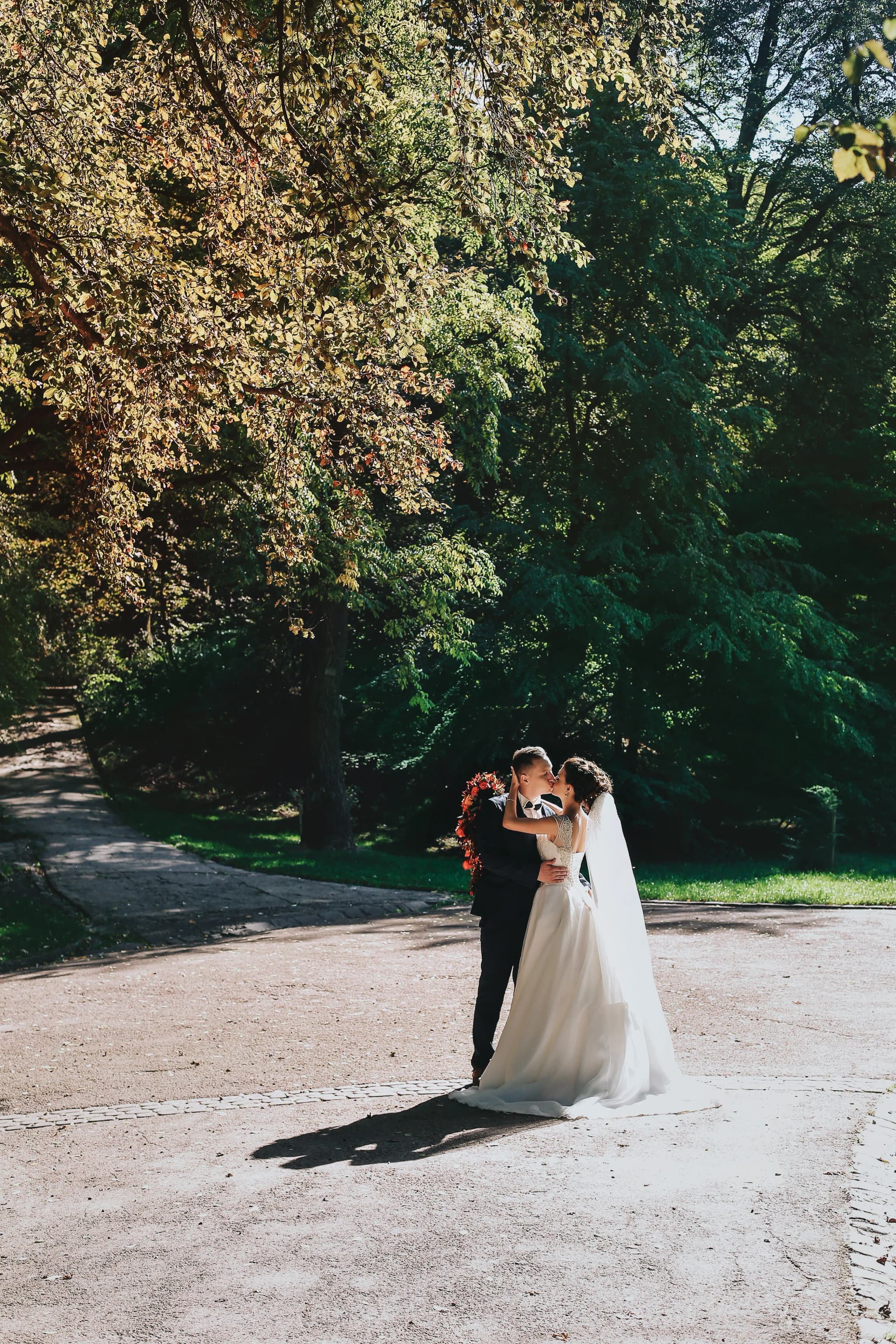
Pembroke's walled rose garden is, for me, the single best reason to consider this college above most others for a summer wedding. It blooms through late May and into June, and at its peak it offers something almost no other central Cambridge college can: genuine, abundant colour set against pale stone walls. Most Cambridge college grounds are, by design, green and stone — manicured lawns, clipped hedges, mellow limestone. The rose garden breaks that palette entirely, and pink and white blooms against grey-gold stone make for portraits with a warmth and softness that architecture alone cannot provide.
If a couple has any flexibility in choosing their wedding date and Pembroke is the venue, I always encourage them to think about the bloom window when they are setting the date rather than treating it as an afterthought. Peak bloom varies by a couple of weeks year to year depending on the spring weather, but late May through the first half of June is generally the safest bet. A wedding booked for late July or August will still have a lovely garden, but it will have moved past its most dramatic flowering, so if the roses are a genuine priority for your photographs it is worth factoring into the planning conversation early, alongside catering and guest numbers.
Planning a Pembroke wedding
I photograph regularly at Cambridge colleges and know Pembroke's chapel, courts, and garden well enough to plan a timeline around the best light and the rose bloom. If you are considering Pembroke for your wedding, I would be glad to talk through timing and locations.
Enquire about wedding photographyAccess, Permissions, and Practical Planning
Photography at Pembroke, as at every Cambridge college, requires prior permission arranged through the college's events or conference office as part of the wedding booking process. It is worth confirming early exactly which areas of the college the couple has access to for photographs beyond the ceremony space itself, since some courts and gardens are more readily available than others depending on the time of year and what else is happening at the college that day. I always liaise directly with couples and, where useful, with the college's events team in advance so that on the day itself there is no ambiguity about where we can and cannot go, and no time lost working it out on the spot.
Pembroke's location is one of its quieter advantages. It sits on Trumpington Street, close to the historic centre and within easy walking distance of King's College, Clare Bridge and the Backs, and the Fitzwilliam Museum, which makes it straightforward to combine a Pembroke ceremony with a short walk to a second location for portraits if a couple wants a wider variety of Cambridge backdrops in their gallery. Because it sits slightly off the busiest tourist routes through the city centre, Pembroke also tends to be calmer on a wedding day than some of the more famous colleges, with fewer passing groups of visitors to work around during ceremony and portrait time.
How I Approach a Pembroke Wedding Day
Every college wedding I photograph starts with a site visit, and Pembroke is no exception. I like to walk the chapel, Old Court, Ivy Court, and the rose garden at roughly the time of day the ceremony and portraits will actually happen, so I can see exactly how the light moves through the space rather than relying on how it looked on a previous visit at a different time of year. Cambridge college architecture is dense and often quite enclosed, and the difference between a court in direct midday sun and the same court in soft late-afternoon light can be substantial — knowing which is which for your specific date and time means far less guesswork on the day.
On the day itself I try to build in a realistic amount of time for portraits across the different areas of the college, because Pembroke genuinely rewards it. A couple who only allows fifteen rushed minutes for photographs after the ceremony will get lovely but limited images. A couple who allows thirty to forty-five minutes to move unhurriedly from the chapel steps through Old Court, into Ivy Court, and finally into the rose garden if the season allows, comes away with a much richer and more varied set of photographs that actually tells the story of the venue, not just of the ceremony moment. I always build the running order around the couple's wider day — drinks reception, wedding breakfast, evening celebrations — so that photography enhances the timeline rather than working against it.
Pembroke is a college that rewards a little bit of planning with photographs that genuinely could not be taken anywhere else in Cambridge — a Wren chapel unlike any other, courts with seven centuries of settled age in the stone, and a rose garden that, timed well, adds a warmth and colour that most college weddings simply do not have available to them. If you are getting married at Pembroke, or considering it, I would love to talk through your date, the rose bloom timing, and how we might use the college's courts and garden across your day. Get in touch and we can start planning.


Yana Skakun
Photographer · England
Professional wedding, family and portrait photographer based in England. Passionate about capturing authentic emotions and timeless moments.
About Yana →Pembroke College Cambridge weddingPembroke Cambridge wedding photographerWren Chapel Pembroke weddingCambridge college wedding PembrokePembroke College wedding photography guide
Venue Spotlights — Wedding & Portrait Photography in Cambridge & England
Yana Skakun photographs weddings and portrait sessions at venues across Cambridge, East England, London, and beyond. Venue scouting and creative collaboration are part of every booking — every location is worked with rather than against. This guide — Pembroke College Cambridge Wedding Photography: Wren Chapel & Rose Garden — is part of the photography journal: practical, experience-based advice drawn from real sessions across England. Whether you arrived searching for pembroke college cambridge wedding or pembroke cambridge wedding photographer, the same care and attention shapes every session Yana photographs.
Wedding & Portrait Photography sessions are available year-round, with bookings open across Cambridge, Ely, Huntingdon, Peterborough, and further afield — East England, London, the Midlands, and beyond. If you have specific questions about wren chapel pembroke wedding, mention it in your enquiry. Get in touch through the contact form above to check availability and discuss your session. Enquiries are welcomed from anywhere in the UK.
Frequently Asked Questions
What should I look for when visiting a wedding venue?+
Look at the natural light at the time of day your ceremony will take place. Walk outside and consider where portraits will happen — is there an area with shade, a garden, a meaningful backdrop? Ask about vendor restrictions (some venues require you to use their preferred photographer list). Check logistics: where do guests park, where does the bridal party get ready, is there a bridal suite?
How far in advance should you book a wedding venue?+
Popular venues book 18–24 months ahead, especially for peak season (May–September) Saturdays. If you're flexible on date and day of week, 12 months is usually sufficient. Always view a venue before booking — photos online rarely show the full picture of scale, light, or atmosphere.
What questions should you ask a wedding venue?+
Ask: what's included in the venue hire? Can you bring your own caterer? What are the noise restrictions and finishing times? Is there accommodation on site? What's the plan if it rains for outdoor ceremonies? What is the minimum and maximum guest capacity? Are there any vendor restrictions or preferred supplier lists?
How do venue locations affect wedding photography?+
Venue architecture, grounds, and natural light dramatically affect the quality of wedding photography. Beautiful venues with varied backdrops, good natural light in the key rooms, and outdoor space for portraits make the photographer's job much easier. When choosing a venue, visiting at the same time of day as your planned ceremony is helpful for assessing the light.
What makes a venue photogenic for weddings?+
Natural light (large windows, north-facing rooms), textured backgrounds (stone walls, wooden beams, floral arrangements), varied outdoor spaces (gardens, courtyards, woodland, water features), and interesting architectural details. Venues that feel authentic to their setting — a barn that's actually rustic, a manor house with period features — photograph better than generic white box venues.
Continue Reading
Related Articles

Venue Spotlights
Beach and Coastal Portrait Photography in England
13 min read · Read Article
Venue Spotlights
Autumn Photography Locations in Cambridgeshire: The Complete Seasonal Guide
12 min read · Read Article
Venue Spotlights
Cherry Blossom Photography Locations in England: Where & When to Shoot
11 min read · Read Article
Get in Touch
Ready to Book Your Session?
Get in touch to discuss your vision — I'll reply within 24 hours.