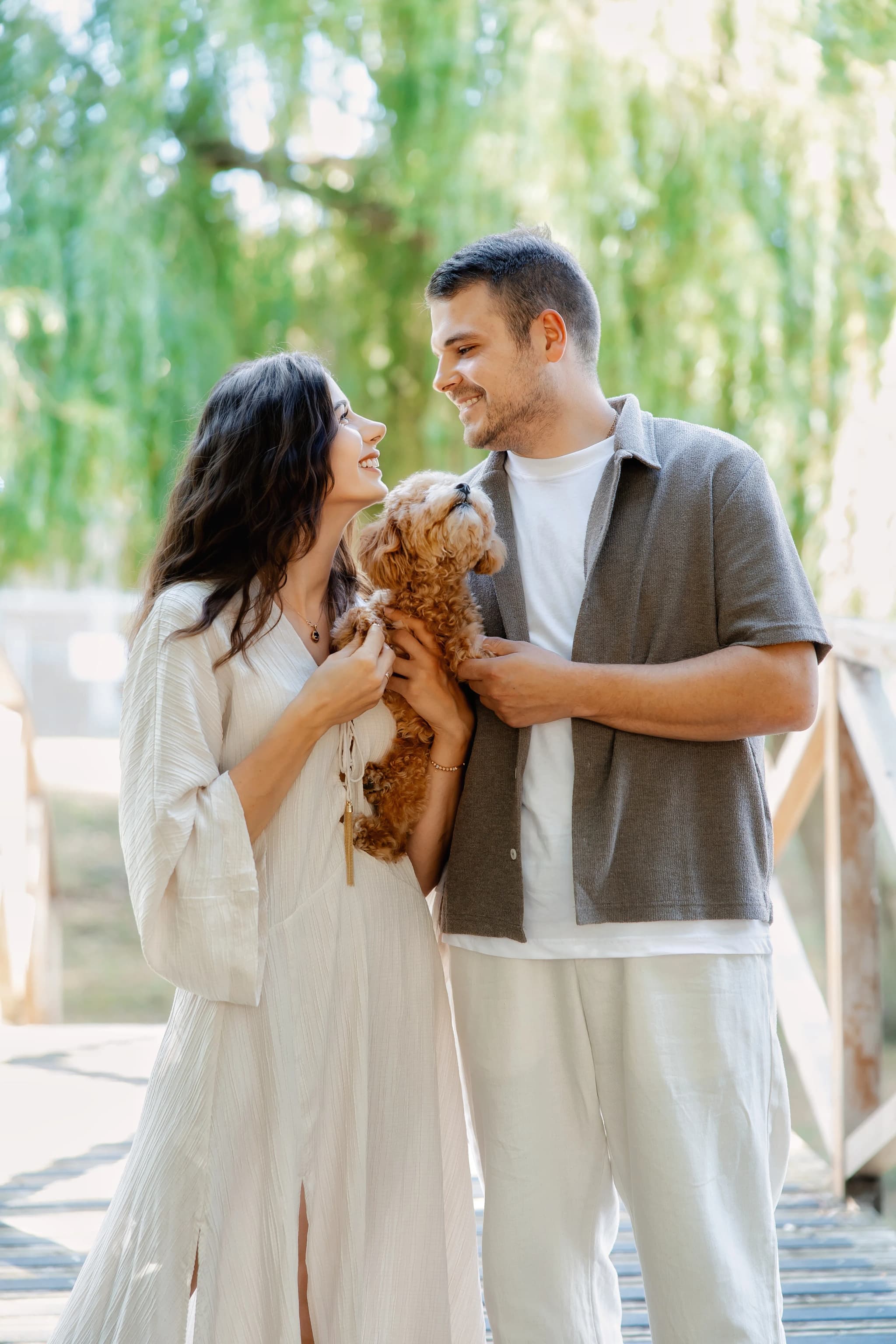
The hour before sunset — what photographers call "golden hour" — produces the most flattering, cinematic, emotionally resonant light of the day. Warm amber tones, long soft shadows, a sky that transitions from blue to gold to pink to deep violet. If you're planning an outdoor proposal, timing it for golden hour makes an extraordinary difference to your photographs.
What Makes Golden Hour Light Special
When the sun is low in the sky, its light travels through a much greater depth of atmosphere before reaching your subject. This filters out much of the harsh blue and ultraviolet light, leaving warm golden tones that are universally flattering to human skin. The angle of the light is also low and directional, which creates gentle shadows that give faces shape and depth without harshness.
During midday, the same sun directly overhead creates harsh, unflattering shadows. Golden hour light wraps around faces and landscapes in a way that makes everything glow.
The Golden Hour Window in the UK
UK sunset times vary dramatically across the year. Knowing your window:
- December–January: Sunset around 3:50–4:10pm; golden hour begins around 3:00pm
- February: Sunset around 5:00–5:30pm; golden hour begins around 4:15pm
- March–April: Sunset around 6:30–8:00pm (clocks change late March)
- May–July: Sunset between 8:30–9:15pm; golden hour is extended and spectacular
- August–September: Sunset between 7:30–8:30pm; transitional warm light
- October–November: Sunset between 4:30–6:30pm; some of the most dramatic skies of the year
Choosing the Right Location for a Sunset Proposal
For a golden hour proposal to shine photographically, you want:
- A clear western view — you need to be able to see the setting sun. Hills, open parkland, coastlines, and elevated spots with a clear horizon work best.
- A background that benefits from warm light — stone buildings, trees and foliage, water reflecting the sky, coastline.
- A position where you face towards (but not directly into) the sun — side lighting at golden hour wraps around faces beautifully while showing the sky in the background.
UK Locations Famous for Sunset Views
Durdle Door and the Jurassic Coast — some of the most dramatic sunset photography in England. Rannoch Moor and Glencoe (Scotland) — vast open skies. The Norfolk Broads — wide, flat, water-reflecting horizons. Malvern Hills — 360-degree views with extraordinary evening light. Camber Sands (East Sussex) — beach proposal with open western horizon.
The "Blue Hour" After Sunset
The 20–30 minutes after sunset — the "blue hour" — produces its own unique quality of light: the sky fades through pink and orange into deep blue-violet, while the world below is lit by soft, even light with no shadows. Blue hour photographs have an atmospheric, cinematic quality that's equally beautiful to golden hour, though slightly more technically demanding.
If you're not limited to golden hour specifically, planning to propose around 15 minutes before sunset allows captures in both golden hour and the transitional blue hour.
Practical Notes for Your Photographer
The golden hour window is short — 30–60 minutes depending on season. Your photographer will need to be in position at least 15 minutes before the window begins, which means coordinating your arrival time precisely. The best light is often only 10–15 minutes; come late and you miss it entirely.
Communicate with your photographer the day before: confirm the specific sunset time, the meeting point, the cover story, and what to do if weather changes.
Planning a golden hour proposal?
I specialise in outdoor proposals and know exactly how to work with golden hour light. Get in touch to discuss your plans.