Wedding speeches are one of the most emotionally charged parts of any reception. The best man's jokes, the father of the bride's tears, the maid of honour's heartfelt tribute, the couple's visible emotion as people they love speak publicly about them — these moments are fleeting, unrepeatable, and extraordinarily difficult to capture well. The lighting is usually poor, the room is crowded, and the photographer needs to capture both the speaker and the reactions of the couple and guests simultaneously. This guide covers the techniques, planning, and positioning that produce outstanding speech photography.
Why Speech Photography Is So Challenging
- Low light: speeches typically happen during the evening reception, in artificially lit rooms with mixed colour temperatures — warm incandescent overhead lights, cool window light fading, candles, and possibly coloured uplighting from a DJ or lighting company.
- Restricted movement: guests are seated at tables. The photographer can't easily move around without disrupting the room. Aisles between tables are narrow.
- Two subjects at once: the speaker is telling the story, but the real emotional content is on the faces of the couple listening. Both need to be captured, and they're usually in different parts of the room.
- Unpredictability: the best speech moments — a punchline landing, tears breaking through, a surprise reveal — happen without warning and last fractions of a second.
- Duration: speeches can last 5 minutes or 45 minutes. The photographer needs to maintain focus and anticipation throughout, not just at the beginning and end.
Positioning: Where Should the Photographer Be?
Primary Position: Angle on the Couple
The most important images from speeches are the couple's reactions — not the speaker. Position yourself where you can see the couple's faces clearly, ideally at a 30–45 degree angle from their table. A 70-200mm lens at this position allows tight crops on facial expressions without being physically close enough to distract them.
Secondary Position: Behind/Beside the Speaker
From behind or to the side of the speaker, you can capture both the speaker (in partial profile or from behind) and the couple's reactions in the same frame. This creates context — the viewer sees who is speaking and how the couple is responding in a single image. It's the strongest compositional position for storytelling.
Third Position: Wide Room Shot
At least once during speeches, capture a wide image showing the entire room — the speaker, the couple, the guests' attention. This establishes the scene and the atmosphere. A 24–35mm lens from the back or side of the room works well.
Two Photographers Advantage
This is where a second photographer earns their fee. One photographer covers the speaker (expressions, gestures, notes in hand, nervous laughter); the other covers the couple and guests' reactions. Without a second photographer, the lead must constantly alternate between subjects, and will inevitably miss some reaction moments while shooting the speaker.
Camera Settings for Speech Photography
- ISO: typically 1600–6400, depending on venue lighting. Modern cameras handle high ISO well, and a slightly grainy speech image with genuine emotion beats a clean, technically perfect image with a flat moment.
- Aperture: f/2.8 or wider. Fast lenses (f/1.4, f/1.8, f/2.0) are critical for speech photography because they let in more light and create shallow depth of field that isolates subjects from busy backgrounds.
- Shutter speed: no slower than 1/125s for sharp facial expressions. Faster (1/250s) if the speaker gestures frequently.
- Autofocus: continuous AF with face/eye detection. The photographer can't afford to miss focus during a fleeting emotional moment.
- Flash: generally avoided during speeches because it's disruptive and changes the mood of the room. If flash is necessary (extremely dark venue), bounced off-camera flash from a remote position is preferred over direct on-camera flash.
- White balance: auto or pre-set to match the venue's dominant light source. Mixed lighting (warm bulbs + cool window light) makes white balance challenging; shoot in RAW to correct in post-processing.
What to Capture During Each Speech
The Speaker
- Standing up and beginning — the nervous first moments are often wonderful.
- Reading from notes or a phone — a detail shot of hands holding the speech.
- Genuine laughter at their own joke.
- Emotional moments — tears, voice cracking, pausing to compose themselves.
- Toasting — glass raised, looking at the couple.
The Couple
- Laughter — catching both partners laughing at the same moment.
- Tears — these are some of the most treasured images from any wedding.
- Physical affection — hand-holding, leaning into each other, an arm around the shoulder.
- Eye contact with the speaker — showing the relationship and connection.
- Embarrassment (in a good way) — blushing at stories about their past.
The Guests
- Table reactions — groups laughing together, wiping tears.
- Parents' faces during speeches about their children.
- The best man's nervousness before his own speech.
- Children looking confused or bored — these images are charming in context.
- The collective toast — everyone raising glasses simultaneously.
Planning Tips for Couples
- Tell your photographer the speech order: knowing that the best man speaks first, then the father of the bride, then the maid of honour allows the photographer to plan positions for each speech.
- Lighting matters: if your venue allows, ask for the lights to be kept at a reasonable level during speeches. Completely dimmed rooms with only candle light make photography extremely difficult.
- Seat the couple where they're visible: if the top table faces the room with a wall behind it, the photographer has a clear shot. If the couple is seated in a corner with their backs to a window, it's much harder.
- Microphone positioning: if a lectern or microphone stand is provided, it should be positioned so the speaker faces the couple — this allows the photographer to capture both from a single angle.
- Keep speeches during dinner, not after dark: if you have any flexibility in timing, speeches during the meal (with natural light still contributing through windows) produce significantly better results than speeches at 10pm in a fully artificially lit room.
Post-Processing Speech Images
Speech images often need more post-processing work than other parts of the day because of the challenging lighting conditions. Expect your photographer to:
- Correct mixed white balance — warm faces, cool backgrounds.
- Reduce noise from high ISO shooting.
- Lift shadows on faces lit from the side by candles or uplighting.
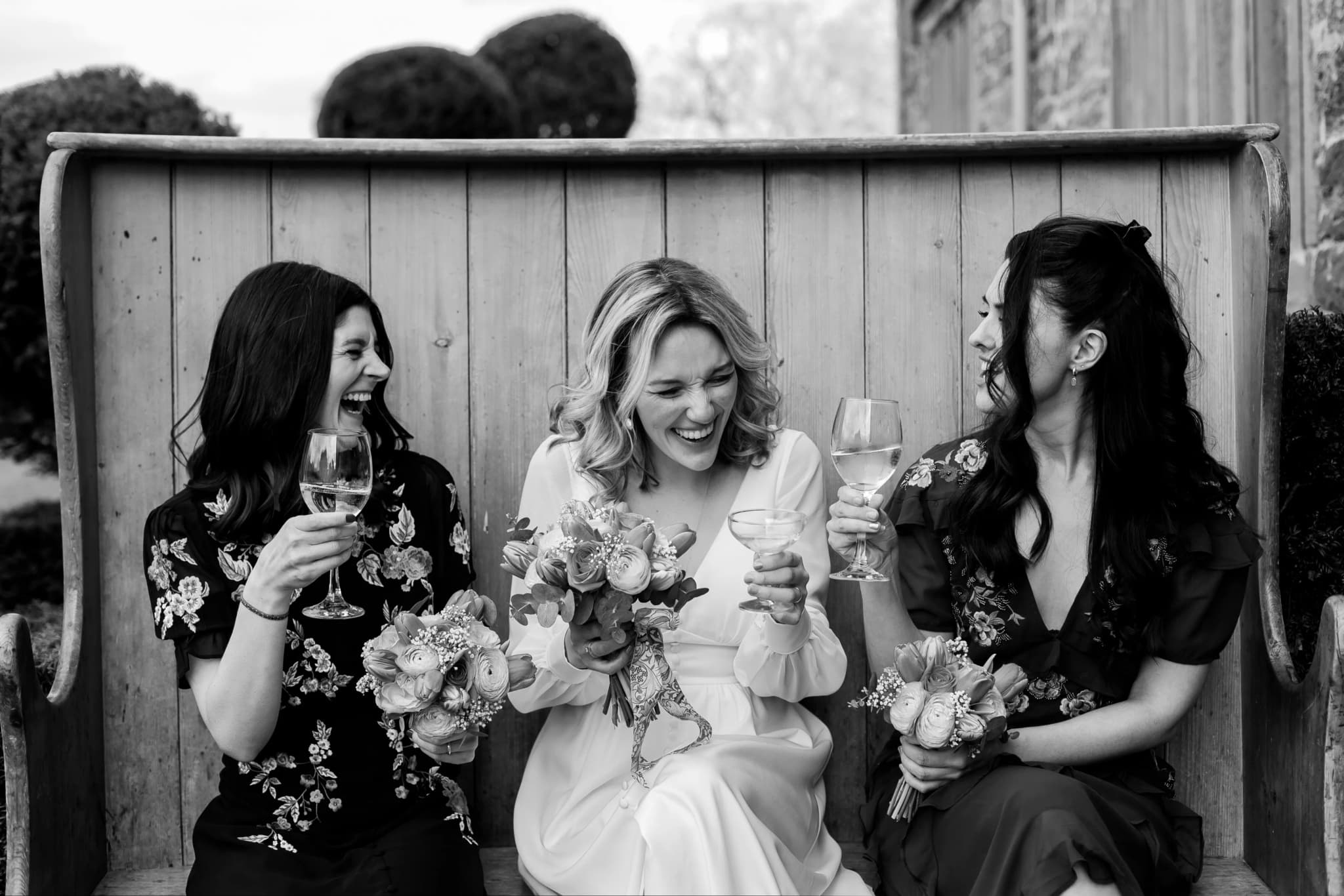
- Convert some images to black and white — speech photographs often work beautifully in monochrome because the focus is entirely on expression, not colour.
Speech photography captured with two-camera coverage and zero flash disruption.
Every laugh, every tear, every raised glass — documented naturally and unobtrusively. View speech gallery highlights.