Yana Skakun
Fine Art Monochrome Wedding Photography
Fine Art Black and White Wedding Photographer
High tonal range monochrome wedding photography — Avedon, Karsh, Penn — silver gelatin quality, digitally realised, for images that last.
The Most Timeless Photographic Tradition
Fine art black and white wedding photography is not a filter applied to a colour image. It is a discipline of seeing, lighting, and processing that belongs to the deepest tradition in the history of photography: Avedon's frontal formal portraits, Karsh's tonal depth and presence, Cartier-Bresson's documentary precision, Adams' zone system landscape tonal range. These are the standards against which fine art monochrome wedding photography measures itself.
The removal of colour from a photograph is not a subtraction. It is a concentration — the colour information that competes with the emotional information is removed, and what remains is tonal: light, shadow, expression, geometry, human presence. A fine art monochrome image of the ceremony moment has a directness and emotional economy that colour photography of the same subject cannot achieve.
Fine art black and white wedding photography across the UK — from the ceremony close-up to the landscape portrait, from the editorial session to the architectural interior.
The Fine Art Monochrome Approach
Six distinct traditions of black and white photography, applied to different elements of your wedding day.
Ceremony in Pure Monochrome
Emotion, light and shadow undistracted by colour
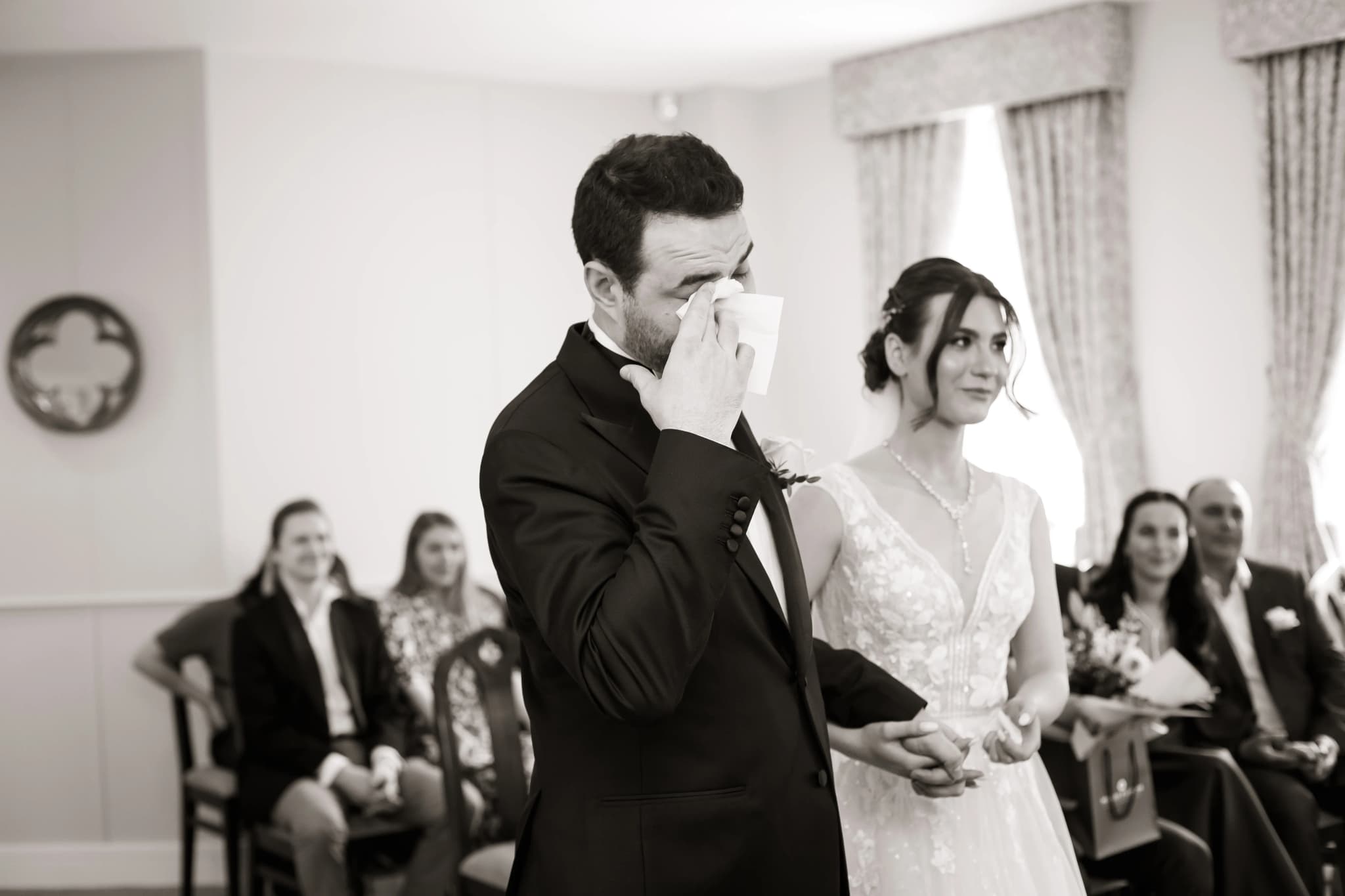
The wedding ceremony is the most emotionally concentrated part of the day, and black and white photography serves it with an economy that colour cannot match: colour information is removed, and what remains is tonal — the relationship of light, shadow, and human expression. The faces of the couple at the moment of the vow; the congregation in the middle distance; the light through a window falling across the officiant — all of these are served by the directness of high-quality monochrome photography. Nothing in the colour temperature of the flower arrangement competes with the face making a vow.
Landscape Monochrome — The Ansel Adams Tonal Scale
Zone system depth in the landscape image
Landscape monochrome wedding photography at its most technically refined draws on the zone system tradition established by Ansel Adams: a full tonal range from deep shadow to specular highlight, with maximum detail and tonal graduation in the mid-range zones where the face and the landscape meet. A portrait of the couple at the edge of a highland loch, or at the cliff edge of a coastal headland, photographed and processed with zone system precision, produces an image of technical quality that has the character of a large-format print.
Direct Flash High Contrast — The Avedon Tradition
White background, frontal light, total figure-ground separation
Richard Avedon's formal portraiture tradition — direct flash on a white or blank ground, maximum figure-ground separation, faces at full resolution — is among the most influential in the history of twentieth century photography, and its application to wedding portraiture produces images that stand completely apart from the soft, natural, ambient-light aesthetic dominant in contemporary wedding photography. A couple photographed in the Avedon mode, against a blank pale wall with direct frontal flash, in high contrast monochrome, produces an image that will look as powerful in fifty years as it does now.
Fine Art Portrait Session — Karsh Quality
Extended editorial portraiture at the highest standard
Yousuf Karsh photographed Churchill, Hemingway, Callas, Einstein — the formal extended portrait session in controlled natural light, processed with precision to maximise tonal depth and facial character, is the closest wedding photography comes to the editorial portraiture tradition. A 30–60 minute portrait session with the couple, in a single location chosen for its light and its visual character, processed as fine art monochrome, produces images that belong in the tradition of great portrait photography rather than the genre of contemporary wedding coverage.
Table and Detail — Architectural Graphic
Objects and spaces as geometric composition
Monochrome table and detail photography at a wedding removes all the colour information that dominates how we process decoration — the flower colours, the linen colours, the candle flame warmth — and what remains is form: the geometry of place settings, the graphic shadow of a window frame across the table, the architectural lines of a historic dining room ceiling. These images have a graphic quality that colour documentation of the same subject cannot achieve, and they function as architectural study as much as event documentation.
Mixed Colour and B&W Gallery Curation
Monochrome as editorial selection within a colour gallery
The most sophisticated application of fine art black and white wedding photography is curatorial rather than comprehensive: the full wedding day gallery in colour, with a selection of images — perhaps 60–100 — processed as fine art monochrome for their particular editorial and emotional properties. The ceremony portrait, the landscape portraits, the direct flash detail images: those elements of the day that are best served by the directness of monochrome, curated as a parallel strand within the colour gallery rather than as a replacement for it.
Fine Art Monochrome Wedding Packages
Colour documentary coverage with fine art monochrome curation — across the UK.
Essential
£1,395
- 6 hours coverage
- 300+ edited images
- Curated B&W selection
- Online gallery
Most Popular
Full Day
£2,395
- 10 hours coverage
- 500+ edited images
- Extended B&W portrait session
- Online gallery
Premium
£3,495
- 12 hours coverage
- 700+ edited images
- Fine art baryta print set
- Clamshell archival box
Why Fine Art Monochrome Endures
Timeless Without Being Retro
Fine art black and white wedding photography ages better than any other photographic aesthetic — not because it is nostalgic for the age of black and white photography, but because it removes the period-specific colour information that dates photographs to a particular era. A high-quality monochrome image cannot be dated by skin tone warm filters, by the colour of a venue's ambient lighting, or by the Instagram-era presets applied to colour images. It exists outside photographic trend cycles entirely.
Emotion Without Distraction
Colour is information, and in a documentary photograph of an emotional moment, colour information often competes with the emotional information for the viewer's attention. The vow exchange, the first look, the father of the bride's expression at the ceremony — these moments are served by the directness and economy of monochrome, which removes the colour information and directs attention entirely to the face, the expression, and the light. Fine art black and white photography distils the emotional content of the image.
Large-Format Print Quality
Fine art black and white images, processed with attention to tonal depth and resolution, are technically optimised for large-format printing: the deep shadow detail, the smooth tonal graduation, the edge sharpness. A correctly processed fine art monochrome image prints at exhibition quality at 60x90cm without degradation. The intention of fine art monochrome wedding photography is partly archival — images processed to print quality rather than screen quality, for prints that last rather than images viewed once on a phone.
Editorial Heritage
The visual tradition that fine art black and white wedding photography belongs to — Avedon, Karsh, Penn, Cartier-Bresson, Brassaï — is the most important tradition in the history of photographic portraiture and documentary photography. Wedding photography that draws consciously on this tradition produces images that participate in a conversation with the best photographers who ever worked, rather than existing within the narrow aesthetic horizon of contemporary wedding photography style.
Gallery as Artefact
A fine art print set of black and white wedding photographs — printed on baryta or matte cotton rag paper, housed in a clamshell box or gallery-bound album — is an artefact of the day rather than a digital file. The physical presence and permanence of a well-produced fine art print set has a different relationship to memory than a digital gallery: it is handled, looked at with full attention, passed from generation to generation. The Premium package includes a curated fine art print set for this reason.
Architecture and Environment at Their Finest
Fine art monochrome photography renders architectural and landscape environments — the stone walls of a country house, the vaulted ceiling of a cathedral, the sweep of a highland moorland — with a tonal depth and graphic precision that colour photography often cannot match. The graphic architecture of a great English country house seen in monochrome, with the couple placed within it, produces an image that is simultaneously portrait, architectural study, and landscape photograph in a way that colour documentation of the same scene rarely achieves.
Frequently Asked Questions
Will I receive black and white versions of all my wedding photos?
The fine art black and white approach is typically applied selectively rather than comprehensively — the images chosen for monochrome processing are those where the removal of colour strengthens rather than diminishes the photograph. These are typically the ceremony close-up portraits, the landscape couple portraits, the direct flash Avedon-style portraits, and specific documentary moments where emotional directness is served by monochrome. The full wedding gallery will contain both colour documentary images and fine art monochrome images, with the split agreed before the day. All images can be delivered in colour and the monochrome selection identified separately if preferred.
What is the difference between standard black and white and fine art monochrome?
Standard black and white conversion removes colour information and adjusts overall exposure and contrast. Fine art monochrome processing — in the tradition of darkroom zone system work — individually adjusts the tonal response of each colour channel, the shadow density, the highlight separation, the midtone graduation, the micro-contrast, and the grain structure to maximise the three-dimensional tonal depth and visual density of the image. Fine art monochrome images have a quality of depth and presence — they look as if they exist within the frame rather than on the surface of it — that standard black and white conversion typically does not achieve.
Can I have fine art black and white prints as part of my package?
Yes — the Premium package includes a curated fine art print set: 20–30 selected monochrome images printed on Hahnemühle baryta fine art paper (the archival successor to silver gelatin fibre-base paper), individually signed, and presented in a museum-quality clamshell box. These prints are archival quality — rated at 100+ years under normal display conditions — and are intended as heirlooms rather than decorative items. Print sizing, paper selection, and quantity can be adjusted from the standard specification at booking.
Do you photograph the whole wedding in black and white?
No — a purely monochrome wedding gallery would lose a great deal of information that is valuable in colour: the specific colour of the dress, the flowers, the landscape, the light at golden hour. The fine art black and white approach applies monochrome where it strengthens the image and retains colour where the colour is part of what makes the image work. The result is a gallery with two parallel visual strands — colour documentary and fine art monochrome — that complement rather than replace each other.
What styles of black and white wedding photography do you offer?
The full range: high-contrast direct flash in the Avedon editorial tradition; soft tonal landscape monochrome in the zone system tradition; close documentary monochrome of ceremony moments in the humanist photography tradition (Cartier-Bresson, Brassaï, Doisneau); graphic architectural monochrome; and formal extended portraiture in the Karsh tradition. The approach applied to each element of your day is discussed at the planning stage and aligned with the character of your venue, your aesthetic preferences, and the specific quality of light available.
Interested in Fine Art Monochrome?
High tonal range black and white wedding photography — for images that last generations.
Get in Touch
Let's Create Together
Tell me about your vision and I'll be in touch within 24 hours.