Yana Skakun
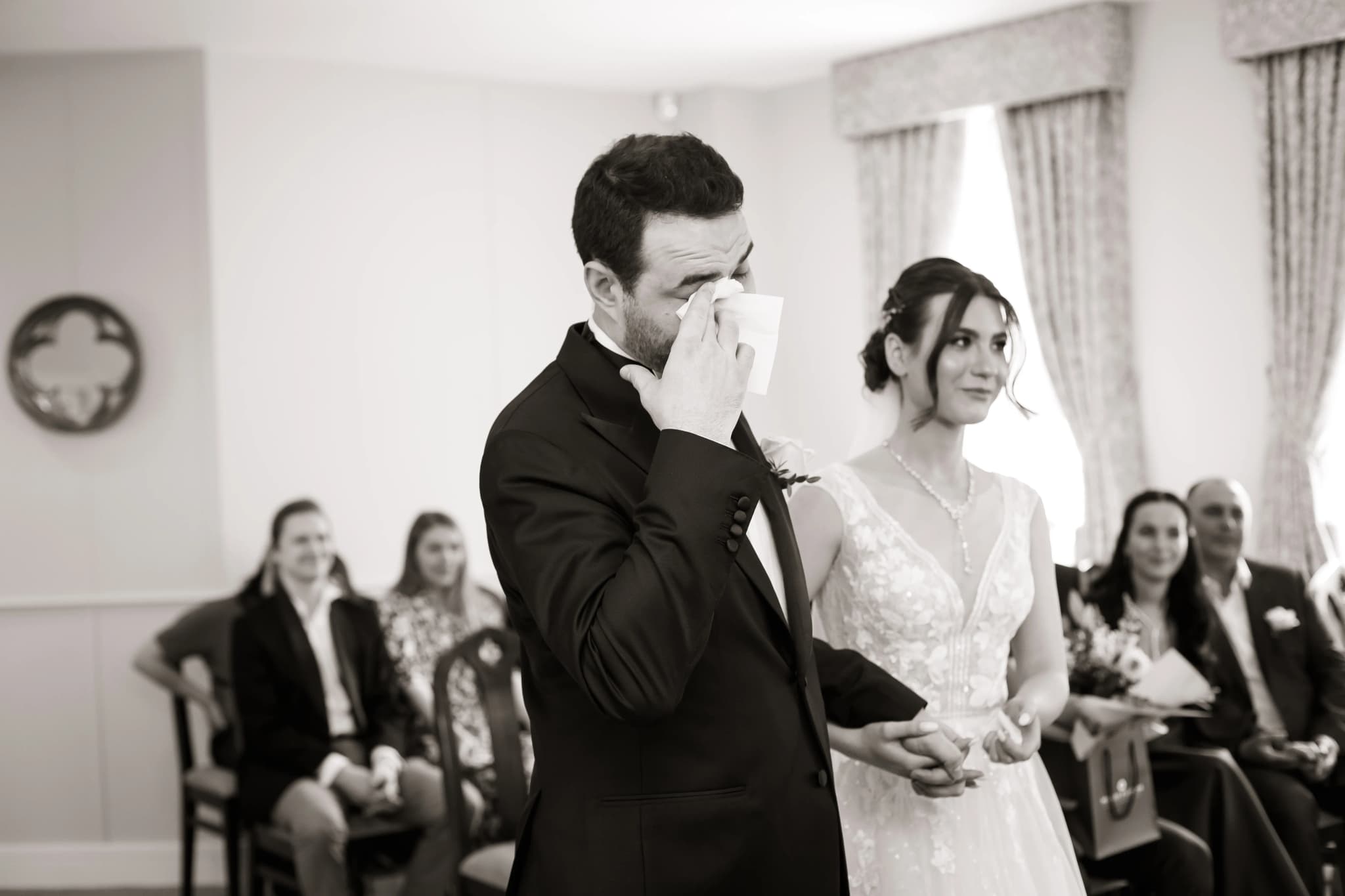
Cinematic Scottish Wedding Photography
Cinematic Wedding Photographer Scotland
The Cairngorms, Loch Lomond, Edinburgh Old Town, the Highland glens and the Isle of Skye — cinematic, landscape-scale wedding photography across Scotland.
Scotland's Cinematic Landscape
Scotland provides the most cinematically dramatic wedding photography landscape in Britain — the Cairngorms' sub-arctic plateau, the Trossachs' mirror lochs, Edinburgh's volcanic ridge, Skye's Cuillin silhouettes against Atlantic sky. These are landscapes that have appeared in hundreds of films precisely because they carry a visual weight of dramatic beauty that is immediately cinematic — the scale, the light quality, the atmospheric unpredictability.
Cinematic wedding photography in Scotland operates with the landscape as active participant rather than passive background — building portrait sessions around specific viewpoints at specific light times, treating atmospheric conditions as creative material rather than obstacles, and producing photographs that carry the emotional weight of genuinely extraordinary scenery.
From an intimate Edinburgh close to an open Skye moorland, from a Cairngorm plateau at golden hour to a candlelit Highland castle feast — Scottish wedding photography is among the richest visual commissions available to a photographer working in the UK.
Scottish Cinematic Wedding Locations
From the Cairngorms plateau to the Isle of Skye — Scotland's most extraordinary cinematic settings.
Cairngorms National Park
Scottish Highlands — UK's largest National Park
The Cairngorms plateau is the most genuinely wild landscape available for wedding photography in the UK — a sub-arctic plateau at 1,200 metres, with ancient Caledonian pine forest at its base, open moorland glens and a quality of light specific to its altitude and latitude that is found nowhere else in these islands. Autumn in the Cairngorms — October and early November — provides a colour and light that is as dramatically beautiful as any landscape in Europe.
Loch Lomond & The Trossachs
West Highlands, accessible from Glasgow
Loch Lomond provides cinematic scale within reach of Scotland's central belt — the Ben Lomond ridge reflecting in the loch, the island-dotted southern shore, the oakwood shores of the east bank in autumn. The Trossachs beyond (The Trossachs NP) provides Rob Roy country landscape character with the distinctive quality of west Highland softness — more gentle, more wooded and more lake-reflecting than the eastern Highlands.
Edinburgh Old Town
Royal Mile, Castle Rock and Arthur's Seat
Edinburgh provides the most cinematically spectacular urban wedding photography setting in the UK — the Castle on its volcanic plug, the Royal Mile's medieval closes and tenements, Arthur's Seat's 251-metre summit visible from everywhere in the Old Town, the Forth estuary light in the distance. A couple portrait session on Arthur's Seat at golden hour, with Edinburgh Castle and the city below and the Forth beyond, is among the most visually dramatic wedding photography settings anywhere in Britain.
Highland Glens — The Great Glen
Fort William to Inverness — Caledonian Canal corridor
The Great Glen fault line from Fort William to Inverness — containing Loch Linnhe, Loch Lochy, Loch Oich and Loch Ness — is the geographic spine of the Highlands, and each glen and loch along its length provides a different variant of classic Highland cinematic landscape: the Ben Nevis massif from Fort William, the Commando Memorial at Spean Bridge, the scale of Loch Ness, the light falling from the Monadliath hills to the south onto the canal.
Argyll Sea Lochs
Loch Fyne, Loch Awe, Loch Etive
The sea lochs of Argyll — Loch Fyne (the longest sea loch in Scotland), Loch Awe (the longest freshwater loch by length), Loch Etive (wild and relatively inaccessible, with Glencoe visible) — provide a quality of landscape photography specific to the west coast: the silver light of the Atlantic weather system, the sea loch's tidal quality, and the specific combination of glen, mountain and tidal water that defines the Argyll character.
Isle of Skye
Fairy Pools, Quiraing, Dunvegan Castle, Neist Point
Skye provides the most immediately cinematic scenery in Scotland — the Quiraing's tortured landslip geology, the Old Man of Storr against the Trotternish Ridge, the Fairy Pools of the Black Cuillin, Dunvegan Castle on its sea loch, Neist Point lighthouse at the westernmost tip of the island. Wedding photography on Skye operates in a landscape visual vocabulary borrowed directly from film — it is impossible to take an artistically uninteresting photograph in the Cuillins.
Scottish Wedding Photography Packages
Scotland-wide destination coverage. Travel included in Premium.
Essential
£1,395
- 6 hours coverage
- 300+ edited images
- Online gallery
- Personal licence
Most Popular
Full Day
£2,395
- 10 hours coverage
- 500+ edited images
- Online gallery
- Engagement session
Premium
£3,495
- 12 hours coverage
- 700+ edited images
- Fine art album
- Travel + location scout
Why Cinematic Scottish Photography Is Exceptional
The Cinematic Scottish Light
Scottish Highland light has a specific quality unlike anything in England — the combination of latitude (Edinburgh is 55.9°N, equivalent to Moscow or Copenhagen), the frequent Atlantic cloud cover that produces soft diffused light across the landscape, and the specific low sun angle even at midsummer that casts long shadows and produces a warm-gold quality even at midday. Photographers who understand and work with this specific light quality rather than against it produce photographs of dramatically different character from those who don't.
Landscape as Protagonist
In cinematic Scottish wedding photography, the landscape is not background — it is co-protagonist. The couple in the foreground of the Quiraing, or silhouetted against a Cairngorms sunset, or standing in a Highland glen with mountains framing them: the landscape participates in the composition actively rather than providing a neutral setting. This requires building couple portrait sessions around the specific landscape views and light positions rather than using the landscape as backdrop.
Mist and Atmospheric Conditions
Scottish Highland mist — morning haar on a sea loch, low cloud obscuring the mountain tops, driving rain followed by sudden sunlit clearing — is a visual quality specific to this landscape and used actively in cinematic Scottish photography rather than treated as adverse weather. A Highland glen in mist with sunlight breaking through has a cinematic quality that a clear day at the same location lacks. The approach to Scottish weather is always to treat atmospheric conditions as creative material.
Highland Castle Venues
Scotland's concentration of castle venues — many still in the original landscape rather than suburban or semi-rural settings — provides a castle wedding photography aesthetic distinct from English castle photography. Eilean Donan rising from the tidal loch, Dunvegan guarding its Skye inlet, Inveraray on its Loch Fyne shore: these are castles embedded in genuinely wild landscape in a way that Leeds Castle or Hever Castle, beautiful as they are, are not.
Seasons of Extraordinary Colour
Each Scottish season holds specific landscape photography character. Spring: the purple-green emergence of moorland and the light snowpack on the high plateaux. Summer: the longest days — golden hour after 10pm on Skye in June — and the full green of the glens. Autumn: the most dramatically coloured, with the Cairngorm birch turning gold, the heather's final colour and the first snow on Ben Nevis. Winter: stark, extreme and extraordinarily cinematic — the low-light intensity and the dramatic contrast of snow against dark peat.
Destination Wedding Coverage
Scottish destination wedding photography is covered as a full travel package — rail from London to Edinburgh (4.5 hours), connecting Scotrail to Highland destinations, or fly to Inverness for the north Highlands. A full Premium package for a Scottish destination wedding includes travel, accommodation and a pre-wedding location scouting session at the specific venues and landscape locations. Skye and the outer islands require overnight stays on the island and are quoted individually.
Frequently Asked Questions
How does the weather affect cinematic photography in Scotland?
Scottish weather is part of the visual subject, not a risk to be managed. A Highland wedding in sunshine is beautiful; a Highland wedding in mist, dramatic rain or the clearing after a storm is often more cinematically interesting. The approach is to build flexibility into the day so that weather conditions are responded to rather than fought: if morning mist makes landscape portrait sessions extraordinary, the morning session is extended; if afternoon rain arrives, the indoor ceremonies and reception coverage continues uninterrupted. The weather variable is a creative resource.
What time of year is best for cinematic Highland wedding photography?
September and October for the most dramatic colour — the Cairngorms in mid-October birch gold combined with the first dusting of Cairngorm summit snow is cinematically at its most intense. June for the longest days — Skye at midsummer gives golden hour after 10pm, which allows evening outdoor portrait sessions at a time of day typically impossible elsewhere in the UK. Each season has its specific Highland character: spring for the clarity of the post-winter landscape, winter for the extreme dramatic starkness of the low-light plateau. There is genuinely no bad season for cinematic Scottish photography.
Is Isle of Skye photography practical for a wedding day?
Skye works best when the wedding base and the photography locations are both on the island — staying on Skye, marrying on Skye, and using the island's landscape within the couple portrait sessions. Day-trip photography to Skye from the mainland is possible only for elopements or micro-weddings where the entire day is devoted to photography in the landscape rather than a wedding event plus photography. A full wedding day on Skye (venue ceremony, reception and portrait session) requires a dedicated portrait session time within the Trotternish or Black Cuillin, which is straightforward to include with proper planning.
What is the travel arrangement for a Scottish wedding?
London to Edinburgh: LNER Azuma, approximately 4.5 hours, arriving ready to work. Edinburgh to the Highlands (Inverness, Fort William, Pitlochry): 2–3 hours by Scotrail. The journey north by train through the Forth Bridge, past the Cairngorms fringe and into the Highland glens is itself photographically extraordinary and can be built into the travel day. Skye requires the Mallaig–Armadale ferry or the Kyle of Lochalsh bridge, which adds several hours. For Skye and remote Highland locations, overnight accommodation before the wedding day is included in Premium package costs.
What makes Edinburgh different as a cinematic wedding venue from London?
Primarily the volcanic geology — Edinburgh sits on a group of igneous plugs that create sudden, dramatic vertical relief in the middle of a city: Castle Rock, Arthur's Seat, Calton Hill, Salisbury Crags. This means exterior photography in Edinburgh has access to genuinely high viewpoints within walking distance of any Old Town venue — the view from Arthur's Seat summit takes in the city, the Forth estuary, the Fife coast and the Pentland Hills simultaneously. London has no equivalent elevated urban landscape. Edinburgh also has a consistent Georgian and medieval architectural fabric in the Old Town and New Town that is visually distinct from London's mixture of periods.
Getting Married in Scotland?
Cairngorms, Loch Lomond, Edinburgh, the Highlands or the Isle of Skye — get in touch to discuss cinematic Scottish wedding photography.
Get in Touch
Let's Create Together
Tell me about your vision and I'll be in touch within 24 hours.