Yana Skakun
How to create a family photo book: A practical UK guide
By Yana Skakun·12 May 2026·8 min read
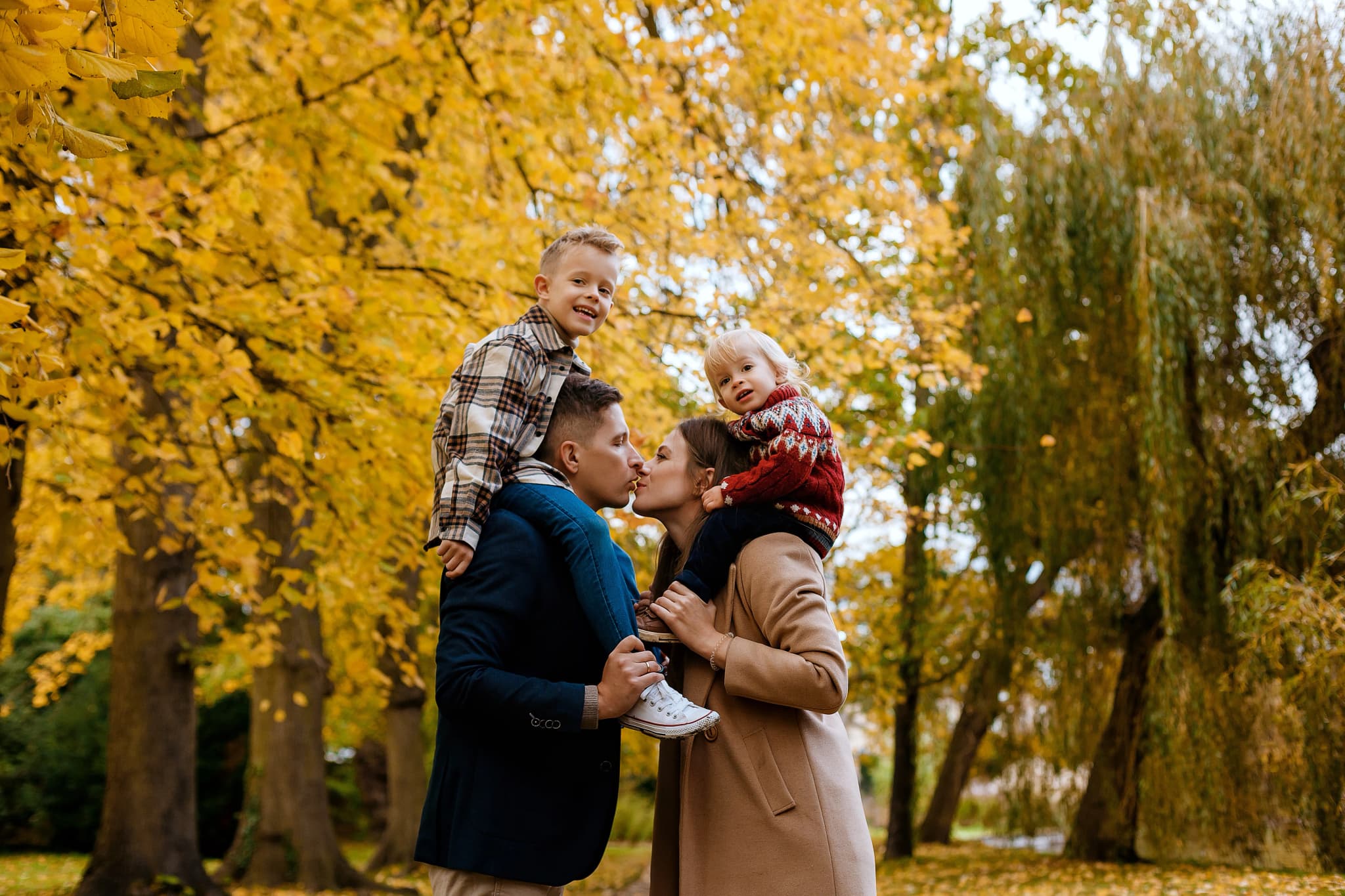
A photo book is one of the best things you can do with your family photographs, and one of the most consistently procrastinated. The images sit on a hard drive, in a cloud backup, or scattered across a phone's camera roll, and the book that was meant to bring them together never quite gets made. I see this constantly with my own clients: beautiful galleries delivered, downloaded, admired for a week, and then left digital indefinitely. Here is how to actually get a book made, and made well.
Why a Physical Book Matters
Screens and digital galleries are convenient, but they are fundamentally passive. Photographs on a screen get scrolled past rather than lingered over, and they are quietly vulnerable — lost when an app is discontinued, buried when a phone is upgraded, forgotten in a folder nobody opens twice. A physical photo book behaves completely differently. It sits on a shelf where it gets noticed. It gets pulled down on a rainy afternoon, looked at together, handed across a room to a grandparent who wants to see how much the children have grown.
The objects that actually survive within families, and get passed down from one generation to the next, are physical objects. A phone full of photographs does not get inherited in any meaningful sense — it gets wiped, replaced, or simply lost to a forgotten password. A shelf of yearly photo books does. If you want your family photographs to still mean something in thirty years, printing them is not a nostalgic indulgence; it is the only reliable way to make that happen.
There is also something in the physical act of holding a printed photograph that a screen cannot replicate. Paper has weight and texture. Turning a page is a deliberate act in a way that swiping is not. Children in particular respond to books in a way they never respond to a parent's phone gallery — a photo book becomes something they ask for by name, something they read like any other bedtime story.
This is exactly the reasoning I give clients who ask whether it's really worth printing a book when the digital gallery already looks so good on a screen. A gallery link is genuinely lovely for the first fortnight after delivery — it gets shared, admired, screenshotted for social media — and then, in my experience, it is opened increasingly rarely as the weeks pass. A book on a shelf has no such decay. It stays exactly as present in the sixth month as it was in the first, simply because it's physically there to be picked up.
Start Small and Actually Finish It
The single biggest mistake families make when planning a photo book is being too ambitious. "I'll do a book covering the last two years" is a project that, realistically, never gets finished, because the scope is too large and the editing task too daunting to ever feel complete. Start with one specific, bounded thing instead — a single holiday, one Christmas, a single season of family portraits. A thirty-page book built around one clearly defined event can be designed in an evening, and it has a natural endpoint, which matters more than people expect.
Once you have made one small book and held the finished result in your hands, the next one becomes far easier, because you already know the process works and roughly how long it takes. Building this habit with small, achievable projects before attempting anything comprehensive is the difference between families who end up with a shelf of books and families who end up with good intentions and an overflowing camera roll.
A practical way to start is to pick the most recent significant event in your family's life — a session you had done professionally, a holiday you took this year, a milestone birthday — and commit to making a book of only that, nothing else. Resist the temptation to fold in "just a few extra photos from earlier in the year" once you've started; scope creep is exactly what turns a one-evening project into a six-month one that never gets finished.
Editing Down Is the Real Work
The genuinely difficult part of making a photo book has nothing to do with software or layout — it is the editing. Choosing forty photographs from four hundred on your phone is a real creative task, and it is worth taking seriously rather than rushing. If the images are coming from a professional session, the job is already partly done: your photographer will have delivered an edited, curated gallery, so you are choosing your favourite twenty or thirty from a set that has already been through a first pass rather than from an unfiltered phone roll.
For phone photographs specifically, be genuinely ruthless. Remove duplicates without hesitation, cut anything blurry, and be honest about images where someone's expression simply isn't quite right, however tempting it is to include "almost" photographs because they capture a moment you remember fondly. What remains after that cull will be a noticeably stronger set, and a smaller, tighter set of genuinely good photographs makes a far better book than a large set of mediocre ones.
A note on printing
Every family session I deliver includes print-ready, high-resolution files, chosen and edited specifically with printing in mind. The photographs are meant to end up on a wall or a shelf, not just in a gallery link you open once and forget. If you are planning a session with a book or prints in mind, it is worth mentioning at the outset so I can shape the coverage around it.
Get in touch about a sessionA useful trick when editing down is to do a first pass quickly and instinctively — go through the whole set once, marking anything that makes you pause, without overthinking it — and only then go back for a slower second pass to cut that shortlist down further. Editing in two distinct passes, rather than agonising over every image on a single pass, makes the whole process faster and produces a more honest final selection than trying to make every decision perfectly the first time.
UK Printing Services Worth Using
For quality printing in the UK, a handful of services consistently stand out at different price points. Saal Digital produces some of the finest print quality available at a genuinely reasonable mid-range price, and is my usual recommendation for families making their first book. Artifact Uprising sits at the premium end and is worth the additional cost for sessions where print fidelity really matters — skin tones, subtle colour gradation, and paper weight are all noticeably better. Photobox is convenient, widely used, and perfectly good for casual, lower-stakes family books, particularly if you want something quickly and are not chasing archival quality.
It is worth avoiding the cheapest end of the market almost entirely. The difference in paper quality, colour accuracy, and binding durability between a budget photo book and a mid-range one is significant and immediately visible once the books are side by side. A book that starts fading, warping, or falling apart within a couple of years defeats the entire purpose of printing in the first place.
Paper choice matters more than most first-time buyers expect. A matte lay-flat page generally handles a wider range of tones better than a glossy finish, and lay-flat binding specifically means a photograph that spans two pages doesn't disappear into the gutter at the spine — worth paying a little extra for if a book is going to include any wide, landscape-format images from an outdoor family session.
Design Principles That Actually Work
Restraint consistently produces better books than complexity. One strong photograph given a full page is more powerful, almost without exception, than four smaller photographs crowded onto the same spread. Resist the urge to fit everything in; a book with fewer, larger images reads as considered and intentional, while a densely packed one reads as cluttered, however good the individual photographs are.
Choose a consistent colour palette and stick to it throughout, or simply use the printing service's existing templates, which are generally designed by people who understand layout and will keep you from accidentally producing something that looks amateurish. And print large wherever the photograph deserves it — the images that matter most to you should get at least a half page, ideally a full one, rather than being shrunk down to fit alongside six others.
Make It a Yearly Ritual
The families who genuinely end up with a shelf of photo books, rather than a single one made in a burst of enthusiasm and never repeated, are the ones who turn it into an annual habit. One book per year, ordered every January, covering the twelve months just finished. Once you have a rhythm and a template you like, the whole process — from selecting images to placing the order — realistically takes an afternoon with a curated set of photographs already in hand.
The result, over a decade, is a genuinely valuable piece of family history: a growing shelf that your children will pull down and look through as teenagers, and that they will eventually pack up and take with them when they leave home. Very few things you buy or make in a given year will still matter that much a decade later. A yearly photo book quietly does.
Keep a running note through the year — a note on your phone is enough — of images you love as they happen, rather than trying to remember them all in one sitting in January. A shortlist built gradually across twelve months makes the annual editing task dramatically smaller, and you are far less likely to overlook a genuinely good photograph simply because it happened in February and you're now sitting down to choose in December.
If you are planning a family session and want the resulting photographs to end up in a book rather than just a gallery, get in touch and we can talk through what that looks like before the day itself.

Yana Skakun
Photographer · England
Professional wedding, family and portrait photographer based in England. Passionate about capturing authentic emotions and timeless moments.
About Yana →family photo book UKphoto book printing UKhow to create photo bookfamily album photographyprint family photos UK
Family Tips — Family Photography in Cambridge & England
Yana Skakun offers natural, relaxed family photography sessions across Cambridge, Cambridgeshire, and the wider East of England. Sessions take place outdoors — in parks, woodland, and countryside — or at your family home, wherever everyone feels most at ease. This guide — How to create a family photo book: A practical UK guide — is part of the photography journal: practical, experience-based advice drawn from real sessions across England. Whether you arrived searching for family photo book uk or photo book printing uk, the same care and attention shapes every session Yana photographs.
Family Photography sessions are available year-round, with bookings open across Cambridge, Ely, Huntingdon, Peterborough, and further afield — East England, London, the Midlands, and beyond. If you have specific questions about how to create photo book, mention it in your enquiry. Get in touch through the contact form above to check availability and discuss your session. Enquiries are welcomed from anywhere in the UK.
Frequently Asked Questions
How do you prepare children for a family photoshoot?+
Keep it low-key beforehand — don't over-explain or build it up too much. Make sure children are fed and rested. Bring a snack and a favourite toy or comfort item. Let them warm up at their own pace rather than forcing poses from the start. The best family photos happen when children forget there's a camera.
What should a family wear for photos?+
Choose a colour palette — 2–3 complementary tones — rather than identical outfits. Earthy neutrals, blues and greens, or cream and blush all work beautifully outdoors. Avoid large logos, neon colours, and very small patterns that create visual noise. Dress for the location and season, and make sure everyone is comfortable.
When is the best time for an outdoor family photoshoot?+
The golden hour — the first hour after sunrise or the last hour before sunset — gives the softest, warmest light. Overcast days are also excellent: the cloud acts as a natural diffuser, eliminating harsh shadows. Midday summer sun is the most challenging light to shoot in.
How long does a family photography session take?+
Most family sessions last 45–75 minutes. Mini sessions (30–40 minutes) work well for smaller families and toddlers who have shorter attention spans. Larger extended family groups may need 90 minutes to cover everyone comfortably.
How many photos will I get from a family photoshoot?+
A standard 60-minute family session typically produces 30–60 edited images delivered in a private online gallery. Mini sessions deliver 15–25 images. All images are colour-corrected, naturally edited, and ready for printing.
Continue Reading
Related Articles

Family Tips
Blended Family Photography: A Sensitive Guide to Step-Families, Co-Parenting & Group Portraits
11 min read · Read Article
Family Tips
Baby Milestone Photography: Capturing Every Stage of the First Year
10 min read · Read Article
Family Tips
Maternity Photography in England: When to Book, What to Wear & Where to Shoot
11 min read · Read Article
Get in Touch
Ready to Book Your Session?
Get in touch to discuss your vision — I'll reply within 24 hours.