Yana Skakun
How to Photograph Children: Yana's Secrets for Genuine, Joyful Shots
By Yana Skakun·12 March 2026·7 min read
The question I am asked most often before a family session — usually in a slightly worried voicemail or a message sent the night before — is some version of: "What if the children don't cooperate?" It is such a common worry that I have come to expect it, and my honest answer always surprises people a little. The best images of children almost never come from children who are cooperating in the way parents imagine cooperation should look. They come from children who are fully themselves, doing what they actually want to do, with the camera and the photographer largely irrelevant to their experience. My job on the day is not to extract compliance from a child. It is to build a short window of time in which a child feels free enough, safe enough, and interested enough that the real them shows up in front of the lens. Everything below is what I have learned, session after session, about how to get there — whether we are working in a Cambridge garden, out on the Fens, or in your own front room.
Let Them Lead, Let Them Move
Children, particularly under the age of seven or eight, are simply not built to hold a static pose for more than a few seconds at a time. Ask a four-year-old to stand still and smile and you will get exactly the tense, glassy, slightly panicked expression that most parents dread seeing in their family photographs. The muscles required to fake a smile on command are not muscles most young children have practised, and the resulting image looks like what it is — a held breath rather than a real moment.
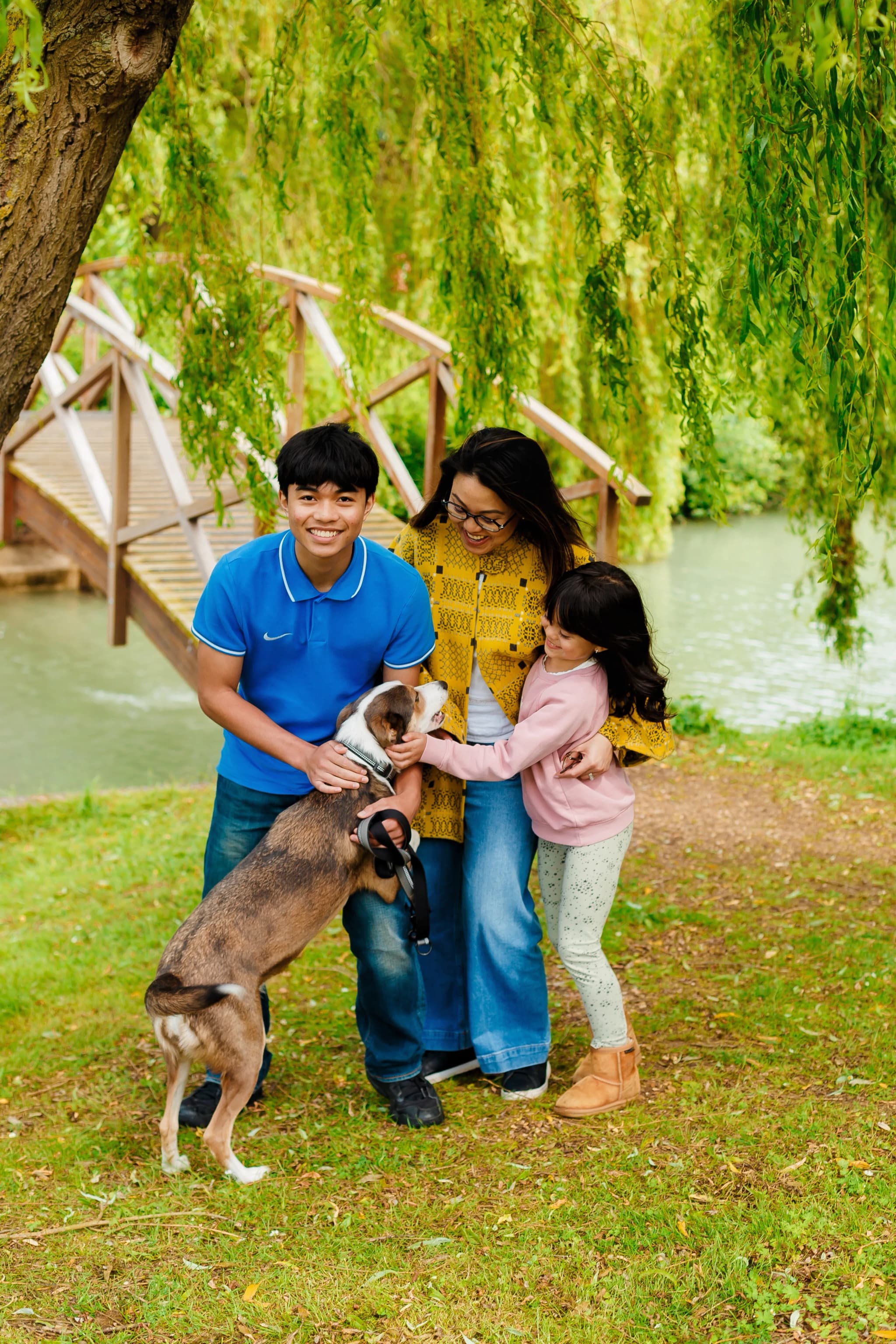
Instead, I almost always begin a children's session with free play. Running across a lawn, building something out of sticks, hiding behind a tree, climbing over a low wall — whatever the location naturally invites. This does two things at once. First, it burns off the nervous, unfamiliar energy that comes with meeting a new adult with a camera. Second, it produces a child who is physically settled rather than physically braced. Once a child has run to the point of mild exhaustion through a woodland, or charged back and forth across a beach a dozen times, they will often come and sit quietly in a parent's lap for a few minutes to catch their breath — and it is precisely those unguarded few minutes that tend to produce the portraits families end up printing large and hanging on the wall.
I photograph throughout that whole arc, not just at the calm end of it. Some of the strongest images from any session are mid-run, mid-laugh, mid-fall — genuinely in motion, slightly blurred at the edges, completely alive. Parents sometimes worry these will not be "proper" photographs because the child is not looking at the camera or standing still. In my experience these are usually the ones people come back to years later, because they show a child exactly as they were at that age, rather than as a posed version of themselves.
Games and Prompts That Actually Work
Over many sessions I have built up a small library of activities that reliably produce genuine joy and genuine movement, rather than a forced smile held for a countdown. Running toward the camera on a count of three almost always produces real laughter by the second or third attempt, once the novelty of "chasing" the photographer takes over. Picking up handfuls of leaves, grass, or sand and throwing them into the air works at almost any time of year and gives younger children something physical to do with their hands, which in turn relaxes their whole body. Whispering a secret into a parent's ear produces one of the most consistently lovely expressions I photograph — a private, soft smile that no amount of direct instruction could produce on demand.
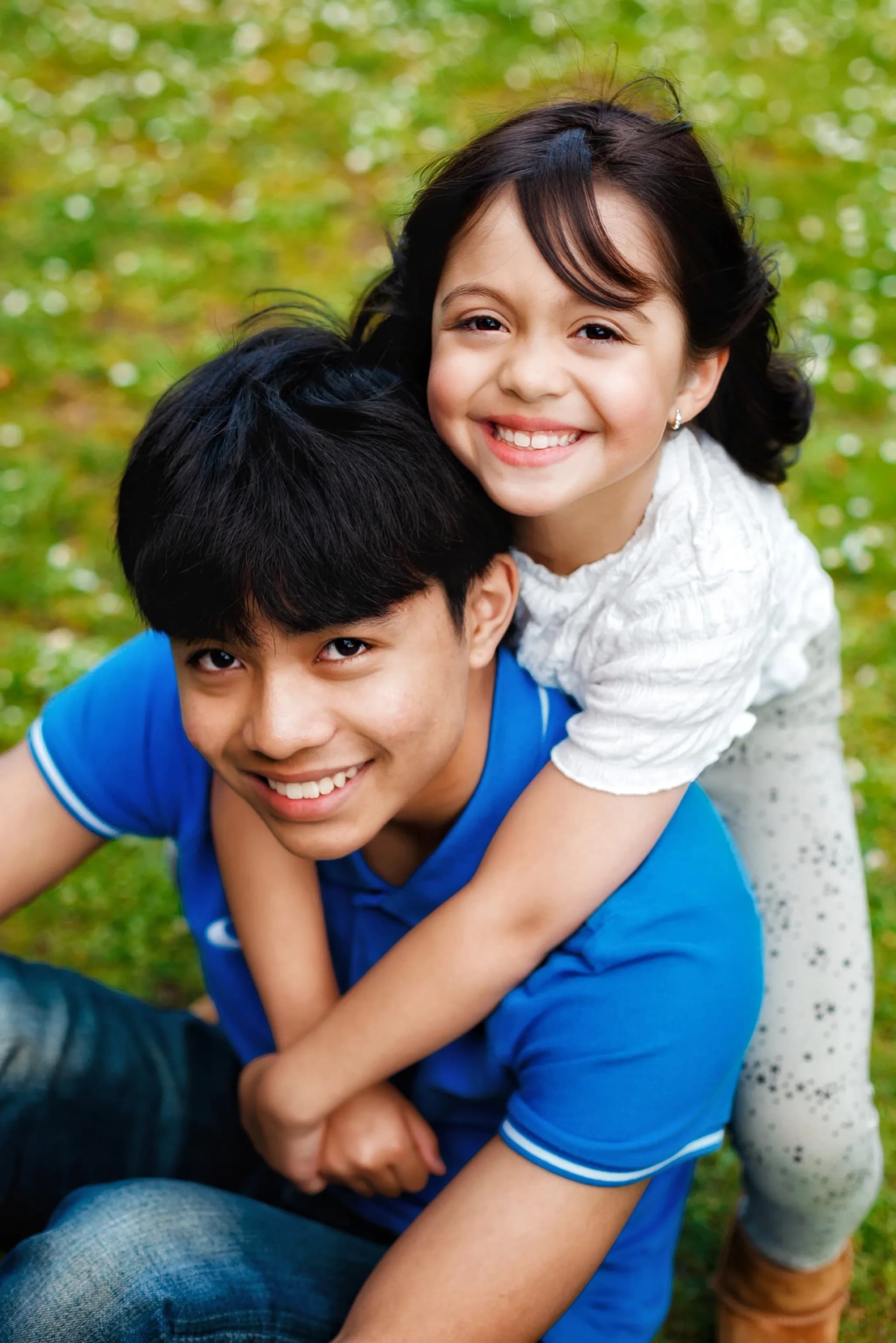
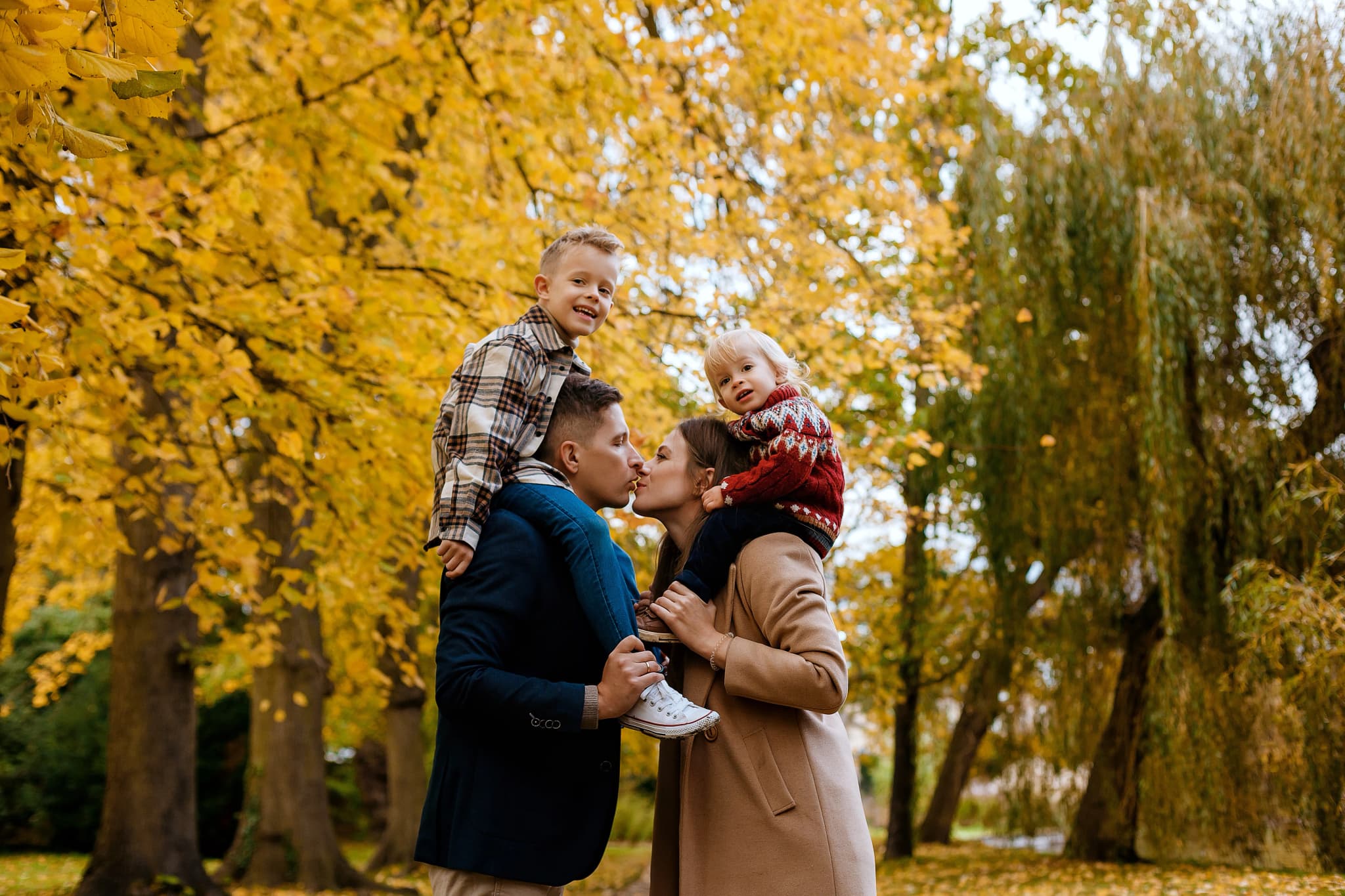
Piggyback rides and being swung or lifted by a parent generate genuine shrieks of delight from most children under about six, and the resulting images have an energy that static posing simply cannot match. Peek-a-boo through long grass or around a doorway works particularly well with toddlers, who find the game itself endlessly funny rather than performed. For slightly older children, a small challenge — jump from that step into Daddy's arms, see who can spin the fastest without falling over, race to that tree and back — gets them moving, competing, and laughing, and the photographs I take during the run-up and the aftermath of these little games are consistently stronger than anything posed.
The common thread in all of these is that the photographer's role is to create the conditions for a moment and then be ready for it, not to manufacture a position and wait for the child to arrive at it. When a session is experienced by the child as a series of small games rather than a series of instructions, genuine laughter and genuine connection follow on their own, and I simply need to be positioned well and paying attention when they happen.
A relaxed approach to family photography
I photograph families with children of every age, from newborns through to teenagers, always with the same underlying approach — unhurried, responsive to what is actually happening in front of me, and built around play rather than instruction. If you would like to talk through what a session with your family might look like, I would love to hear from you.
Get in touch about a family sessionThe Role Parents Play (It Is Bigger Than You Think)
The single most important thing parents can do during a children's session is to be genuinely present and engaged rather than anxiously monitoring whether their child is behaving correctly. Children, especially young ones, are exquisitely sensitive to their parents' emotional state, often far more sensitive than adults give them credit for. A parent who is tense, repeatedly correcting a child's expression, or visibly worried about how things are going will almost always produce a child who becomes tense, self-conscious, or resistant in response, even if no cross word has actually been said aloud. Children read tone of voice, posture, and facial expression long before they can articulate what they are reading, and they respond to it instinctively.
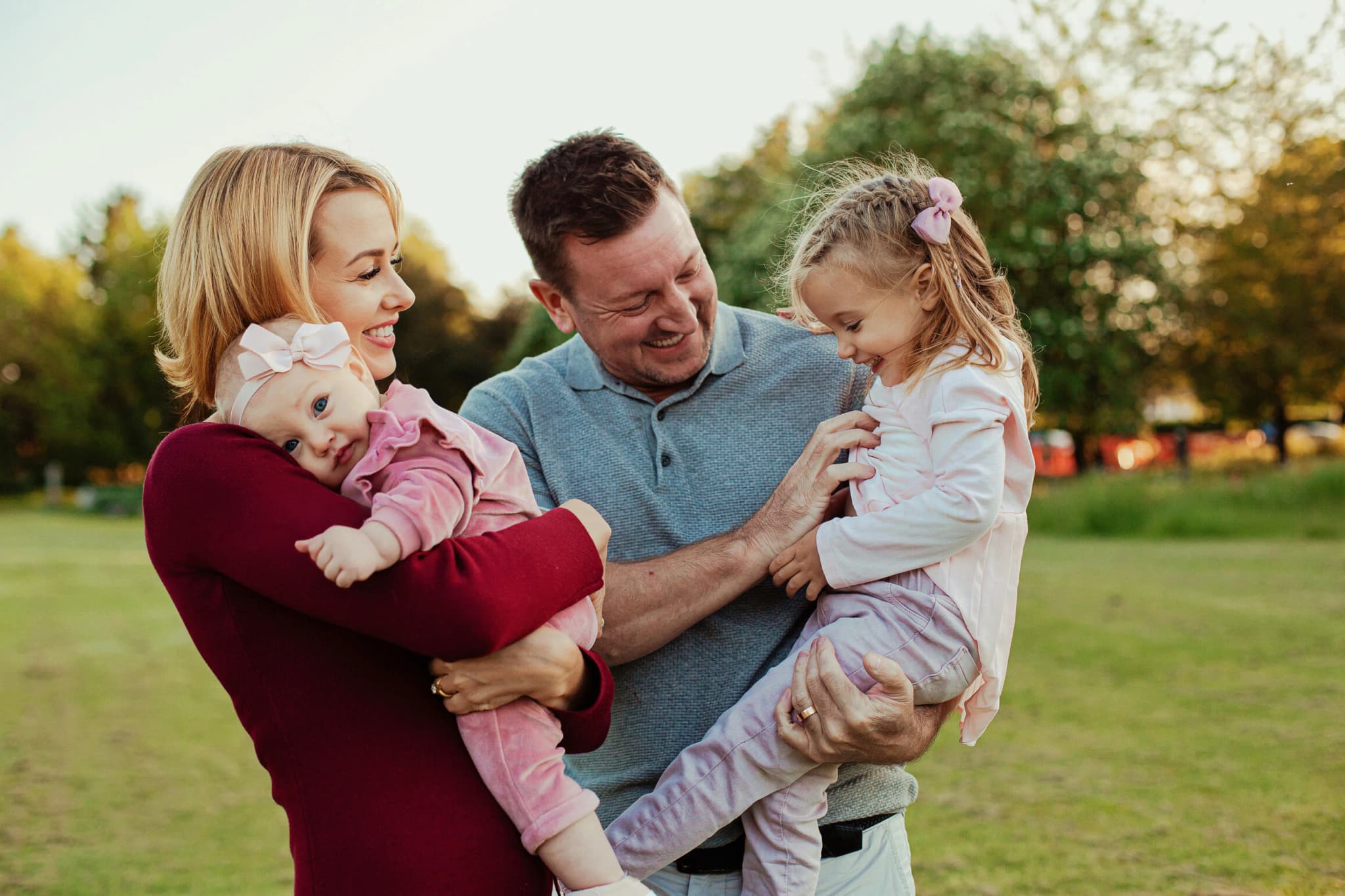
The opposite is just as true, and far more useful. If you can be present, playful, and genuinely unconcerned about perfection — trusting that I will find the real images within whatever chaos actually unfolds — your children will follow your energy rather than your instructions. Some of the best family images I have taken have come in the exact moment a parent gave up trying to arrange everyone neatly and simply started laughing at how ridiculous the attempt had become. That laugh, and the children's reaction to it, is usually a far better photograph than the tidy arrangement everyone had been aiming for in the first place.
This is also why I encourage parents not to narrate the session to their children beforehand as a performance to get through. Telling a child "we are going to have our photos taken and you need to smile nicely" sets up an expectation of scrutiny that most children respond to with exactly the stiffness parents are trying to avoid. Framing it instead as going somewhere to play, with a friendly adult who will be pointing a camera at them while they do, tends to produce children who arrive curious rather than braced.
Timing the Session Around Real Children, Not the Ideal Light
Photographers talk a great deal about golden hour and the beautiful light around sunrise and sunset, and for adult portraits and couples this is often genuinely the best time of day. For sessions involving young children, however, the light has to be balanced against the child's actual rhythms, and I would rather have slightly less dramatic light and a genuinely happy child than perfect light and a meltdown.
In practice this means avoiding the early afternoon window, roughly one until three o'clock, when many toddlers and young children are at their most tired and least cooperative, whatever the light is doing outside. It also means being cautious with very late evening sessions timed purely for sunset colour if there are young children in the group who reliably become emotional once they are overtired. Mid-morning, after breakfast and before the accumulated tiredness of the day sets in, is often the single most reliable window for families with children under five, and I steer families toward that slot whenever the choice is available.
Snacks are not a trick or a bribe in my view — they are simply a practical tool that acknowledges how children actually function. A short, unhurried snack break part way through a session gives the whole afternoon a natural pause, takes the pressure off, and very often resets a flagging child for a genuinely energetic second half. I build this into longer sessions as a matter of course, and I would always rather pause for ten minutes and come back to a happy child than push through and photograph a tired, tearful one because the schedule said we should be finished.
Letting Go of "Clean and Tidy"
Some of the most beautiful family photographs I have taken involve what most parents would, in the moment, describe as a mess: muddy knees, an ice-cream-smeared face, odd socks, wind-tangled hair, a shirt untucked from an afternoon of climbing. These are very often the images that become the favourite print in the house, the one that actually looks like childhood rather than a catalogue advertisement for childhood. A stiffly ironed outfit with not a hair out of place tends to photograph as exactly that — an outfit — rather than as a record of an actual afternoon with an actual child in it.
My advice at the start of every children's session is to put away the worry about clean clothes for the duration, within reason, and let whatever happens happen. If a child wants to sit in a puddle, jump in the mud, or roll down a grassy bank, I would much rather photograph that than spend the session steering them away from anything that might mark their clothes. The session is meant to be an authentic record of your family and your children as they actually are at this age, not a carefully maintained presentation of how you would like them to appear. That said, I am always happy to work with families who would prefer a tidier, more controlled aesthetic — it is entirely your session, and I will always ask beforehand what balance of spontaneity and polish feels right for you.
What to Bring and How to Prepare
A little preparation goes a long way toward a relaxed session. I generally suggest bringing a spare outfit for younger children in case of spills, muddy knees, or an unplanned puddle incident, along with snacks and water as already mentioned. A favourite small toy or comfort object can be genuinely useful for very young children as something to hold onto in an unfamiliar setting, though I would rather it stay in a parent's bag as a backup than dominate every frame.
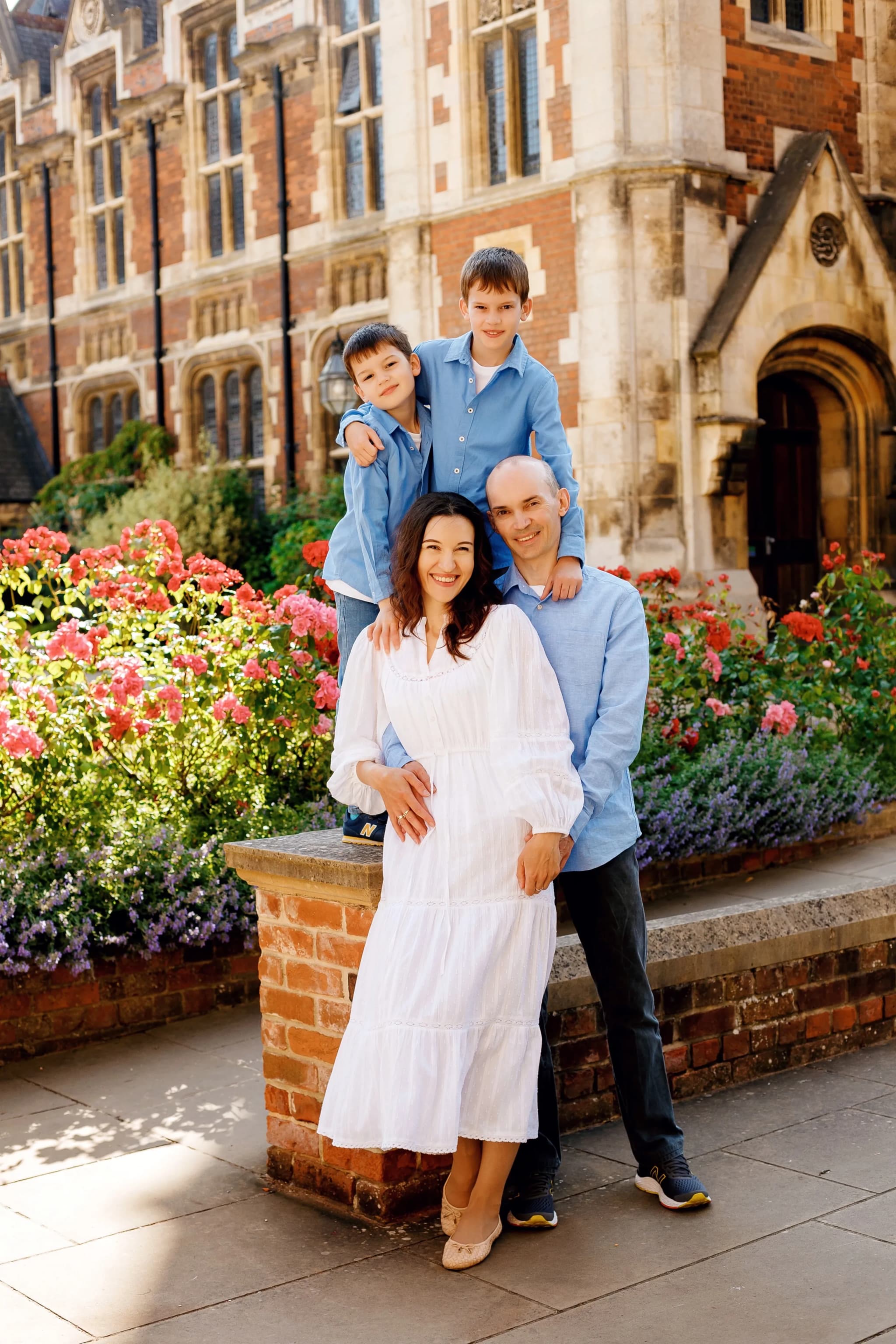
For clothing, I steer families toward coordinated rather than perfectly matching outfits — a shared colour palette across two or three complementary tones photographs far better than everyone in identical shirts, which tends to flatten a group of individuals into a uniform. Beyond that, comfort matters more than anything else. A child who is uncomfortable in a stiff new outfit or an unfamiliar pair of shoes will show that discomfort in every frame, however lovely the outfit looks on a hanger.
Finally, arrive with realistic expectations rather than a fixed shot list you are determined to achieve. I always ask beforehand about anything genuinely important to you — a grandparent who could not be there and needs a particular combination captured, a sibling relationship you especially want documented — and I build the session around those priorities. But the more flexible we can be around the specifics, the more room there is for the unplanned, unscripted moments that usually turn out to be the best photographs of the day.
Photographing children well is less a technical skill than a kind of patient attentiveness — watching for the moment a child forgets the camera is there, and being ready when it arrives. Every family and every child is different, and the approach that works for a shy three-year-old is not the approach that works for a boisterous group of siblings or a self-conscious eleven-year-old, which is exactly why I spend time before every session understanding your children rather than applying the same formula to everyone. If you would like to talk through what a relaxed, play-led session might look like for your family, get in touch and we can find a time and a setting that suits your children as they actually are.

Yana Skakun
Photographer · England
Professional wedding, family and portrait photographer based in England. Passionate about capturing authentic emotions and timeless moments.
About Yana →photographing children tipshow to photograph kidschildren photography techniquesnatural children portraits
Family Tips — Family Photography in Cambridge & England
Yana Skakun offers natural, relaxed family photography sessions across Cambridge, Cambridgeshire, and the wider East of England. Sessions take place outdoors — in parks, woodland, and countryside — or at your family home, wherever everyone feels most at ease. This guide — How to Photograph Children: Yana's Secrets for Genuine, Joyful Shots — is part of the photography journal: practical, experience-based advice drawn from real sessions across England. Whether you arrived searching for photographing children tips or how to photograph kids, the same care and attention shapes every session Yana photographs.
Family Photography sessions are available year-round, with bookings open across Cambridge, Ely, Huntingdon, Peterborough, and further afield — East England, London, the Midlands, and beyond. If you have specific questions about children photography techniques, mention it in your enquiry. Get in touch through the contact form above to check availability and discuss your session. Enquiries are welcomed from anywhere in the UK.
Frequently Asked Questions
How do you prepare children for a family photoshoot?+
Keep it low-key beforehand — don't over-explain or build it up too much. Make sure children are fed and rested. Bring a snack and a favourite toy or comfort item. Let them warm up at their own pace rather than forcing poses from the start. The best family photos happen when children forget there's a camera.
What should a family wear for photos?+
Choose a colour palette — 2–3 complementary tones — rather than identical outfits. Earthy neutrals, blues and greens, or cream and blush all work beautifully outdoors. Avoid large logos, neon colours, and very small patterns that create visual noise. Dress for the location and season, and make sure everyone is comfortable.
When is the best time for an outdoor family photoshoot?+
The golden hour — the first hour after sunrise or the last hour before sunset — gives the softest, warmest light. Overcast days are also excellent: the cloud acts as a natural diffuser, eliminating harsh shadows. Midday summer sun is the most challenging light to shoot in.
How long does a family photography session take?+
Most family sessions last 45–75 minutes. Mini sessions (30–40 minutes) work well for smaller families and toddlers who have shorter attention spans. Larger extended family groups may need 90 minutes to cover everyone comfortably.
How many photos will I get from a family photoshoot?+
A standard 60-minute family session typically produces 30–60 edited images delivered in a private online gallery. Mini sessions deliver 15–25 images. All images are colour-corrected, naturally edited, and ready for printing.
Continue Reading
Related Articles

Family Tips
Blended Family Photography: A Sensitive Guide to Step-Families, Co-Parenting & Group Portraits
11 min read · Read Article
Family Tips
Baby Milestone Photography: Capturing Every Stage of the First Year
10 min read · Read Article
Family Tips
Maternity Photography in England: When to Book, What to Wear & Where to Shoot
11 min read · Read Article
Get in Touch
Ready to Book Your Session?
Get in touch to discuss your vision — I'll reply within 24 hours.