Yana Skakun

Sibling Photography: Capturing the Relationship Between Brothers and Sisters
By Yana Skakun·1 August 2025·5 min read
The relationship between siblings is one of the longest and most formative of a human life — often beginning before conscious memory and enduring well beyond any other close relationship a person will have. Parents will outlive their usefulness as playmates, friends will drift in and out with schools and house moves, but a sibling is, for better and occasionally for worse, a fixed point across an entire childhood. Photographs that genuinely capture that relationship — not just children standing together and smiling on command, but the actual dynamic between them, the push and pull, the shared whisper, the spontaneous laughter that erupts from a joke only they understand — are among the most treasured images a family will ever own. Sibling photography, done well, is not really about producing a nice matching set of portraits for the wall. It is about noticing and preserving a relationship while it is still taking shape.
Why Sibling Photography Is Its Own Discipline
Photographing one child is largely a question of connecting with a single personality — finding what makes them laugh, what holds their attention, how to draw out a genuine expression rather than a rehearsed one. Photographing siblings together multiplies that challenge rather than simply adding to it. Every child in the frame is bringing their own mood, energy level, and relationship to the camera, and on top of that there is the relationship between the children themselves, which has its own weather system entirely separate from anyone's individual mood that day.
A photographer working with siblings needs to read all of that simultaneously — who is tired, who is showing off for the camera, who is quietly seeking a parent's attention, who has just been mildly wronged by a shove out of shot two minutes earlier and is not yet over it. None of this is solved by instruction. Telling three children to "stand together and smile" produces exactly the stiff, slightly resentful group photo that most families already have several versions of in a drawer somewhere. Genuine sibling photography works by creating situations — a shared task, a bit of gentle mischief, a race, a secret — and photographing what actually happens, rather than posing what should happen.
This is also why sibling sessions tend to run a little differently to solo portrait sessions in terms of pacing. I build in more time for children to settle around each other and around me before I expect anything resembling a considered image, and I keep a much wider net of options open throughout — if the two of you are not landing in front of a camera today, we go and do something else for five minutes and come back to it, rather than pushing through a mood that is not going to produce anything worth keeping.
Different Ages, Different Dynamics
One of the most interesting parts of sibling photography is how completely the dynamic changes depending on the ages involved, and a good session is planned around the specific combination of children in front of the camera rather than a single template applied to every family.
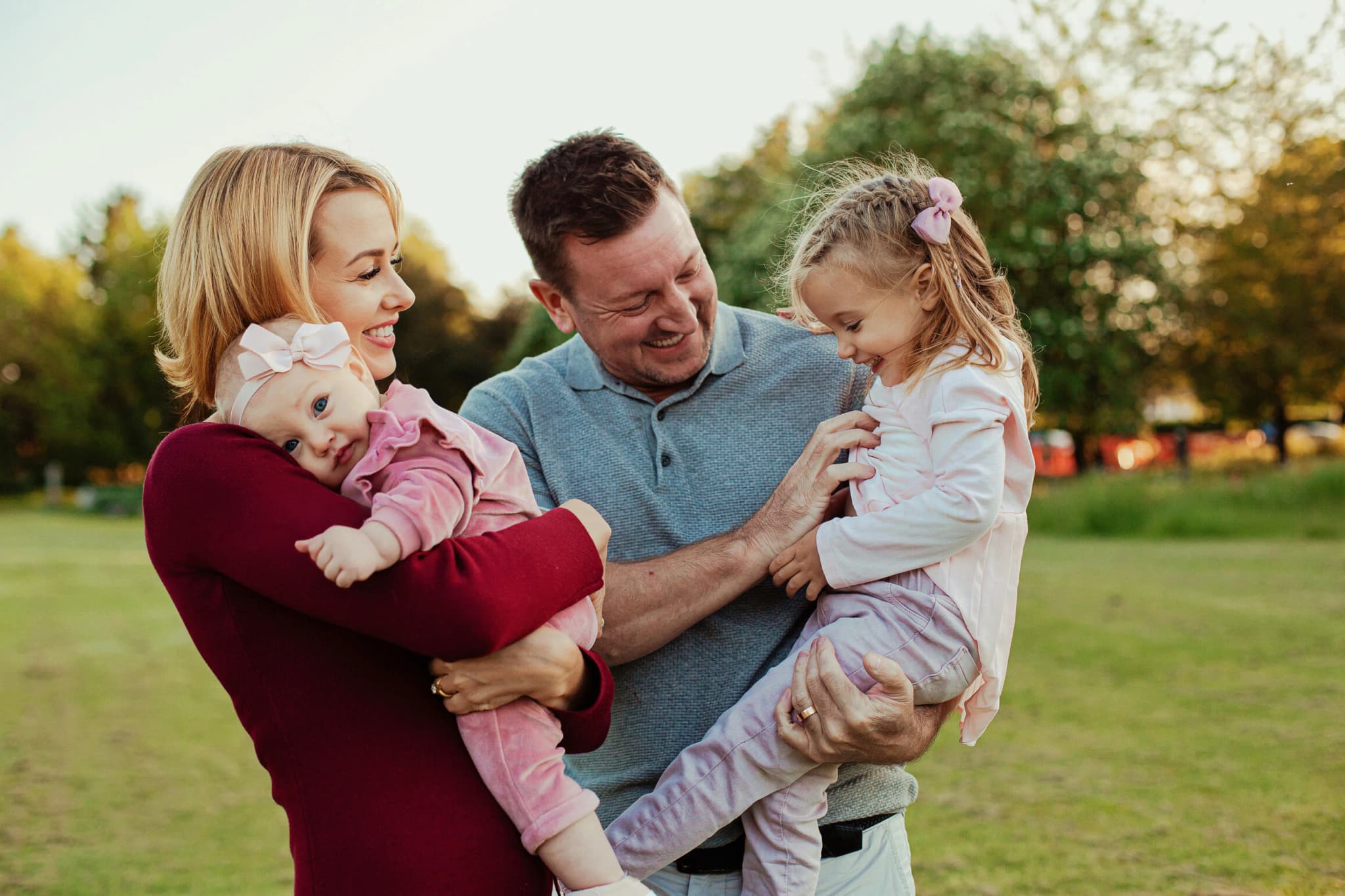
Toddler and baby. The combination of a toddler meeting a new sibling — or a slightly older child sitting alongside a very young infant — produces some of the most tender and genuinely emotional images in family photography. The size difference alone is striking through a lens: a two-year-old's hand next to a newborn's hand, a preschooler's careful, slightly uncertain touch on a baby's foot, the concentrated expression of a small child examining fingers or toes as though they are the most fascinating thing they have ever encountered. These are moments of real photographic weight, and they pass very quickly — within a matter of months the toddler is bigger, more confident, less careful, and the particular tenderness of that first tentative introduction has moved on to something else. Sessions at this stage tend to work best on the floor, at the children's level, with very little asked of either child beyond simply being close to one another.
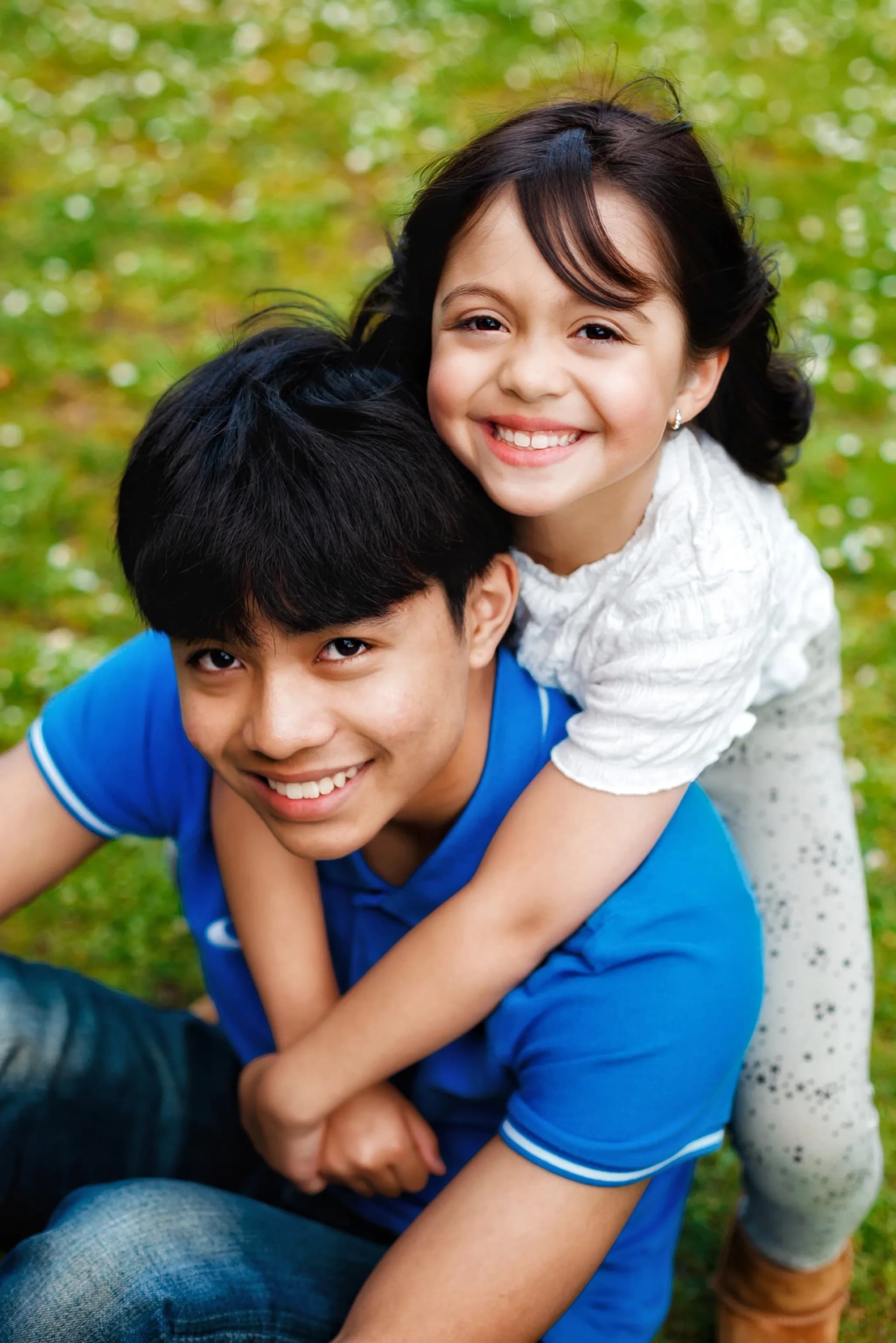
Primary-age siblings. Children roughly five to eleven together are full of energy, competitiveness, affection, and the particular physical ease with each other that siblings develop from years of shared bedrooms, shared car journeys, and shared everything else. This is the age range where genuine play produces the best images by a wide margin — games of chase, piggybacks, whispered jokes, minor negotiations over who goes first. I lean heavily on activity at this age: a ball, a den to build, leaves to throw, a race to a tree and back. The photographs that come out of genuine play at this age have an energy that no amount of posing could replicate, and they are usually the images parents come back to years later as the ones that really looked like their children at that time.
Wider age gaps. Where there is a significant gap — a teenager and a much younger sibling, for instance — the dynamic is different again, often built more around the older child's protectiveness or gentle teasing than around matched physical play. I find these sessions benefit from giving the older sibling a genuine role — carrying, showing, helping — rather than trying to put both children through the same activity, which rarely suits either of them.
Teenagers and older siblings. Siblings photographed together as teenagers or young adults, particularly in the years before one or more of them leaves home for university, work, or their own household, capture a relationship at a very specific point — still under one roof, still in daily contact, still operating with the shorthand and ease that comes from that proximity. These images tend to become more precious rather than less as time passes, once that daily closeness has naturally given way to separate lives, separate cities, and relationships that are still close but no longer built on simply being in the next room. Sessions with older siblings often work best with less direction rather than more — a walk, a conversation, genuine time together with the camera present but not dictating — because teenagers in particular are alert to anything that feels staged and photograph far better when they have forgotten the camera is there.
Handling Rivalry, Reluctance, and Real Moods
Every family with more than one child recognises the reality that siblings do not exist in a permanent state of harmony, and a photography session is not exempt from ordinary sibling friction. A child who has just been told to wait their turn, a child who did not want to come today, a child who is furious that their sibling got the swing first — these things happen during sessions, and pretending they will not is not a useful way to plan.
My approach is to work with the mood in the room rather than against it. If two children are mid-squabble, the honest photograph in that moment might not be the tender, arms-around-each-other image parents had in mind — but it is very often a photograph that captures something true, and families are frequently surprised by how much they end up loving an image of an eye-roll, a folded-arms standoff, or a moment of genuine exasperation, because it looks like their family rather than an idealised version of it. Where a mood is genuinely unworkable, the better move is almost always a short break — a snack, five minutes apart, a change of activity — rather than pushing through and hoping for the best, which tends to produce forced, unhappy images that nobody wants to look at afterwards.
Reluctant children are a related but distinct challenge. Some children, particularly as they head towards the tween years, simply do not want to be photographed, and no amount of enthusiasm from a photographer changes that on its own. In these cases I try to give the reluctant child a job rather than a pose — holding something, leading the way, being in charge of choosing the next location — which shifts their attention away from being looked at and towards doing something, and produces far more natural results than any direct request to smile ever could.
Sibling and family sessions in Cambridge
I photograph siblings of all ages and combinations across Cambridge and the wider county, both outdoors in parks and gardens and in a relaxed studio setting, tailoring the session to the personalities and ages actually in the room.
Enquire about a sibling sessionPreparing for the Session: Practical Advice for Parents
Timing matters more with multiple children than with one. I generally recommend scheduling sibling sessions for mid-morning, once everyone has had breakfast and is a reasonable distance from their next nap or meltdown, rather than late afternoon when tiredness and hunger from a full day have already set in. If nap schedules are involved for a younger sibling, it is almost always worth working the session time around that rather than hoping a tired toddler will hold it together for the sake of the appointment.
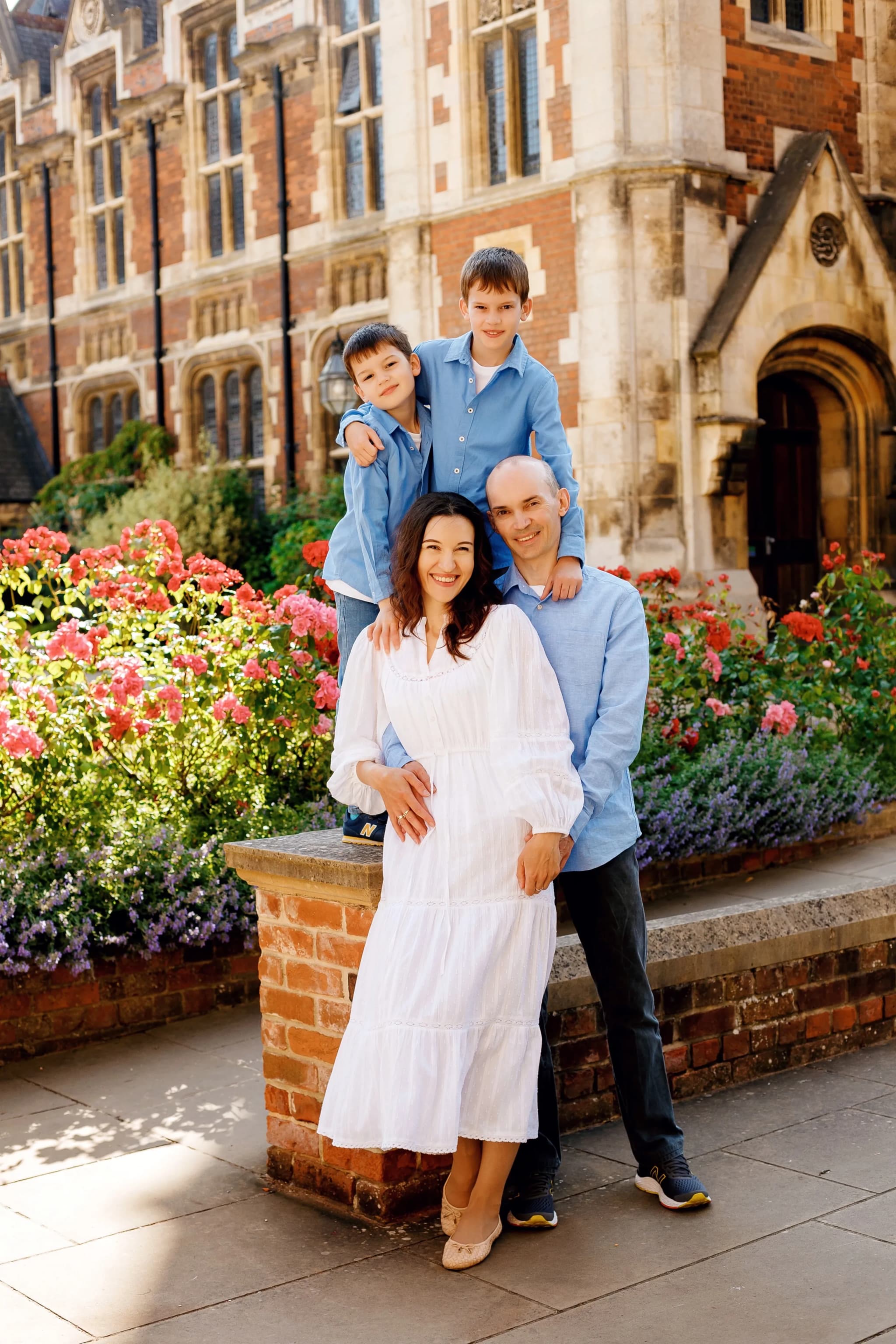
On clothing, coordinated rather than identical outfits tend to photograph best. Matching the children in exactly the same outfit can flatten the images and make the individual personalities harder to read; choosing complementary colours and tones within a similar palette — without insisting on identical patterns — keeps the group looking cohesive while still allowing each child to look like themselves. Comfortable clothing matters more than usual with siblings, since a session that involves genuine play and movement is not the place for anything restrictive, itchy, or precious enough that a parent is anxious about grass stains.
A familiar comfort object — a soft toy, a particular blanket — can be genuinely useful for a younger sibling who needs something to hold onto in an unfamiliar situation, and I am always happy to work it into images rather than asking for it to be put away. Screens, on the other hand, are worth leaving at home or in the car. A tablet or phone is an extremely effective way to calm a fractious child in the short term, but it also flattens their expression and attention in a way that is very difficult to photograph around, and the transition away from a screen once the session starts is often harder than not introducing one at all.
Perhaps the single most useful piece of advice I give parents booking a sibling session is to trust the photographer to lead once the session begins, rather than actively managing or directing the children throughout. Constant parental instruction — "look at the camera," "stand up straight," "stop doing that" — tends to raise tension rather than lower it, and children who are being directed by two adults at once (a parent and a photographer) rarely relax into anything genuine. I would always rather manage the children myself during the shooting itself and let parents step back into an observing, supportive role, stepping in only where needed for comfort or safety.
Locations: Outdoor, Studio, or Both
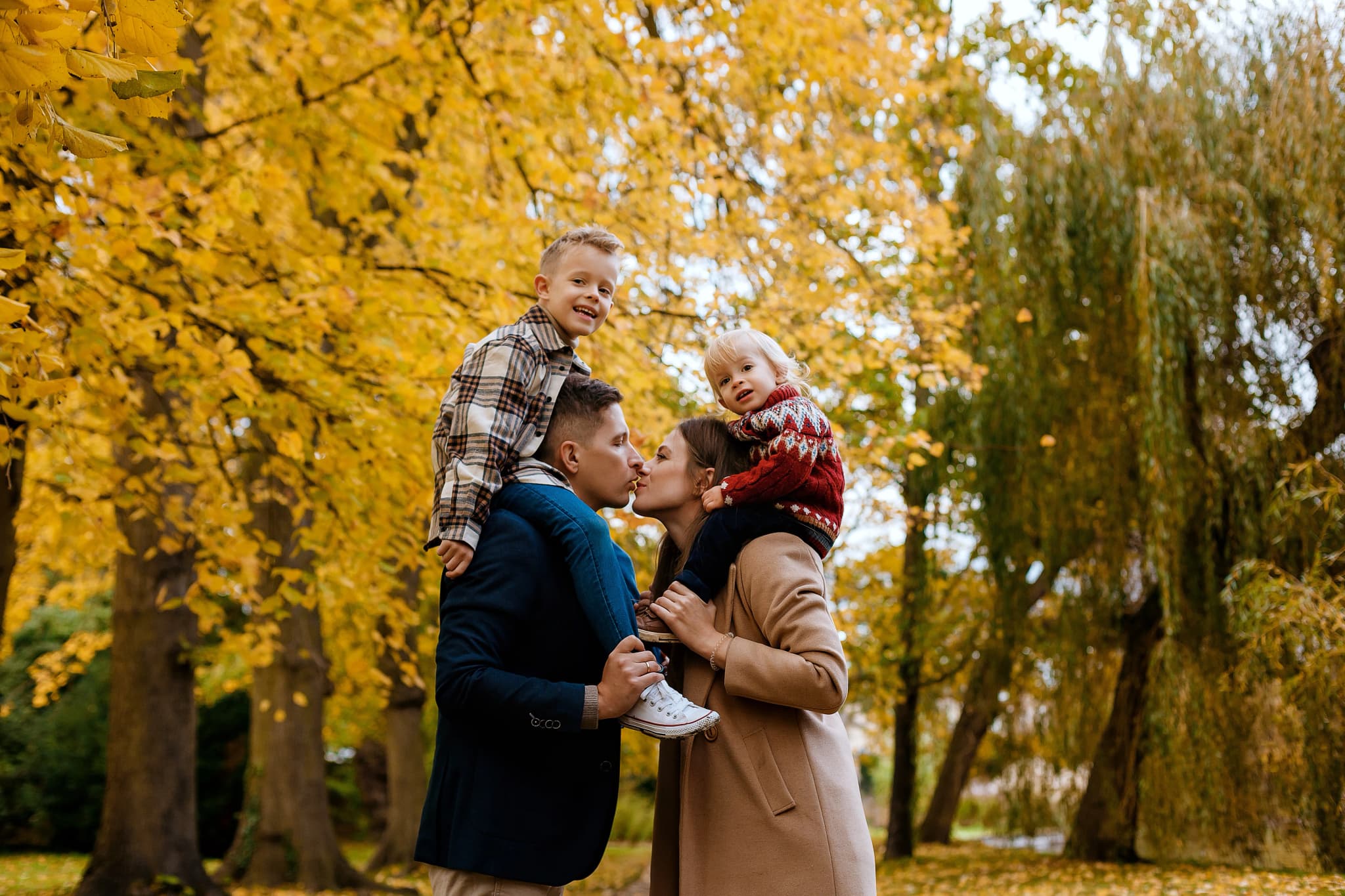
Sibling sessions work well in a number of settings and the right choice depends on the ages involved and what the family wants from the images. Outdoor locations — a favourite park, a garden, a stretch of woodland — give children room to run and play, which is particularly valuable for primary-age siblings where movement is where the best images come from. Cambridge has a good range of options for this: open green spaces close to the city, quieter park corners away from foot traffic, and softer natural light under tree cover that flatters skin tones far more than direct sun.
A studio setting offers a different and complementary set of advantages, particularly for families with a baby or very young toddler in the mix, where temperature control, a controlled and safe floor space, and consistent light matter more than a scenic backdrop. Studio sessions also work well when a family wants a cleaner, simpler set of images without the visual business of an outdoor location competing for attention, and they remove weather as a variable entirely, which matters a great deal when a session includes multiple children and a limited window before naps or patience run out.
Some families choose to combine the two across a single booking — a portion of the session outdoors for movement and energy, a portion in studio for a calmer, more classic set of portraits — and this can work particularly well for a wide sibling age range, giving the younger child a controlled environment while still letting older children have space to be themselves.
Why These Photographs Matter Over Time
Sibling relationships change more than almost any other family relationship across a childhood. The physical size gap between a toddler and a baby closes within a couple of years and never returns; the easy, tumbling closeness of two primary-age children shifts as they move through different schools, different friendship groups, and different interests; the daily proximity of teenage siblings under one roof gives way, eventually, to separate addresses and a relationship maintained by choice rather than circumstance. None of these changes are sudden and none of them are marked by an obvious before-and-after moment while they are happening — which is exactly why photographs taken along the way matter so much in hindsight. A family looking back on sibling images from several years earlier is very rarely looking at posed, formal portraits with any real emotional pull; they are looking at the photograph of one sibling laughing at something the other just did, or a hand resting on a shoulder, or a private joke caught mid-telling, and recognising, often with some surprise, exactly how the relationship used to look at that particular age.
If you have children who could do with a set of images that capture how they actually are together — rather than how they look when told to stand still and smile — I would love to help. Sessions can be tailored around nap schedules, energy levels, and whatever combination of ages and personalities your family happens to have, whether that means an outdoor session full of running and leaves, a calmer studio setting, or a mixture of both. Get in touch to talk through what would suit your children best, and we can find a time and a setting that gives them the space to simply be themselves in front of the camera.

Yana Skakun
Photographer · England
Professional wedding, family and portrait photographer based in England. Passionate about capturing authentic emotions and timeless moments.
About Yana →sibling photography UKbrothers and sisters portrait Cambridgesibling session Cambridgeshirechildren siblings photography UKsibling portraits outdoor Cambridgefamily sibling photos UK
Family Tips — Family Photography in Cambridge & England
Yana Skakun offers natural, relaxed family photography sessions across Cambridge, Cambridgeshire, and the wider East of England. Sessions take place outdoors — in parks, woodland, and countryside — or at your family home, wherever everyone feels most at ease. This guide — Sibling Photography: Capturing the Relationship Between Brothers and Sisters — is part of the photography journal: practical, experience-based advice drawn from real sessions across England. Whether you arrived searching for sibling photography uk or brothers and sisters portrait cambridge, the same care and attention shapes every session Yana photographs.
Family Photography sessions are available year-round, with bookings open across Cambridge, Ely, Huntingdon, Peterborough, and further afield — East England, London, the Midlands, and beyond. If you have specific questions about sibling session cambridgeshire, mention it in your enquiry. Get in touch through the contact form above to check availability and discuss your session. Enquiries are welcomed from anywhere in the UK.
Frequently Asked Questions
How do you prepare children for a family photoshoot?+
Keep it low-key beforehand — don't over-explain or build it up too much. Make sure children are fed and rested. Bring a snack and a favourite toy or comfort item. Let them warm up at their own pace rather than forcing poses from the start. The best family photos happen when children forget there's a camera.
What should a family wear for photos?+
Choose a colour palette — 2–3 complementary tones — rather than identical outfits. Earthy neutrals, blues and greens, or cream and blush all work beautifully outdoors. Avoid large logos, neon colours, and very small patterns that create visual noise. Dress for the location and season, and make sure everyone is comfortable.
When is the best time for an outdoor family photoshoot?+
The golden hour — the first hour after sunrise or the last hour before sunset — gives the softest, warmest light. Overcast days are also excellent: the cloud acts as a natural diffuser, eliminating harsh shadows. Midday summer sun is the most challenging light to shoot in.
How long does a family photography session take?+
Most family sessions last 45–75 minutes. Mini sessions (30–40 minutes) work well for smaller families and toddlers who have shorter attention spans. Larger extended family groups may need 90 minutes to cover everyone comfortably.
How many photos will I get from a family photoshoot?+
A standard 60-minute family session typically produces 30–60 edited images delivered in a private online gallery. Mini sessions deliver 15–25 images. All images are colour-corrected, naturally edited, and ready for printing.
Continue Reading
Related Articles

Family Tips
Blended Family Photography: A Sensitive Guide to Step-Families, Co-Parenting & Group Portraits
11 min read · Read Article
Family Tips
Baby Milestone Photography: Capturing Every Stage of the First Year
10 min read · Read Article
Family Tips
Maternity Photography in England: When to Book, What to Wear & Where to Shoot
11 min read · Read Article
Get in Touch
Ready to Book Your Session?
Get in touch to discuss your vision — I'll reply within 24 hours.