Yana Skakun

Snowdrop Season Family Photography: Late Winter Light and Natural Settings
By Yana Skakun·9 July 2025·4 min read
There is a brief window in late January and February when the English countryside offers something genuinely unexpected: carpets of white flowers spreading across woodland floors and garden borders, weeks before anything else has stirred. Snowdrops are the first sign that winter is loosening its grip, and long before daffodils or blossom arrive, ancient woodlands and historic estates across Cambridgeshire turn silver-white with drifts of Galanthus moving gently in the cold air. It is a season most people associate with dog walks and National Trust car parks rather than family photography, and that is precisely what makes it so rewarding. A snowdrop family session has an atmosphere unlike any other time of year — soft, quiet, and touched with the particular hopefulness of something beginning.
Why Snowdrop Season Works So Well for Family Portraits
Most family photography sessions in the UK cluster around a handful of predictable moments — high summer, golden autumn, the run-up to Christmas. Snowdrop season sits entirely outside that pattern, and the images it produces look different as a result. There is no competing colour to distract from faces: the palette is white, silver-grey, and the soft brown of bare woodland floor, which means clothing, expressions, and the relationships between family members carry the photograph rather than a busy, colourful background.
The scale of a good snowdrop display also does something that few other settings manage. Where a single flowerbed reads as a garden feature, a woodland floor covered from path edge to tree line in drifts of white flowers reads as a landscape in its own right. Photographing a family within that landscape, rather than in front of it, produces images with a sense of place and season that is hard to replicate at any other time of year.
There is also a practical benefit that families often do not anticipate: February woodland is quiet. Visitor numbers are far lower than during the spring blossom or fresh-green months that follow, which means fewer people wandering into the background of a shot and a calmer, less crowded feel to the whole session.
Where to Find Snowdrops Near Cambridge
Cambridgeshire and the surrounding counties have several genuinely excellent snowdrop displays, and knowing which one suits a particular family — and when it will be at its best — is most of the work of planning a good session.
Anglesey Abbey, near Lode just outside Cambridge, is the standout location in the region. The National Trust winter garden there holds one of the finest snowdrop collections in England, with hundreds of named varieties planted through informal drifts along winding paths, and the estate typically runs a dedicated Snowdrop Festival through February when the display is at its peak. The scale of planting means there is always a stretch of path with flowers close enough to the edge to work with, and the wider parkland gives options if the main winter garden feels busy.
Wimpole Estate offers a different character — more open woodland walks rather than a curated winter garden, with snowdrops spreading naturally through the parkland trees. It suits families who want a slightly wilder, less manicured backdrop, and the estate's wider grounds give plenty of options if the light or the crowds on a given day suggest moving elsewhere.
Audley End, just over the county border near Saffron Walden, has a strong show of snowdrops in the kitchen garden and the wider grounds, with the added benefit of the house itself as an occasional backdrop for a handful of frames. Beyond the well-known estates, a number of smaller private gardens across Cambridgeshire and Hertfordshire open specifically for snowdrop displays in February, often through the National Garden Scheme, and some of these lesser-known gardens offer a more intimate, uncrowded setting than the larger estates.
Whichever location suits a family best, advance planning matters here more than almost any other season I photograph. Most of these venues require a paid entry ticket and some require separate permission or a booking for photography, particularly if a tripod or additional equipment is involved. I handle this coordination as part of booking a session, but families should know that spontaneous, same-week visits are rarely possible during peak snowdrop weeks.
The Light in Late Winter
February light is one of the more underrated tools available to a photographer working outdoors in England, and it is a large part of why snowdrop sessions produce images with such a distinctive feel. The sun stays low in the sky through the entire day at this time of year, never climbing to the harsh overhead position it reaches in summer. That low angle gives light a directional, gently warm quality even in the middle of the day, with soft shadows that add shape and depth to a face rather than flattening it.
Overcast days, which are common in February, work particularly well for this kind of session. Cloud cover acts as a natural diffuser, spreading the light evenly and removing the risk of harsh highlights or deep shadows — something that matters especially when photographing pale white flowers, which can easily blow out to featureless white under strong direct sun. A soft grey February sky, which might feel unpromising for a walk, is often close to ideal for photography.
There is also a structural advantage that is easy to overlook. With the woodland canopy completely bare of leaves in February, far more light reaches the ground than at any other point in the year. Paradoxically, this makes late winter one of the better seasons for photographing on a woodland floor rather than one of the more difficult ones — there is no dappled shade to fight against, and the flowers themselves are lit clearly and evenly.
What to Wear for a Snowdrop Session
Because the setting itself is so pale — white flowers, grey-brown woodland floor, often a grey February sky — clothing has more influence over the final look of a snowdrop session than it does in almost any other setting I photograph in.
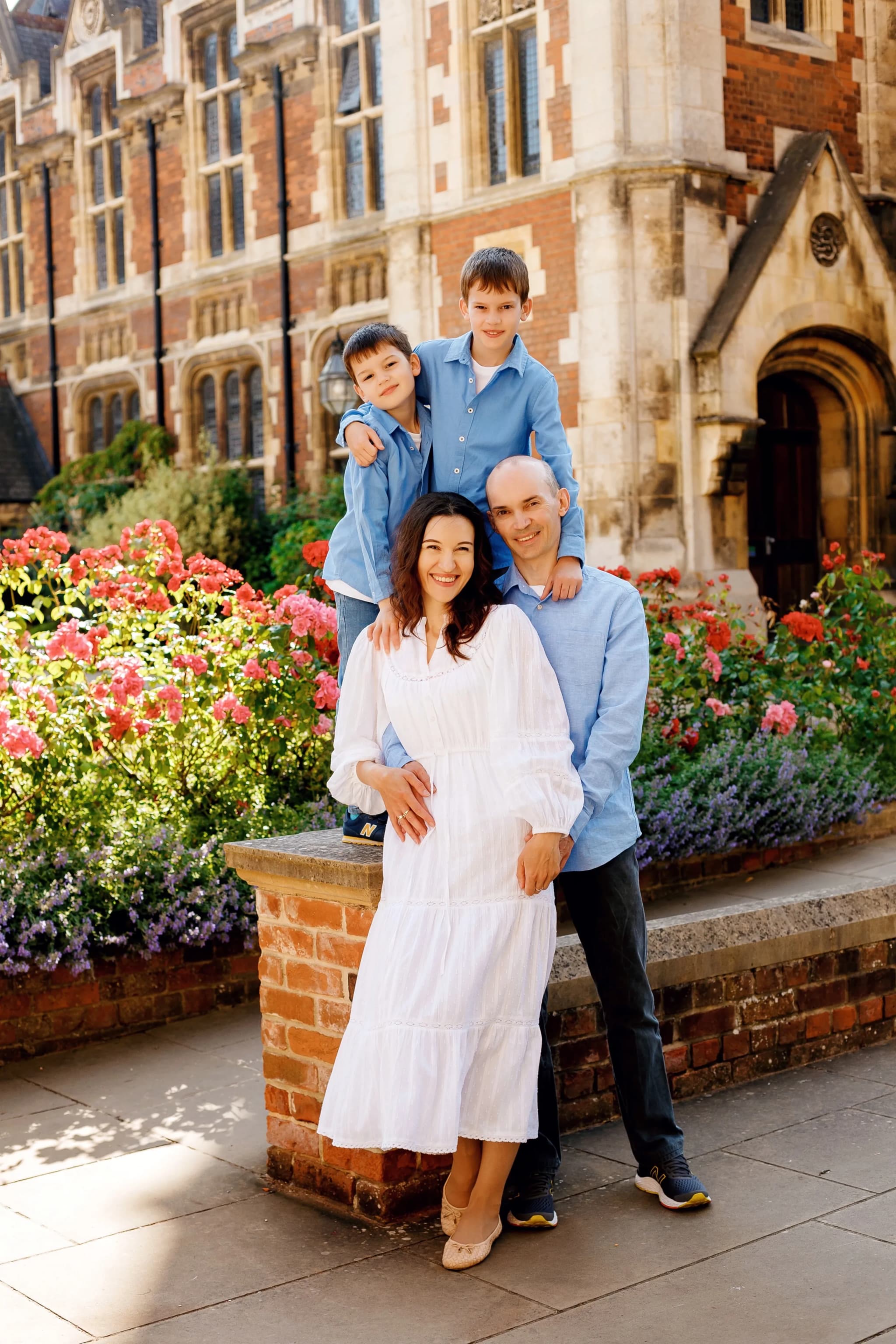
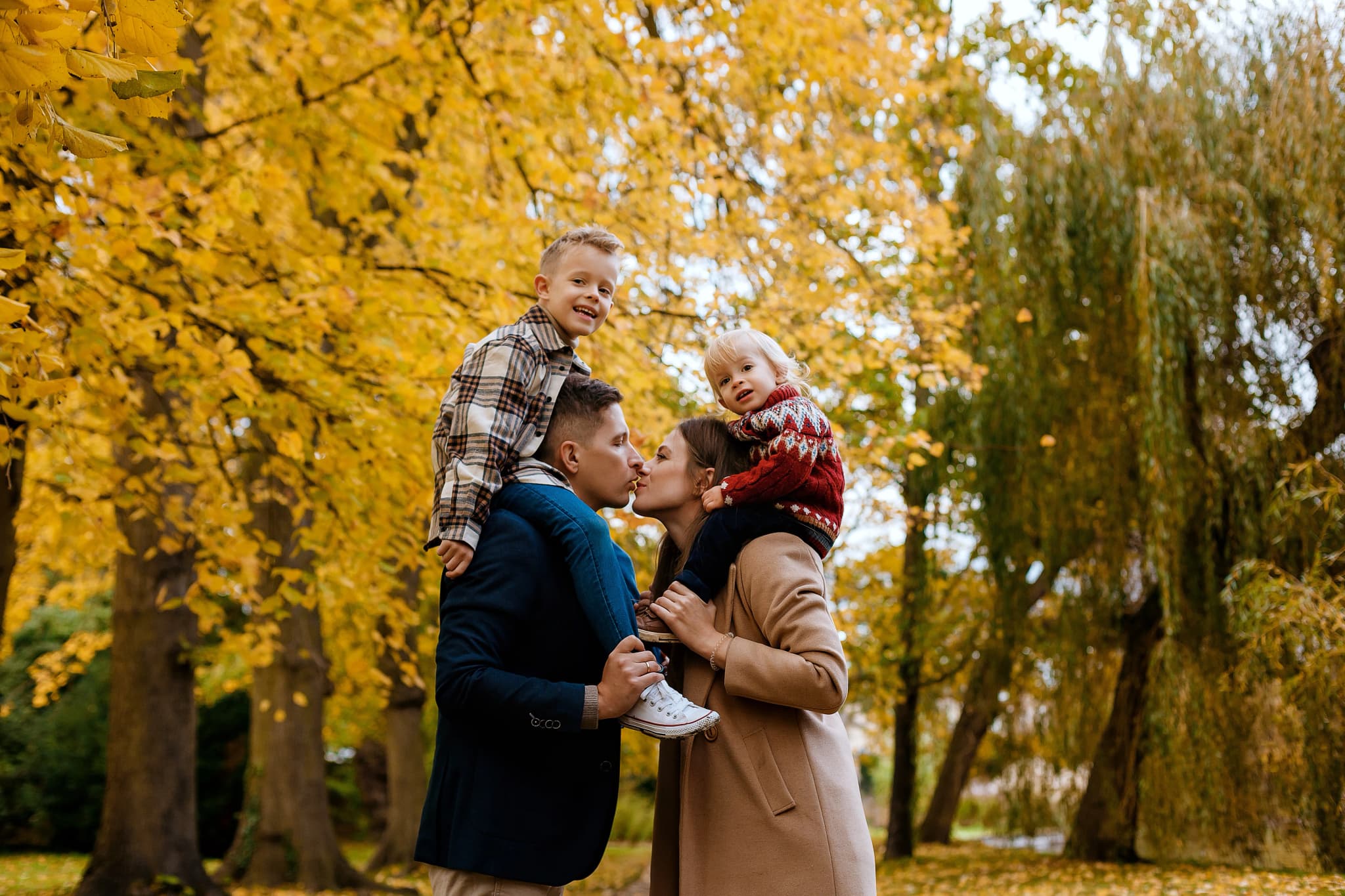
Soft, warm neutral tones work beautifully against this backdrop: camel, oat, soft blush, warm grey, and cream all sit gently within the palette rather than fighting it, and photograph as calm and cohesive as a family group. For families who want a little more definition against the white flowers, rich jewel tones provide a flattering contrast — deep teal, burgundy, bottle green, or a warm rust all stand out clearly without ever looking out of place in a winter garden.
Avoid bright white or very pale ivory for more than one person in the group, since it tends to disappear into the flowers rather than stand out against them, and avoid busy patterns or anything with large printed logos, both of which distract from faces in a setting that is otherwise so quiet and simple. Layering matters enormously in February — a coat that can come off for some frames and go back on between shots keeps everyone comfortable through a session that typically runs thirty to forty-five minutes outdoors in genuinely cold weather. Scarves and knitted accessories in those same warm or jewel tones add texture without adding visual noise.
Footwear deserves particular thought for this season. Woodland floors in February, even on a dry day, are often wet, muddy, or uneven underfoot from months of winter rain, and wellies or sturdy walking boots are close to essential for anyone who wants to move freely rather than tiptoe carefully around puddles. For young children especially, wellies mean freedom to crouch down among the flowers, walk off the main path a little, and generally behave the way children behave outdoors, rather than being constantly steered back onto a narrow dry strip of path.
Children in Snowdrop Sessions
Snowdrop sessions suit young children particularly well, for a reason that has nothing to do with photography technique and everything to do with scale. Snowdrops sit low to the ground, at roughly the height a toddler or young child naturally exists at, while adults have to crouch or kneel to get close to them. That difference in perspective produces some of the most genuine, unposed images of the whole season — a small child crouching to look closely at a flower, walking carefully along a path edged with white, or simply sitting down in the middle of a drift because it is there and it is interesting.
I rarely ask children to look at the camera during this kind of session. Far better images come from letting them explore — pointing out a particularly large patch of flowers, asking what colour they think the petals are, or simply giving them space to wander a little way ahead of the rest of the family along the path. The resulting photographs carry a genuine curiosity and stillness that is very different from a posed group shot, and they tend to be the images families return to years later.
For babies and very young children, a woodland pram walk that pauses naturally at a good patch of flowers works better than trying to set up a formal seated portrait on cold, damp ground. For older children and teenagers, who can sometimes find flower photography a little precious for their taste, giving them a role — leading a younger sibling by the hand, pointing something out, walking slightly ahead — keeps the images natural and avoids the reluctant, arms-crossed expression that a straightforward "stand there and smile" request tends to produce.
A short, well-timed season
Snowdrop displays across Cambridgeshire typically peak for only a few weeks each February, and the best light and the best flowers rarely align for long. Booking early means securing a date while venue access and timing can still be planned properly.
Ask about snowdrop session availabilityPlanning a Snowdrop Session: Timing and Practicalities
Timing is the single most important variable in a successful snowdrop session, and it is also the hardest to pin down months in advance. The exact peak shifts from year to year depending on the winter's weather — a mild January can bring flowers on early, while a hard, prolonged frost can delay them by a couple of weeks. I watch the main Cambridgeshire locations closely from early January onwards and confirm exact session dates only once the display is genuinely close to its best, which usually falls somewhere between the last week of January and the last week of February.
Because of that narrow, weather-dependent window, I keep the number of snowdrop sessions I offer each year deliberately limited, and I build some flexibility into confirmed bookings so a date can shift by a few days either way if the flowers are running early or late. Families booking a snowdrop session should expect this kind of flexibility to be part of the process, rather than a fixed date locked in many weeks ahead regardless of conditions on the ground.
Sessions themselves run for around thirty to forty-five minutes at a single chosen location, which is enough time to move through several different spots within a woodland or garden without the whole outing becoming a long, tiring trek for young children in cold weather. As with all of my family sessions, a full set of edited images is delivered afterwards via an online gallery, with the option to add prints or wall art once the images have been chosen.
Snowdrop season is easy to miss entirely — it arrives quietly, in the coldest, greyest part of the year, and is gone again within a matter of weeks. But for families willing to wrap up warm and head out into a February woodland, it offers something genuinely unusual: soft, flattering light, a landscape that will not look the same again until next year, and a set of family photographs that feel completely distinct from the summer garden portraits and Christmas card images most people already have. If you would like to know when the Cambridgeshire snowdrops are expected to peak this year and whether a session date is available, get in touch and I will keep you updated as the season develops.



Yana Skakun
Photographer · England
Professional wedding, family and portrait photographer based in England. Passionate about capturing authentic emotions and timeless moments.
About Yana →snowdrop family photography UKwinter family photography Cambridgewoodland family photos UKlate winter family portraits UKsnowdrop woodland photography UKFebruary family photography UK
Family Tips — Family Photography in Cambridge & England
Yana Skakun offers natural, relaxed family photography sessions across Cambridge, Cambridgeshire, and the wider East of England. Sessions take place outdoors — in parks, woodland, and countryside — or at your family home, wherever everyone feels most at ease. This guide — Snowdrop Season Family Photography: Late Winter Light and Natural Settings — is part of the photography journal: practical, experience-based advice drawn from real sessions across England. Whether you arrived searching for snowdrop family photography uk or winter family photography cambridge, the same care and attention shapes every session Yana photographs.
Family Photography sessions are available year-round, with bookings open across Cambridge, Ely, Huntingdon, Peterborough, and further afield — East England, London, the Midlands, and beyond. If you have specific questions about woodland family photos uk, mention it in your enquiry. Get in touch through the contact form above to check availability and discuss your session. Enquiries are welcomed from anywhere in the UK.
Frequently Asked Questions
How do you prepare children for a family photoshoot?+
Keep it low-key beforehand — don't over-explain or build it up too much. Make sure children are fed and rested. Bring a snack and a favourite toy or comfort item. Let them warm up at their own pace rather than forcing poses from the start. The best family photos happen when children forget there's a camera.
What should a family wear for photos?+
Choose a colour palette — 2–3 complementary tones — rather than identical outfits. Earthy neutrals, blues and greens, or cream and blush all work beautifully outdoors. Avoid large logos, neon colours, and very small patterns that create visual noise. Dress for the location and season, and make sure everyone is comfortable.
When is the best time for an outdoor family photoshoot?+
The golden hour — the first hour after sunrise or the last hour before sunset — gives the softest, warmest light. Overcast days are also excellent: the cloud acts as a natural diffuser, eliminating harsh shadows. Midday summer sun is the most challenging light to shoot in.
How long does a family photography session take?+
Most family sessions last 45–75 minutes. Mini sessions (30–40 minutes) work well for smaller families and toddlers who have shorter attention spans. Larger extended family groups may need 90 minutes to cover everyone comfortably.
How many photos will I get from a family photoshoot?+
A standard 60-minute family session typically produces 30–60 edited images delivered in a private online gallery. Mini sessions deliver 15–25 images. All images are colour-corrected, naturally edited, and ready for printing.
Continue Reading
Related Articles

Family Tips
Blended Family Photography: A Sensitive Guide to Step-Families, Co-Parenting & Group Portraits
11 min read · Read Article
Family Tips
Baby Milestone Photography: Capturing Every Stage of the First Year
10 min read · Read Article
Family Tips
Maternity Photography in England: When to Book, What to Wear & Where to Shoot
11 min read · Read Article
Get in Touch
Ready to Book Your Session?
Get in touch to discuss your vision — I'll reply within 24 hours.