Yana Skakun
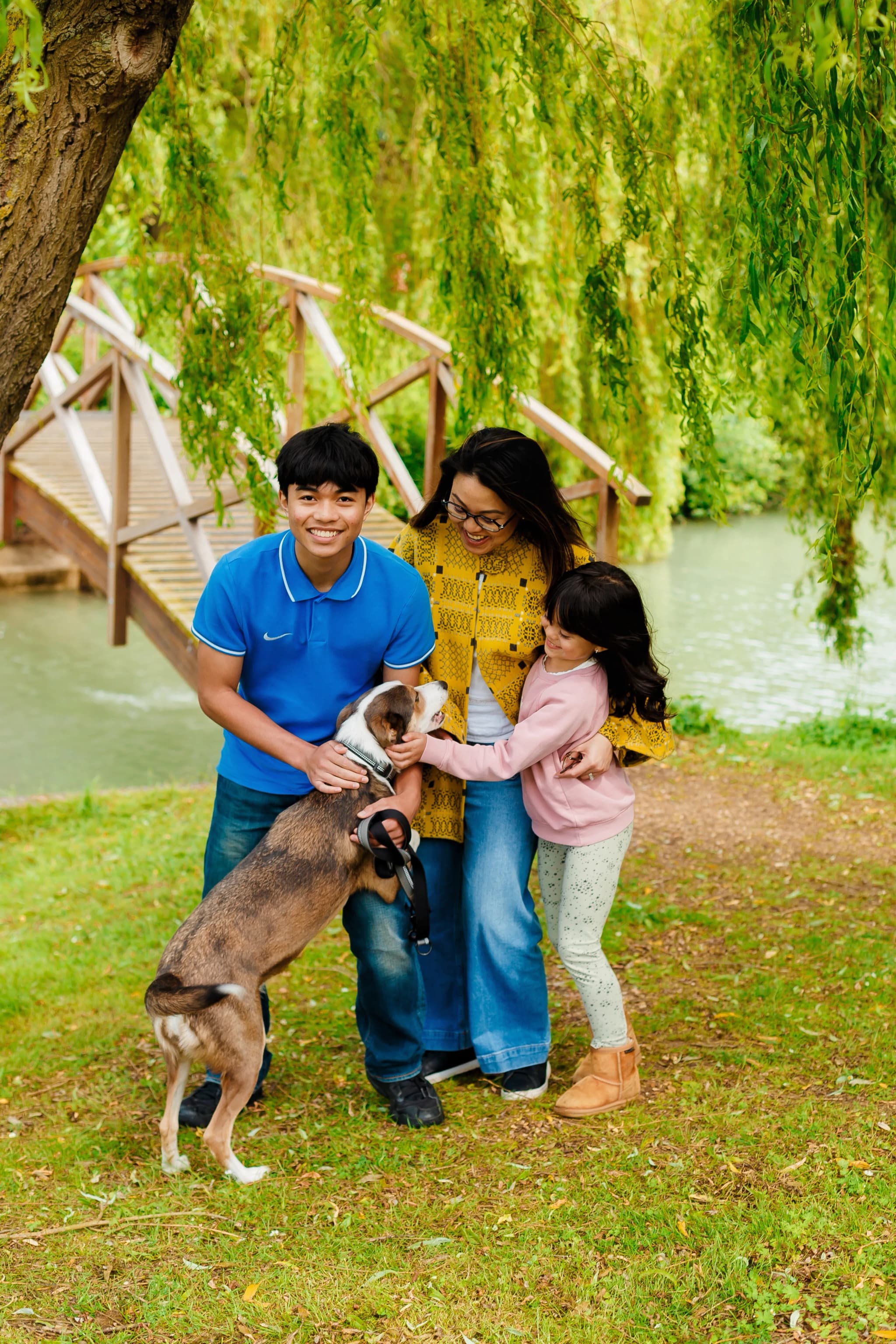
Spring Family Photography: Cherry Blossoms, Fields & Fresh Air
By Yana Skakun·12 March 2026·7 min read
Spring is the most actively beautiful season for family photography in England — and also the most demanding to plan around. Unlike autumn, where the colour builds gradually over several weeks and gives you a reasonably generous window to work with, spring arrives in a series of short, overlapping bursts. Blossom appears and falls within days. Bluebells carpet a wood for perhaps a fortnight and then fade to green. Rapeseed fields turn from stubble to solid yellow in the space of a week. Anyone photographing families through the spring has to work differently than at any other time of year: watching conditions closely, staying ready to move quickly, and building genuine flexibility into how sessions are booked rather than pinning everything to a single date months in advance. This guide sets out how I plan and run spring family sessions around Cambridge, what each stage of the season actually looks like on the ground, and what you can do as a family to get the most from a booking in a season that rewards preparation and punishes rigid planning.
Reading the Spring Calendar: What Happens When
Spring in Cambridgeshire does not move in a straight line so much as in a sequence of overlapping acts, and knowing the rough order of them is the first step to planning a session around the right one. Blackthorn is usually the earliest woodland blossom, showing white flowers on bare black branches from mid-March, often before anything else has properly woken up. Cherry and ornamental blossom follows from late March into mid-April, varying by several weeks depending on how mild or cold the preceding winter has been. Daffodils are at their best through most of March and into early April along riversides and college grounds. Bluebells generally arrive in the final third of April and hold into the first week or so of May in a good year. Apple and pear blossom in the county's orchards tends to peak in the last third of April, overlapping with the tail end of bluebell season. Rapeseed fields build through late April and are usually at their most saturated yellow through May. Tulips in more formal garden settings can be timed anywhere from late March to late April depending on the variety and the site.
None of these dates are fixed, and that is the entire point of this section. A warm February and March can pull blossom forward by two to three weeks; a cold, wet spring can hold everything back by a similar margin. This is why I never recommend booking a spring session against a single calendar date chosen in December. Instead, I ask families to commit to a season and a rough fortnight, and then I confirm the actual day once conditions are close to peak. It is a different way of planning than a wedding or a fixed-date event, but it is the only approach that reliably gets you photographs of blossom actually in bloom rather than photographs of bare branches or brown petals on the ground.
Cherry and Apple Blossom Sessions
Cherry blossom is the image most people have in mind when they think of spring family photography — soft pink canopies overhead, petals drifting down, that particular quality of diffused pink-tinted light underneath a full bloom. It is also the shortest-lived of all the spring conditions I photograph in. A cherry tree in full flower typically holds that peak for seven to ten days before the first proper wind or rain strips a significant portion of the blossom. In a mild, still spring it can last slightly longer; in a windy one it can be gone in three or four days. This is why cherry blossom sessions are booked with the least amount of lead time of anything in the spring calendar — I ask families to be available on a few days' notice once the trees at a given site start to open.
Cambridge itself has genuinely good cherry blossom locations. Several of the college grounds have mature ornamental cherry trees, Jesus Green and Midsummer Common have avenues that come into bloom in sequence rather than all at once (useful, because it extends the usable window across the city), and there are notable blossom streets in the residential areas north of the river. Further out, the orchards on the lower slopes of the Gog Magog Hills give a more rural, open setting with blossom trees set among grass rather than against pavement and railings.
Apple and pear blossom follows two to three weeks behind cherry, usually landing in the final third of April into the first days of May. It is a gentler, whiter and more understated blossom than cherry, generally lasting a little longer in bloom, and the settings tend to be working or former orchards rather than ornamental street trees — long grass, old gnarled trunks, a more textured and less manicured backdrop. Cambridgeshire, Hertfordshire, and Essex all have surviving traditional orchards within reasonable driving distance of Cambridge, and I have several I return to each year because the trees are old enough to have real character and the ground beneath them is left to grow naturally rather than being mown flat.
Bluebell Woods
If cherry blossom is the most photographed spring subject, bluebell woodland is, in my view, the most genuinely beautiful setting the English countryside offers a family photographer all year. A mature bluebell carpet under a light woodland canopy has a colour and depth that is almost impossible to replicate with any other backdrop — a haze of blue-violet stretching into the distance under fresh green leaves that have only just opened. The peak window is narrow, usually the final third of April into the first week of May, and it depends heavily on the particular wood: some sites bloom slightly earlier because of soil and aspect, others slightly later.
Cambridgeshire has several ancient woodland sites with genuine, undisturbed bluebell carpets rather than the thin, scattered bluebells you sometimes find in newer or more disturbed woodland. Ancient woodland is important here specifically — bluebells spread very slowly and a dense carpet is usually a sign that a wood has had continuous tree cover for centuries, which also tends to mean better light structure and more established underlying paths to work with. I have several such sites west and south-west of Cambridge that I monitor from early April onwards, checking each one every few days as the season builds so that I know precisely which wood is closest to peak when a family's date approaches.
Timing within the day matters as much as timing within the season for bluebell photography. Early morning, roughly before ten o'clock, is when horizontal light still reaches down through the canopy and lights the bluebells from the side, giving them depth and a slight glow. By midday, with the sun high overhead, the light in the wood flattens and the same bluebells can look comparatively dull and shadowless in photographs. I schedule bluebell sessions accordingly — almost always mid-morning, sometimes early rather than late, which does mean asking families to commit to an earlier start than they might for a summer evening session, but the difference in the final images is worth the earlier alarm.
Rapeseed Fields and Open Landscape
Rapeseed is the one spring subject that does not depend on delicate timing or narrow blooming windows in the same way blossom and bluebells do. Cambridgeshire is heavily arable, and fields of oilseed rape turn a solid, saturated yellow across large parts of the county from late April through May, sometimes holding well into early June depending on the variety planted and the weather. It is a bold, graphic background rather than a soft or intimate one — a flat sea of yellow meeting a big open sky, which suits families who want something striking and unmistakably seasonal rather than something delicate.
Working around a working farm crop does come with some practical caveats worth being upfront about. Rapeseed fields are private agricultural land, and I only photograph along public footpaths and field margins with clear right of access, never trampling into a standing crop. The best images tend to use the field as a backdrop from the edge rather than placing the family inside it, and late afternoon light with the sun low and slightly behind gives the yellow a warmth and glow that midday sun does not. It photographs particularly well with older children and teenagers, who tend to enjoy the boldness of the setting more than toddlers do.
A note on timing and booking
Because every stage of spring moves at its own pace and can shift by two or three weeks either way depending on the year's weather, I ask families to book a date range rather than a single fixed day, and I confirm the exact session date once I can see conditions approaching peak at the relevant site. Getting in touch in late February or early March, before the season starts moving, gives the most flexibility for choosing which stage of spring — blossom, bluebells, or rapeseed — suits your family best.
Enquire about spring sessionsWhat to Wear for Spring Photographs
Spring backgrounds run from soft pinks and whites through fresh green to saturated yellow, which is a wider range of background colour than any other season offers, so clothing choices benefit from a little more thought than usual. Against blossom and bluebells, I generally steer families towards soft neutrals and muted tones — cream, soft sage, dusty blue, pale grey, warm white — which sit alongside the pastel and green tones of the setting rather than fighting them. Against rapeseed, the strong yellow of the field means clothing does better staying away from yellow itself and leaning into contrasting or complementary tones instead — navy, denim blue, white, or soft grey all read cleanly against a solid yellow background without competing with it.
Layers matter more in spring than in almost any other season because of the temperature swing across a session. A spring morning in Cambridgeshire can sit at five to eight degrees Celsius at the start of a bluebell session and climb noticeably by the time the session ends an hour or so later. A light jumper or cardigan that can come off partway through, or a jacket that adds texture to the earlier images and comes off for the later ones, works well practically and photographically. For children, avoid anything too obviously branded or logo-heavy, since it dates the images and pulls attention away from faces, and bring a spare layer or two in the car regardless of the forecast — spring weather in England changes its mind more often than any other season.
Session Length, What You Receive, and How Booking Works
A spring family session typically runs for around an hour at a single location, which is enough time to work through a mix of posed and candid moments, group and individual images, without asking small children to hold focus for longer than they reasonably can. Edited images are delivered through an online gallery, usually within a couple of weeks of the session, with the option to select a smaller favourites set as well as download the full collection, and prints or wall art can be ordered directly from the gallery afterwards if you would like something physical rather than only digital files.
Booking a spring session works a little differently from booking at other times of year, precisely because of the timing issues described above. I ask for a deposit to secure a place within a given fortnight's window rather than a single date, and I stay in contact by text or email as that window approaches, confirming the actual day once I can see the blossom, bluebells, or rapeseed at the chosen site reaching the point I want them at. This does ask a little more flexibility of families than a fixed booking would, but it is the only way I have found to reliably deliver images of spring conditions genuinely at their best, rather than a week early or a week too late.
Spring rewards patience and quick movement in almost equal measure — patience to wait for the right conditions rather than forcing a session on a date chosen months ahead, and quick movement once those conditions actually arrive. Cambridgeshire has a genuinely good spread of blossom streets, ancient bluebell woodland, and open arable landscape within easy reach of the city, and across a typical spring I can usually find something close to peak somewhere in the county even in a year where the season overall runs early or late. If you would like a family session built around this year's blossom, bluebells, or rapeseed, get in touch in late winter or early spring and I will keep you updated as conditions develop and help find a date that works for the setting you have in mind.

Yana Skakun
Photographer · England
Professional wedding, family and portrait photographer based in England. Passionate about capturing authentic emotions and timeless moments.
About Yana →spring family photographyspring family photo sessionbluebell family photos UKcherry blossom family photoshoot
Family Tips — Family Photography in Cambridge & England
Yana Skakun offers natural, relaxed family photography sessions across Cambridge, Cambridgeshire, and the wider East of England. Sessions take place outdoors — in parks, woodland, and countryside — or at your family home, wherever everyone feels most at ease. This guide — Spring Family Photography: Cherry Blossoms, Fields & Fresh Air — is part of the photography journal: practical, experience-based advice drawn from real sessions across England. Whether you arrived searching for spring family photography or spring family photo session, the same care and attention shapes every session Yana photographs.
Family Photography sessions are available year-round, with bookings open across Cambridge, Ely, Huntingdon, Peterborough, and further afield — East England, London, the Midlands, and beyond. If you have specific questions about bluebell family photos uk, mention it in your enquiry. Get in touch through the contact form above to check availability and discuss your session. Enquiries are welcomed from anywhere in the UK.
Frequently Asked Questions
How do you prepare children for a family photoshoot?+
Keep it low-key beforehand — don't over-explain or build it up too much. Make sure children are fed and rested. Bring a snack and a favourite toy or comfort item. Let them warm up at their own pace rather than forcing poses from the start. The best family photos happen when children forget there's a camera.
What should a family wear for photos?+
Choose a colour palette — 2–3 complementary tones — rather than identical outfits. Earthy neutrals, blues and greens, or cream and blush all work beautifully outdoors. Avoid large logos, neon colours, and very small patterns that create visual noise. Dress for the location and season, and make sure everyone is comfortable.
When is the best time for an outdoor family photoshoot?+
The golden hour — the first hour after sunrise or the last hour before sunset — gives the softest, warmest light. Overcast days are also excellent: the cloud acts as a natural diffuser, eliminating harsh shadows. Midday summer sun is the most challenging light to shoot in.
How long does a family photography session take?+
Most family sessions last 45–75 minutes. Mini sessions (30–40 minutes) work well for smaller families and toddlers who have shorter attention spans. Larger extended family groups may need 90 minutes to cover everyone comfortably.
How many photos will I get from a family photoshoot?+
A standard 60-minute family session typically produces 30–60 edited images delivered in a private online gallery. Mini sessions deliver 15–25 images. All images are colour-corrected, naturally edited, and ready for printing.
Continue Reading
Related Articles

Family Tips
Blended Family Photography: A Sensitive Guide to Step-Families, Co-Parenting & Group Portraits
11 min read · Read Article
Family Tips
Baby Milestone Photography: Capturing Every Stage of the First Year
10 min read · Read Article
Family Tips
Maternity Photography in England: When to Book, What to Wear & Where to Shoot
11 min read · Read Article
Get in Touch
Ready to Book Your Session?
Get in touch to discuss your vision — I'll reply within 24 hours.