Yana Skakun
What to wear for your family photos: A complete guide for English families
By Yana Skakun·5 March 2025·7 min read
Of all the questions I get asked in the run-up to a family session, "what should we wear?" comes up more often than anything else — more than questions about weather, location, or what to do with a toddler who refuses to sit still. It makes sense. Outfits are the one part of the session that families feel fully in control of, and it is also the part that is easiest to get wrong if you are guessing rather than working from a plan. The good news is that dressing well for photographs is not about matching everyone in identical shirts or spending a fortune on new clothes. It is about a handful of practical decisions — colour, texture, layering, and comfort — that, once you understand the logic behind them, make choosing outfits considerably less stressful than most families expect.
Coordinate, Do Not Match
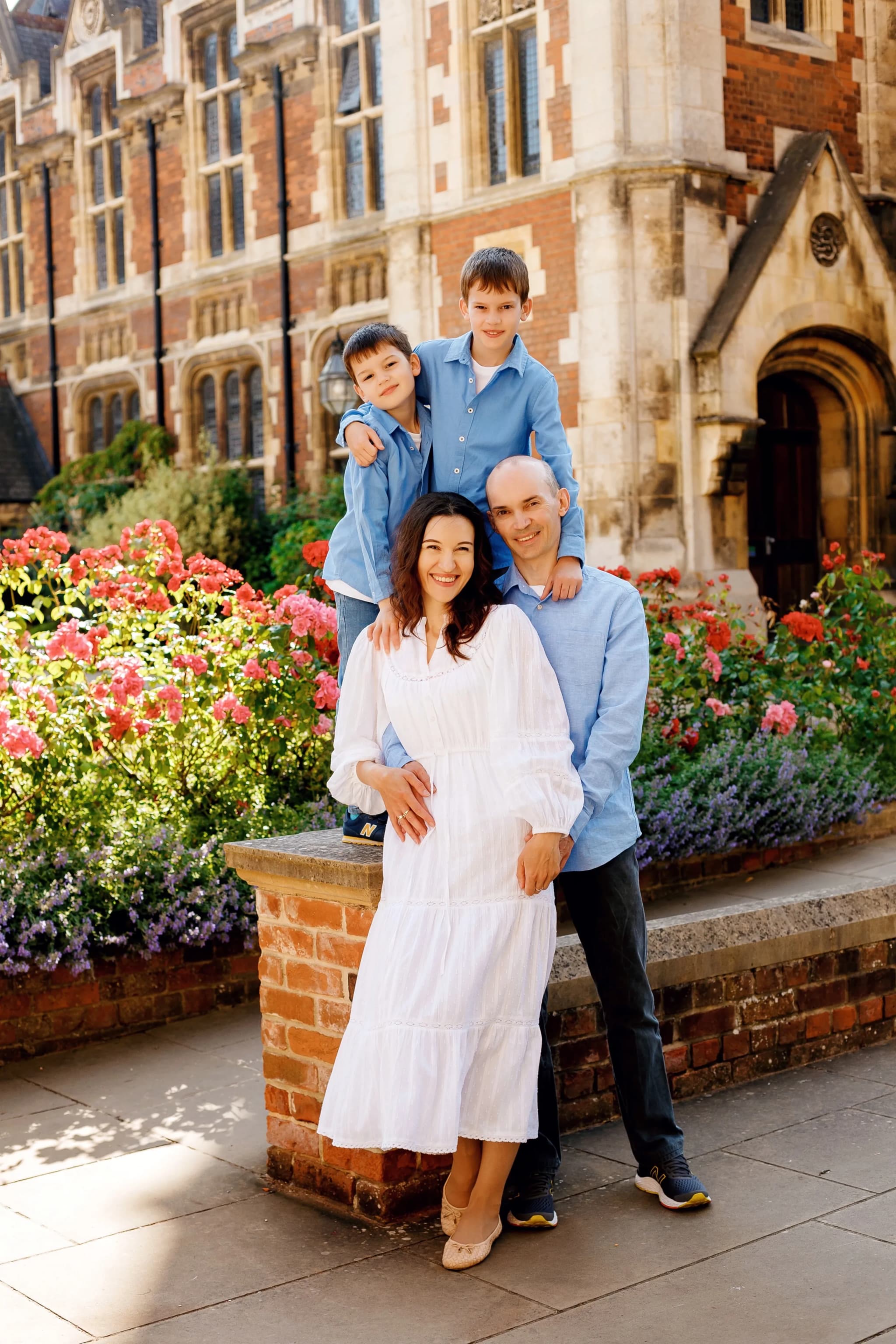
The single most common mistake I see is families arriving in genuinely identical outfits — four people in the same shade of blue shirt, for example. It is a well-meaning instinct, but in a photograph it tends to read as stiff and staged rather than natural, and it flattens the group into a block of one colour instead of a set of individuals who happen to belong together. What works far better is coordination: choosing a palette of two or three colours that sit comfortably alongside each other, then letting each person wear something within that palette in whatever combination suits them.
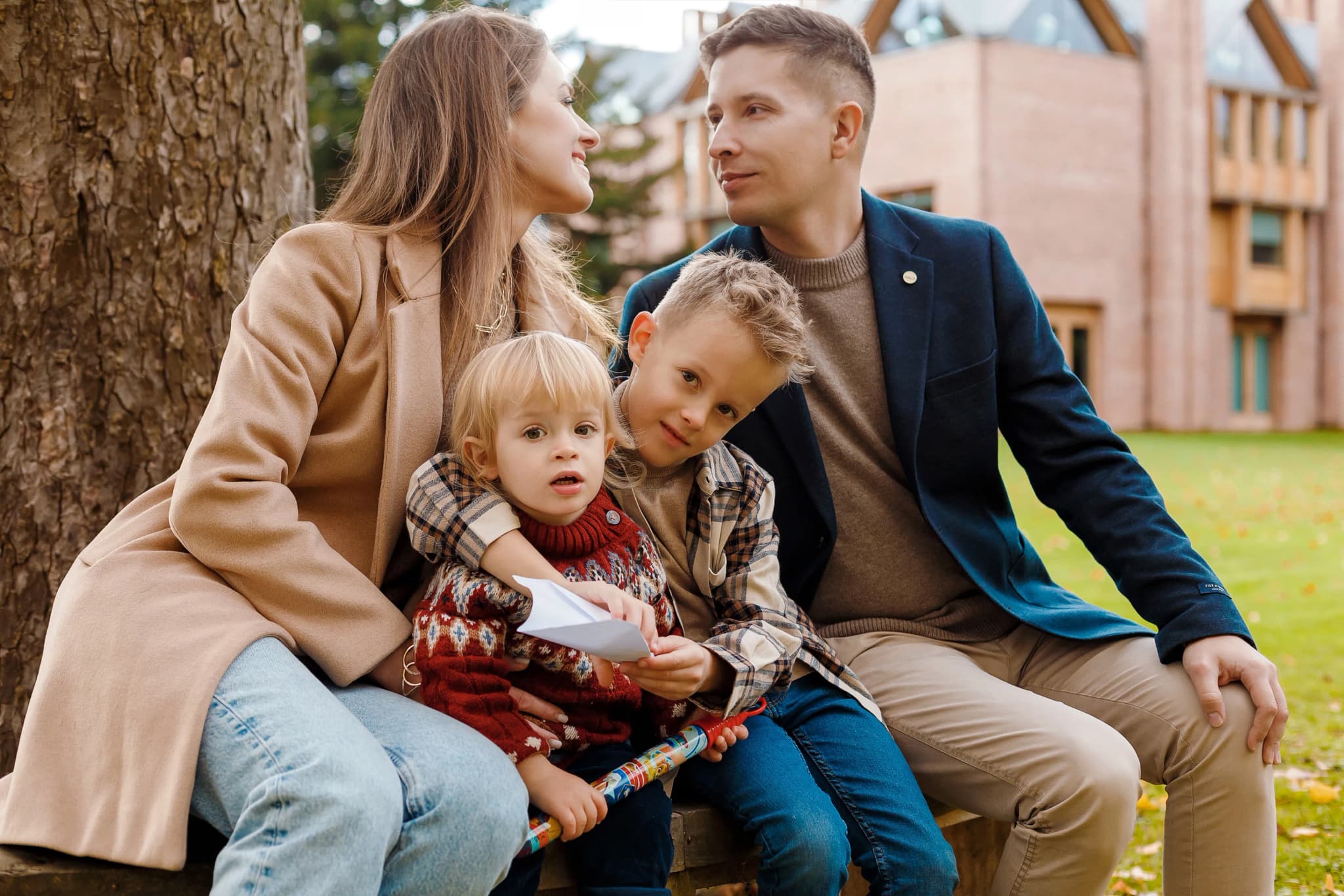
A palette might be cream, terracotta, and soft navy. Mum could wear a terracotta dress, dad a navy jumper over a cream shirt, and the children a mix of the two in smaller items — a cream cardigan, terracotta socks, a navy pinafore. Nobody is wearing exactly the same thing as anyone else, but the eye reads the group as connected and considered. This is the approach I recommend to every family I photograph, and it is genuinely more forgiving than trying to source four matching items, which usually ends up either impossible or looking like a uniform.
Colours That Photograph Well
Not every colour that looks good in person translates well into a photograph, and some colours that look unremarkable on a hanger come alive beautifully in natural light. Earthy neutrals — cream, ivory, taupe, warm grey, camel — are close to foolproof. They sit well against almost any background, from a woodland path to a city street to the inside of your own home, and they never fight for attention with the people wearing them.
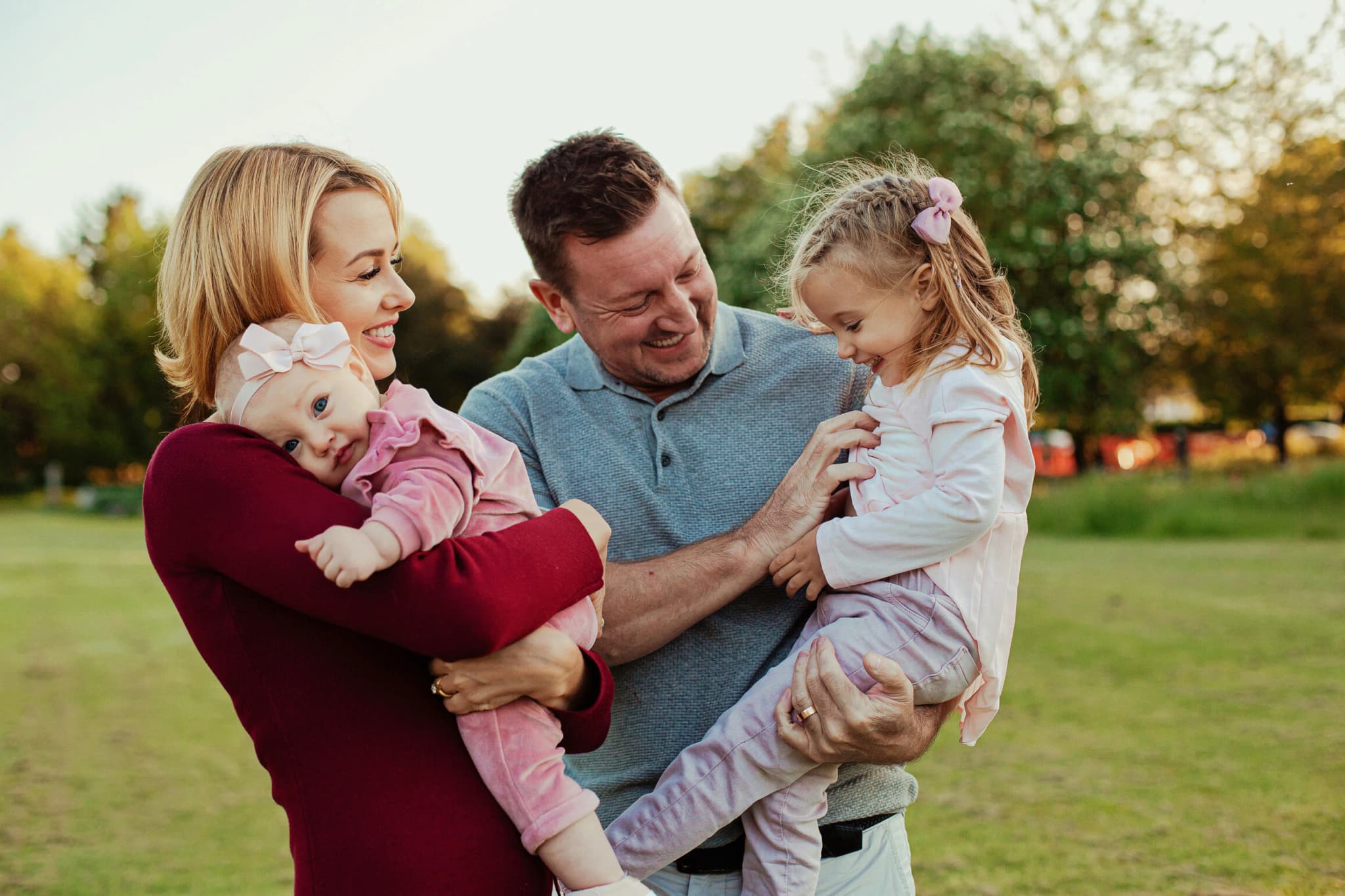
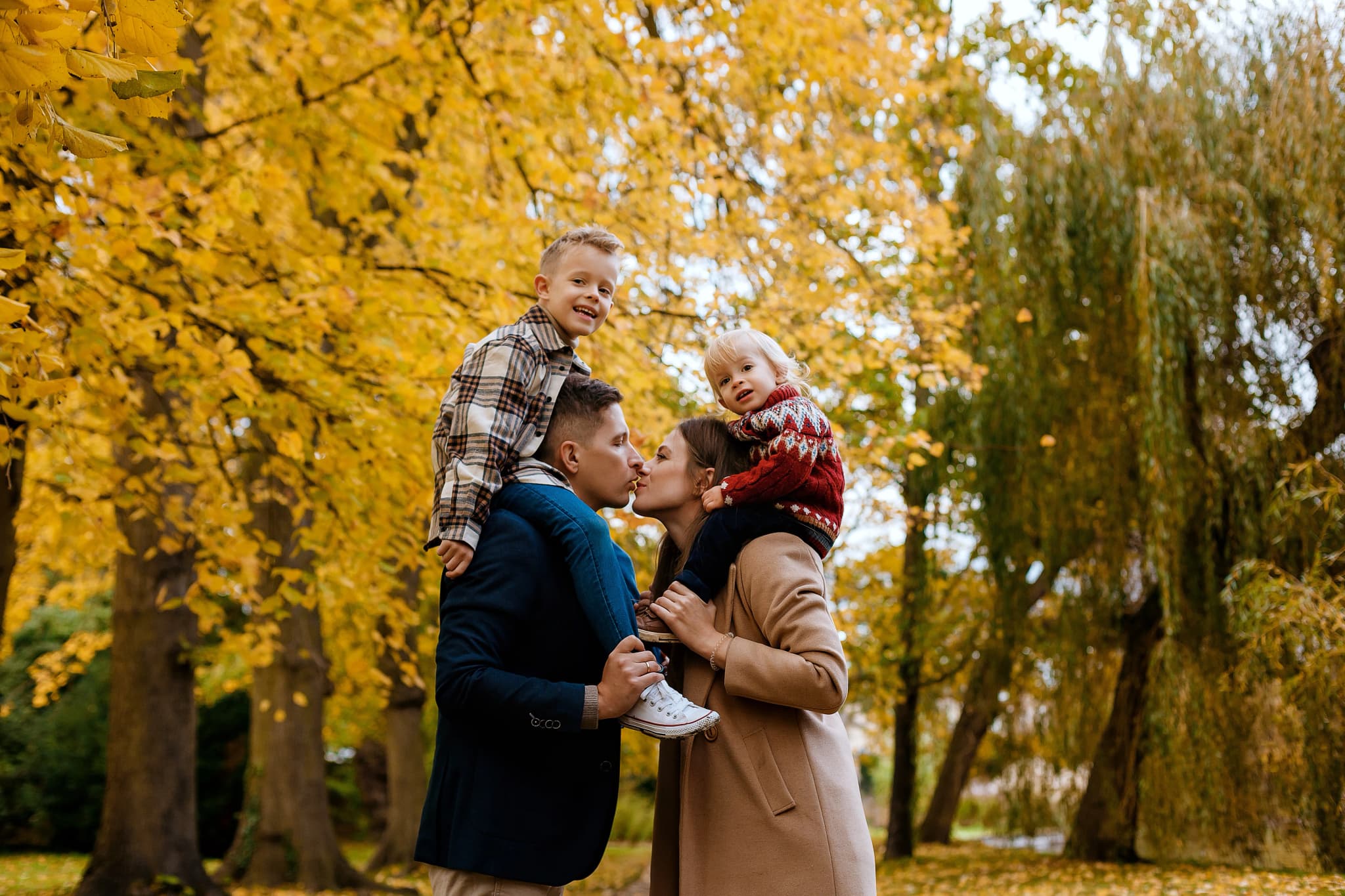
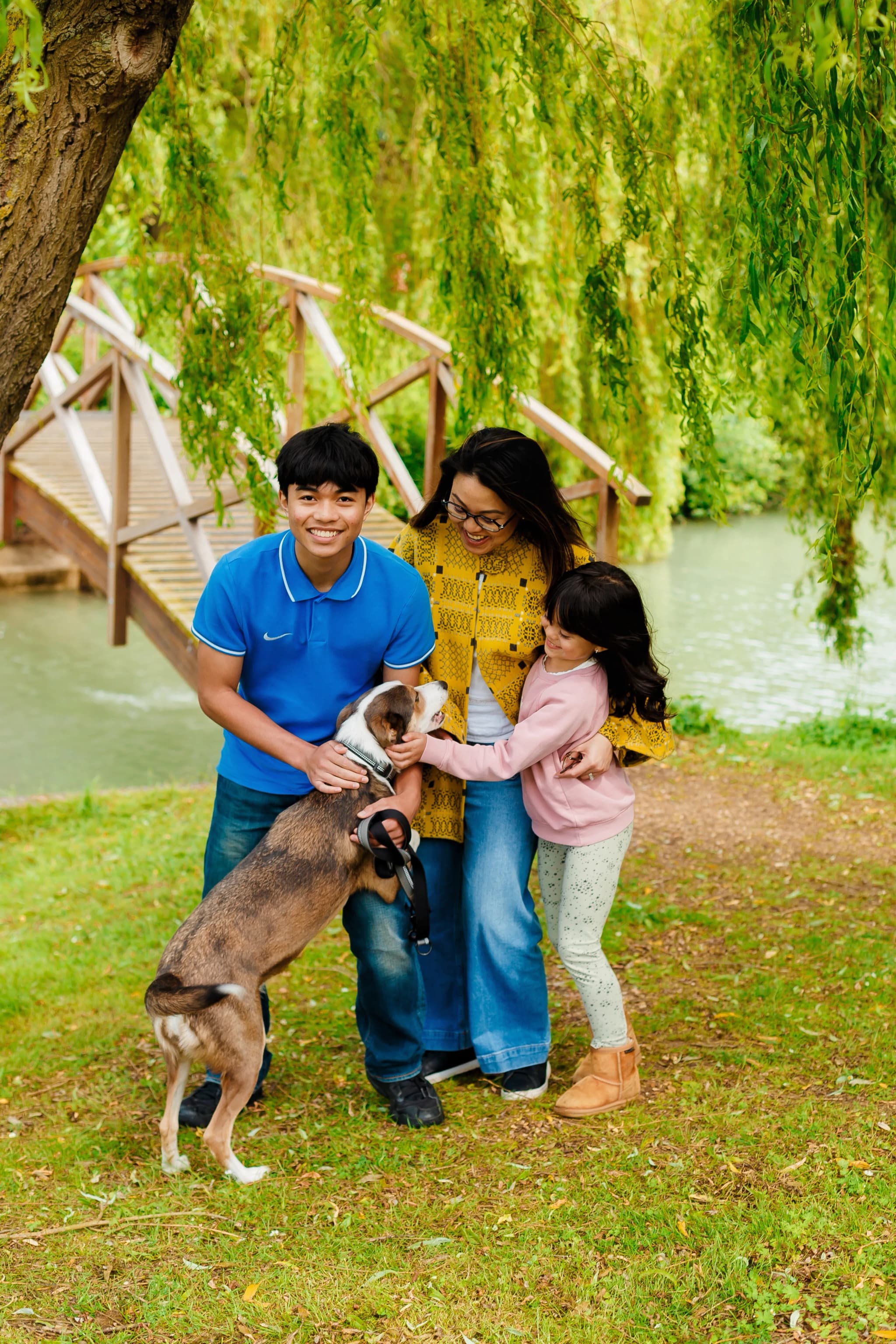
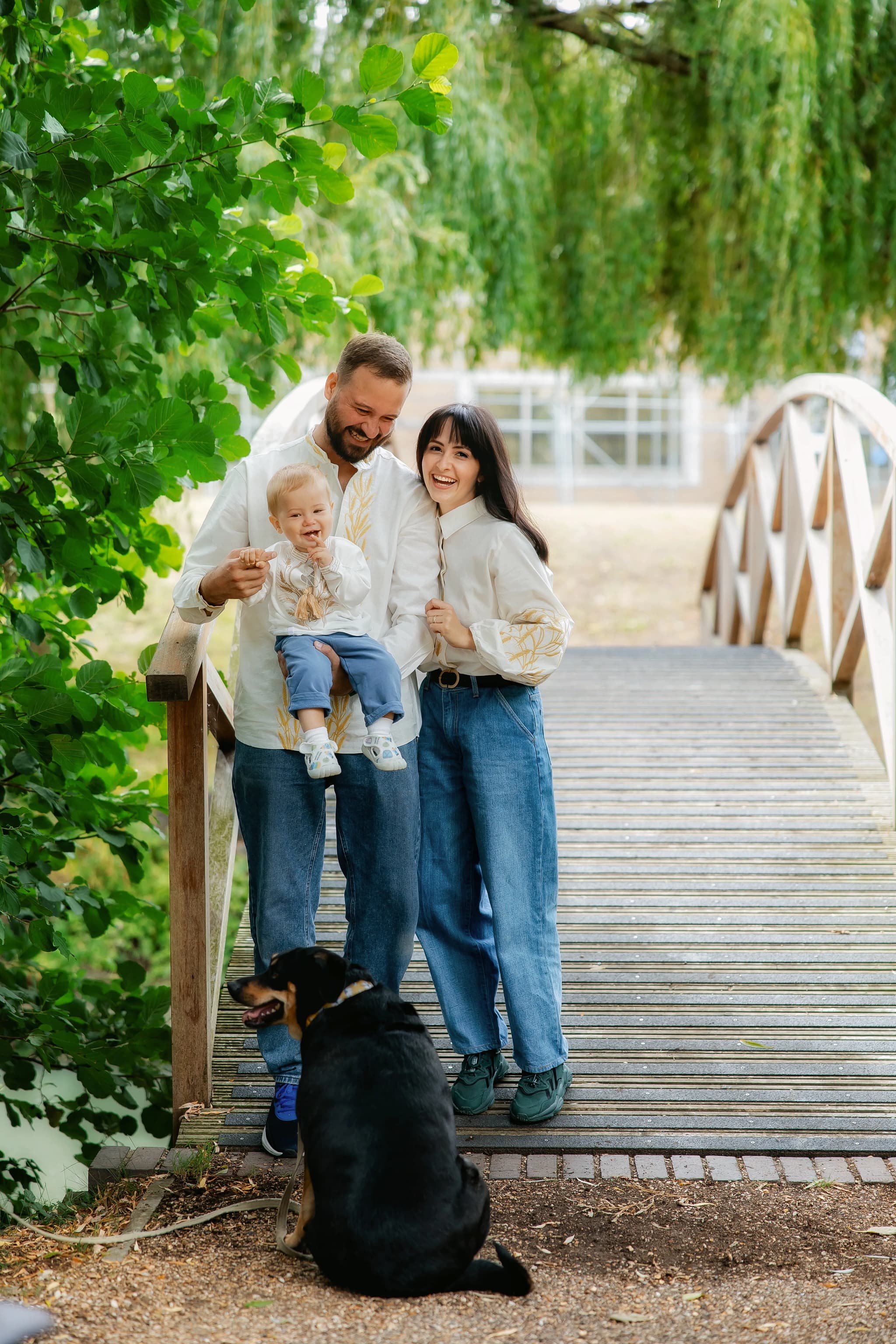
Soft, muted tones such as dusty pink, sage green, and powder blue photograph particularly beautifully in the warm light of golden hour, which is when I schedule the majority of outdoor family sessions. Deeper, richer tones — navy, forest green, burgundy, rust — work well for autumn and winter sessions or anywhere you want a bit more visual weight in the image without anyone standing out too sharply from the rest of the group. Classic white paired with denim is a dependable combination for spring and summer sessions, especially anywhere with a coastal or garden setting, though pure white is worth using sparingly rather than on every family member, since large blocks of bright white can pull the eye away from faces in strong sunlight.
If you are struggling to settle on a palette, start from the location. A session in a golden autumn woodland calls for warm tones that sit alongside amber leaves rather than competing with them. A session against Cambridge's honey-coloured college stone or a soft grey city backdrop gives you more room to introduce a stronger colour, since the background itself is fairly neutral.
What to Avoid
A few categories of clothing cause problems in photographs consistently enough that I flag them to every family before a session. Neon and very saturated bright colours reflect onto skin under certain lighting conditions, which can leave a faint colour cast across a face that is genuinely difficult to correct afterwards. Large printed logos, slogans, or bold graphic text pull the eye straight to the wording rather than to the people wearing it, and they date a photograph almost immediately — a jumper's logo instantly places an image in a particular year in a way that a plain jumper does not.
Fine stripes, small checks, and busy intricate patterns can create a shimmering visual distortion known as moiré, especially in video and sometimes in stills, and even where it does not create moiré outright, a very busy pattern competes with facial expression for the viewer's attention. And it is worth avoiding outfits that clash outright — one person in bright orange standing next to another in bright cyan will always draw the eye to the colour clash rather than the moment between the two of them. None of this means every outfit needs to be neutral or muted; it simply means it is worth thinking about how colours and patterns will sit next to each other in the frame, not just how each item looks on its own in the mirror.
Not sure your outfits work together?
Send me a photo of what you are considering before the session and I am always happy to advise on colours, layering, and whether anything needs swapping.
Ask about outfit adviceDressing by Season
Cambridge and the surrounding countryside change character across the year, and outfit choices are worth thinking about alongside the season a session falls in. In spring and summer, light fabrics work both practically and visually — linen shirts, cotton sundresses, soft florals, and pale layers all move well in a breeze and photograph beautifully in bright, open light. This is also the easiest season to work with white and denim, since the light is generally forgiving enough not to blow out pale fabrics.
Autumn is, in my view as a photographer, the most rewarding season for family clothing. Rich, warm tones — rust, mustard, burnt orange, deep green, chocolate brown — sit directly alongside turning leaves and low golden light in a way that no other season quite matches. It is worth leaning into these tones rather than defaulting to a summer palette out of habit. Winter calls for genuine warmth as much as style: chunky knitwear, scarves, and coats in jewel tones such as deep blue, burgundy, or forest green photograph richly against bare trees, grey skies, or an indoor setting with warm lamplight, and because everyone is dressed for the cold, nobody is standing stiffly trying not to shiver through the session.
Dressing Children (and Keeping Everyone Sane)
Comfort matters more for children than for anyone else in the group, because a child who is uncomfortable will show it in every frame, however carefully the outfit was chosen. A stiff new dress, a shirt collar that itches, or shoes that have never been worn outside a shop will produce a session full of fidgeting and complaint rather than the relaxed, natural expressions parents actually want. Wherever possible, dress children in clothes they already know and are happy in, ideally worn at least once before the session so any obvious discomfort has already surfaced at home rather than in front of the camera.
Coordinating siblings does not mean dressing them identically. A little girl in a dusty pink dress and her brother in navy shorts with a plain white or cream shirt will read as a coordinated pair without looking like a costume. For very young children and babies, simplicity tends to work best — a plain onesie or a soft knit in a neutral tone photographs far better over time than something heavily patterned or seasonal, which can make a photograph feel dated within a year or two. If a session involves any amount of movement — running, being lifted, sitting on grass — it is worth choosing shoes children can actually walk and play in rather than anything precious that has to be protected for the whole appointment.
For layering, a jumper over a shirt or a light jacket or gilet over a plain top gives useful texture and also gives some flexibility through the session itself — a layer can come off if a child gets warm from running around, or go back on between shots if the weather turns. Layers photograph well precisely because they add depth to an outfit without adding pattern or colour complexity, which is often exactly what a simple family photograph needs.
None of this needs to become a source of stress. The families who arrive most relaxed are usually the ones who have picked a simple palette in advance, chosen clothes everyone is genuinely comfortable in, and left a bit of room for the outfits to be imperfect rather than engineered. A photograph that looks natural because everyone is at ease will always outperform one where the clothing is flawless but the people in it look tense. If you would like a second opinion on outfits before your own session, or want some guidance specific to your chosen location and time of year, get in touch and I am happy to talk it through with you.

Yana Skakun
Photographer · England
Professional wedding, family and portrait photographer based in England. Passionate about capturing authentic emotions and timeless moments.
About Yana →what to wear family photoshootfamily photo outfits Englandfamily photography tips UKcoordinated family photos
Family Tips — Family Photography in Cambridge & England
Yana Skakun offers natural, relaxed family photography sessions across Cambridge, Cambridgeshire, and the wider East of England. Sessions take place outdoors — in parks, woodland, and countryside — or at your family home, wherever everyone feels most at ease. This guide — What to wear for your family photos: A complete guide for English families — is part of the photography journal: practical, experience-based advice drawn from real sessions across England. Whether you arrived searching for what to wear family photoshoot or family photo outfits england, the same care and attention shapes every session Yana photographs.
Family Photography sessions are available year-round, with bookings open across Cambridge, Ely, Huntingdon, Peterborough, and further afield — East England, London, the Midlands, and beyond. If you have specific questions about family photography tips uk, mention it in your enquiry. Get in touch through the contact form above to check availability and discuss your session. Enquiries are welcomed from anywhere in the UK.
Frequently Asked Questions
How do you prepare children for a family photoshoot?+
Keep it low-key beforehand — don't over-explain or build it up too much. Make sure children are fed and rested. Bring a snack and a favourite toy or comfort item. Let them warm up at their own pace rather than forcing poses from the start. The best family photos happen when children forget there's a camera.
What should a family wear for photos?+
Choose a colour palette — 2–3 complementary tones — rather than identical outfits. Earthy neutrals, blues and greens, or cream and blush all work beautifully outdoors. Avoid large logos, neon colours, and very small patterns that create visual noise. Dress for the location and season, and make sure everyone is comfortable.
When is the best time for an outdoor family photoshoot?+
The golden hour — the first hour after sunrise or the last hour before sunset — gives the softest, warmest light. Overcast days are also excellent: the cloud acts as a natural diffuser, eliminating harsh shadows. Midday summer sun is the most challenging light to shoot in.
How long does a family photography session take?+
Most family sessions last 45–75 minutes. Mini sessions (30–40 minutes) work well for smaller families and toddlers who have shorter attention spans. Larger extended family groups may need 90 minutes to cover everyone comfortably.
How many photos will I get from a family photoshoot?+
A standard 60-minute family session typically produces 30–60 edited images delivered in a private online gallery. Mini sessions deliver 15–25 images. All images are colour-corrected, naturally edited, and ready for printing.
Continue Reading
Related Articles

Family Tips
Blended Family Photography: A Sensitive Guide to Step-Families, Co-Parenting & Group Portraits
11 min read · Read Article
Family Tips
Baby Milestone Photography: Capturing Every Stage of the First Year
10 min read · Read Article
Family Tips
Maternity Photography in England: When to Book, What to Wear & Where to Shoot
11 min read · Read Article
Get in Touch
Ready to Book Your Session?
Get in touch to discuss your vision — I'll reply within 24 hours.