Yana Skakun

Wildflower Meadow Family Photography: The Joy of Summer's Most Beautiful Setting
By Yana Skakun·16 July 2025·4 min read
There is a stretch of a few weeks each summer, usually somewhere between the last week of June and the middle of July, when the meadows around Cambridgeshire stop being background scenery and become the whole point of the walk. Poppies lean in drifts along the field margins, ox-eye daisies stand at knee height in white sheets, cornflowers and meadow cranesbill thread blue and violet through the grass, and the light in the hour before sunset turns the whole thing gold. It is, without exaggeration, one of the most beautiful settings I photograph in all year, and it is also one of the most fleeting. Wildflower family sessions exist to make the most of that short window — not as a formal portrait in front of a pretty backdrop, but as a genuine excuse for a family to be outside together at the loveliest time of day, with a camera quietly capturing what actually happens.
Why Wildflower Meadows Work So Well for Families
Most family portrait settings ask children to behave in a particular way — stand here, look there, hold still. A wildflower meadow does the opposite. There is always something at knee height to look at, something with a smell worth investigating, something with an insect on it, something worth picking and immediately handing to a parent. Children do not need to be directed in a meadow because the meadow itself is doing the entertaining, and that means the expressions I photograph are genuinely theirs rather than performed for the camera.
There is also a visual quality to wildflower meadows that is difficult to replicate anywhere else. Photographed with the sun low and behind the subjects, the meadow grass and flower heads catch the light and glow, creating a soft, textured backdrop that has real depth without being distracting. Shot at a wide aperture, the foreground flowers blur into warm colour while the family in the middle distance stays sharp, and the effect is something closer to a painting than a typical portrait. It is a setting that photographs beautifully almost regardless of technical choices, which frees me to focus entirely on the people rather than fighting the location.
And because the season is so short, the images carry a kind of built-in specificity. A wildflower session from a particular July will always read as exactly that — not a generic outdoor portrait that could have been taken any year, but a record of a specific, irreplaceable few weeks when your children were a particular age and the meadow looked a particular way. Families who book these sessions often come back year after year, partly because the results are so well loved, and partly because each year's version genuinely looks different from the last.
When the Meadows Are at Their Best
Wildflower meadows in this part of England typically build through May, reach a first flush of colour in June, and hit their real peak somewhere between the last week of June and the middle of July, though the exact timing shifts a little each year depending on rainfall and temperature. A cool, wet spring tends to push the peak later into July; a warm, dry spring can bring it forward. I watch the meadows I use closely from late May onwards, checking on them every week or two, so that I can guide families toward the dates when a particular field is genuinely at its best rather than just guessing at the calendar.
Within the season, the time of day matters just as much as the date. I schedule almost all wildflower sessions for the hour or so before sunset, when the light comes in low and warm rather than from directly overhead. Midday sun in an open meadow is harsh and unflattering — it flattens colour, creates hard shadows under eyes, and makes everyone squint. Evening light does the opposite: it wraps around faces, catches the edges of hair and grass alike, and gives the whole scene the warm, golden quality that people picture when they imagine a wildflower photograph. It also happens to be a more comfortable time for young children, who are often calmer and more cooperative once the heat of the day has passed.
Because the golden hour window is genuinely short — perhaps forty-five minutes of truly beautiful light on any given evening — I keep wildflower sessions tightly timed. Families arrive with enough time to settle in and let children start exploring before I begin photographing in earnest, and the session runs through until the light starts to fade and lose its warmth. Punctuality matters more for these sessions than for almost any other type I offer, simply because the light will not wait.
Where to Find Good Wildflower Meadows Near Cambridge
Cambridgeshire has a good number of genuinely excellent wildflower sites within easy reach of the city, ranging from managed nature reserves to farmland margins left to grow wild under agri-environment schemes. Nature reserves such as those managed by the Wildlife Trust tend to have the richest and most reliable displays, since the meadows are cut and managed specifically to encourage native wildflower diversity rather than left to whatever grows. These sites often have the added benefit of parking nearby and paths that are easy for buggies and small legs, which matters more than people expect when a session includes a toddler who will inevitably need carrying part of the way.
Smaller pockets of wildflower meadow also appear on the fringes of Cambridge itself — road verges managed for biodiversity, community orchards with wildflower understorey, and green spaces where mowing has deliberately been reduced through summer. These local spots are sometimes less dramatic than a full reserve meadow but have the advantage of convenience, particularly for families who want to keep travel time to a minimum with young children.
I keep a running list of which locations are looking best each week through June and July, since meadows vary enormously from year to year and even from field to field depending on how they have been managed. Rather than committing to a location months in advance, I confirm the specific meadow closer to the session date, once I have seen how that summer's growth is developing. This means every family gets directed to wherever is genuinely flowering best that week, rather than a location chosen on a guess back in the spring.
The window is short — plan ahead
Peak wildflower colour lasts only a handful of weeks each summer, and the best evening slots are naturally limited. If a wildflower session is something you would like this year, it is worth getting in touch early so we can pencil in a date and confirm the exact evening once the meadows are properly in bloom.
Get in touch about summer datesWhat to Wear in a Wildflower Meadow
The palette of a wildflower meadow is warm and earthy even where the flowers themselves are bright — golden grass, green stems, soft brown seed heads, and colour that pops in patches rather than covering everything. Clothing that sits comfortably within that palette tends to photograph best: terracotta, mustard, sage and olive green, cream, warm white, dusky pink, and soft denim all work beautifully. These tones let the flowers do the work of adding vibrancy to the image rather than competing with clothing that is already doing the same job.
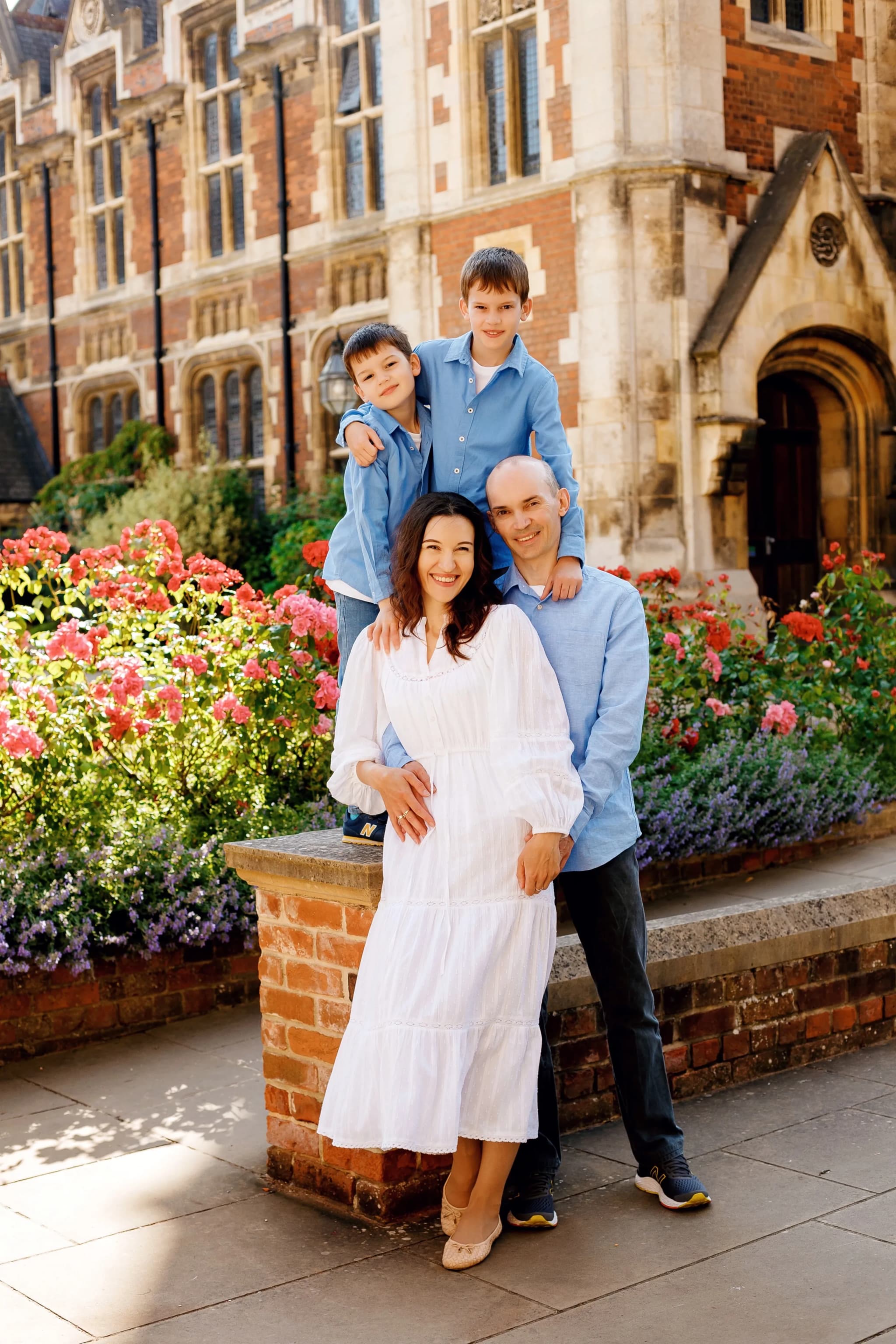
I generally steer families away from very bright primary colours, neon shades, and stark cold white, all of which tend to pull the eye away from faces and can look slightly jarring against the softness of a meadow. Busy patterns and clothing with large logos or text also tend to date photographs and distract from what should be the focus — the people, not the outfit. Coordinating loosely across the family, rather than matching exactly, generally photographs best: a shared palette of two or three complementary tones works far better than everyone in identical outfits, which can look stiff and overly staged.
Practically speaking, meadows mean long grass, occasional nettles, and ground that is not always perfectly even, so footwear worth considering carefully. Trainers or flat sandals work well for most adults; bare feet, while tempting for the aesthetic, are best avoided in a working meadow where stray brambles or uneven ground can catch people out. For children, clothes that can get a little grass-stained without anyone worrying about it make for a far more relaxed and natural session than an outfit everyone is anxious about keeping pristine.
Getting Genuine Moments Rather Than Posed Ones
The single biggest advantage of a wildflower meadow session, in my experience, is how little direction is actually needed. Left to their own devices in a field full of interesting things, children tend to do exactly what makes a good photograph without being told: crouching down to look closely at a flower, running ahead and turning back to check a parent is following, picking a small bunch and presenting it to someone. My job in these moments is mostly to be ready, positioned with good light behind me, rather than to orchestrate what happens.
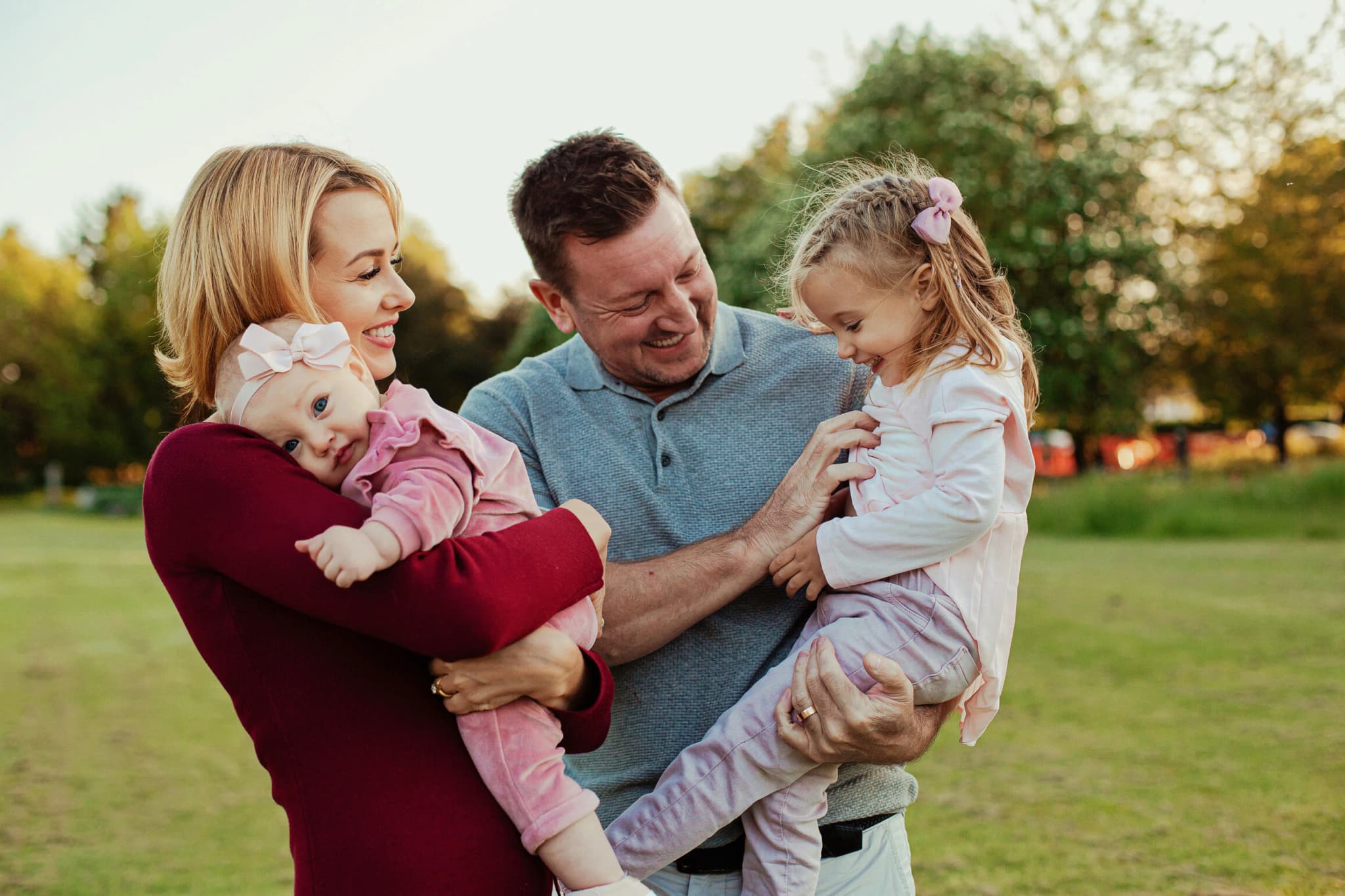
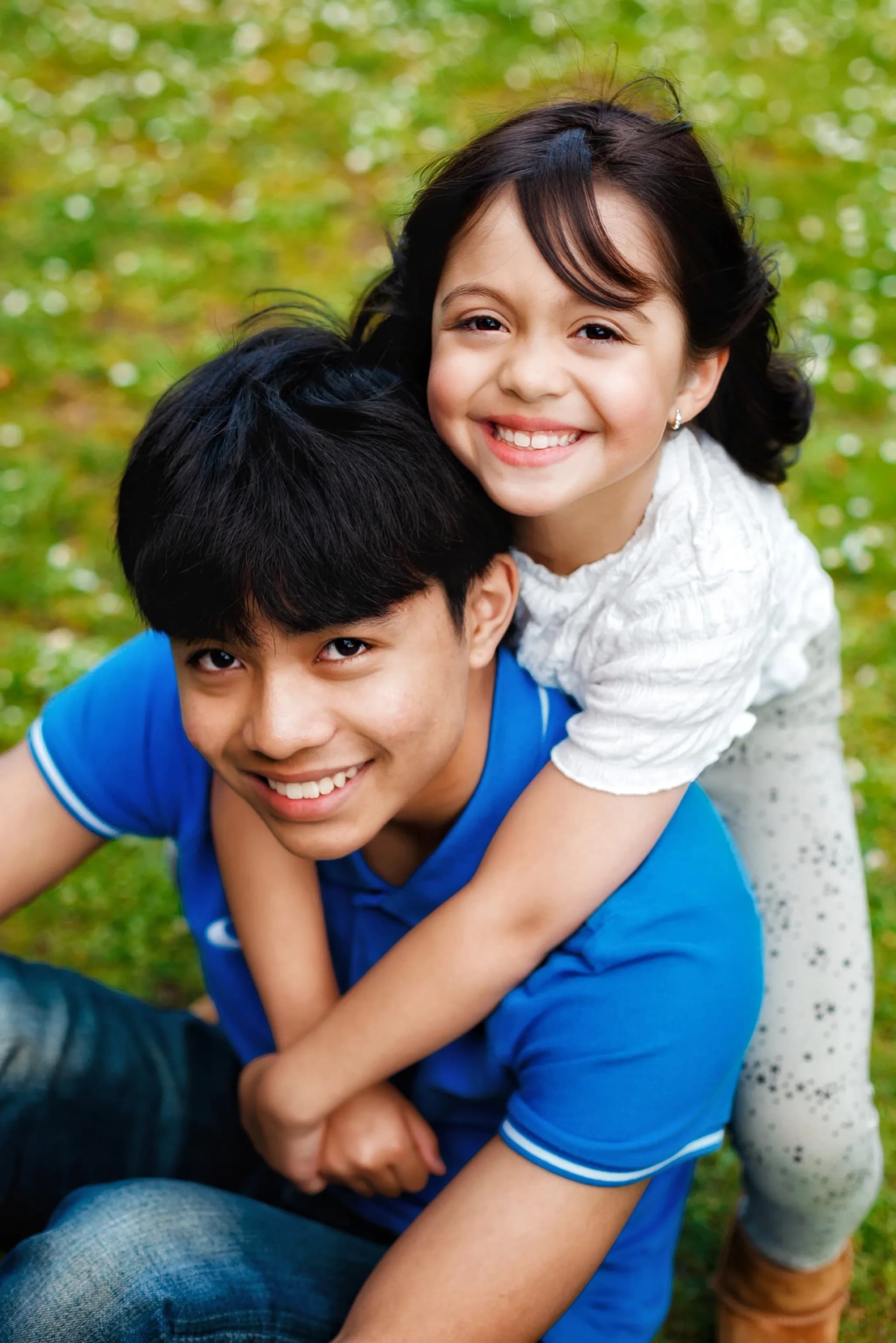
For babies and very young toddlers, being carried or sat directly in the grass at meadow height produces some of the most striking images of the whole session — the flowers rising up around them at their own scale rather than towering overhead. For older children, a simple task such as picking flowers for a small posy, or racing a sibling to a particular tree at the meadow's edge, generates movement and laughter that is far more interesting than a posed group shot. For couples and older family members, simply walking slowly through the meadow together, without being asked to look at the camera, tends to produce the warmest and most natural images of the evening.
I do build in time for a handful of more composed family group images as well — everyone gathered together, looking at the camera, genuinely smiling rather than caught mid-blink — because most families want at least one or two images like that for a frame on the wall. But these are woven through the session rather than being the whole of it, and they tend to work better once everyone has had ten or fifteen minutes to relax into the setting and stop feeling self-conscious about being photographed.
Booking and What to Expect
Wildflower sessions run for around an hour, which allows enough time to move between a couple of different spots within a meadow as the light shifts, without asking small children to sustain focus for longer than they realistically can. Because timing against the light matters so much, I confirm the exact evening and meeting point a few days ahead once I can see how the season is developing, rather than locking in a fixed date months in advance. Deposits secure a place in the summer schedule, with the specific evening finalised closer to the time.
As with my other sessions, edited images are delivered through an online gallery, with options to download full-resolution files and order prints or wall art directly. Because the wildflower season is short and the best evenings limited, I keep the number of sessions I take on each summer deliberately modest, which means dates are worth enquiring about well before the meadows are actually in bloom.
A wildflower meadow at its peak is one of those settings that genuinely earns the word magical, and it only exists for a few weeks a year. If you would like your family photographed in exactly that light, among exactly that colour, while your children are exactly the age they are this summer, get in touch and I will let you know as soon as this year's meadows are ready.

Yana Skakun
Photographer · England
Professional wedding, family and portrait photographer based in England. Passionate about capturing authentic emotions and timeless moments.
About Yana →wildflower meadow family photography UKsummer family portraits Cambridgewildflower family photos Cambridgeshireoutdoor family photography July UKmeadow family session Cambridgesummer evening family photography UK
Family Tips — Family Photography in Cambridge & England
Yana Skakun offers natural, relaxed family photography sessions across Cambridge, Cambridgeshire, and the wider East of England. Sessions take place outdoors — in parks, woodland, and countryside — or at your family home, wherever everyone feels most at ease. This guide — Wildflower Meadow Family Photography: The Joy of Summer's Most Beautiful Setting — is part of the photography journal: practical, experience-based advice drawn from real sessions across England. Whether you arrived searching for wildflower meadow family photography uk or summer family portraits cambridge, the same care and attention shapes every session Yana photographs.
Family Photography sessions are available year-round, with bookings open across Cambridge, Ely, Huntingdon, Peterborough, and further afield — East England, London, the Midlands, and beyond. If you have specific questions about wildflower family photos cambridgeshire, mention it in your enquiry. Get in touch through the contact form above to check availability and discuss your session. Enquiries are welcomed from anywhere in the UK.
Frequently Asked Questions
How do you prepare children for a family photoshoot?+
Keep it low-key beforehand — don't over-explain or build it up too much. Make sure children are fed and rested. Bring a snack and a favourite toy or comfort item. Let them warm up at their own pace rather than forcing poses from the start. The best family photos happen when children forget there's a camera.
What should a family wear for photos?+
Choose a colour palette — 2–3 complementary tones — rather than identical outfits. Earthy neutrals, blues and greens, or cream and blush all work beautifully outdoors. Avoid large logos, neon colours, and very small patterns that create visual noise. Dress for the location and season, and make sure everyone is comfortable.
When is the best time for an outdoor family photoshoot?+
The golden hour — the first hour after sunrise or the last hour before sunset — gives the softest, warmest light. Overcast days are also excellent: the cloud acts as a natural diffuser, eliminating harsh shadows. Midday summer sun is the most challenging light to shoot in.
How long does a family photography session take?+
Most family sessions last 45–75 minutes. Mini sessions (30–40 minutes) work well for smaller families and toddlers who have shorter attention spans. Larger extended family groups may need 90 minutes to cover everyone comfortably.
How many photos will I get from a family photoshoot?+
A standard 60-minute family session typically produces 30–60 edited images delivered in a private online gallery. Mini sessions deliver 15–25 images. All images are colour-corrected, naturally edited, and ready for printing.
Continue Reading
Related Articles

Family Tips
Blended Family Photography: A Sensitive Guide to Step-Families, Co-Parenting & Group Portraits
11 min read · Read Article
Family Tips
Baby Milestone Photography: Capturing Every Stage of the First Year
10 min read · Read Article
Family Tips
Maternity Photography in England: When to Book, What to Wear & Where to Shoot
11 min read · Read Article
Get in Touch
Ready to Book Your Session?
Get in touch to discuss your vision — I'll reply within 24 hours.