Yana Skakun
Autumn Wedding Photography in Cambridge: Golden Leaves & Ancient Colleges
By Yana Skakun·16 March 2026·6 min read
Cambridge in autumn is among the most beautiful cities in England, and I say that having photographed here across every season for years. The ancient colleges cast long afternoon shadows across courts and lawns; the Backs — the meadows and gardens behind the river-facing colleges — turn tawny gold as the lime and chestnut trees colour; and a low September or October sun catches the stonework in a way that makes the university's eight-hundred-year history feel fully alive rather than simply historic. For wedding photography built specifically around fallen and turning leaves, autumn Cambridge is genuinely exceptional, and this piece focuses on exactly that — the leaves themselves, where to find the best of them, and how I use them in wedding portraits.
The Autumn Palette Along the Backs
The Backs in October are extraordinary. The line of trees along the far bank of the Cam — lime trees, horse chestnuts, weeping willows — reflect in the water in tones of gold and amber, doubling the colour in a way that a landlocked setting simply cannot manage. The Mathematical Bridge, the Bridge of Sighs, and the rears of King's, Clare, and Trinity colleges form a backdrop that is simultaneously intimate and unmistakably historic, and a couple photographed here in October has both the leaves and eight centuries of architecture working in their favour at once.
Peak colour along the Backs typically falls between the second week of October and the first week of November, with lime trees usually yellowing first, chestnuts following close behind, and the oaks holding onto their russet tones latest of all into November. This staggered turning means there is often good colour somewhere along the Backs across several weeks, even if any single species has already passed its individual peak.
Working With Fallen Leaves in Portraits
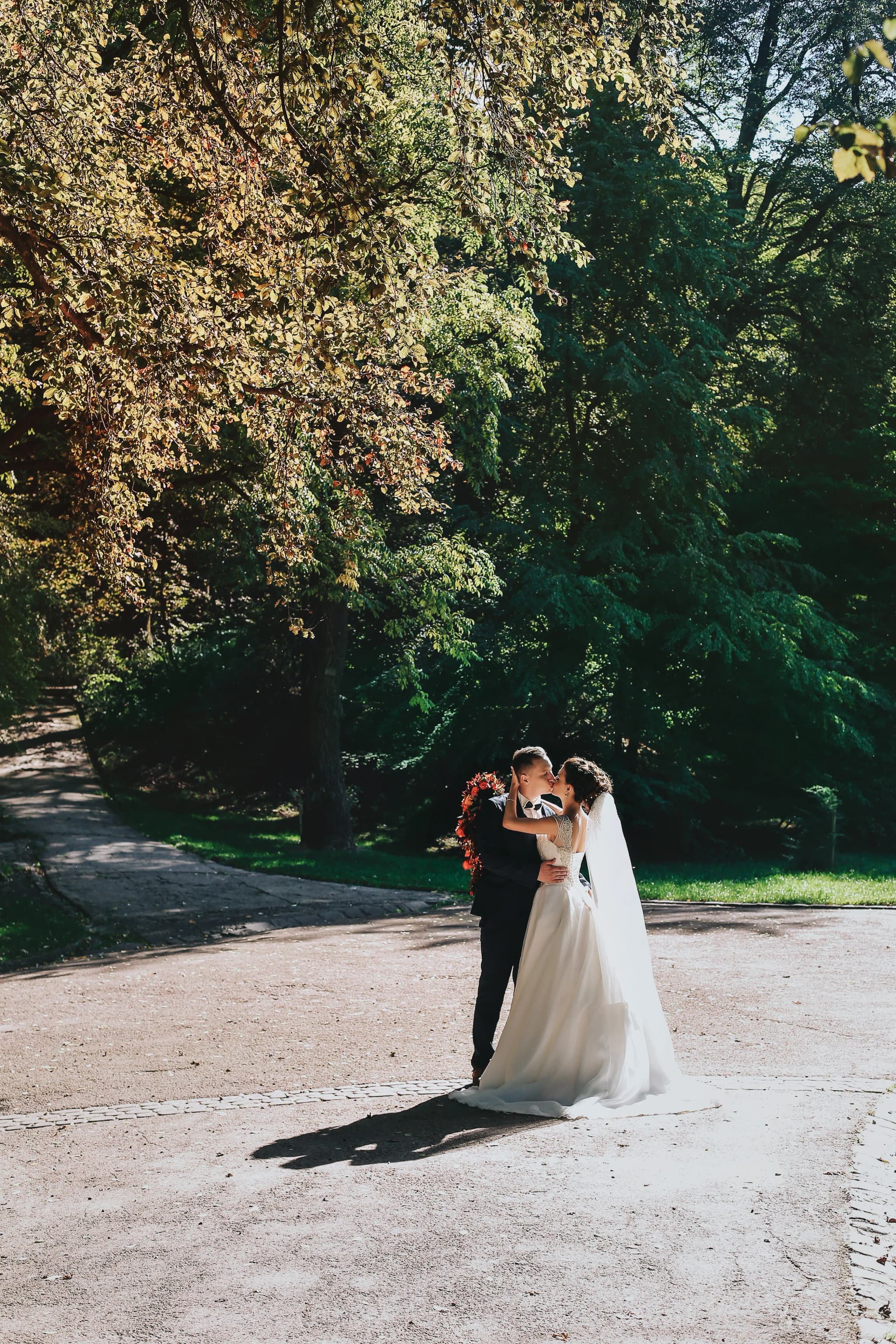
Once leaves begin falling in earnest, usually from mid-October onwards, the ground itself becomes part of the composition, not just the canopy overhead. A wedding dress trailing across a carpet of gold and rust leaves, or a couple walking hand in hand through drifts underfoot, produces images with a texture and warmth that a bare lawn or gravel path cannot match. I look for spots where leaves have gathered naturally against a wall or under a particular tree rather than scattering them artificially, since the natural drift tends to look more convincing and less staged in the final photographs.
A gentle scattering thrown by a couple, or leaves falling from a shaken branch above them, can also work beautifully for a handful of frames — not as a gimmick repeated throughout the whole session, but as one or two images among a broader set that capture the movement and playfulness of the moment rather than a static pose.
Best Leaf-Colour Locations Around Cambridge
King's College lawns give one of the most classic compositions available anywhere in the city — the west front of King's College Chapel behind the couple, the great lawn scattered with fallen leaves in front. The riverbank near Clare Bridge, the oldest bridge over the Cam, has overhanging autumn trees and reflections of the colleges visible in the water below. The avenue of lime trees leading up to Trinity turns a vivid yellow-gold through October, forming what is genuinely a tunnel of colour for a short but spectacular window each year.
Beyond the colleges, the University Botanic Garden holds one of the best collections of autumn foliage in the East of England, with the Systematic Garden and the large specimen trees on the main lawn particularly striking. Grantchester Meadows, just south of the city along the river, floods with gold in late October and offers a more informal, pastoral setting for couples who want leaves and open space rather than architecture in the background.
An autumn leaves wedding in Cambridge?
I keep close track of leaf colour and leaf fall at each of these locations every autumn, and can advise on the best week and setting for your day.
Plan your autumn leaves weddingTiming Around the City
Early morning sessions, roughly 7.30 to 9am, in October Cambridge give the best combination of light and the fewest visitors. The sun comes in low from the east, catching the wet stone and paths, and the colleges have a quiet, slightly mystical quality before the working day properly begins. For couples marrying later in the day, this early window usually means a separate portrait session either on the wedding morning itself or the day after, which many couples choose specifically to capture leaves and light without the time pressure of the wedding day schedule.
For evening sessions, golden hour around 5 to 5.30pm in October creates warm amber light that makes the stonework glow and lights fallen leaves from behind, giving them a translucent quality that flat midday light cannot produce. I plan the couple portrait time within the day's schedule around whichever of these windows suits the wedding better.
Cambridge Wedding Venues With Autumn Grounds
Several Cambridge venues have access to grounds that come into their own once the leaves turn. Downing College's formal lawns, Trinity Hall's garden overlooking the river, and Madingley Hall with its wider parkland all offer genuinely good autumn settings alongside their indoor spaces. Combined with the city's secular and academic architecture more broadly, autumn Cambridge gives couples a real range of settings that can be matched to different wedding aesthetics, from a formal college affair to something more relaxed and rural just outside the city.
Confetti and Leaves Together
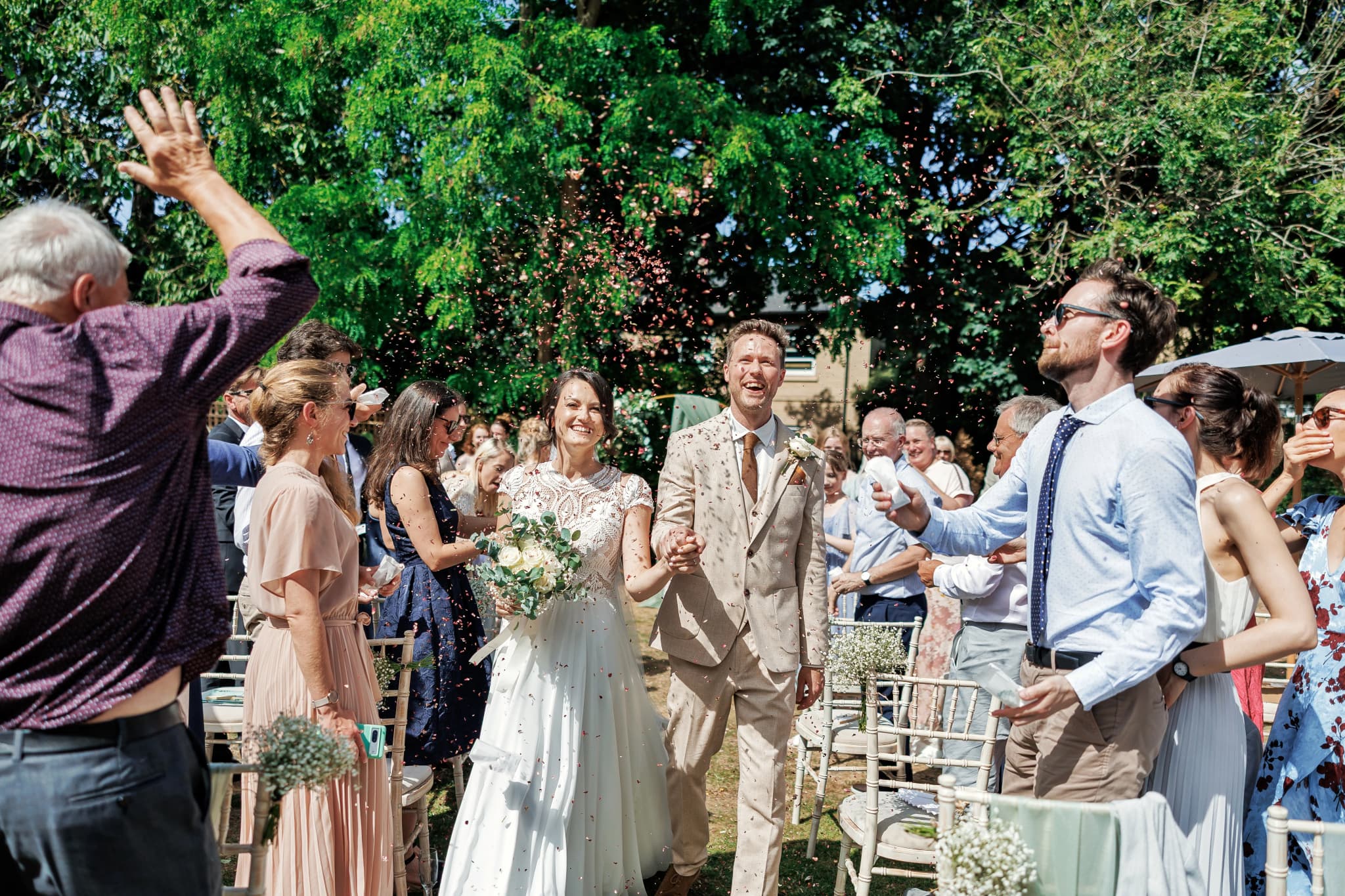
One detail I encourage couples to think about at an autumn Cambridge wedding is how confetti and fallen leaves interact in the same frame. A confetti exit thrown into a scene already scattered with leaves underfoot produces a genuinely layered image — petals suspended mid-air against a backdrop that is already gold and rust rather than green. I generally suggest natural, biodegradable confetti in warm tones — dried petals in amber, rust, or deep red — over bright synthetic colours, both for the sake of the college grounds, which are often protective of what can be thrown on their lawns, and because warm-toned confetti sits far more naturally within an autumn leaf setting than a clashing bright pink or blue would.
It is always worth checking directly with a venue or college about their confetti policy before the day, since some Cambridge colleges restrict what can be thrown on their grounds quite strictly, and I would rather couples know this in good time than discover it as a surprise on the morning itself.
Beyond confetti, I also look for opportunities to work fallen leaves into smaller, quieter details through the day — a leaf tucked into a buttonhole alongside the usual foliage, a scatter across a table setting for the reception, or simply a handful placed beside the rings for a detail shot. These small touches tie the season into the day's overall visual story even outside the main portrait session itself.
Dress and Suit Considerations for a Leaf-Focused Session
A wedding dress moving through fallen leaves photographs beautifully, but it is worth thinking practically about fabric and length in advance. Heavier fabrics and shorter trains tend to hold up better against damp ground than delicate, easily marked silks with a long train, and I always let brides know in advance which spots involve walking directly through leaves so a decision can be made about whether to protect the dress or embrace a little natural wear for the sake of the images. Grooms and their parties generally have an easier time of it, though a well-chosen tweed or heavier wool suit sits noticeably better against an autumn leaf backdrop than a lightweight summer-cut suit designed for warmer weather.
For couples particularly concerned about their outfits, I am always happy to plan the leaf-focused portraits for a point in the day before the dress has seen much wear, such as directly after the ceremony rather than late in the evening.
Autumn leaves in Cambridge are a genuinely short-lived spectacle, usually at their best for only a few weeks each year, and getting the timing right makes a real difference to the final images. If you are planning an autumn wedding here and want it built around this colour and light, get in touch and I can help you plan the day around it.


Yana Skakun
Photographer · England
Professional wedding, family and portrait photographer based in England. Passionate about capturing authentic emotions and timeless moments.
About Yana →autumn wedding CambridgeCambridge autumn wedding photographyCambridge fall wedding photographer
Wedding Tips — Wedding Photography in Cambridge & England
Yana Skakun is a professional wedding photographer based in Cambridge, covering weddings across England — from intimate elopements to full-day ceremonies at country houses, barns, and city venues. Every couple receives a relaxed, documentary approach that captures the day as it truly unfolds. This guide — Autumn Wedding Photography in Cambridge: Golden Leaves & Ancient Colleges — is part of the photography journal: practical, experience-based advice drawn from real sessions across England. Whether you arrived searching for autumn wedding cambridge or cambridge autumn wedding photography, the same care and attention shapes every session Yana photographs.
Wedding Photography sessions are available year-round, with bookings open across Cambridge, Ely, Huntingdon, Peterborough, and further afield — East England, London, the Midlands, and beyond. If you have specific questions about cambridge fall wedding photographer, mention it in your enquiry. Get in touch through the contact form above to check availability and discuss your session. Enquiries are welcomed from anywhere in the UK.
Frequently Asked Questions
How much does a wedding photographer cost in England?+
Wedding photography in England typically ranges from £1,500 to £4,000+ for a full day. Price depends on experience, coverage hours, and whether albums or engagement shoots are included. Most photographers charge between £2,000–£3,000 for 8–10 hours of coverage.
How early should you book a wedding photographer?+
For peak season (May–September), book 12–18 months in advance. For autumn and winter weddings, 9–12 months is usually sufficient. Popular photographers at popular venues fill up fast — as soon as you have a date and venue confirmed, start reaching out.
How many photos do you get from a wedding photographer?+
Most professional wedding photographers deliver 400–800 edited images for a full-day wedding. The exact number depends on coverage hours, how many guests there are, and the photographer's editing style. Quality matters more than quantity — a curated gallery of 500 images tells the story better than 1,500 unedited files.
Do you need a second photographer at your wedding?+
A second photographer is helpful if you want simultaneous coverage of getting-ready moments in different locations, multiple angles during the ceremony, or more candid coverage during the reception. It adds cost but significantly increases the variety and completeness of your gallery.
What is the difference between documentary and editorial wedding photography?+
Documentary (reportage) wedding photography captures moments as they happen — the photographer observes and doesn't intervene. Editorial photography involves deliberate direction: placing you in good light, shaping compositions, creating intentional portraits. Most photographers blend both styles throughout the day.
Continue Reading
Related Articles

Wedding Tips
Sustainable Eco-Friendly Wedding Guide — Planning a Green Celebration
15 min read · Read Article
Wedding Tips
Trash the Dress Session — Complete Planning and Photography Guide
14 min read · Read Article
Wedding Tips
Client Communication for Photographers — From Enquiry to Gallery Delivery
15 min read · Read Article
Get in Touch
Ready to Book Your Session?
Get in touch to discuss your vision — I'll reply within 24 hours.