Yana Skakun
Autumn Woodland Wedding Photography: Thousand Shades of Gold
By Yana Skakun·16 March 2026·6 min read
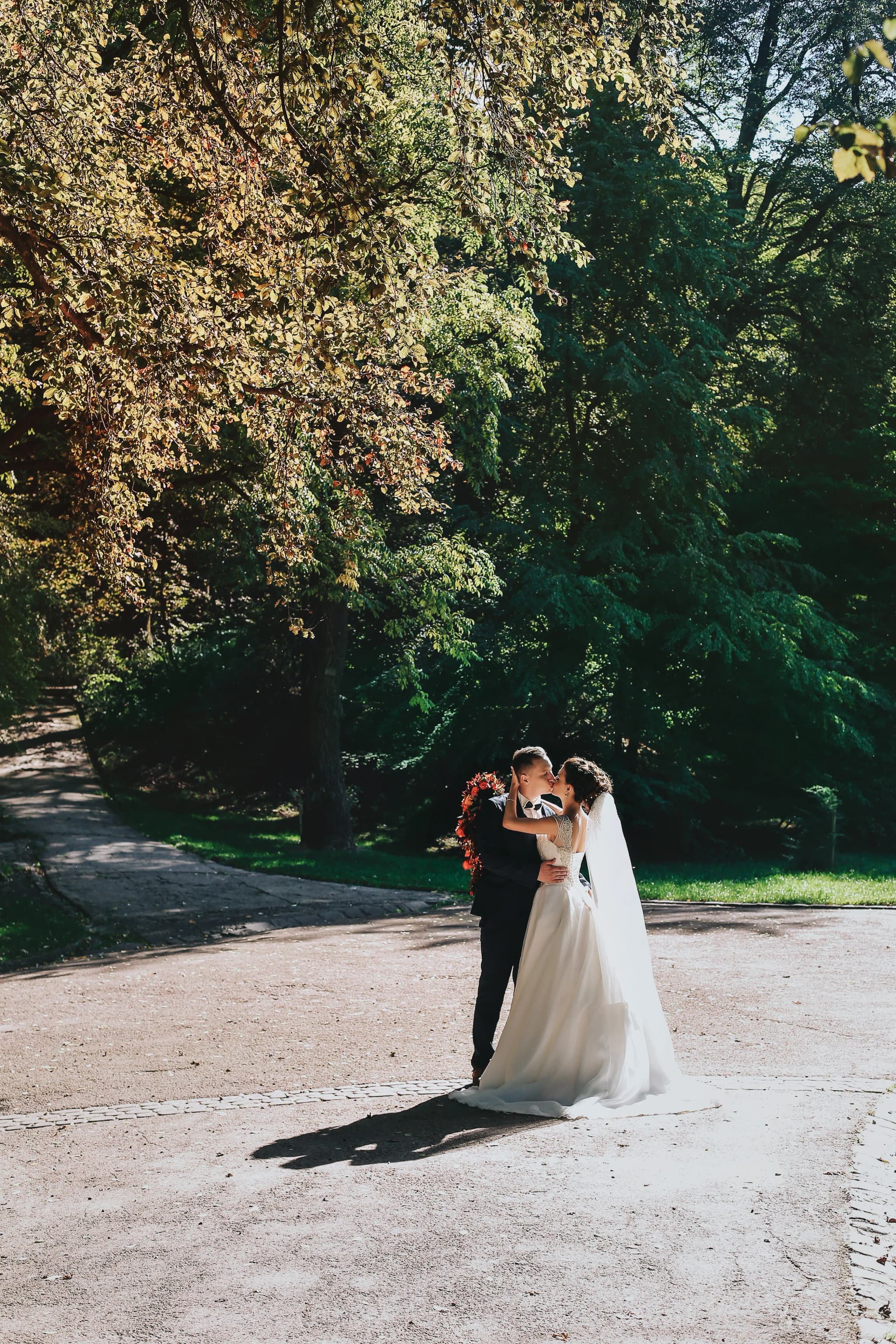
Autumn woodland is one of the most visually extraordinary natural environments available to a wedding photographer, and England has some genuinely fine ancient woodland within reach of most venues. Beech hangers, oak groves, chestnut avenues, and mixed deciduous woodland that has been growing in place for centuries: when October turns these landscapes, the effect is of a thousand shades of gold applied with no interest in restraint whatsoever. This piece focuses specifically on woodland as a wedding photography setting — what makes it work, which species matter most, and how I approach the practical challenges of shooting inside a forest rather than in open ground.
What Makes Woodland Photography Exceptional in Autumn
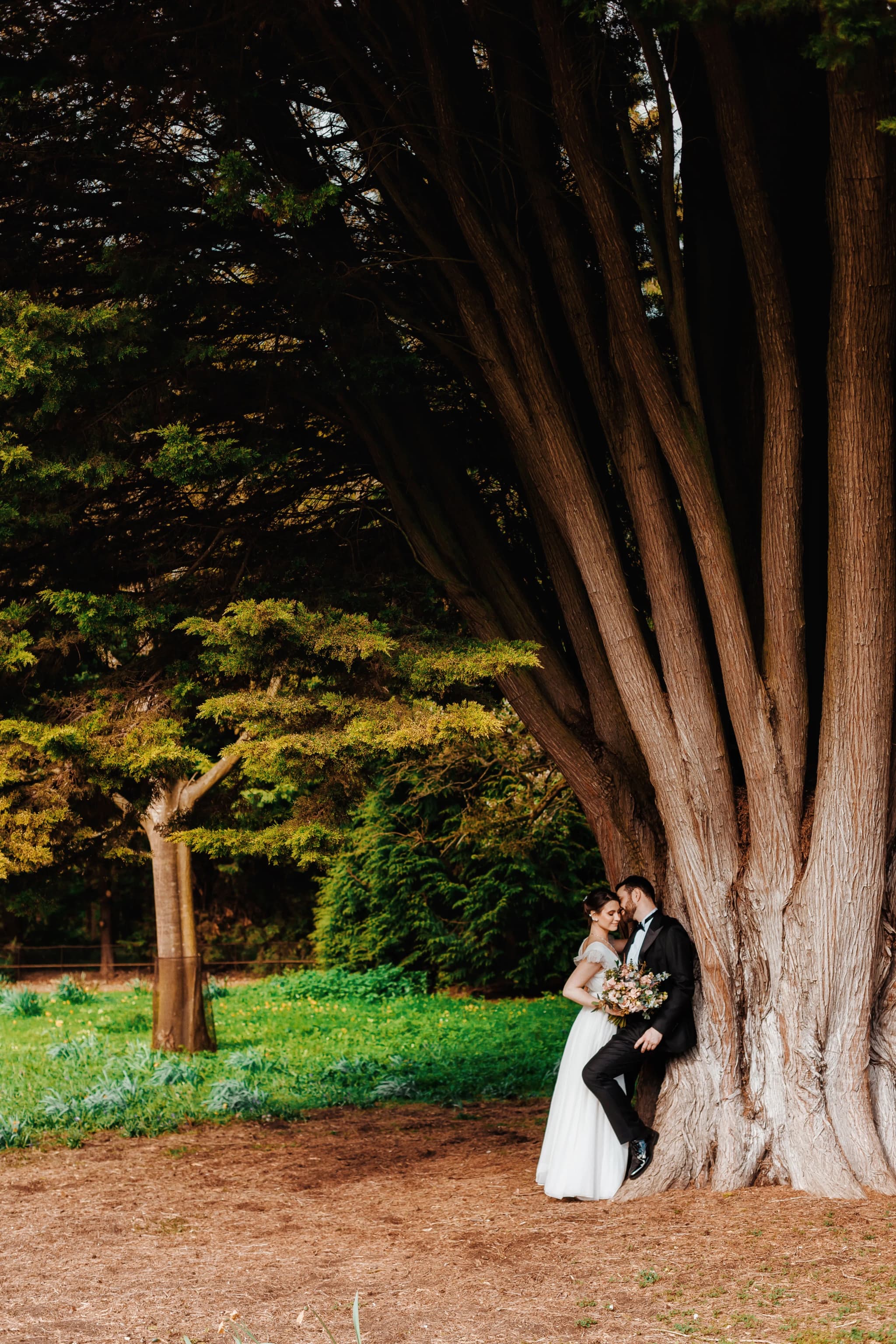
Several elements come together in autumn woodland in a way that is genuinely well suited to wedding photography. The light filtering through a beech canopy at full autumn colour has a quality that no other light source can replicate — warm, diffuse, and constantly shifting as the breeze moves the leaves above. The woodland floor itself, deep in dropped leaves and often carpeted in beech mast or acorn caps by October, adds a textural depth to every frame that a mown lawn simply cannot provide. Mature trees also give a genuine sense of scale: a couple standing beneath a two-hundred-year-old beech reads very differently, and photographs very differently, from the same couple on an open lawn with nothing overhead.
Woodland also creates a natural sense of seclusion and intimacy that is hard to achieve deliberately in an open setting. Being enclosed within the trees, with the rest of the world effectively invisible beyond the canopy, changes how couples behave in front of the camera — there is less awareness of being watched or photographed, which tends to produce more relaxed, genuine expressions. The sound and sensation of woodland matters too: the crunch of leaves underfoot, the movement of branches overhead, the slightly muffled acoustic quality of a forest all affect how people feel during the session, and that feeling comes through in how their expressions read afterwards.
The Species That Matter Most
Beech is the most dramatic autumn woodland species for photography purposes. Beech leaves turn gold, orange, and copper, and tend to hold on the tree well into November before falling in a genuine cascade, which gives a longer window of good colour than many other species. Beech woodland in low October light is extraordinary, and some of the most photogenic beech woodland in England can be found in the Chilterns, along the South Downs, and in the New Forest, though closer to Cambridge, Wandlebury Country Park on the Gog Magog Hills offers a smaller-scale but genuinely beautiful beech setting.
Oak colours later than beech but produces rich, deep russet tones once it does. Ancient oaks standing in hedgerows or open parkland, rather than closed woodland, create a different kind of autumn setting — more isolated, more sculptural, with a single tree as the focal point rather than an enclosing canopy. Silver birch is usually the first species to turn, often as early as September, and produces the brightest yellow of any tree in the autumn palette; birch woodland has an airy, delicate quality that feels quite different from the density of oak or beech. Sweet chestnut is among the most vivid colouring trees of all, turning a brilliant gold through October, and chestnut avenues on estate properties can be genuinely spectacular for a formal portrait walk.
Working With Woodland Light Practically
Light inside woodland is more complex to work with than light in an open field, and this is where experience matters. It can be very dark under a dense, unbroken canopy and very bright the moment the canopy opens into a clearing, sometimes within the space of a few metres. I work with different apertures and camera positions through a woodland session specifically to balance the atmospheric darkness that makes woodland feel like woodland against the clarity needed to properly render faces and expressions, rather than letting one extreme dominate the whole set of images.
One technique I return to often is positioning a couple so the canopy sits between them and the sun, backlighting the leaves around them. This produces a translucent glow around the edges of the frame that is genuinely difficult to achieve any other way, and it tends to be among the most striking images from any autumn woodland session.
Dreaming of an autumn woodland wedding?
I love working in autumn woodland and know several locations around Cambridgeshire that consistently deliver beautiful colour and light.
Find the right woodland settingPractical Considerations for the Wedding Day
Woodland locations are rarely directly beside a car park or the venue itself, so I factor travel and walking time into the day's schedule rather than assuming it will happen instantly. A dress with a train, or heels on an uneven, root-covered path, need consideration in advance — many brides bring a second pair of flat shoes specifically for a woodland portrait session, changing back before returning to the reception. Weather is also worth planning around more carefully than in open ground: woodland after rain holds moisture on the floor for longer than an open lawn does, and while a bit of mud rarely ruins a wedding day, knowing about it in advance means nobody is caught off guard.
I always scout a specific woodland location in the weeks before a wedding where possible, checking the state of the canopy and the condition of the paths, so that on the day itself I already know exactly where the light will be best and can move the couple there efficiently rather than spending valuable time searching.
Combining Woodland With a Wider Venue
Woodland rarely needs to be the only setting for a wedding's photography, and I usually treat it as one part of a broader day rather than the whole story. A venue with its own formal gardens or lawns for the ceremony and reception, paired with a short walk into adjacent or nearby woodland for a focused portrait session, gives a day genuine visual variety — the formality of the main setting alongside the more intimate, atmospheric quality that woodland brings. Several countryside wedding venues around Cambridgeshire have exactly this combination on their own grounds or within a short walk, which removes the need for a separate journey partway through the day.
Where a venue does not have its own woodland, I am always happy to suggest a nearby public location that suits the couple's style, provided travel time is built sensibly into the schedule rather than assumed to happen instantly between other parts of the day.
Group Photographs in a Woodland Setting
Woodland is generally better suited to couple portraits and small, informal groups than to large, formal family line-ups. Narrow paths and uneven ground make it genuinely difficult to arrange fifteen or twenty guests for a traditional group photograph in the way an open lawn allows, so I usually reserve woodland time specifically for the couple, the wedding party, or small family groupings, and keep the larger formal groups for a more open area near the main venue. Explaining this distinction to couples in advance, rather than during the day itself, helps set realistic expectations for what woodland time will actually be used for.
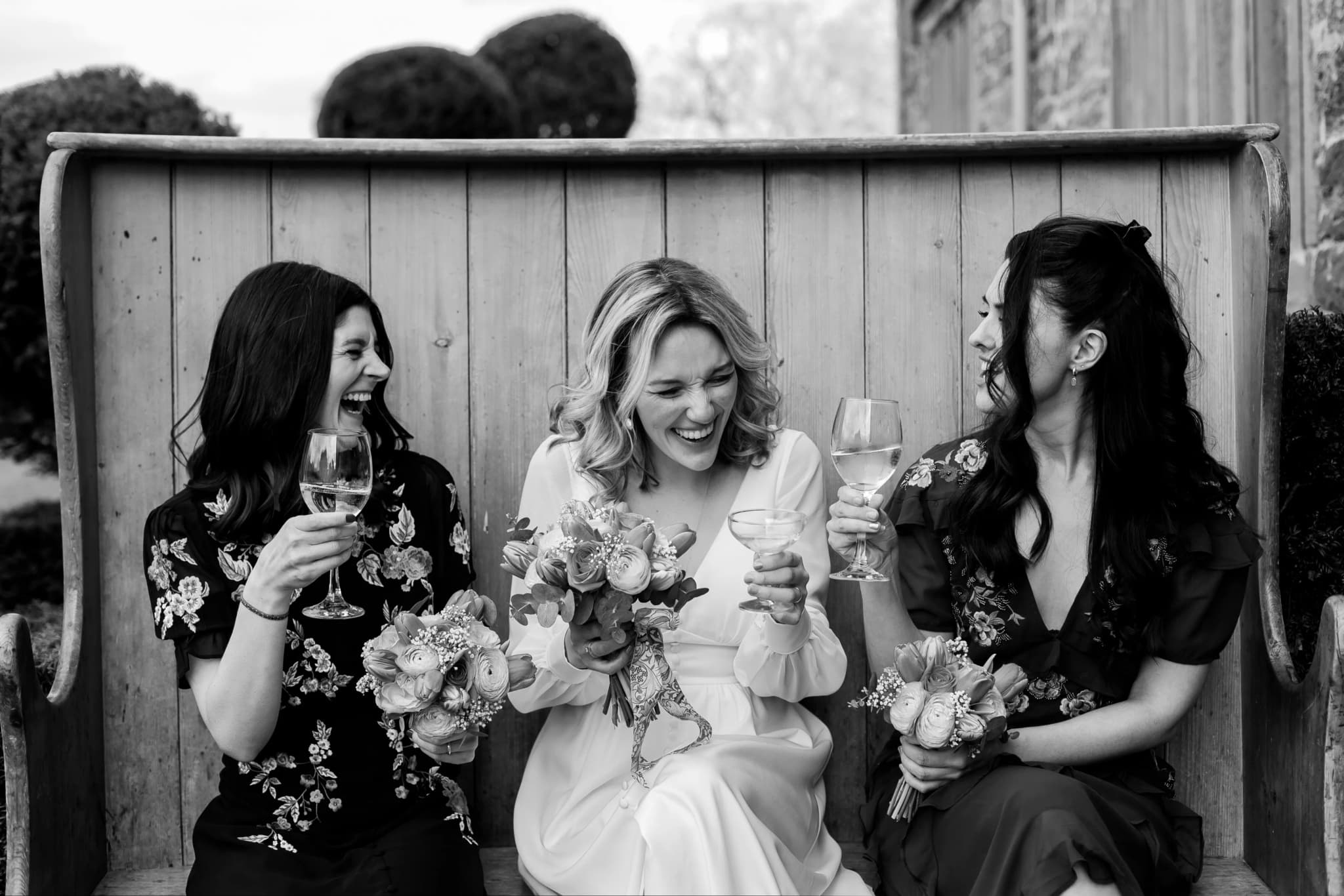
Wedding parties in particular tend to enjoy woodland settings, since the more relaxed, playful atmosphere among a group of close friends translates well into genuine laughter and movement, producing images with a different energy from the more composed formal family photographs taken elsewhere in the day.
For couples who want both a formal group record and a set of relaxed woodland images, I usually suggest completing the required formal groups first at the main venue, then treating any woodland time afterwards as unstructured and purely for the couple, the wedding party, or however many people can comfortably fit along a woodland path without the session turning into a logistical exercise.
Autumn woodland gives wedding photography a depth, warmth, and sense of scale that few other settings can match, and the window to make the most of it each year is genuinely short. If you are considering a woodland setting for your wedding portraits this autumn, get in touch and I can suggest locations that suit your venue and the style of images you want.


Yana Skakun
Photographer · England
Professional wedding, family and portrait photographer based in England. Passionate about capturing authentic emotions and timeless moments.
About Yana →autumn woodland wedding photographyfall woodland wedding UKforest wedding photographer autumn England
Wedding Tips — Wedding Photography in Cambridge & England
Yana Skakun is a professional wedding photographer based in Cambridge, covering weddings across England — from intimate elopements to full-day ceremonies at country houses, barns, and city venues. Every couple receives a relaxed, documentary approach that captures the day as it truly unfolds. This guide — Autumn Woodland Wedding Photography: Thousand Shades of Gold — is part of the photography journal: practical, experience-based advice drawn from real sessions across England. Whether you arrived searching for autumn woodland wedding photography or fall woodland wedding uk, the same care and attention shapes every session Yana photographs.
Wedding Photography sessions are available year-round, with bookings open across Cambridge, Ely, Huntingdon, Peterborough, and further afield — East England, London, the Midlands, and beyond. If you have specific questions about forest wedding photographer autumn england, mention it in your enquiry. Get in touch through the contact form above to check availability and discuss your session. Enquiries are welcomed from anywhere in the UK.
Frequently Asked Questions
How much does a wedding photographer cost in England?+
Wedding photography in England typically ranges from £1,500 to £4,000+ for a full day. Price depends on experience, coverage hours, and whether albums or engagement shoots are included. Most photographers charge between £2,000–£3,000 for 8–10 hours of coverage.
How early should you book a wedding photographer?+
For peak season (May–September), book 12–18 months in advance. For autumn and winter weddings, 9–12 months is usually sufficient. Popular photographers at popular venues fill up fast — as soon as you have a date and venue confirmed, start reaching out.
How many photos do you get from a wedding photographer?+
Most professional wedding photographers deliver 400–800 edited images for a full-day wedding. The exact number depends on coverage hours, how many guests there are, and the photographer's editing style. Quality matters more than quantity — a curated gallery of 500 images tells the story better than 1,500 unedited files.
Do you need a second photographer at your wedding?+
A second photographer is helpful if you want simultaneous coverage of getting-ready moments in different locations, multiple angles during the ceremony, or more candid coverage during the reception. It adds cost but significantly increases the variety and completeness of your gallery.
What is the difference between documentary and editorial wedding photography?+
Documentary (reportage) wedding photography captures moments as they happen — the photographer observes and doesn't intervene. Editorial photography involves deliberate direction: placing you in good light, shaping compositions, creating intentional portraits. Most photographers blend both styles throughout the day.
Continue Reading
Related Articles

Wedding Tips
Sustainable Eco-Friendly Wedding Guide — Planning a Green Celebration
15 min read · Read Article
Wedding Tips
Trash the Dress Session — Complete Planning and Photography Guide
14 min read · Read Article
Wedding Tips
Client Communication for Photographers — From Enquiry to Gallery Delivery
15 min read · Read Article
Get in Touch
Ready to Book Your Session?
Get in touch to discuss your vision — I'll reply within 24 hours.