Yana Skakun
Beach Wedding Guide for England: Rules, Venues & Photography Tips
By Yana Skakun·20 March 2026·6 min read
Beach weddings in England carry a quality you simply cannot manufacture in a marquee or a manor house. The salt wind, the shifting light, the sound of waves behind your vows — these are the things couples remember decades later. Having photographed coastal ceremonies from the chalk cliffs of East Sussex to the wide sands of Northumberland, I can say with confidence that an English beach wedding, done thoughtfully, produces some of the most moving and visually distinctive photographs of any setting in the country.
The Legal Landscape: What a Beach Ceremony Actually Looks Like
One of the first questions every couple asks is whether they can legally marry on a beach in England. The honest answer is: not on an open beach, in the open air. Under English and Welsh law, civil ceremonies must take place in a building or structure with a permanent roof that holds a wedding licence. This means the ceremony you picture — barefoot in the sand, waves behind you — will almost certainly be a symbolic or blessing ceremony rather than the legal marriage itself.
The most practical approach is a two-part day. Couples sign the register at a licensed venue — sometimes a seafront hotel, a converted lifeboat station, or a beach hut complex that holds a licence — and then move to the beach itself for a symbolic renewal, a blessing, or simply portraits and celebration. A number of venues have secured licences precisely because couples want this combination: the legal formality handled elegantly, the emotional moment given space on the shoreline.
It is worth asking your registrar or venue coordinator specifically about licensed outdoor structures near the coast. Several coastal venues in Cornwall, Norfolk, and Northumberland have invested in certified structures — gazebos, pavilions, walled gardens — that sit within metres of the sea and carry the necessary approval. The landscape changes, and so does the licensing landscape with it.
Choosing Your Beach: England's Most Photogenic Coastline
England's coastline runs to roughly 2,748 miles, and within that distance is an extraordinary variety of landscape. The right beach for your wedding photography depends on what feeling you want the images to carry. Dramatic and wild? Intimate and golden? Romantic and cinematic? Each stretch of coast answers a different brief.
The Seven Sisters in East Sussex remain, in my experience, one of the most powerful backdrops available to any wedding photographer in England. The white chalk cliffs rising from the English Channel, the green clifftop, the swirling sky — the scale is humbling. Couple portraits here have an epic quality that is genuinely hard to achieve elsewhere. Birling Gap offers beach access at the foot of the cliffs, and the combination of cliff, sky, and pebbled shore in a single frame is extraordinary.
Holkham Beach in Norfolk is a different proposition altogether. The vast, flat expanse of pale sand backed by National Nature Reserve pines creates images of almost minimalist beauty. The sky is enormous here, which means golden-hour light is transformative. Bamburgh in Northumberland pairs one of England's finest castles with a sweeping north-facing beach — the North Sea sky above Bamburgh Castle as the tide comes in is the kind of shot that ends up on the cover of wedding magazines. For those drawn to the softer palette of the west, the coves of the Lizard Peninsula in Cornwall and the harbour beaches of St Ives offer a warmth that surprises visitors expecting grey northern seas.
Timing and Light: Working With the Coast, Not Against It
Coastal light is different from inland light. The sea reflects and amplifies it, clouds form and break more rapidly, and the golden hour at the coast is frequently more saturated and more dramatic than the equivalent inland. I always scout coastal locations at least once before a wedding shoot, because the quality and direction of light changes with the season, the tidal pattern, and the orientation of the beach. A west-facing beach at sunset in September is an entirely different proposition from the same beach in June at noon.
The single most important thing couples can do for their beach wedding photography is to trust the tide table. A beautiful beach at low tide can be dramatically reduced at high tide, and some of the most atmospheric locations — the rock pools at Kynance Cove, the sand flats at Holkham, the wet-sand mirror at Camber Sands — are only accessible or visually striking at specific points in the tidal cycle. I build tide tables into my planning for every coastal shoot, and I strongly recommend couples do the same when choosing ceremony and portrait times.
Golden hour at the coast — the 45 minutes before sunset — is worth building your entire afternoon schedule around if you can. The low-angle light catches the texture of sand, illuminates faces from the side in the most flattering possible way, and turns the sea a shade of hammered copper or deep rose that no artificial lighting can replicate. If your venue allows a beach portrait session at golden hour, do not sacrifice it for a longer sit-down dinner. The photographs will last considerably longer than an extra course.
Planning a coastal wedding in England?
I travel across England for coastal ceremonies and portrait sessions. Whether you have already chosen your beach or are still weighing up locations, I am happy to advise on timing, tides, and what to expect on the day. Get in touch to discuss your plans or explore my wedding photography work.
What to Wear: Dressing for the English Coast
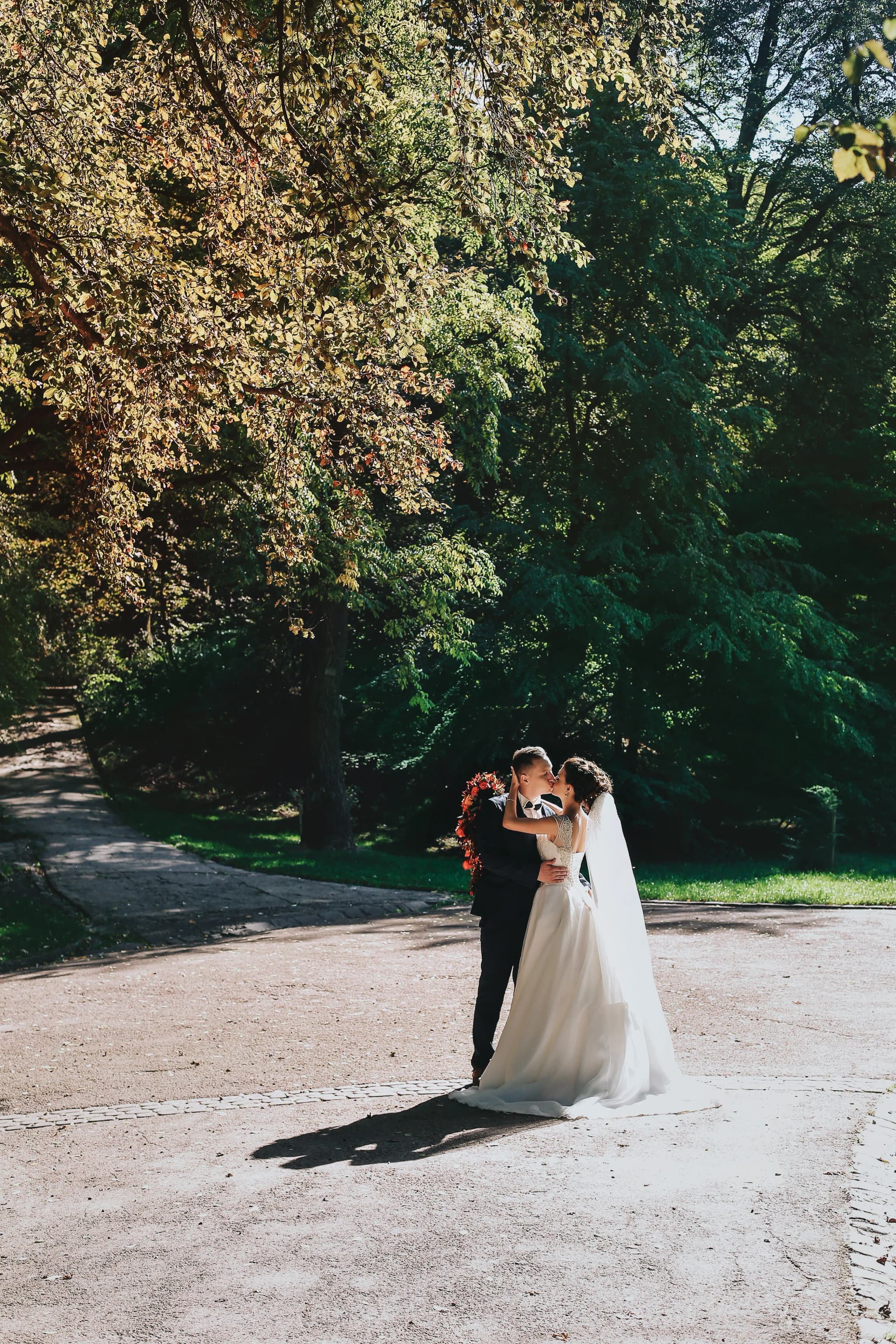
The English coast is not always warm, and it is rarely still. Wind is the single factor that most couples underestimate when they plan a beach wedding. A strapless gown that works beautifully in a calm garden can become an active distraction on a Cornish headland in May. This is not a reason to change your dress — it is a reason to think about how wind can be used rather than fought. A full skirt caught mid-movement by a sea breeze creates one of the most romantic images in wedding photography. Flyaway hair and movement are not problems to be controlled; they are part of what makes coastal images feel alive.
Practically speaking, fabric choices matter. Heavy silk crepe, lace with some structure, and fabrics with body tend to photograph better in moving air than very light chiffon, which can wrap and cling unpredictably. Grooms considering linen should know that it becomes attractively rumpled in sea air almost immediately, which gives coastal portraits a relaxed, editorial quality — many couples find they love the result. Footwear is a separate calculation entirely: most couples simply carry shoes to the beach and go barefoot for portraits, which always looks right and feels genuinely freeing.
Logistics and Practical Planning on the Day
Beaches in England are almost always public land, which means there are no booking fees or access restrictions — but it also means other people. The most popular coastal locations in summer attract significant visitor numbers, and a Saturday afternoon at Durdle Door or Seven Sisters will include walkers, families, and tourists. This is manageable with good timing and positioning, but it is worth having a realistic conversation with your photographer about what is achievable and when. Early mornings and late afternoons are almost always quieter, and some beaches that are busy midday are entirely empty at 6am or 7pm in summer.
Parking, access, and distances are worth researching carefully. Several of England's most beautiful coastal spots involve a genuine walk from the nearest parking area — Holkham requires a 15-20 minute walk through the pines, Kynance Cove involves a steep descent, and the path to Durdle Door is not trivial in a wedding dress and with a group. I always advise couples to recce their chosen location in person before the wedding, wearing something close to what they will wear on the day, to understand what is involved. The effort is nearly always worth it, but it is better to know in advance.
Weather contingency planning is essential for any outdoor English event and doubly so for coastal ones, where temperature and wind can change within an hour. Having a specific indoor fallback identified, agreed with your venue, and communicated to guests reduces anxiety enormously. In practice, I have shot beach portraits in light rain and low cloud and produced some of the most atmospheric images of my career. Overcast English coastal light is genuinely beautiful — soft, even, and evocative. Do not write off a grey day before you see what it produces.
Working With a Photographer on the Coast
A beach setting changes the technical demands on a photographer considerably. Sand reflects light upward and can cause unexpected under-exposure or harsh shadows; sea spray and salt air require lens protection; the contrast between a bright sky and a shaded subject needs active management. I use a combination of reflectors, portable off-camera flash, and careful positioning relative to the sun to make sure faces are always lit well, even against a dramatic backdrop. The goal is never to fight the environment but to understand it and work with it.
The most important thing couples can bring to a coastal portrait session is willingness to be present in the place. The photographs that genuinely move people — the ones that get framed, that friends ask about at Christmas years later — are the ones where the couple is actually experiencing where they are. Standing at the edge of the sea in the late afternoon, hearing the waves, feeling the wind, looking at each other rather than the camera: that is the raw material of memorable photography. I always set aside time at coastal shoots for couples to simply walk, explore, and be somewhere together. The images from those minutes are consistently the ones they treasure most.
An English beach wedding, with all its unpredictability and wildness, is one of the most honest settings for a marriage. The coast does not flatter or soften; it reveals. The photographs it produces carry that quality — real, moving, and unmistakably of this particular island. If you are considering a coastal ceremony or portrait session and want to talk through what is possible, I would be genuinely glad to hear from you.


Yana Skakun
Photographer · England
Professional wedding, family and portrait photographer based in England. Passionate about capturing authentic emotions and timeless moments.
About Yana →beach weddings Englandbeach wedding guide UKbeach wedding ceremony photographer England
Wedding Tips — Wedding Photography in Cambridge & England
Yana Skakun is a professional wedding photographer based in Cambridge, covering weddings across England — from intimate elopements to full-day ceremonies at country houses, barns, and city venues. Every couple receives a relaxed, documentary approach that captures the day as it truly unfolds. This guide — Beach Wedding Guide for England: Rules, Venues & Photography Tips — is part of the photography journal: practical, experience-based advice drawn from real sessions across England. Whether you arrived searching for beach weddings england or beach wedding guide uk, the same care and attention shapes every session Yana photographs.
Wedding Photography sessions are available year-round, with bookings open across Cambridge, Ely, Huntingdon, Peterborough, and further afield — East England, London, the Midlands, and beyond. If you have specific questions about beach wedding ceremony photographer england, mention it in your enquiry. Get in touch through the contact form above to check availability and discuss your session. Enquiries are welcomed from anywhere in the UK.
Frequently Asked Questions
How much does a wedding photographer cost in England?+
Wedding photography in England typically ranges from £1,500 to £4,000+ for a full day. Price depends on experience, coverage hours, and whether albums or engagement shoots are included. Most photographers charge between £2,000–£3,000 for 8–10 hours of coverage.
How early should you book a wedding photographer?+
For peak season (May–September), book 12–18 months in advance. For autumn and winter weddings, 9–12 months is usually sufficient. Popular photographers at popular venues fill up fast — as soon as you have a date and venue confirmed, start reaching out.
How many photos do you get from a wedding photographer?+
Most professional wedding photographers deliver 400–800 edited images for a full-day wedding. The exact number depends on coverage hours, how many guests there are, and the photographer's editing style. Quality matters more than quantity — a curated gallery of 500 images tells the story better than 1,500 unedited files.
Do you need a second photographer at your wedding?+
A second photographer is helpful if you want simultaneous coverage of getting-ready moments in different locations, multiple angles during the ceremony, or more candid coverage during the reception. It adds cost but significantly increases the variety and completeness of your gallery.
What is the difference between documentary and editorial wedding photography?+
Documentary (reportage) wedding photography captures moments as they happen — the photographer observes and doesn't intervene. Editorial photography involves deliberate direction: placing you in good light, shaping compositions, creating intentional portraits. Most photographers blend both styles throughout the day.
Continue Reading
Related Articles

Wedding Tips
Sustainable Eco-Friendly Wedding Guide — Planning a Green Celebration
15 min read · Read Article
Wedding Tips
Trash the Dress Session — Complete Planning and Photography Guide
14 min read · Read Article
Wedding Tips
Client Communication for Photographers — From Enquiry to Gallery Delivery
15 min read · Read Article
Get in Touch
Ready to Book Your Session?
Get in touch to discuss your vision — I'll reply within 24 hours.