Yana Skakun

The Best Wedding Photo Poses for Real Couples (Not Models)
By Yana Skakun·10 June 2026·5 min read
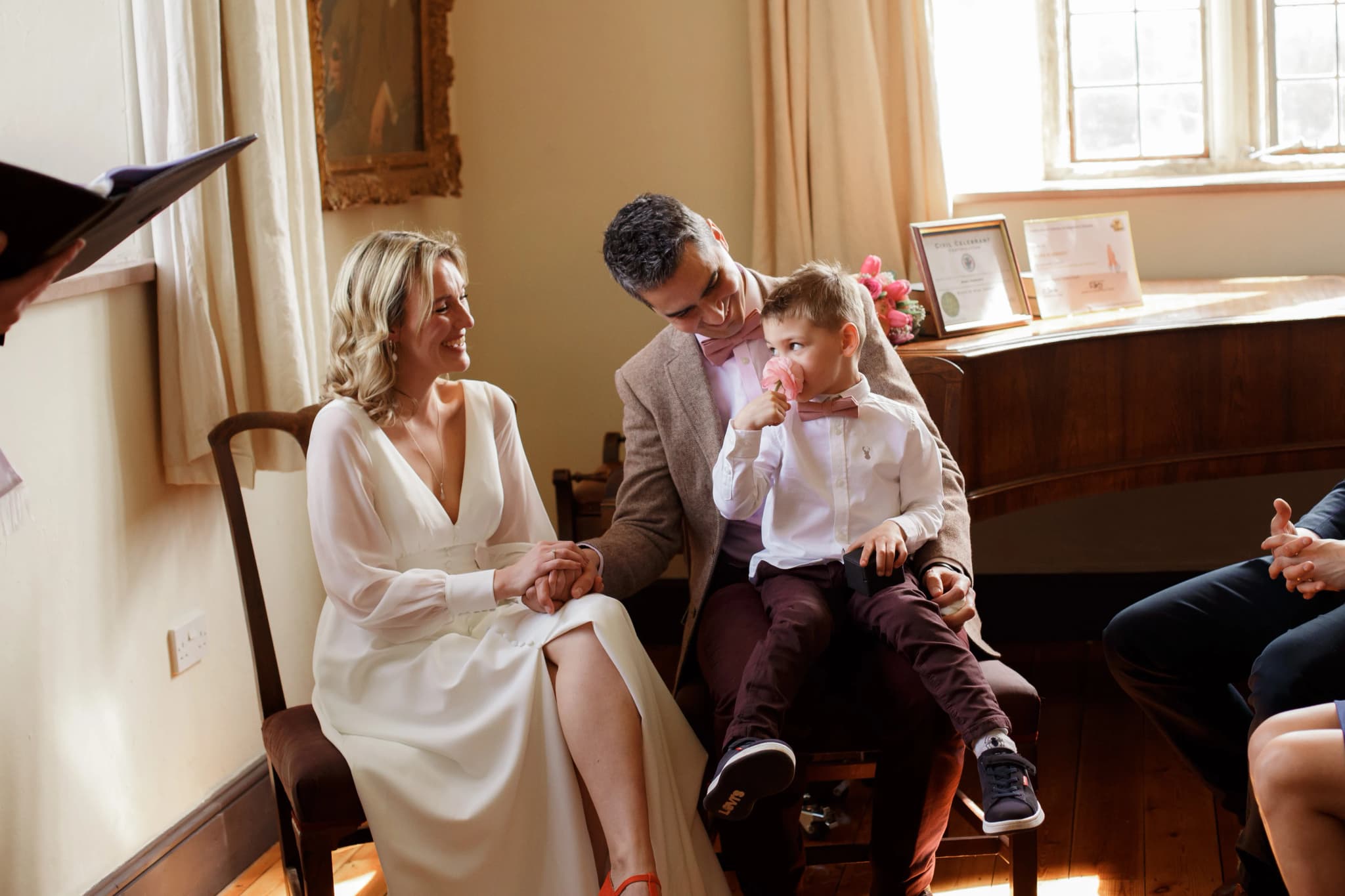
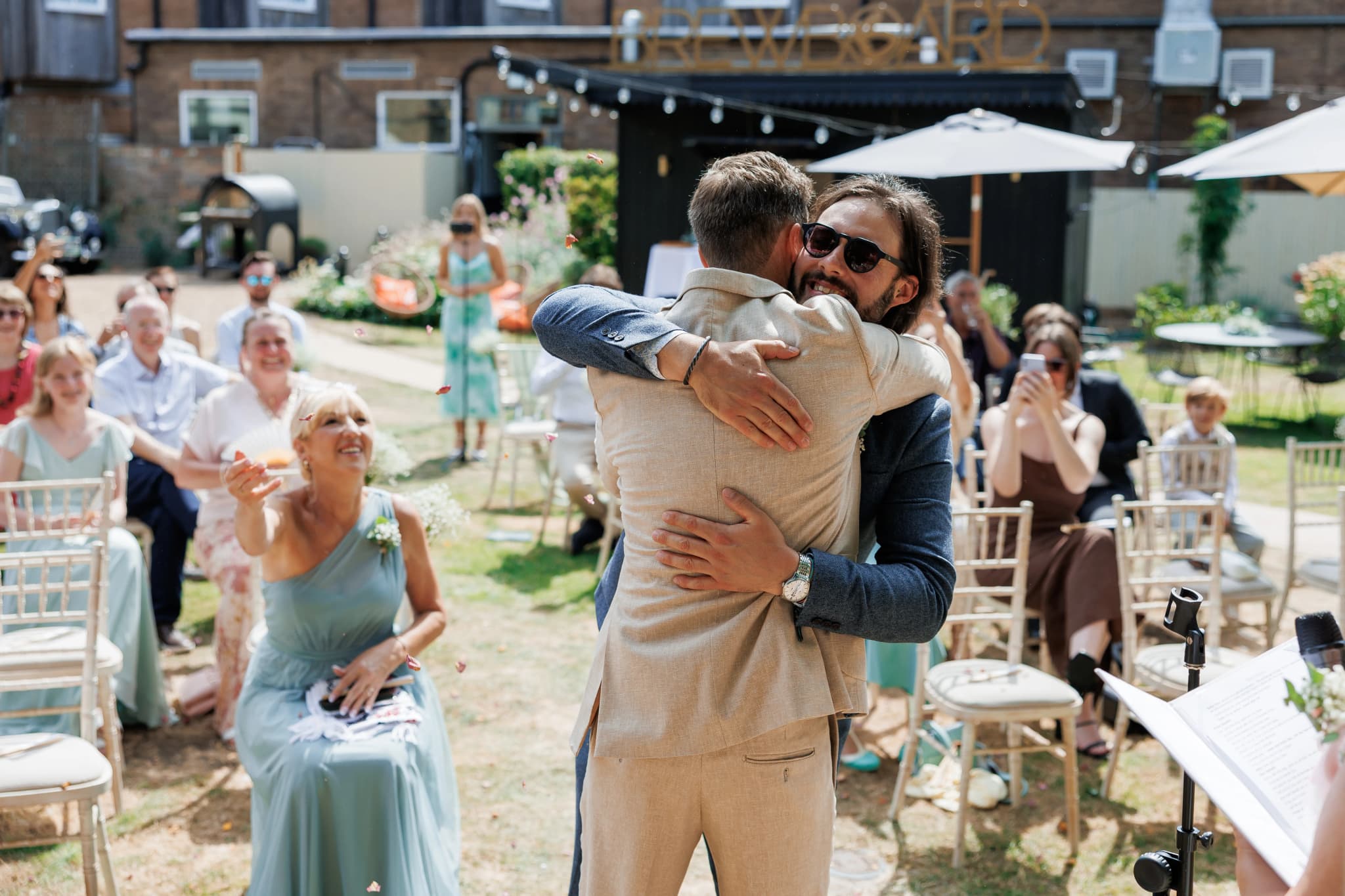
Most couples who sit down with me before their wedding say the same thing: "We're not very photogenic." What they really mean is that they've never been directed by someone who knows how to make real people — people who aren't professional models — look completely natural in front of a camera. The truth is, the best wedding photographs don't come from perfecting a pose; they come from finding movements and moments that feel genuinely like you.
Why "Posing" Is the Wrong Word
When most people hear "wedding photo poses," they picture something stiff — hands placed just so, chins tilted at a prescribed angle, smiles held until they ache. That approach produces photographs that look like they belong in a catalogue, not in a family album. For real couples, what works far better is what I call guided movement: small, natural actions that create authentic expressions as a byproduct.
Instead of asking a couple to "stand closer together," I'll ask the partner on the left to whisper something they love about today into their partner's ear. Instead of telling someone to smile, I'll ask them to think about the moment they knew this was the person they wanted to marry. The result is not a performed smile — it's a real one. That distinction is visible in every single photograph, and it's the difference between images you'll treasure and images you'll tolerate.
At Cambridge weddings especially, where the architecture and light are extraordinary, I want the couple to inhabit the setting rather than merely stand in front of it. That only happens when they're relaxed enough to forget the camera exists — and guided movement is how we get there.
The Core Poses That Work for Almost Every Couple
Over years of shooting weddings across Cambridgeshire, Suffolk, and London, I've returned again and again to a handful of foundational approaches that consistently produce beautiful, unforced images. These aren't rigid poses — they're starting points that I then adapt to each couple's dynamic and each venue's light.
- ◆The Slow Walk: Ask the couple to walk toward you slowly, holding hands, talking about anything at all. The movement relaxes the body, the conversation relaxes the face, and the resulting images have a timeless, editorial quality that static poses rarely achieve. Works especially well on country lanes, riverside paths, and college courtyards.
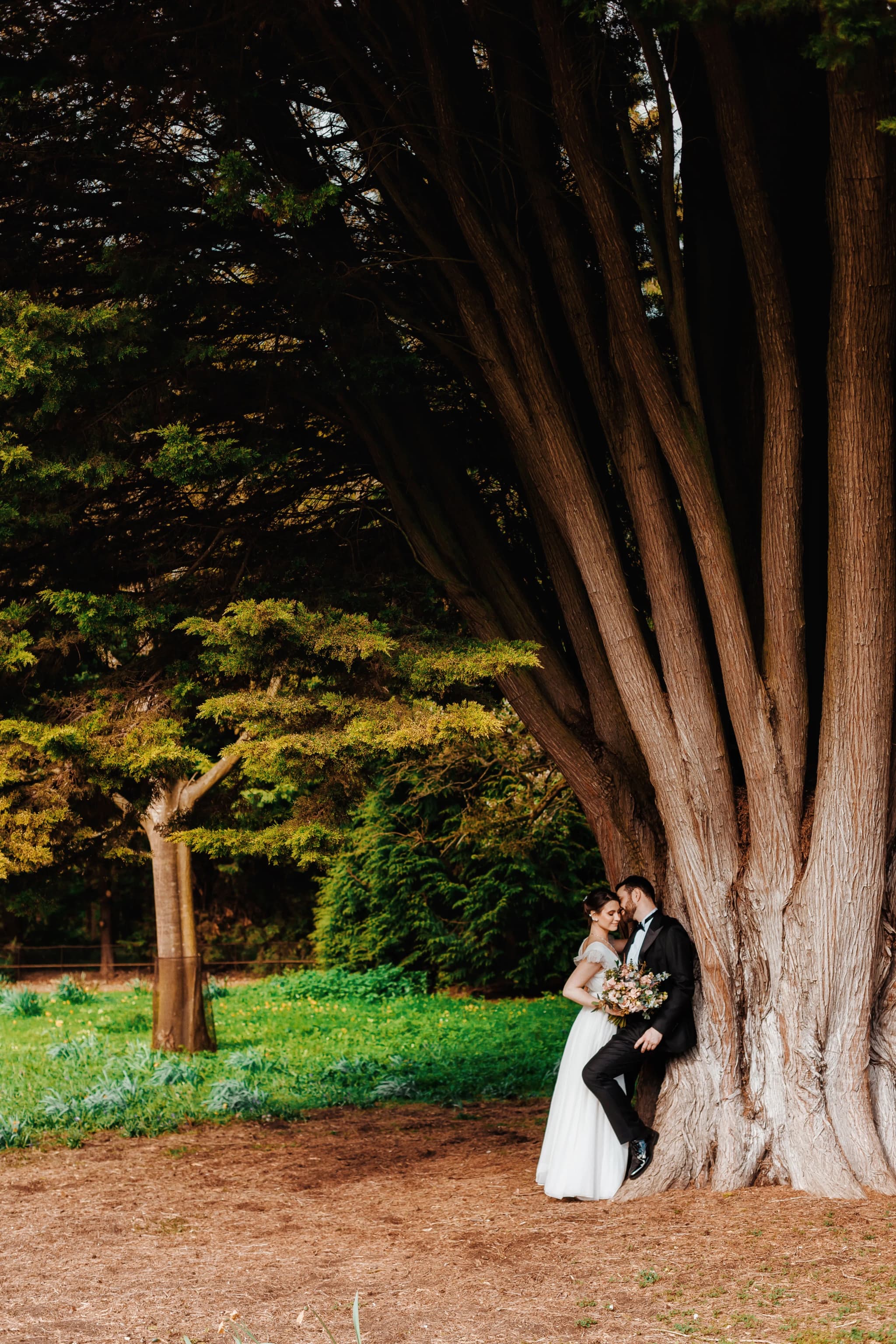
- ◆Forehead Touch: Both partners close their eyes and rest their foreheads together. This is intimate without requiring any performance — the closed eyes mean neither person feels watched, which removes self-consciousness entirely. The resulting expression is almost always genuinely tender. It photographs beautifully in both natural light and golden-hour.
- ◆The Wrap-Around: One partner stands slightly behind the other, arms around their waist, chin resting lightly on their shoulder or near their cheek. This works because it's a position couples naturally adopt in everyday life — watching something together, standing at a kitchen window. The body recognises it as safe and relaxed, so the face follows.
- ◆Looking Away Together: Both partners face the same direction, looking at something in the middle distance — a view, the venue, the horizon. I use this to capture in-between moments: a quiet laugh, a shared glance, a hand squeeze. It removes the pressure of "performing" for the lens and often produces the most honest images of the entire day.
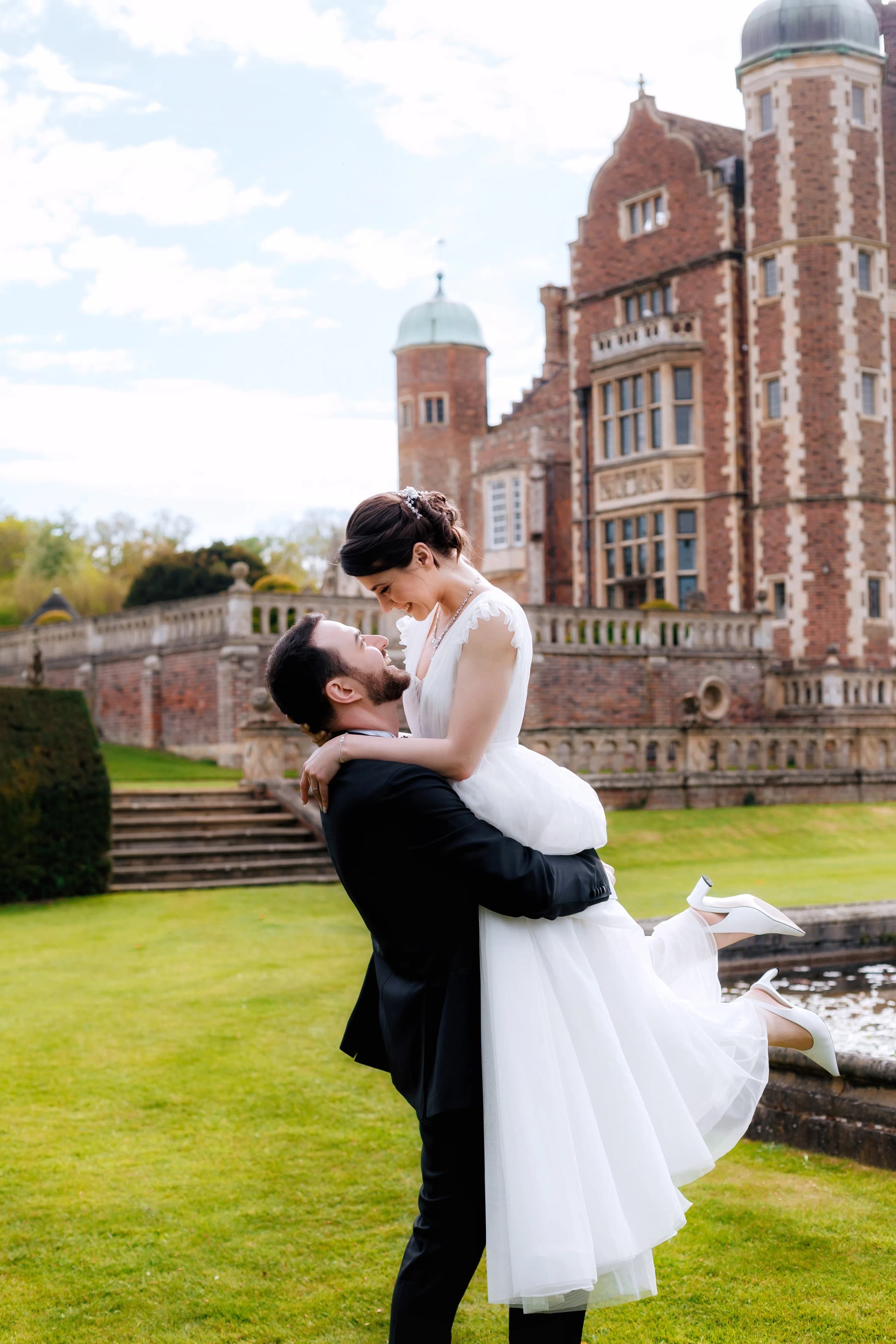
- ◆The Dip (Used Sparingly): A gentle, controlled dip — not a dramatic theatrical one — works for couples who are physically comfortable with each other and enjoy a bit of playfulness. The key is keeping it slow and holding the position for several seconds so I can capture both the movement and the laughter that almost always follows.
- ◆Sitting Together: Sitting removes the stiffness that standing in front of a camera creates. On a barn step, a churchyard wall, a hotel staircase — sitting brings eye levels together, encourages leaning in, and produces an immediate sense of ease. It's particularly effective for quieter, more introverted couples who find standing and being looked at uncomfortable.
How UK Wedding Venues Shape the Poses You Use
Posing at a converted barn in Suffolk requires completely different instincts from posing in a Cambridge college chapel or a London townhouse. In a barn with exposed beams and warm tungsten light, I lean into the close, cosy, tactile poses — the wrap-around, sitting on a hay bale, slow dancing without music. The warmth of the space calls for warmth in the images.
In a grand college setting — King's, Queens', Peterhouse — the scale of the architecture is part of the story. I'll use the colonnades and archways to frame the couple, often with one of them slightly ahead of the other, glancing back. The architectural grandeur does half the work; the couple's job is simply to move naturally through it. Wide angles that show the setting alongside the couple tend to outperform tight portrait shots in these environments.
For outdoor weddings in the British countryside — which so often means working with unpredictable light and the occasional light drizzle — I favour movement-based approaches that read well even in flat, overcast conditions. The slow walk, the forehead touch, and the wrap-around all photograph beautifully without requiring golden-hour sunshine.
What to Do If You're Nervous About Being Photographed
Almost every couple I've ever worked with has told me, at some point before the wedding, that they hate having their photograph taken. And almost every couple has told me afterwards that the portrait session was one of the highlights of the day. The gap between those two feelings is almost entirely bridged by a photographer who gives clear, gentle direction and who takes the pressure off you to "do something photogenic."
My practical advice: book an engagement shoot before the wedding. Not because you need a set of formal engagement photographs (though many couples love them), but because spending an hour with your photographer in a low-stakes environment teaches you what direction feels like, what your instincts are, and what naturally makes both of you laugh. By the wedding day, working with me feels familiar rather than foreign — and that familiarity shows in every photograph.
I also always allow more time for portraits than strictly necessary. A rushed fifteen-minute portrait session produces tense photographs. When we have forty-five minutes to an hour, the first fifteen are warm-up, the middle section is where the magic happens, and the final stretch is pure enjoyment. I'd rather spend that extra time giving you photographs you'll print and frame than rushing back to the reception ten minutes earlier.
Group Shots and Family Portraits: Keeping It Manageable
The formal group photographs that happen after the ceremony are often the most logistically challenging part of any wedding day — and the part most couples dread. The key to keeping them quick and relatively painless is preparation. Before the wedding, I ask my couples for a numbered list of the group shots they want, ordered by priority, so we can move through them efficiently without anyone needing to think on the spot.
For family groups, I always encourage natural arrangement over rigid rows. Grandparents seated, parents standing behind, siblings and siblings' partners in whatever configuration feels natural — this produces photographs that look like a family, not a corporate headshot. I keep the instructions minimal: "Everyone take one step closer together," and then I watch for the moment when the arrangement settles and people stop thinking about where to stand.
For wedding party shots, I use a combination of guided walking shots (the whole party approaching camera) and relaxed standing groups where I encourage people to lean in, hold hands, adjust jackets — small movements that break the stiffness of a formal line-up. The resulting images tend to be genuinely joyful rather than merely organised.
Ready for portraits that actually look like you?
I work with real couples — not models — across Cambridge, Cambridgeshire, Suffolk, and London, guiding you through every portrait moment so the photographs feel effortless. If your date is still available, I'd love to talk about your wedding.
Check Your Date →

Yana Skakun
Photographer · England
Professional wedding, family and portrait photographer based in England. Passionate about capturing authentic emotions and timeless moments.
About Yana →bestweddingphotoposes
Wedding Tips — Wedding Photography in Cambridge & England
Yana Skakun is a professional wedding photographer based in Cambridge, covering weddings across England — from intimate elopements to full-day ceremonies at country houses, barns, and city venues. Every couple receives a relaxed, documentary approach that captures the day as it truly unfolds. This guide — The Best Wedding Photo Poses for Real Couples (Not Models) — is part of the photography journal: practical, experience-based advice drawn from real sessions across England. Whether you arrived searching for best or wedding, the same care and attention shapes every session Yana photographs.
Wedding Photography sessions are available year-round, with bookings open across Cambridge, Ely, Huntingdon, Peterborough, and further afield — East England, London, the Midlands, and beyond. If you have specific questions about photo, mention it in your enquiry. Get in touch through the contact form above to check availability and discuss your session. Enquiries are welcomed from anywhere in the UK.
Frequently Asked Questions
How much does a wedding photographer cost in England?+
Wedding photography in England typically ranges from £1,500 to £4,000+ for a full day. Price depends on experience, coverage hours, and whether albums or engagement shoots are included. Most photographers charge between £2,000–£3,000 for 8–10 hours of coverage.
How early should you book a wedding photographer?+
For peak season (May–September), book 12–18 months in advance. For autumn and winter weddings, 9–12 months is usually sufficient. Popular photographers at popular venues fill up fast — as soon as you have a date and venue confirmed, start reaching out.
How many photos do you get from a wedding photographer?+
Most professional wedding photographers deliver 400–800 edited images for a full-day wedding. The exact number depends on coverage hours, how many guests there are, and the photographer's editing style. Quality matters more than quantity — a curated gallery of 500 images tells the story better than 1,500 unedited files.
Do you need a second photographer at your wedding?+
A second photographer is helpful if you want simultaneous coverage of getting-ready moments in different locations, multiple angles during the ceremony, or more candid coverage during the reception. It adds cost but significantly increases the variety and completeness of your gallery.
What is the difference between documentary and editorial wedding photography?+
Documentary (reportage) wedding photography captures moments as they happen — the photographer observes and doesn't intervene. Editorial photography involves deliberate direction: placing you in good light, shaping compositions, creating intentional portraits. Most photographers blend both styles throughout the day.
Continue Reading
Related Articles

Wedding Tips
Sustainable Eco-Friendly Wedding Guide — Planning a Green Celebration
15 min read · Read Article
Wedding Tips
Trash the Dress Session — Complete Planning and Photography Guide
14 min read · Read Article
Wedding Tips
Client Communication for Photographers — From Enquiry to Gallery Delivery
15 min read · Read Article
Get in Touch
Ready to Book Your Session?
Get in touch to discuss your vision — I'll reply within 24 hours.