Yana Skakun
The Most Stunning Castle Wedding Venues Across England (2026)
By Yana Skakun·20 March 2026·6 min read
Castle weddings occupy a singular place in the English wedding landscape. No other venue type so immediately communicates the weight of history, the romance of deep time, and that distinctly English story running from Norman conquest through medieval power struggles, Civil War ruins, and Victorian restoration. To marry in a castle is to step inside a building that has witnessed more human drama than any purpose-built venue could imagine — and as a wedding photographer, I can tell you that drama translates directly into photographs of extraordinary depth and atmosphere.
The Range of Castle Venues Across England
England's castle wedding market is surprisingly varied, and understanding the distinctions matters enormously when you are choosing a venue. At one end sit the great living castles — Arundel in West Sussex and Belvoir in Leicestershire remain private family homes where weddings take place in specific state rooms and carefully managed grounds. These venues carry an intimacy alongside the grandeur: you are guests in someone's ancestral home, and that feeling saturates the day.
Then there are the purpose-managed castle wedding destinations. Leeds Castle in Kent, Hever Castle (childhood home of Anne Boleyn), and Peckforton Castle in Cheshire have been developed specifically as wedding venues with full coordination services, dedicated bridal suites, and catering infrastructure built in. These are often the most logistically straightforward choice, particularly for larger guest lists. Further still are the romantic ruin venues — Helmsley, Corfe, and Kenilworth among them — where the lawful ceremony takes place in a modern register office or licensed space, while the couple use the ruined castle itself as backdrop for portraits of breathtaking drama.
Finally, England has a rich tradition of Victorian gothic "castles" — not genuinely medieval at all, but nineteenth-century romantic inventions built to look the part. Eastnor Castle in Herefordshire is perhaps the finest example: it was completed in 1820 and is visually indistinguishable from a genuine Norman fortress in photographs. Do not discount these. Their interiors are often warmer and more practically configured than genuine medieval structures, while the exterior delivers everything you could want photographically.
What Castle Settings Give You Photographically
The combination of stone architecture, typically elevated position — castles were built for command of landscape — extensive grounds, and the powerful visual grammar of battlements, towers, arrow loops, and gatehouses gives castle wedding photography a cinematic quality that is genuinely difficult to replicate elsewhere. Wide-angle compositions with the castle as a vast, ancient backdrop; telephoto compressions that stack battlements behind the couple; intimate details of carved stone in raking afternoon light — the images practically compose themselves.
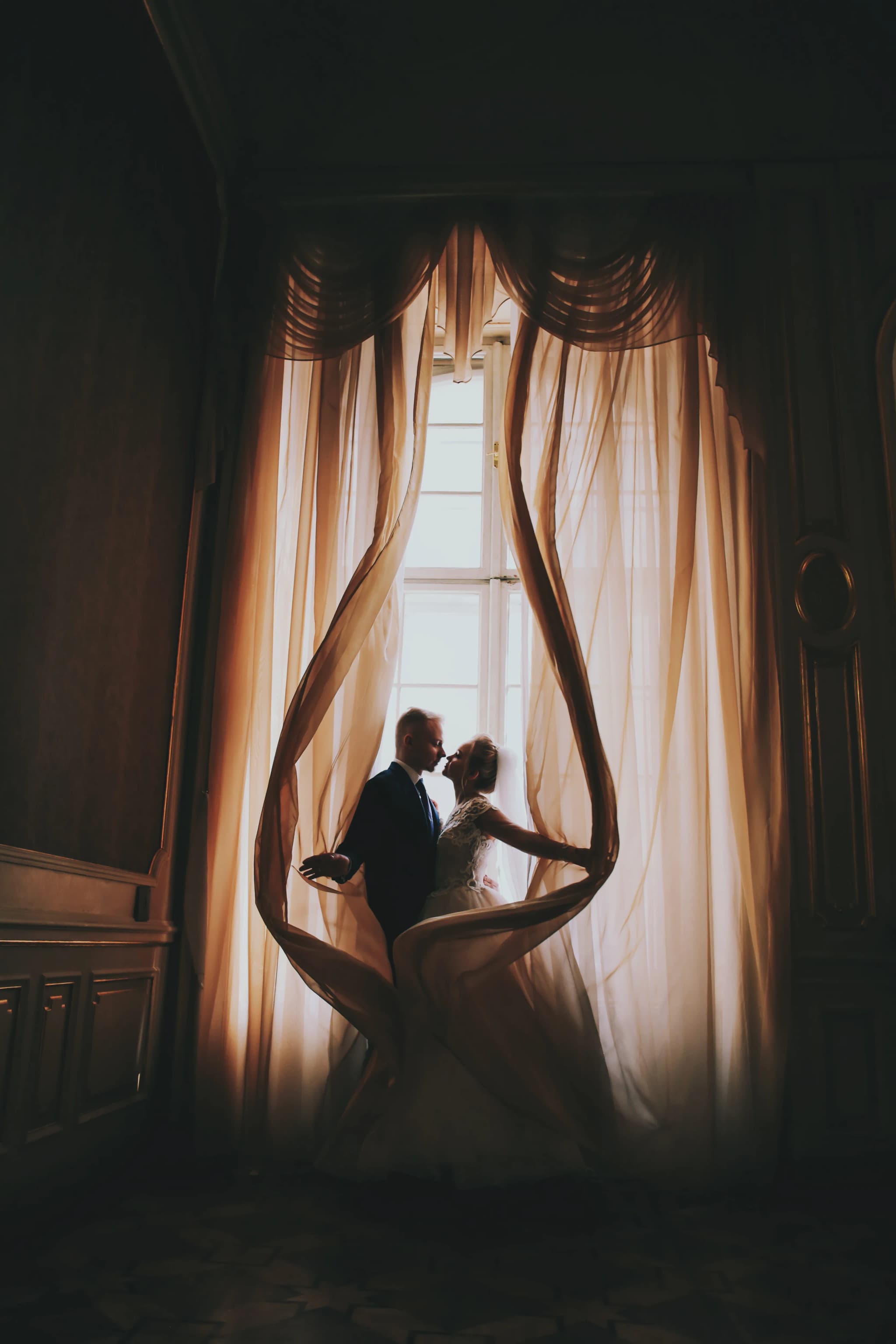
In my experience, the most arresting castle photographs come not from the grand frontal "postcard" views but from working the transitional spaces: the moment a couple passes beneath a portcullis arch, or stands in a window embrasure with the grounds spreading behind them, or descends a worn spiral staircase in golden-hour light that pours through a narrow lancet window. These are images with genuine spatial drama — light, shadow, depth, and texture all working together.
Overcast days, which many couples worry about, can be the best conditions at a castle. Soft diffused light wraps around stone beautifully, eliminates harsh shadows inside thick-walled interiors, and renders the green of the surrounding parkland in saturated, lush tones. I actively enjoy shooting castle weddings in the kind of silver-grey English light that visitors from sunnier climates find puzzling.
Planning Your Day: Logistics Worth Knowing
Castle venues present some planning challenges that differ from barns, country houses, or hotels. First, distances. The walk from a great hall ceremony space to the walled garden or outer bailey can be considerable — and in a wedding dress, over uneven cobbles or gravel, that matters. Walk the venue during your visit and be honest with yourself about footwear. I always recommend brides bring a flat pair of shoes or elegant trainers for outdoor portrait sessions at castle venues; it makes movement through the grounds far more enjoyable and the resulting photographs far more relaxed.
Second, interior lighting. Genuine medieval interiors were not designed with modern comfort in mind. Many castle venues have installed supplementary lighting in their ceremony and reception spaces, but the corridors, staircases, and connecting rooms often remain genuinely dark. As your photographer, I carry off-camera lighting specifically for these situations, but it is worth discussing with your venue coordinator exactly which spaces are well-lit and which require supplementary equipment. This affects both the quality of your photographs and the atmosphere of the day.
Third, exclusivity. Many castle venues offer exclusive hire — you and your guests have the entire property for the day and sometimes overnight. This is worth the premium cost for the freedom it gives your photographer. When a venue is exclusively yours, we can use every corner of it, move without managing other guests or tourists in the background, and respond to the light as it changes without schedule pressure.
Seasonal Considerations at English Castles
Castle venues behave very differently across the seasons, and the choice of month significantly shapes both your experience and your photographs. Late spring — May and early June — is arguably the finest time. Blossoms and fresh foliage soften the severity of stone architecture, the days are long enough to allow a golden-hour portrait session after your reception meal, and the parkland grass is vivid green after winter rains. Summer proper brings crowds to many open castle venues, so if you are marrying at a publicly accessible castle, check whether your venue maintains exclusivity during visitor hours.
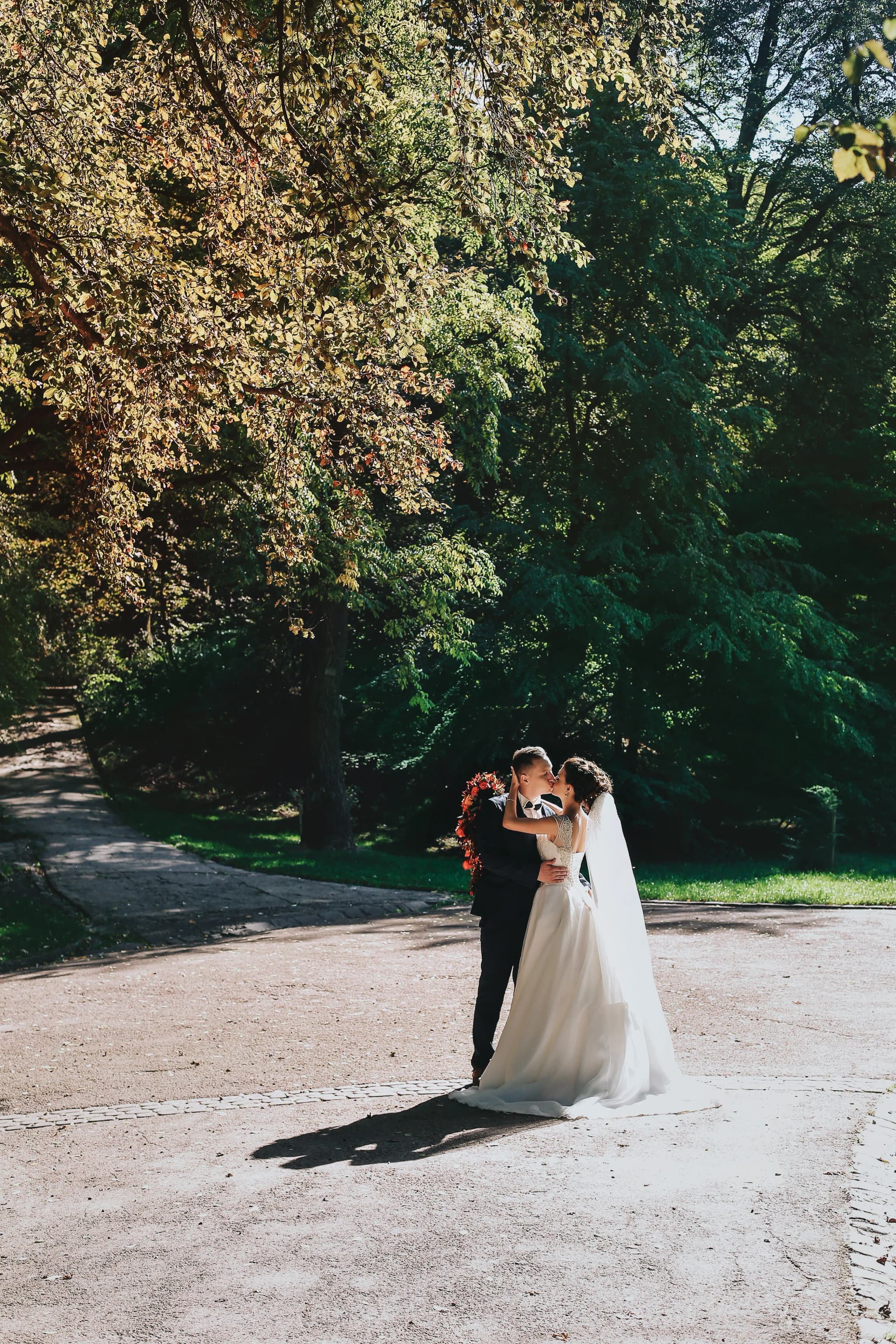
Autumn at a castle is spectacular and underrated. The tones of turning leaves — burnt orange, deep amber, burgundy — sit against grey stone in a way that feels ancient and specifically English. October and November bring lower light angles that are genuinely beautiful, raking across battlements and creating dramatic shadows in the early afternoon. Winter castle weddings are intimate affairs: bare trees, frost on stone, candlelight in great halls, and the profound quiet of an English country estate in January. If that aesthetic appeals to you, embrace it fully — the photographs will be unlike anything a summer wedding can produce.
Specific Venues Worth Serious Consideration
Several English castle venues come up repeatedly in conversations with couples who have done their research, and they are worth naming. Leeds Castle in Kent remains one of the most photographed — its moated setting, with the castle rising directly from the water, is genuinely extraordinary and produces images that read as fairy-tale even when the light is flat. Hever Castle, also in Kent, offers the particular romance of its genuine Tudor history: this is where Henry VIII courted Anne Boleyn, and that story seeps into every stone. The walled gardens are exceptional in summer.
In the North of England, Bamburgh Castle in Northumberland is simply one of the most dramatic coastal settings in Britain — the castle sits on a basalt outcrop above the North Sea, with Lindisfarne visible on clear days and the beach immediately below the walls. The journey from Cambridge is not trivial, but couples who make it consistently describe their wedding as defined by that landscape. Closer to the Midlands, Warwick Castle offers genuine medieval grandeur at scale, while Soughton Hall in North Wales — technically a grade-I listed mansion rather than a castle — provides similar drama with more practical interior spaces.
For couples in East Anglia or near Cambridge specifically, Kimbolton Castle in Huntingdonshire deserves attention: it is a baroque remodelling of a medieval castle, most famous as the final residence of Catherine of Aragon, and its intimate scale and warm stone make it a genuinely distinctive alternative to the more heavily marketed southern venues.
Planning a castle wedding?
I photograph weddings at castle venues across England, from Kent and Sussex to Northumberland and beyond. Every castle is different — the light, the logistics, the story it tells. I visit venues before the day wherever possible, so I know exactly where the light falls at six in the evening in October, and which archway makes the most extraordinary frame. Get in touch to discuss your venue and vision, or browse my wedding photography work to see castle settings in my portfolio.
How to Prepare as a Couple
The single most useful thing you can do before a castle wedding is visit the venue at the same time of day as your planned portrait session — not just during a daytime coordinator meeting. The quality and direction of light in a castle's great hall at two in the afternoon is completely different from what you will experience at five-thirty. Bring your phone, take some reference shots, and share them with your photographer. That fifteen-minute exercise prevents a great deal of guesswork and helps me plan the portrait sequence around the actual light you will have, rather than the theoretical light I imagine.
Also think carefully about your timeline. Castle weddings frequently run long — the sheer size of the venue, the temptation to explore with guests, the distances between spaces — and the schedule can drift in ways that a hotel wedding simply does not. Build in buffer. I always recommend at least thirty minutes of "free" time in the early evening for a couple's portrait session, ideally scheduled to coincide with the last hour of golden light. At a castle, those thirty minutes will yield images that carry your day. They are not a luxury; they are the centrepiece of your album.
Castle weddings are, at their finest, an argument that England's history is still alive — not behind glass in a museum, but warm with candlelight and full of your family and friends. The photographs that come from these days are ones you will show your children, and they will show theirs. That is the promise of the setting, and it is one I take seriously every time I arrive at a castle gate with my cameras.


Yana Skakun
Photographer · England
Professional wedding, family and portrait photographer based in England. Passionate about capturing authentic emotions and timeless moments.
About Yana →castle weddings Englandcastle wedding venues 2026castle wedding photographer England guide
Wedding Tips — Wedding Photography in Cambridge & England
Yana Skakun is a professional wedding photographer based in Cambridge, covering weddings across England — from intimate elopements to full-day ceremonies at country houses, barns, and city venues. Every couple receives a relaxed, documentary approach that captures the day as it truly unfolds. This guide — The Most Stunning Castle Wedding Venues Across England (2026) — is part of the photography journal: practical, experience-based advice drawn from real sessions across England. Whether you arrived searching for castle weddings england or castle wedding venues 2026, the same care and attention shapes every session Yana photographs.
Wedding Photography sessions are available year-round, with bookings open across Cambridge, Ely, Huntingdon, Peterborough, and further afield — East England, London, the Midlands, and beyond. If you have specific questions about castle wedding photographer england guide, mention it in your enquiry. Get in touch through the contact form above to check availability and discuss your session. Enquiries are welcomed from anywhere in the UK.
Frequently Asked Questions
How much does a wedding photographer cost in England?+
Wedding photography in England typically ranges from £1,500 to £4,000+ for a full day. Price depends on experience, coverage hours, and whether albums or engagement shoots are included. Most photographers charge between £2,000–£3,000 for 8–10 hours of coverage.
How early should you book a wedding photographer?+
For peak season (May–September), book 12–18 months in advance. For autumn and winter weddings, 9–12 months is usually sufficient. Popular photographers at popular venues fill up fast — as soon as you have a date and venue confirmed, start reaching out.
How many photos do you get from a wedding photographer?+
Most professional wedding photographers deliver 400–800 edited images for a full-day wedding. The exact number depends on coverage hours, how many guests there are, and the photographer's editing style. Quality matters more than quantity — a curated gallery of 500 images tells the story better than 1,500 unedited files.
Do you need a second photographer at your wedding?+
A second photographer is helpful if you want simultaneous coverage of getting-ready moments in different locations, multiple angles during the ceremony, or more candid coverage during the reception. It adds cost but significantly increases the variety and completeness of your gallery.
What is the difference between documentary and editorial wedding photography?+
Documentary (reportage) wedding photography captures moments as they happen — the photographer observes and doesn't intervene. Editorial photography involves deliberate direction: placing you in good light, shaping compositions, creating intentional portraits. Most photographers blend both styles throughout the day.
Continue Reading
Related Articles

Wedding Tips
Sustainable Eco-Friendly Wedding Guide — Planning a Green Celebration
15 min read · Read Article
Wedding Tips
Trash the Dress Session — Complete Planning and Photography Guide
14 min read · Read Article
Wedding Tips
Client Communication for Photographers — From Enquiry to Gallery Delivery
15 min read · Read Article
Get in Touch
Ready to Book Your Session?
Get in touch to discuss your vision — I'll reply within 24 hours.