Yana Skakun
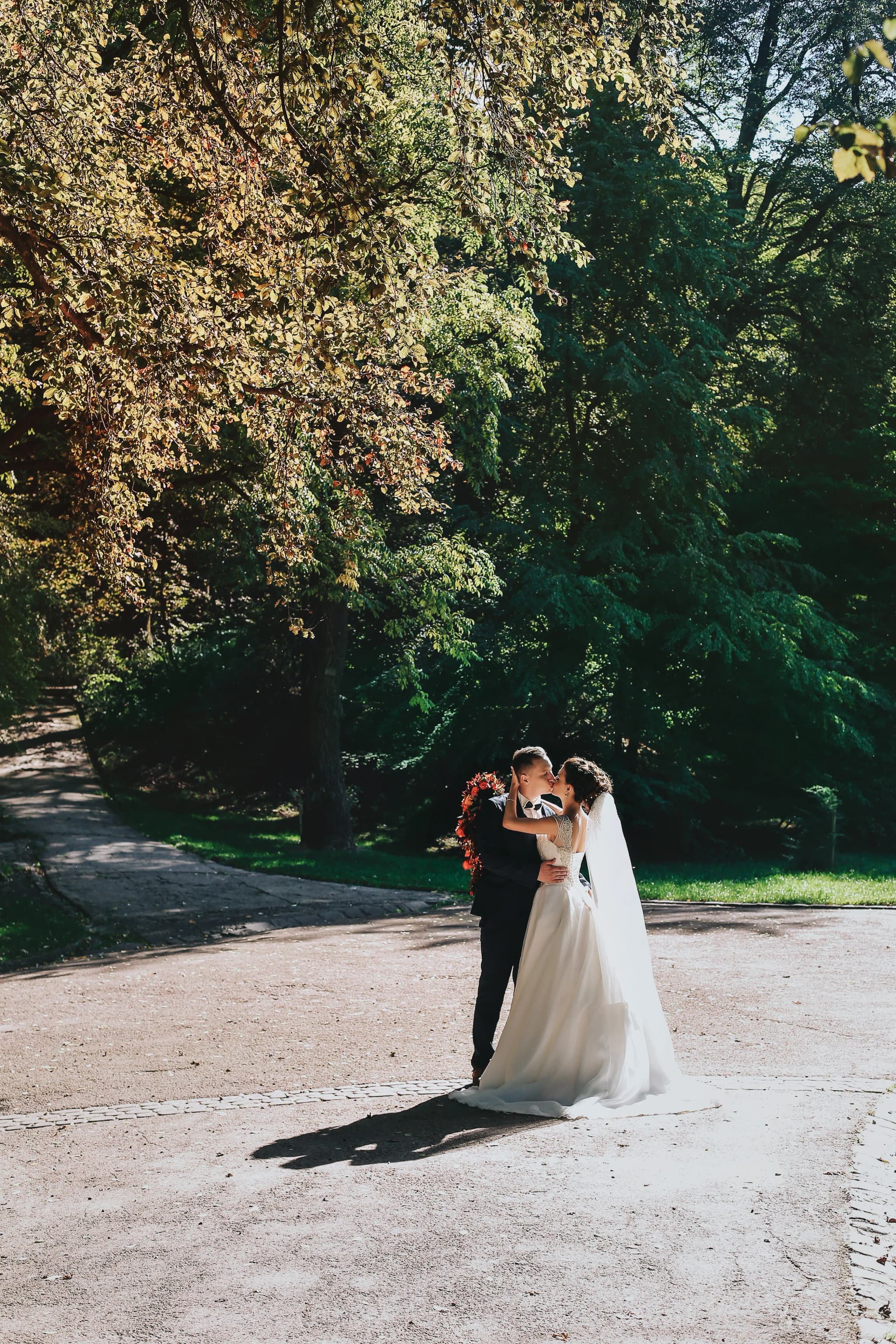
Castle Wedding Venues: England vs Scotland (What's the Difference?)
By Yana Skakun·20 March 2026·6 min read
Castle weddings occupy a singular place in the imagination of couples planning a truly memorable day. Whether it is the windswept battlements of a Highland fortress or the honey-stone towers of an English manor-castle surrounded by manicured parkland, these settings carry centuries of history into every frame. As a photographer who has worked at castle venues across both countries, I can say with confidence that no other type of venue rewards careful preparation quite so richly — and none punishes a lack of it quite so swiftly.
What Makes Castle Venues Photographically Exceptional
The fundamental advantage of a castle as a wedding backdrop is the sheer density of visual material. You are not working with a single hero shot — you are working with stone archways, spiral staircases, great halls with hammer-beam ceilings, walled gardens, drawbridges, and in the case of Scottish estates, entire mountain ranges behind the battlements. That abundance is both a gift and a challenge. The discipline lies in not photographing everything indiscriminately, but in choosing the handful of architectural moments that suit each particular couple.
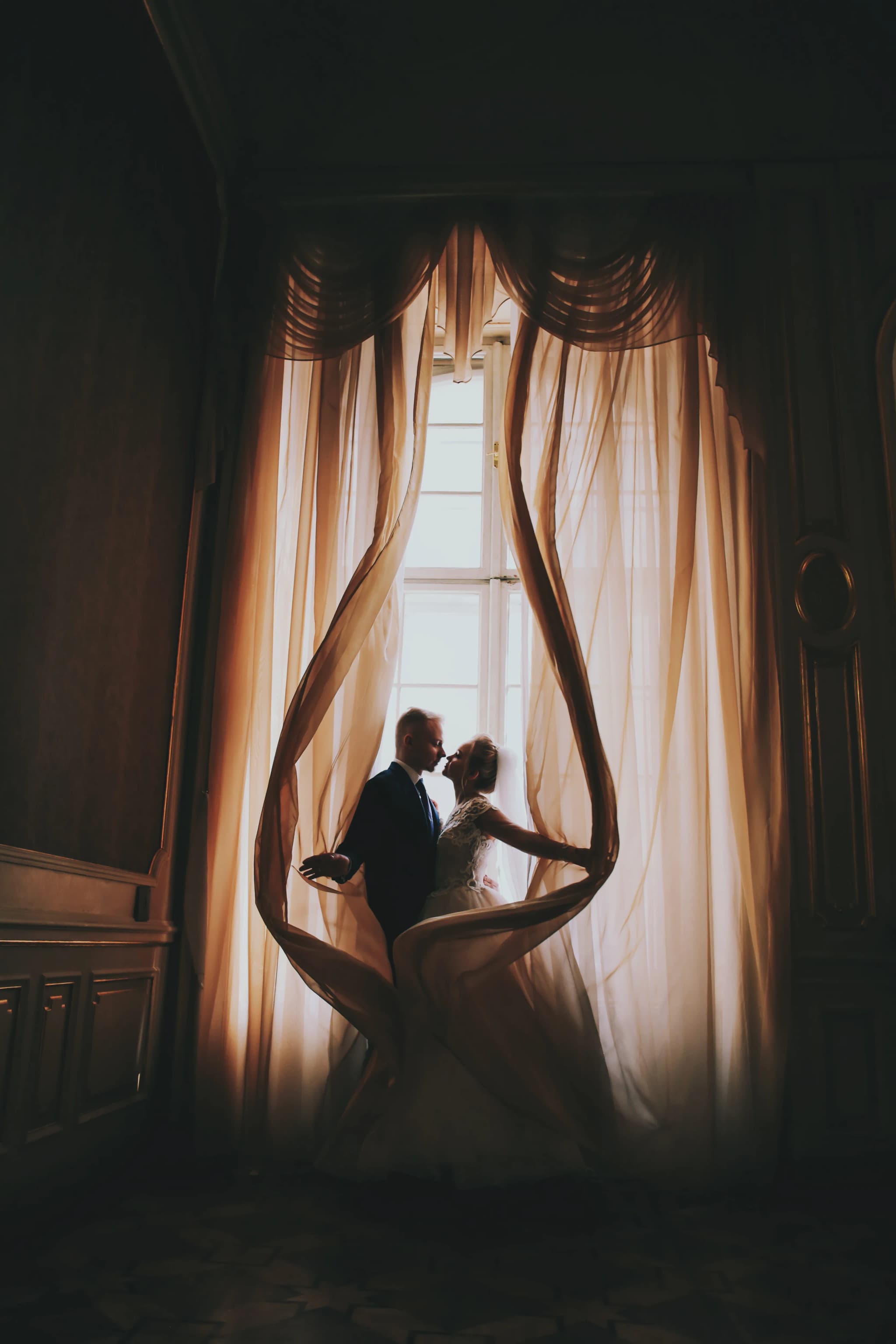
Light behaves differently inside castle walls. Thick stone keeps interiors cool and dim even on bright days, which means window-lit portraits become enormously important — and enormously rewarding. A single lancet window throwing northern light across a bride's face against a rough-hewn wall is one of the most beautiful compositions available in wedding photography, and it exists only in buildings of a certain age. I always walk the entire venue on the morning of a wedding, noting where the light falls at each hour, because in a castle the difference between ten in the morning and two in the afternoon can be the difference between a lit room and a dark cave.
Exteriors present a different set of considerations. Castles are rarely designed with symmetry in mind, so the conventional approach of placing subjects centrally against a building facade often fails. Better results come from using the architecture asymmetrically — a couple standing at the mouth of a gatehouse tunnel, for instance, or walking along a parapet with the landscape rolling away behind them. The building becomes a frame rather than a backdrop, and the photograph becomes genuinely three-dimensional.
Scottish Castle Weddings: Drama, Light, and the Highland Aesthetic
Scotland's castle venues are in a category of their own for sheer drama. Think of Eilean Donan reflected in the waters of Loch Duich, or Inveraray Castle rising from the shores of Loch Fyne in Argyll, or the romantic ruin of Kilchurn seen across misty water at dawn. Even the working wedding venues — Dundas Castle near Edinburgh, Dalhousie Castle in Midlothian, Achnagairn Estate in the Black Isle — possess a quality of gravitas that is hard to replicate elsewhere. Grey granite, ancient woodland, and the particular pale light of the Scottish sky combine into something that photographs have an almost unfair advantage in capturing.
Scotland in June and July offers extraordinary daylight hours — genuine, warm, usable light until ten o'clock in the evening in the far north, and until half past nine even in Edinburgh. Evening portraits at a Scottish castle in midsummer are among the most beautiful images I produce anywhere in the United Kingdom. The low angle of the sun at nine in the evening creates long shadows and golden raking light that models the stonework beautifully and makes even simple portraits feel cinematic. If you are marrying in Scotland in summer, please protect that evening portrait time — it is genuinely irreplaceable.
Weather is the honest caveat. Scottish summers are not Mediterranean, and any couple who books a Scottish castle wedding should plan fully for rain, wind, and rapid changes in conditions. In practice, this rarely ruins a day — Scottish light through cloud has a softness and drama that clear sunshine cannot replicate, and a couple sheltering under a castle archway while rain sweeps the glen beyond them is an image I would frame on my own wall. But you do need a venue with covered spaces for ceremony and reception, and a photographer who is genuinely comfortable working in changeable conditions rather than one who relies on perfect weather for every shot.
English Castle Venues: Variety, Accessibility, and Romantic Beauty
England's castle venues span a far wider range of styles than Scotland's. In the north you find the great Norman keeps — Bamburgh in Northumberland, with its extraordinary coastal position above the beach, or Alnwick, or Bolton Castle in Wensleydale where Mary Queen of Scots was once imprisoned. In the Midlands and south you find the romantic manor-castle hybrid that defines so much of the English wedding imagination: Hever Castle in Kent, childhood home of Anne Boleyn; Thornbury Castle in Gloucestershire; Amberley Castle in West Sussex, still encircled by its medieval moat. Each carries a completely different photographic character.
English castle weddings tend to benefit from superior transport links and more established wedding supplier networks. If your guests are travelling from across the country, an English castle is almost always more accessible than a Scottish one. This practical advantage matters more than it might seem at the planning stage — tired guests who have endured difficult journeys are harder to photograph than relaxed ones who arrived without stress. A venue that is genuinely beautiful but practically difficult can cause real problems on the day.
The gardens attached to English castle venues are frequently exceptional in their own right. Hever has its Italian garden and lake; Leeds Castle in Kent is set on two islands in a natural lake and surrounded by parkland; Sudeley Castle in the Cotswolds has the ruins of a medieval chapel in its grounds that provide one of the most extraordinary ceremony backdrops in the country. These garden spaces extend the range of portrait locations enormously, and couples should make full use of them rather than restricting themselves to the castle building itself.
Choosing Between Scotland and England: A Practical Framework
The decision between a Scottish and English castle venue comes down to a few clear factors. If you want maximum landscape drama and are comfortable with travel for yourselves and your guests, Scotland is extraordinary. The combination of mountain, loch, and ancient stone is genuinely without parallel in England, and if your aesthetic is wild, romantic, and cinematic, Scotland will serve you better. If accessibility matters more, or if you want the security of knowing your guests can reach the venue easily without a full day of travel, England offers superb alternatives.
Season also matters differently in each country. Scotland rewards summer weddings most obviously, because of the light and because the landscape is at its most spectacular. English castle venues are often more versatile across the seasons — autumn at Hever Castle, with the lake reflecting the colours of the surrounding woodland, is among the most beautiful wedding settings I have encountered anywhere, and winter weddings in a candlelit English great hall have their own particular magic that a Scottish venue in January (with its early darkness and challenging weather) cannot always match.
Budget is a honest consideration too. Scottish destination weddings carry additional costs — travel and accommodation for guests, often a minimum hire requirement for the castle itself, and the logistics of bringing your supplier team to a remote location. That said, private hire of a Scottish castle estate means complete exclusivity for your entire celebration, which is something many English venues cannot offer at any price. The calculus is genuinely different depending on what you value most.
Planning a castle wedding in Scotland or England?
I travel extensively for castle weddings and have worked at venues across both countries. The single most important thing you can do is schedule a venue visit well before the wedding day — and if possible, bring your photographer with you. Understanding how the light moves through the space, where the logistical pinch points are, and which corners of the grounds you actually want to use on the day makes an enormous difference to how the photography unfolds. If you are considering a castle venue and want to talk through what works photographically, get in touch and I am happy to share what I know about specific venues.
Preparing for Your Castle Wedding Day: What Couples Should Know
The single most common mistake couples make at castle venues is underestimating the distances involved. A large castle estate can span many acres, and the journey from bridal suite to ceremony space, from ceremony space to cocktail hour, from cocktail hour to portrait location, can involve meaningful walking distances — often over uneven ground, cobblestones, or grass. If you are wearing heeled shoes, have a plan for this. Speak to your venue coordinator about the route and, if necessary, have flat shoes available for moving between locations. Nothing interrupts the flow of a wedding day quite like a bride reluctantly removing her heels to cross a drawbridge.
Castle interiors can be very dark, particularly in older buildings where window openings are small for structural reasons. I shoot in available light wherever possible and only use flash when truly necessary, but couples should be aware that ceremony spaces in older castle chapels or great halls may require careful management of candles, uplighting, or other venue-provided lighting to ensure the space is actually visible in photographs. Speak to your venue coordinator about lighting options for the ceremony space specifically, and share any concerns with your photographer well in advance of the day.
Finally, protect time for the couple portrait session. At a castle venue with so many photographic possibilities, it is tempting to rush the portrait time to get back to guests — but these dedicated minutes, away from the crowd, in the extraordinary setting you have chosen, are when the most lasting images of your day are made. In my experience, the couples who look back most happily at their castle wedding photographs are those who gave us twenty or thirty minutes together in the evening light, without distraction. Everything else can be captured in passing; that time cannot be recovered once the evening programme begins.
The Photographs You Will Keep for a Lifetime
Castle wedding photographs age extraordinarily well. Unlike images that are tied to a specific contemporary aesthetic or trend, photographs made in genuinely historic settings have a timelessness that remains compelling decades later. The stone does not date. The landscape does not date. What changes is only the couple themselves, growing older together while those photographs on the wall remain exactly as they were on that particular day — the same light, the same mountains, the same ancient walls. That permanence is, in the end, what draws couples to castle venues and what makes them worth every practical complication they involve.
Whether you choose the drama of the Scottish Highlands or the romantic beauty of an English castle garden, you are choosing a setting that will produce images you genuinely treasure. My role as your photographer is to understand that setting deeply, to be there ahead of the light, and to find within those extraordinary spaces the specific moments and compositions that belong uniquely to you. That is work I find endlessly rewarding, and it begins long before the wedding day itself.


Yana Skakun
Photographer · England
Professional wedding, family and portrait photographer based in England. Passionate about capturing authentic emotions and timeless moments.
About Yana →castle weddings Scotland vs EnglandScottish castle vs English castle weddingUK castle wedding comparison
Wedding Tips — Wedding Photography in Cambridge & England
Yana Skakun is a professional wedding photographer based in Cambridge, covering weddings across England — from intimate elopements to full-day ceremonies at country houses, barns, and city venues. Every couple receives a relaxed, documentary approach that captures the day as it truly unfolds. This guide — Castle Wedding Venues: England vs Scotland (What's the Difference?) — is part of the photography journal: practical, experience-based advice drawn from real sessions across England. Whether you arrived searching for castle weddings scotland vs england or scottish castle vs english castle wedding, the same care and attention shapes every session Yana photographs.
Wedding Photography sessions are available year-round, with bookings open across Cambridge, Ely, Huntingdon, Peterborough, and further afield — East England, London, the Midlands, and beyond. If you have specific questions about uk castle wedding comparison, mention it in your enquiry. Get in touch through the contact form above to check availability and discuss your session. Enquiries are welcomed from anywhere in the UK.
Frequently Asked Questions
How much does a wedding photographer cost in England?+
Wedding photography in England typically ranges from £1,500 to £4,000+ for a full day. Price depends on experience, coverage hours, and whether albums or engagement shoots are included. Most photographers charge between £2,000–£3,000 for 8–10 hours of coverage.
How early should you book a wedding photographer?+
For peak season (May–September), book 12–18 months in advance. For autumn and winter weddings, 9–12 months is usually sufficient. Popular photographers at popular venues fill up fast — as soon as you have a date and venue confirmed, start reaching out.
How many photos do you get from a wedding photographer?+
Most professional wedding photographers deliver 400–800 edited images for a full-day wedding. The exact number depends on coverage hours, how many guests there are, and the photographer's editing style. Quality matters more than quantity — a curated gallery of 500 images tells the story better than 1,500 unedited files.
Do you need a second photographer at your wedding?+
A second photographer is helpful if you want simultaneous coverage of getting-ready moments in different locations, multiple angles during the ceremony, or more candid coverage during the reception. It adds cost but significantly increases the variety and completeness of your gallery.
What is the difference between documentary and editorial wedding photography?+
Documentary (reportage) wedding photography captures moments as they happen — the photographer observes and doesn't intervene. Editorial photography involves deliberate direction: placing you in good light, shaping compositions, creating intentional portraits. Most photographers blend both styles throughout the day.
Continue Reading
Related Articles

Wedding Tips
Sustainable Eco-Friendly Wedding Guide — Planning a Green Celebration
15 min read · Read Article
Wedding Tips
Trash the Dress Session — Complete Planning and Photography Guide
14 min read · Read Article
Wedding Tips
Client Communication for Photographers — From Enquiry to Gallery Delivery
15 min read · Read Article
Get in Touch
Ready to Book Your Session?
Get in touch to discuss your vision — I'll reply within 24 hours.