Yana Skakun
Cathedral Wedding Photography Across the UK: Grand Spaces, Sublime Light
By Yana Skakun·20 March 2026·6 min read
Cathedral weddings occupy a category entirely their own in the UK wedding landscape. These are not simply large churches — they are medieval masterworks of stone, light, and proportion that have witnessed centuries of ceremony, and walking into one on your wedding day carries a weight that no other venue can quite replicate. As a wedding photographer, I find cathedral commissions among the most technically demanding and creatively rewarding work I do, and the resulting images consistently rank among the most powerful in any couple's album.
Understanding the Scale: What Makes Cathedrals Photographically Unique
The single most striking thing about photographing inside a cathedral is the relationship between the human figure and the architectural volume surrounding it. At Ely Cathedral in Cambridgeshire, the nave soars to over 30 metres; at Salisbury, the spire is the tallest in England and the interior feeling of upward space is almost vertiginous. When a couple stands at the altar, they are small — intentionally so — in a space designed to make worshippers feel the grandeur of something beyond themselves. This is not a limitation for photography. It is an extraordinary compositional tool.
I approach cathedral interiors with two deliberate modes. The first is wide: images that place the couple within the full sweep of the architecture, where the columns, vaulting, and nave stretching behind them tell the story of where they are. The second is close: intimate portrait frames where the carved stonework, stained glass light, or choir stalls become a structural background rather than a dominant element. A cathedral wedding album needs both registers to feel complete — the grandeur and the intimacy, the architecture and the human.
Ceremony placement matters enormously. Many UK cathedrals hold the wedding ceremony within the choir or sanctuary rather than the full nave, which means the photography position and sightlines are quite different from a parish church. At Canterbury Cathedral, for example, ceremonies in the Corona Chapel have a distinctly different light quality than those in the main quire. Visiting the venue in advance — or at minimum studying floor plans and speaking with the cathedral events coordinator — is non-negotiable preparation.
Light in Cathedral Spaces: Working With Stained Glass and Stone
Cathedral light is extraordinary and demanding in equal measure. The great clerestory windows that line the nave walls are typically filled with medieval or Victorian stained glass, and on a bright day these project shifting pools of coloured light onto the floor, the congregation, and — if you time it right — the couple themselves. A patch of amber or rose light moving slowly across white silk during an exchange of vows is one of those images that requires no artifice whatsoever. The building does it for you.
The challenge is exposure management. Cathedral interiors are typically five to seven stops darker than the exterior, and the contrast range between a bright stained glass window and the stone wall beside it can exceed what any single exposure can capture cleanly. I shoot in RAW and bracket exposures during quieter moments, maintaining a high ISO — often 3200 to 6400 — with fast prime lenses that can work in genuinely low light without compromising the ambience by introducing flash. Silent electronic shutter is essential during the ceremony itself; the acoustic properties of cathedral stone mean even a modest mechanical shutter click carries across the entire space.
Timing within the day is worth discussing with your cathedral coordinator. North-facing clerestories hold a cooler, more diffuse light throughout the day, while south-facing windows change dramatically from morning to afternoon. At Wells Cathedral in Somerset, the morning light through the west window can be almost blinding in summer; at Durham, the rose window above the altar glows warmest in the late afternoon. If you have any flexibility in ceremony timing, this is worth factoring in.
Cathedral Precincts and Closes: The Outdoor Portrait Opportunity
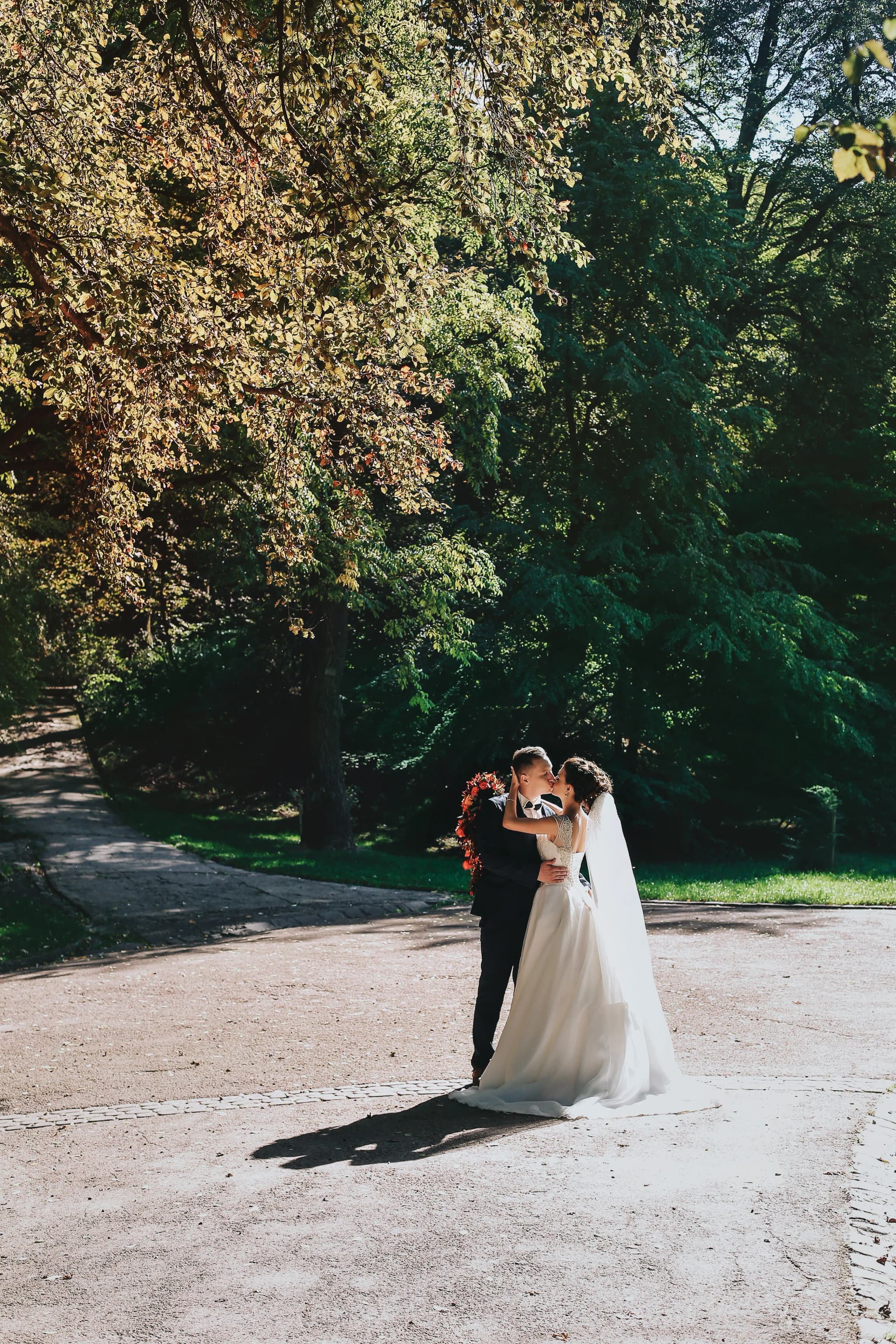
One of the genuine gifts of a cathedral wedding is what lies outside the building. Cathedral closes and precincts are among the most beautiful green spaces in England — Salisbury Cathedral Close is the largest in the country, a wide sweep of grass and Georgian townhouses that frames the cathedral spire with extraordinary elegance. Ely's cathedral sits atop its island city with views across the Cambridgeshire fens that are unlike anything else in England. Winchester's close blends medieval walls with immaculate lawns. These settings provide a natural transition from ceremony to couple portraits without any travel time.
I always scout the precinct light at the approximate time portraits will happen during the day. Cathedral buildings create strong shadow on one side and direct sun on another, and the quality of light on the grass and stone can vary enormously across just twenty minutes. The soft, raking light in the hour before sunset is particularly beautiful against warm limestone — a quality that English Gothic cathedrals in the Bath stone tradition, like Wells or Gloucester, make especially vivid.
For couples planning post-ceremony portraits, I recommend building in at least forty-five minutes in the precinct before moving to the reception venue. Cathedral closes rarely feel rushed — there is always another cloister walk, another angle of the west front, another garden corner. The variety of settings within walking distance is exceptional, and it means your portrait sequence can move through several visually distinct moments without feeling like a production.
Practical Logistics: What You Need to Know Before Your Cathedral Wedding
Every UK cathedral has its own photography policy, and they vary more than you might expect. Some — including several in the south of England — require photographers to register in advance and may restrict flash photography entirely. Others have designated positions for the ceremony photographer and will not permit movement during certain parts of the service, particularly during the liturgy or music. Canterbury, York, and Lincoln cathedrals all have detailed events teams who communicate these requirements clearly, and I always contact them directly several weeks before the date.
Tripods are often prohibited or restricted during ceremonies due to the potential for noise and disruption, which reinforces the case for fast lenses and high-ISO capability. A second camera body with a different focal length — typically a 35mm equivalent and an 85mm equivalent — allows me to cover both intimate moments at the altar and wide architectural frames without changing lenses and risking noise or missed moments. Cathedral ceremonies also tend to be longer than civil ceremonies or smaller church services, often running ninety minutes to two hours, so pacing and stamina matter on both sides of the camera.
Your cathedral will almost certainly have a preferred supplier list or at minimum a set of approved photographers. In some cases — particularly for Church of England cathedrals — the Dean or Chapter must formally approve the photography arrangements as part of the marriage licence process. Start these conversations early, ideally at the same time you book the ceremony itself, to avoid any surprises close to the date.
Planning a cathedral wedding?
I photograph at cathedrals across the UK, with particular experience in the east of England and the Midlands. Before every cathedral commission I visit the venue, liaise directly with the events team, and build a light and location plan around your specific ceremony time and space. Get in touch to talk through your cathedral and what you're envisioning — or explore my wedding portfolio to see how I approach grand ceremonial spaces.
How to Prepare: Advice for Couples
The scale of a cathedral can feel overwhelming on the wedding day itself, and I always encourage couples to spend a quiet hour inside the building before the ceremony — not for photography, but simply to acclimatise. Couples who have sat in the choir stalls, walked the nave, and felt the space before the day arrives consistently feel calmer and more at ease during the ceremony itself, and that ease shows in photographs.
Dress choices read differently in cathedral light than in natural outdoor settings. Very pale ivory or white can blow out quickly in direct beam light from a clerestory window; structured fabrics hold form better than floaty chiffon in the vast interior volume. These are small considerations that can make a meaningful difference when we are working with the particular quality of cathedral illumination. I am happy to discuss this in our pre-wedding consultation.
Think carefully about the processional and recessional. These are among the most cinematic moments in cathedral photography — a long nave allows for a sustained walkthrough that builds in drama shot by shot. If your cathedral permits a slightly slower pace at the start of the recessional, that extra few seconds of you walking toward the light from the west door is often where one of the most memorable frames of the day comes from. In my experience, couples who know this beforehand are far more likely to be relaxed and present for that moment rather than hurrying through it.
Notable UK Cathedrals for Wedding Photography
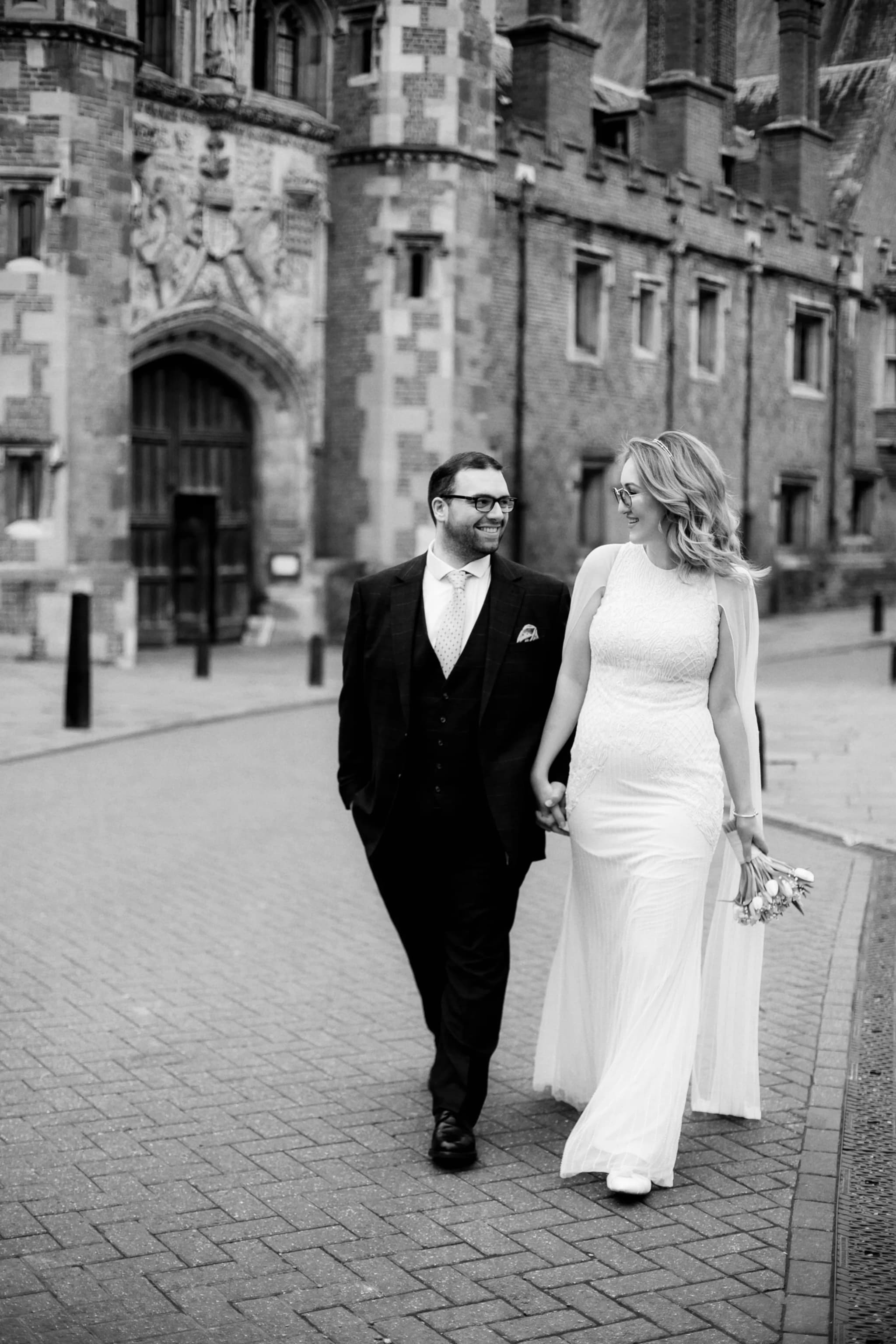
While I work across the full breadth of UK cathedral settings, certain buildings consistently produce exceptional photography. Ely Cathedral in Cambridgeshire — closest to my Cambridge base — offers an interior of extraordinary variety: the Octagon lantern tower floods the crossing with toplight unique among English cathedrals, the Lady Chapel has remarkable decorated stonework, and the exterior west tower frames portraits with a grandeur that is hard to overstate. Peterborough Cathedral, with its extraordinary Early English west facade, gives an arrival and departure backdrop unlike any other.
Further afield, Gloucester Cathedral's cloisters — famously used as Hogwarts in the Harry Potter films — provide a covered exterior walkway of fan vaulting that photographs beautifully in almost any weather condition, making it one of the most weather-resilient portrait settings of any UK venue. Winchester Cathedral's long nave, the longest medieval nave in Europe, creates perspective lines that draw the eye across extraordinary distances. Durham Cathedral, sitting above its river gorge on a wooded promontory, has an exterior setting that is essentially unmatched in English ecclesiastical architecture.
Each of these buildings has its own character, its own light, its own restrictions and opportunities. The preparation I do for each commission is specific to that building and that day — because cathedral wedding photography done well is never generic.
Cathedral weddings ask something of everyone involved: they require planning, patience, and a genuine understanding of spaces that were not designed with cameras in mind. When that preparation comes together — when the light falls exactly as anticipated, when the couple moves through the nave with ease, when the stone and glass and human story align in a single frame — the resulting images are among the most powerful I know how to make. That is what I come to every cathedral commission to create.

Yana Skakun
Photographer · England
Professional wedding, family and portrait photographer based in England. Passionate about capturing authentic emotions and timeless moments.
About Yana →cathedral wedding photography UKcathedral wedding photographer EnglandEly Canterbury Durham wedding photos
Wedding Tips — Wedding Photography in Cambridge & England
Yana Skakun is a professional wedding photographer based in Cambridge, covering weddings across England — from intimate elopements to full-day ceremonies at country houses, barns, and city venues. Every couple receives a relaxed, documentary approach that captures the day as it truly unfolds. This guide — Cathedral Wedding Photography Across the UK: Grand Spaces, Sublime Light — is part of the photography journal: practical, experience-based advice drawn from real sessions across England. Whether you arrived searching for cathedral wedding photography uk or cathedral wedding photographer england, the same care and attention shapes every session Yana photographs.
Wedding Photography sessions are available year-round, with bookings open across Cambridge, Ely, Huntingdon, Peterborough, and further afield — East England, London, the Midlands, and beyond. If you have specific questions about ely canterbury durham wedding photos, mention it in your enquiry. Get in touch through the contact form above to check availability and discuss your session. Enquiries are welcomed from anywhere in the UK.
Frequently Asked Questions
How much does a wedding photographer cost in England?+
Wedding photography in England typically ranges from £1,500 to £4,000+ for a full day. Price depends on experience, coverage hours, and whether albums or engagement shoots are included. Most photographers charge between £2,000–£3,000 for 8–10 hours of coverage.
How early should you book a wedding photographer?+
For peak season (May–September), book 12–18 months in advance. For autumn and winter weddings, 9–12 months is usually sufficient. Popular photographers at popular venues fill up fast — as soon as you have a date and venue confirmed, start reaching out.
How many photos do you get from a wedding photographer?+
Most professional wedding photographers deliver 400–800 edited images for a full-day wedding. The exact number depends on coverage hours, how many guests there are, and the photographer's editing style. Quality matters more than quantity — a curated gallery of 500 images tells the story better than 1,500 unedited files.
Do you need a second photographer at your wedding?+
A second photographer is helpful if you want simultaneous coverage of getting-ready moments in different locations, multiple angles during the ceremony, or more candid coverage during the reception. It adds cost but significantly increases the variety and completeness of your gallery.
What is the difference between documentary and editorial wedding photography?+
Documentary (reportage) wedding photography captures moments as they happen — the photographer observes and doesn't intervene. Editorial photography involves deliberate direction: placing you in good light, shaping compositions, creating intentional portraits. Most photographers blend both styles throughout the day.
Continue Reading
Related Articles

Wedding Tips
Sustainable Eco-Friendly Wedding Guide — Planning a Green Celebration
15 min read · Read Article
Wedding Tips
Trash the Dress Session — Complete Planning and Photography Guide
14 min read · Read Article
Wedding Tips
Client Communication for Photographers — From Enquiry to Gallery Delivery
15 min read · Read Article
Get in Touch
Ready to Book Your Session?
Get in touch to discuss your vision — I'll reply within 24 hours.