Yana Skakun
Church Wedding Photography: Making the Most of Beautiful Architecture
By Yana Skakun·20 March 2026·6 min read
A church wedding carries a particular gravity that no other setting quite replicates. The centuries of worship absorbed into the stonework, the filtered light falling through medieval glass, the echo of vows spoken beneath a vaulted ceiling — photographing a church ceremony means capturing not just a couple but a moment suspended inside history. It is some of the most demanding and most rewarding photography I do.
Why English Parish Churches Are Extraordinary Settings
England is home to over 16,000 medieval churches — an extraordinary density of ancient, beautiful buildings in which couples are still marrying today. Whether you are exchanging vows at a tiny flint-walled church in the Suffolk countryside, a grand Perpendicular-Gothic nave in Ely, or a Norman priory tucked into the Cambridgeshire fens, you are choosing a setting with genuine architectural depth. The carved stone, the ancient pews, the worn flagstones bearing centuries of footsteps, the monuments on the walls — all of this creates layered, atmospheric backgrounds that purpose-built venues simply cannot replicate.
Cathedral and collegiate churches add another dimension entirely. Kings College Chapel in Cambridge, for instance, casts its extraordinary fan-vaulted ceiling above the couple and their guests in a way that makes almost every photograph feel monumental. Ely Cathedral frames the west end of the nave in a tunnel of Norman arches that provides a naturally composed portrait environment. I have photographed ceremonies in village churches where the entire congregation fits in forty seats, and in cathedrals where the guests are dwarfed by the space — and both experiences produce images of profound beauty.
When choosing a church, think about the direction it faces and what time your ceremony is scheduled. South-facing windows will flood the interior with warm afternoon light at a summer ceremony; north-facing churches will be cooler and more even in tone. These are not reasons to prefer one over another — they simply determine the character of the light your photographs will have, and it helps to discuss this with your photographer in advance.
Understanding the Light Inside a Church
Light inside a historic church is complex in ways that catch photographers off guard if they have not prepared. Stained glass filters daylight into coloured patches that move slowly across the interior as the sun tracks across the sky. Candles on the altar provide warm, low, directional light. Modern LED uplighting — installed in many churches for evening events — can cast a completely different colour temperature over the same space. In larger churches, floodlights may illuminate the choir or the reredos with tungsten or daylight-balanced sources that differ from the ambient nave light. Managing all of this simultaneously is one of the genuine technical challenges of church photography.
Most clergy request that flash is not used during the ceremony, and I photograph ceremonies entirely in available light as standard practice. This means choosing lenses that perform well at wide apertures — f/1.4 and f/1.8 primes are workhorses in low-light interiors — and using cameras with strong high-ISO performance. My approach is to embrace the light that exists rather than fight it: if the stained glass is casting a blue-green wash over the left side of the nave and a warm amber glow over the right, those colours become part of the photograph rather than a problem to correct. Churches looked exactly this way to the people who built them, and that quality of light is part of what makes these buildings so resonant.
For couples, the practical implication is that you should not worry about the lighting not being "perfect" in the conventional sense. Uneven, directional, coloured light is not a problem — it is atmosphere. The photographs will have a quality that a well-lit modern venue simply cannot produce. What does help is positioning: if you have any input into where the ceremony takes place within the building, a position where natural light falls on the couple from the side or from above rather than directly behind them will make the photographs more intimate and readable.
Navigating Restrictions and Working with the Officiant
Every church is different in what it permits a photographer to do during the ceremony. The Church of England has no single national policy — individual clergy make their own decisions about flash photography, movement within the building during the service, and where the photographer may stand. Some officiants are very relaxed and will allow me to move quietly around the building during the ceremony to find different angles and perspectives. Others prefer that I take up one position at the start of the service and remain there throughout. A small number will ask me not to photograph during the exchange of vows or the ring ceremony.
I always make contact with the church well in advance of the wedding day to understand the specific requirements for that building and that officiant. If you are early in your planning and have not yet met with your vicar or priest, it is worth asking them directly about their approach to wedding photography. You may also find it useful to share your photographer's name and website — clergy who can see the quality and discretion of a photographer's work are often more comfortable granting more flexibility. I carry a printed copy of my public liability insurance to all church bookings as a matter of course, and some churches will request this documentation before the wedding.
Movement restrictions should not alarm you. Even from a fixed position — typically to one side of the chancel or at the back of the nave — an experienced photographer with the right telephoto lenses can document the full ceremony with sensitivity and detail. The constraint of working from a fixed position often produces better photographs than unrestricted movement would, because it forces compositional discipline and an attention to the light and moment rather than the angle.
Key Moments to Capture During a Church Ceremony
The structure of a Church of England wedding service creates a natural rhythm of photographic moments. The procession down the aisle — whether the bride walks alone, with a parent, or is accompanied by both partners arriving together — is one of the most powerful images of the day. The length of a church aisle gives a photograph its depth; I often use a telephoto from the altar end to compress that depth into a single image that shows the couple surrounded by rows of waiting guests on both sides.
The exchange of vows and rings is the emotional core of the ceremony, and I focus here entirely on faces and hands rather than the wider scene. Tears on a father's face three rows back, the slight tremor in a hand as it receives the ring, the moment two people look at each other and say the words they have prepared — these are the images that couples return to most often in the years after their wedding. I use a 135mm or 200mm lens for this sequence to maintain respectful distance while capturing genuine expression.
The signing of the register — often in the vestry or at a side table — is a quieter, more intimate moment that many photographers undervalue. For the couple it is a moment of official completion, often accompanied by relief, laughter, and the first private few minutes together as a married couple. These photographs are consistently among my favourites from any church wedding.
The Exit and the Churchyard
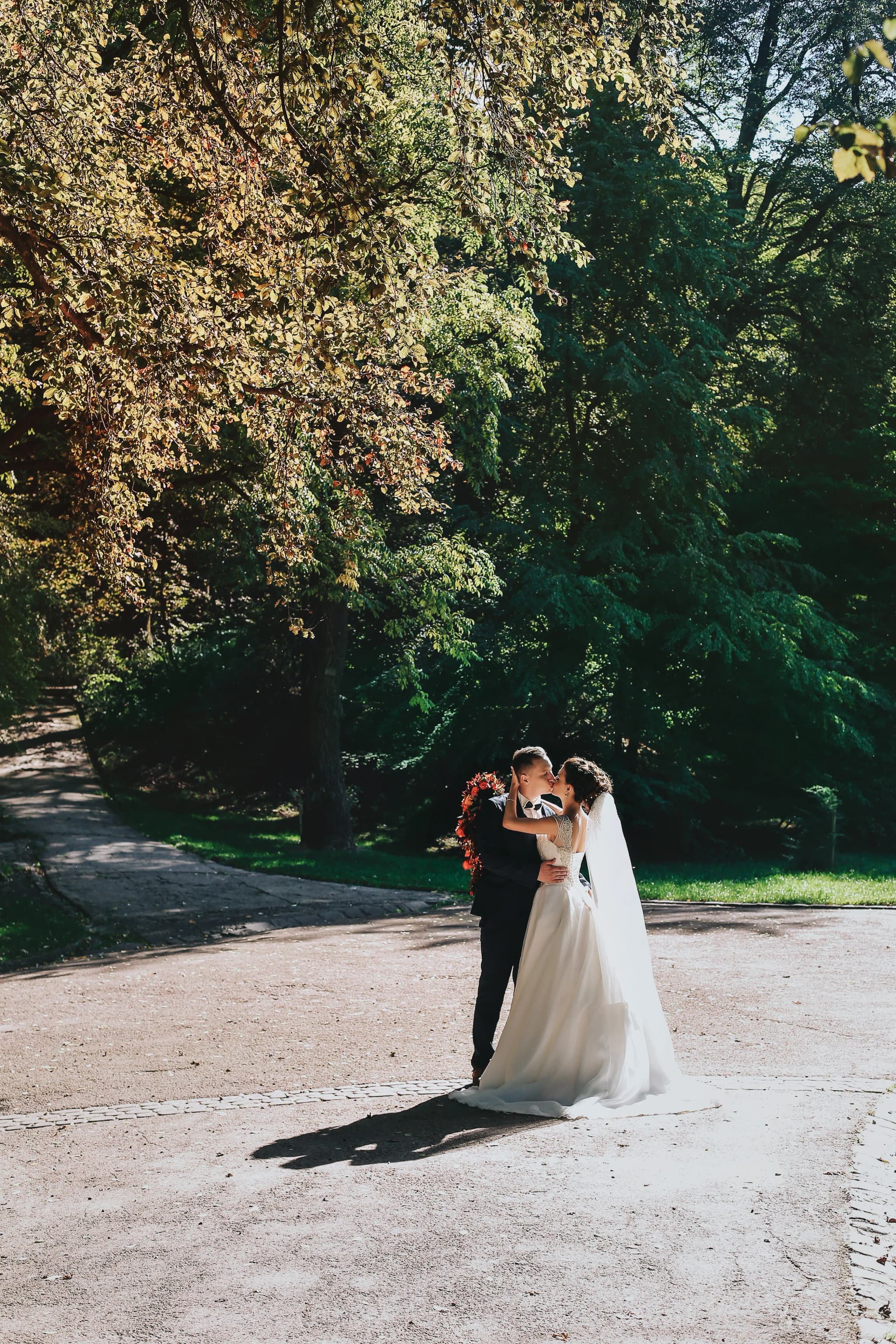
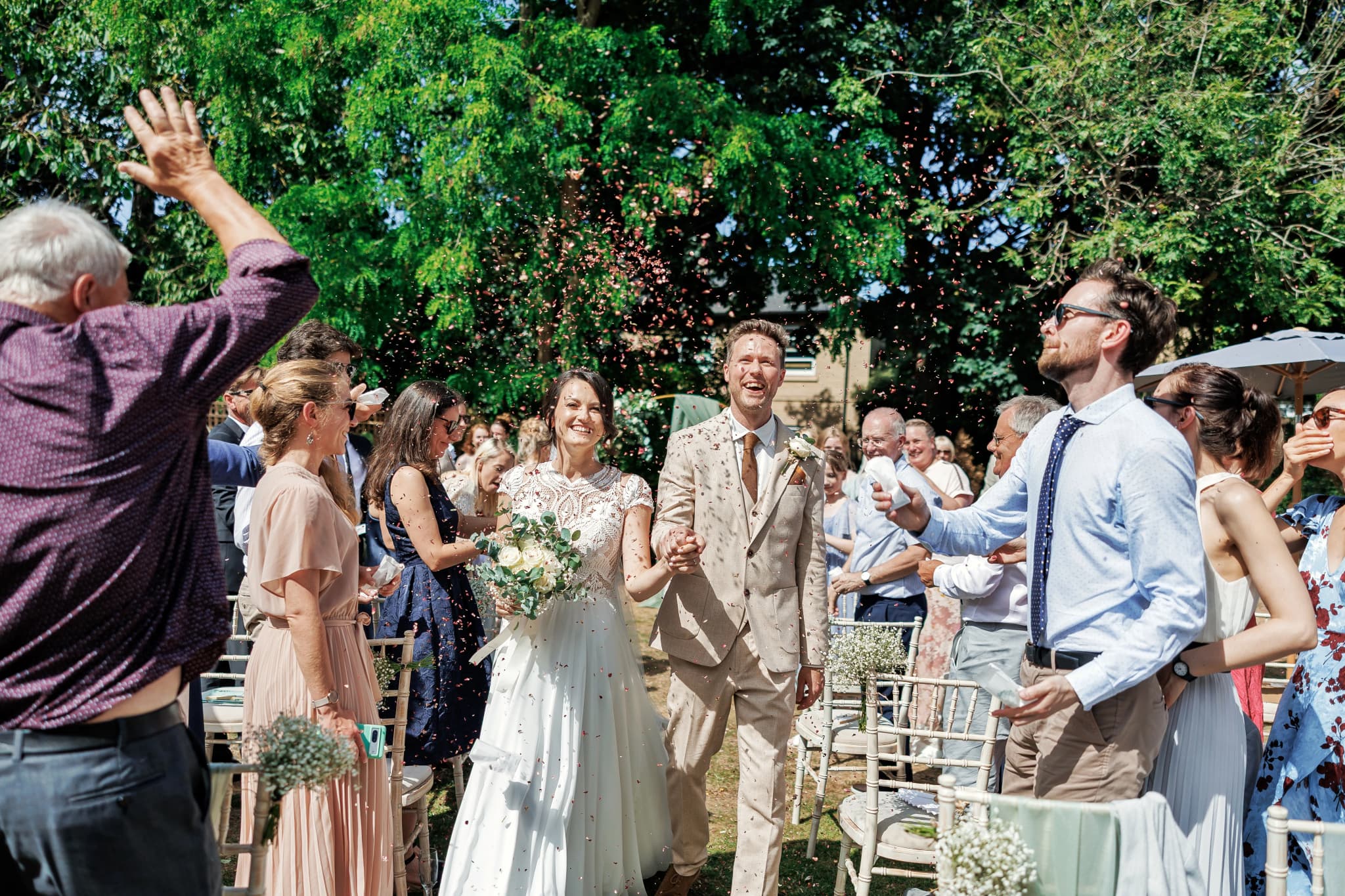
The moment a couple emerge from the church into daylight is one of the most energetic and joyful photographs of any wedding. The transition from the quiet interior to the noise and celebration of waiting guests, the shower of confetti or rose petals, the first full view of each other in open daylight — all of this happens in a few chaotic seconds and produces photographs of extraordinary emotional charge. I position myself outside before the doors open, with a second camera body on a different lens so I can capture both the wide scene and the close detail without missing either.
English churchyards are often wonderful photographic environments in their own right. Ancient yew trees, lichen-covered grave slabs, stone walls draped in ivy, lychgates framing the couple — all of these provide natural framing and texture that complement rather than compete with the couple. After the formal congratulations from guests, I like to take twenty minutes with the couple in the churchyard itself, using the architecture and landscape of the immediate surroundings for portraits before the reception transport arrives. Some of the most timeless wedding portraits I have made have been taken in the quiet of an English churchyard in the twenty minutes after the ceremony while guests enjoy drinks nearby.
If your church has a particularly beautiful tower, ask the verger whether access is possible for a rooftop photograph. Not all churches permit this, and it requires proper logistics planning, but an aerial view of the confetti moment or of the couple standing in the churchyard below is a distinctive image that requires almost no effort from the couple and produces a result they will genuinely not have seen before.
Preparing for Your Church Wedding as a Couple
The most useful thing you can do ahead of a church wedding is simply tell your photographer as much as possible about the building. Share the website, any floor plans or seating layouts, and — if you have them — photographs taken at previous weddings in the same church. A reconnaissance visit before the wedding day is standard in my practice for all church ceremonies; I will assess the light at the time of day your ceremony will take place, identify the best positions, and introduce myself to the church administrator. If you can arrange for me to visit during a rehearsal, so much the better.
Think also about timing. Churches often require a strict schedule, and photography after the ceremony in the churchyard can be difficult if guests are moving straight to cars or coaches. If you can build in even fifteen minutes of free time between the end of the ceremony and departure for the reception, that time will be well used. Similarly, if your reception venue is nearby and you are considering returning to the church later in the afternoon or evening for portraits in quieter conditions, this is worth discussing — the light inside an empty church at five o'clock on a summer afternoon can be remarkable.
Finally, speak to your guests about photography. A polite note in the order of service asking guests to keep phones and cameras lowered during the ceremony helps enormously — not for territorial reasons, but because a sea of raised devices blocks sight lines, distracts from the moment, and creates photographs where what should be a face is instead the back of an iPad. Your guests want to be present at your wedding; giving them permission not to document it themselves often comes as a relief.
Planning a church wedding in Cambridge or the surrounding area?
I have photographed ceremonies at churches and chapels across Cambridgeshire, Suffolk, and Hertfordshire — from village parishes to college chapels. I am familiar with the particular challenges and opportunities each type of building presents, and I always carry out a pre-visit before your wedding day. Get in touch to discuss your church and what you are hoping for from your photographs — I would love to hear about your wedding.
A church wedding is one of the few settings where the architecture, the ritual, and the emotion of the day are all working in the same direction. The difficulty of the photography — the low light, the restrictions, the distance from the action — is real, but it is what produces images that feel genuinely different from those taken in a contemporary venue. In my experience, couples who choose church weddings almost always say, when they receive their photographs, that the images exceeded what they had hoped for. The building does much of the work. My job is to be ready when it does.


Yana Skakun
Photographer · England
Professional wedding, family and portrait photographer based in England. Passionate about capturing authentic emotions and timeless moments.
About Yana →church wedding photography guidechurch wedding photographer UKecclesiastical architecture wedding photos
Wedding Tips — Wedding Photography in Cambridge & England
Yana Skakun is a professional wedding photographer based in Cambridge, covering weddings across England — from intimate elopements to full-day ceremonies at country houses, barns, and city venues. Every couple receives a relaxed, documentary approach that captures the day as it truly unfolds. This guide — Church Wedding Photography: Making the Most of Beautiful Architecture — is part of the photography journal: practical, experience-based advice drawn from real sessions across England. Whether you arrived searching for church wedding photography guide or church wedding photographer uk, the same care and attention shapes every session Yana photographs.
Wedding Photography sessions are available year-round, with bookings open across Cambridge, Ely, Huntingdon, Peterborough, and further afield — East England, London, the Midlands, and beyond. If you have specific questions about ecclesiastical architecture wedding photos, mention it in your enquiry. Get in touch through the contact form above to check availability and discuss your session. Enquiries are welcomed from anywhere in the UK.
Frequently Asked Questions
How much does a wedding photographer cost in England?+
Wedding photography in England typically ranges from £1,500 to £4,000+ for a full day. Price depends on experience, coverage hours, and whether albums or engagement shoots are included. Most photographers charge between £2,000–£3,000 for 8–10 hours of coverage.
How early should you book a wedding photographer?+
For peak season (May–September), book 12–18 months in advance. For autumn and winter weddings, 9–12 months is usually sufficient. Popular photographers at popular venues fill up fast — as soon as you have a date and venue confirmed, start reaching out.
How many photos do you get from a wedding photographer?+
Most professional wedding photographers deliver 400–800 edited images for a full-day wedding. The exact number depends on coverage hours, how many guests there are, and the photographer's editing style. Quality matters more than quantity — a curated gallery of 500 images tells the story better than 1,500 unedited files.
Do you need a second photographer at your wedding?+
A second photographer is helpful if you want simultaneous coverage of getting-ready moments in different locations, multiple angles during the ceremony, or more candid coverage during the reception. It adds cost but significantly increases the variety and completeness of your gallery.
What is the difference between documentary and editorial wedding photography?+
Documentary (reportage) wedding photography captures moments as they happen — the photographer observes and doesn't intervene. Editorial photography involves deliberate direction: placing you in good light, shaping compositions, creating intentional portraits. Most photographers blend both styles throughout the day.
Continue Reading
Related Articles

Wedding Tips
Sustainable Eco-Friendly Wedding Guide — Planning a Green Celebration
15 min read · Read Article
Wedding Tips
Trash the Dress Session — Complete Planning and Photography Guide
14 min read · Read Article
Wedding Tips
Client Communication for Photographers — From Enquiry to Gallery Delivery
15 min read · Read Article
Get in Touch
Ready to Book Your Session?
Get in touch to discuss your vision — I'll reply within 24 hours.