Yana Skakun

Dried Flowers vs Fresh: Which is Better for Wedding Photos and the Planet?
By Yana Skakun·13 April 2026·7 min read
I have photographed a great many bouquets over the years, and I have noticed a shift happening slowly at the edges of every wedding fair, every styled shoot, and every conversation I have with couples in the early planning stages. A few years ago, almost nobody asked me about dried flowers. Now, barely a month goes by without a bride showing me a photograph on her phone of a bouquet made from bleached pampas grass, dried lunaria, and rust-toned strawflowers, and asking whether it would photograph well. It is a fair question, and not a simple one. As someone who stands behind a camera for a living and watches how flowers behave in every kind of light a British wedding day can throw at them, I have strong opinions about which choice serves the photographs best, and I have equally strong opinions about which choice serves the planet best — and the honest answer is that those two things do not always point in the same direction.
How Each One Actually Behaves in Front of a Lens
Fresh flowers have a quality that is very difficult to fake: they are alive, or freshly cut, and that gives them a particular translucency. Light passes through the petals of a fresh peony or garden rose and creates a soft glow, especially in the low golden light of a British summer evening. Water content in the petals means colours stay saturated and vivid, and the slight imperfection of real, growing things — a petal that has just started to open, a leaf with a little natural curl — reads as organic and alive in a photograph. Fresh flowers also move. A breeze through a bouquet during a walking portrait creates a sense of motion and softness that is genuinely lovely, and something I actively look for and wait on when I am composing a shot outdoors.
Dried flowers photograph completely differently, and it is worth being honest that different is not automatically worse. They have a matte, papery texture rather than a glossy or translucent one, and the colour palette is inherently more muted — dusty pinks, warm rust, soft cream, deep terracotta, faded sage. Under harsh midday sun, that muted palette can look flat and a little lifeless in a photograph, because there is none of the light-through-petal glow that makes fresh blooms sparkle. But in softer light — overcast skies, shaded courtyards, the warm indoor light of a converted barn in the evening — dried flowers can look genuinely painterly. They have a texture and a stillness that suits a moodier, more editorial style of image very well, and they photograph beautifully alongside neutral, textured fabrics like linen and raw silk.
The most important practical difference for me as a photographer is durability across the day. Fresh flowers begin to wilt the moment they are cut, and a long, hot wedding day — ceremony, drinks reception, group photographs, the walk to a second location — can take a visible toll on a bouquet by the time we reach the evening reception. Dried flowers do not wilt. A bouquet photographed at nine in the morning looks identical at nine at night, which matters more than couples often realise until I point it out to them during planning.
The Environmental Case, Honestly Examined
This is where I want to be careful, because the environmental story is more nuanced than either side of the debate usually admits. Fresh flowers grown in the UK, in season, from a grower who is not running heated glasshouses through a British winter, have a genuinely low environmental footprint. Locally grown seasonal blooms travel a short distance, do not require refrigerated air freight, and support small-scale UK flower farming, which is itself a positive thing for biodiversity and rural land use. The problem is not fresh flowers as a category. The problem is the supply chain that has grown up around the cut flower industry over the last few decades, in which a very large proportion of flowers sold in the UK, including at weddings, have been flown in from flower farms overseas, kept cold throughout transit, and sold through a wholesale system that prioritises uniformity and year-round availability over provenance.
Dried flowers avoid the wilting-and-waste problem entirely and can, if grown and dried well, be kept and reused, gifted, or displayed at home for months or years afterwards rather than being composted within a week of the wedding. That longevity is a genuine environmental point in their favour, and it is one of the reasons I understand why so many couples are drawn to them. But dried flowers are not automatically the more sustainable choice either. Some of the dried and preserved botanicals sold through wedding suppliers, particularly bleached pampas grass and certain dyed or chemically preserved stems, are imported from far away and have undergone energy-intensive processing to achieve that particular bleached or dyed look. A bundle of dried pampas that has been shipped from overseas and chemically treated is not automatically greener than a hand-tied bouquet of British-grown dahlias cut the same week as the wedding.
My honest view, having watched this conversation evolve over several wedding seasons, is that the fresh-versus-dried question is a less important sustainability lever than the local-versus-imported question and the in-season-versus-out-of-season question. A fresh, seasonal, UK-grown bouquet in July and a well-sourced, minimally processed dried arrangement can both be genuinely low-impact choices. An out-of-season fresh bouquet flown in from the other side of the world in December, and a heavily bleached, dyed, imported dried arrangement, can both be relatively high-impact choices despite looking completely different from one another. The material itself matters less than where it came from and how it was grown, cut, treated, and transported.
Thinking through your own flowers?
I am always happy to talk through how a particular bouquet style or colour palette will actually look in your venue's light before you commit to it, whether you are leaning fresh, dried, or a mix of both.
Get in touch to talk it throughWhich Suits Which Kind of Wedding
I find myself recommending fresh flowers most strongly to couples having a classic, romantic, colour-rich wedding, particularly one taking place in late spring or summer when British-grown blooms are at their most abundant and least expensive relative to the rest of the year. If the venue has a lot of natural light, if the colour scheme leans towards saturated jewel tones or soft romantic pastels, and if the photographs are likely to include a lot of outdoor portraits in good light, fresh flowers will generally give you the most vivid, luminous result. They also suit couples who want their photographs to read as timeless rather than tied to a particular trend, since a classic fresh bouquet of garden roses or peonies has looked essentially the same in wedding photographs for decades.
Dried flowers suit a different aesthetic and, frankly, a different kind of practical planning. Autumn and winter weddings, where fresh seasonal choice in the UK narrows considerably and where the alternative is often importing fresh stems from warmer climates, are a genuinely sensible moment to consider dried or a fresh-and-dried mix. Dried flowers also suit couples planning a wedding with a long single-venue day and no second location, where a bouquet needs to survive twelve hours of handling, warmth, and photographs without wilting. And they suit a particular visual style — muted, textural, a little rustic or bohemian, often paired with linen, rattan, and warm neutral tones — that has become genuinely popular for good reason, because it photographs with real character in the softer light of a barn, a marquee, or an autumn afternoon.
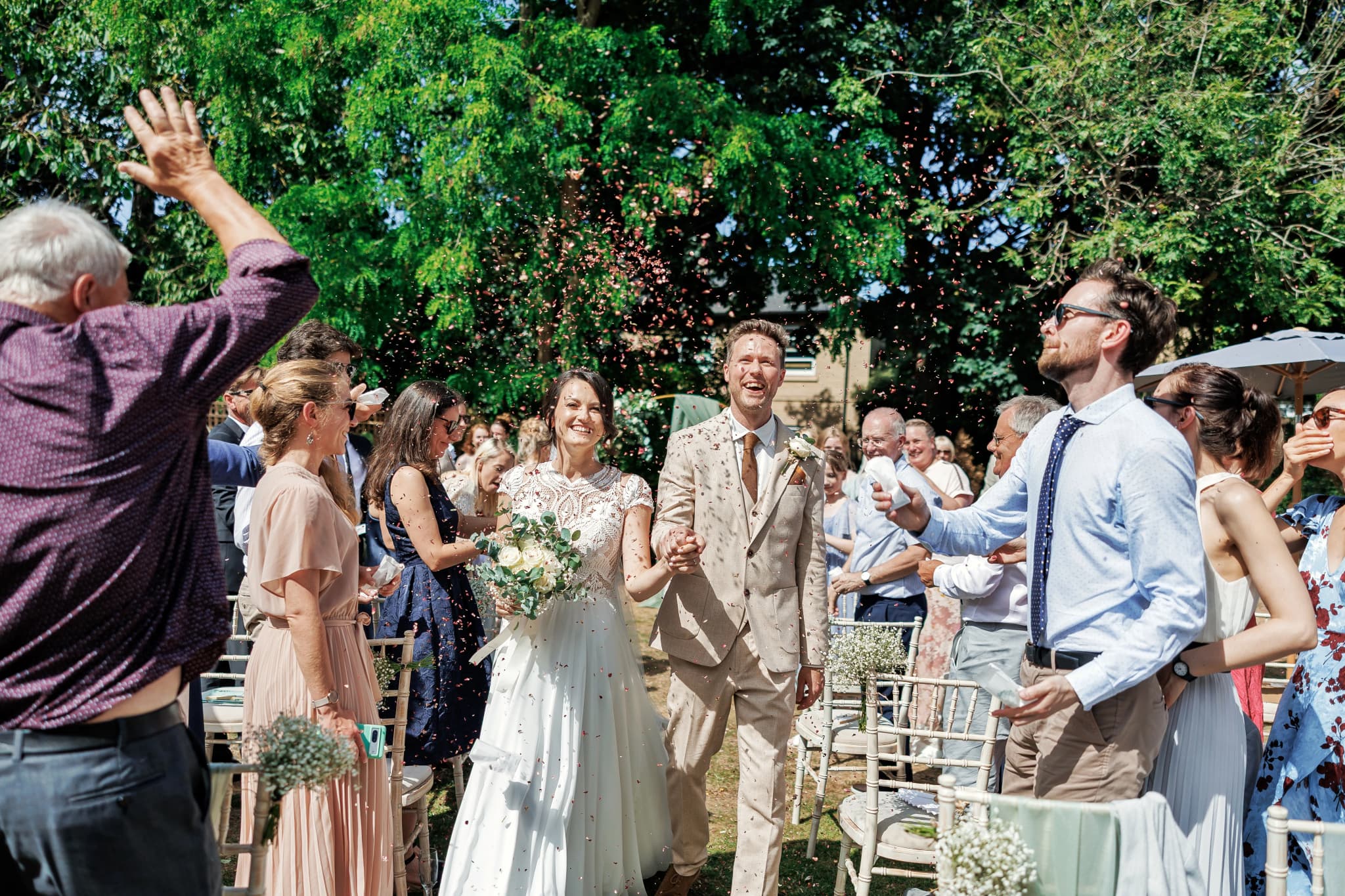
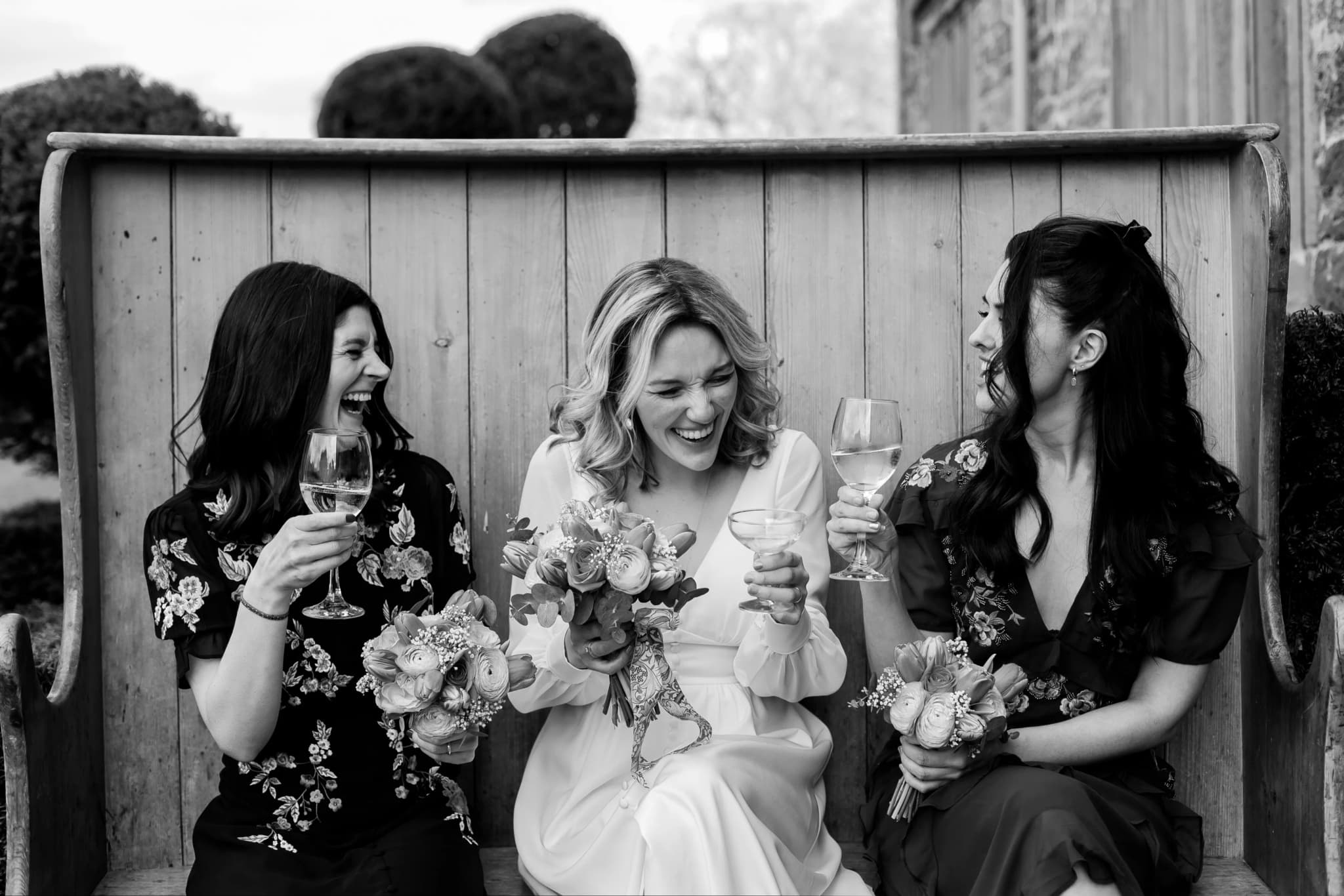
A genuinely practical middle path that I see working very well is a fresh bouquet for the bride, used for the ceremony and the bulk of the portrait session while the flowers are at their best, combined with dried elements in table centrepieces, buttonholes, or décor that needs to last through the entire reception without anyone topping up water or replacing wilted stems. This gives you the luminous, alive quality of fresh flowers in the images that matter most — the ceremony, the first portraits, the confetti moment — while using the durability of dried botanicals where longevity through a long day is more valuable than peak freshness.
Colour, Light, and the Time of Day You Are Marrying
One thing couples rarely think about until I raise it is how flower choice interacts with the specific light at the specific time your ceremony and portraits will actually happen. A midday summer ceremony in bright, direct sun will wash out the subtler tones of dried flowers considerably — the difference between rust and terracotta and dusty pink can flatten under harsh overhead light, whereas the same light makes saturated fresh blooms genuinely sing. Conversely, an early evening ceremony, a shaded courtyard, or an autumn wedding with soft, diffused daylight is a much more forgiving environment for the subtler dried palette, and this is exactly the light in which I find dried arrangements at their most photogenic, with texture and tonal variation reading clearly rather than disappearing into flat colour.
If you already know your ceremony time and roughly what the light will be doing, that is genuinely useful information for choosing your flowers, not just your photographer. I am always glad to walk through a venue with you, or talk through the timings, and give an honest opinion on how a particular colour palette in fresh or dried form is likely to translate into the photographs, because what looks striking in a florist's studio under artificial light does not always translate the same way outdoors in variable British weather.
What I Would Actually Tell a Couple Choosing Between Them
If someone asked me directly, without any of the nuance, which choice is "better," I would decline to give a single answer, because the honest truth is that it depends on your season, your venue, your colour palette, and what you personally find beautiful, far more than it depends on any inherent superiority of one material over the other. What I would say is this: choose fresh flowers, ideally British-grown and in season, if you want maximum vibrancy in your photographs and are marrying somewhere with good natural light during the warmer months. Choose dried, or a fresh-and-dried combination, if you are marrying in autumn or winter, want something that survives a long day untouched, or are drawn to a softer, more textural, more muted aesthetic that suits your venue and your own taste. And if sustainability genuinely matters to you as a driving factor in the decision, spend your research time on provenance and season rather than on the fresh-versus-dried question alone — ask where the flowers were grown, how far they travelled, and whether any dried or preserved elements were heavily processed, because those answers will tell you far more about the environmental footprint of your flowers than the simple fact of whether they were cut yesterday or six months ago.
Flowers are one of the few genuinely three-dimensional, tactile elements of a wedding day, and they show up in nearly every photograph I take — in your hands during the ceremony, pinned to a lapel, scattered across a table, tucked behind an ear during the evening dancing. Whichever way you lean, fresh, dried, or a considered mix of both, the choice is worth making with real information rather than trend alone, and I would always rather talk it through honestly with a couple before the day than see a beautiful concept undermined by light it was never going to suit. If you are still weighing it up, or want a second opinion on how a particular palette will actually look in your venue, get in touch and we can talk it through properly.


Yana Skakun
Photographer · England
Professional wedding, family and portrait photographer based in England. Passionate about capturing authentic emotions and timeless moments.
About Yana →sustainable wedding flowers ukdried wedding flowersfresh vs dried bouqueteco-friendly wedding flowerswedding flower photography tips
Wedding Tips — Wedding Photography in Cambridge & England
Yana Skakun is a professional wedding photographer based in Cambridge, covering weddings across England — from intimate elopements to full-day ceremonies at country houses, barns, and city venues. Every couple receives a relaxed, documentary approach that captures the day as it truly unfolds. This guide — Dried Flowers vs Fresh: Which is Better for Wedding Photos and the Planet? — is part of the photography journal: practical, experience-based advice drawn from real sessions across England. Whether you arrived searching for sustainable wedding flowers uk or dried wedding flowers, the same care and attention shapes every session Yana photographs.
Wedding Photography sessions are available year-round, with bookings open across Cambridge, Ely, Huntingdon, Peterborough, and further afield — East England, London, the Midlands, and beyond. If you have specific questions about fresh vs dried bouquet, mention it in your enquiry. Get in touch through the contact form above to check availability and discuss your session. Enquiries are welcomed from anywhere in the UK.
Frequently Asked Questions
How much does a wedding photographer cost in England?+
Wedding photography in England typically ranges from £1,500 to £4,000+ for a full day. Price depends on experience, coverage hours, and whether albums or engagement shoots are included. Most photographers charge between £2,000–£3,000 for 8–10 hours of coverage.
How early should you book a wedding photographer?+
For peak season (May–September), book 12–18 months in advance. For autumn and winter weddings, 9–12 months is usually sufficient. Popular photographers at popular venues fill up fast — as soon as you have a date and venue confirmed, start reaching out.
How many photos do you get from a wedding photographer?+
Most professional wedding photographers deliver 400–800 edited images for a full-day wedding. The exact number depends on coverage hours, how many guests there are, and the photographer's editing style. Quality matters more than quantity — a curated gallery of 500 images tells the story better than 1,500 unedited files.
Do you need a second photographer at your wedding?+
A second photographer is helpful if you want simultaneous coverage of getting-ready moments in different locations, multiple angles during the ceremony, or more candid coverage during the reception. It adds cost but significantly increases the variety and completeness of your gallery.
What is the difference between documentary and editorial wedding photography?+
Documentary (reportage) wedding photography captures moments as they happen — the photographer observes and doesn't intervene. Editorial photography involves deliberate direction: placing you in good light, shaping compositions, creating intentional portraits. Most photographers blend both styles throughout the day.
Continue Reading
Related Articles

Wedding Tips
Sustainable Eco-Friendly Wedding Guide — Planning a Green Celebration
15 min read · Read Article
Wedding Tips
Trash the Dress Session — Complete Planning and Photography Guide
14 min read · Read Article
Wedding Tips
Client Communication for Photographers — From Enquiry to Gallery Delivery
15 min read · Read Article
Get in Touch
Ready to Book Your Session?
Get in touch to discuss your vision — I'll reply within 24 hours.