Yana Skakun

Editorial Wedding Poses for the Modern Couple
By Yana Skakun·10 June 2026·5 min read
Modern editorial wedding poses are not about standing still and smiling at the camera — they are about movement, intention, and telling a story that belongs entirely to you. The couples I photograph in Cambridge and across the UK want images that look like they belong in a magazine spread, not a school portrait. That shift in approach changes everything: how we move through a space, how you hold each other, and how the light wraps around you in a single decisive moment.
What Makes a Pose Feel Editorial Rather Than Staged
The difference between a posed photograph and an editorial one is rarely about the position of your hands — it is about whether the moment reads as lived-in or performed. Editorial posing draws from fashion and documentary photography simultaneously: there is clear compositional intent, but the subjects look as though they are in the middle of something real. A glance away from the camera at exactly the right instant, a hand resting on a lapel rather than gripping it, walking with genuine momentum rather than a coached stroll — these micro-decisions separate images that feel alive from those that feel constructed.
When I work with couples on their wedding day, I rarely say "stand here and face this way." Instead, I give a prompt — whisper something to each other, walk past me without stopping, rest your forehead against theirs and breathe. The pose that emerges from a prompt is always more honest than one assembled body-part by body-part. For UK weddings especially, where the light is often soft and diffused by cloud cover, this kind of naturalistic tension reads beautifully: there is no harsh shadow to hide from, so the focus falls entirely on the relationship between two people.
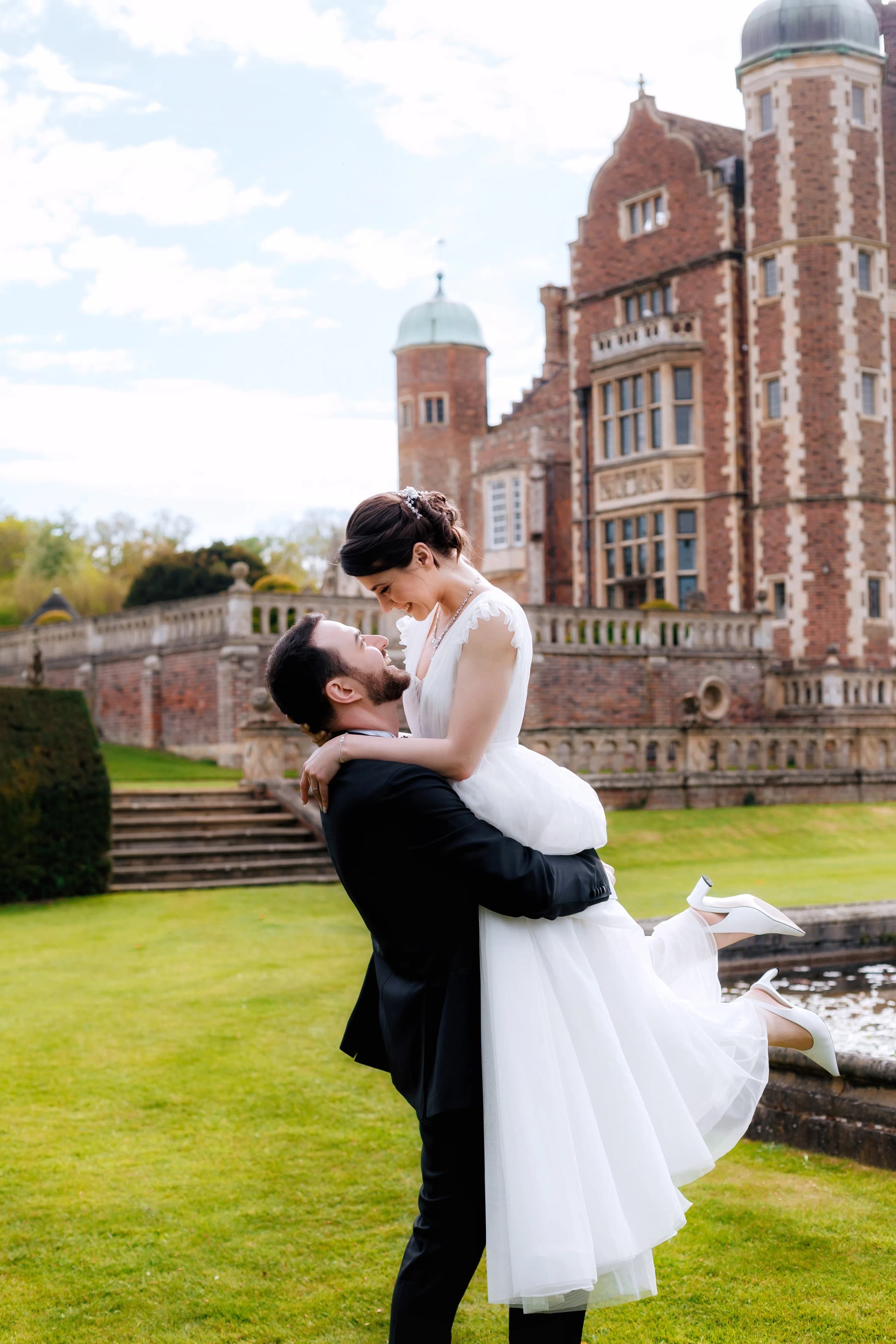
Editorial posing also demands that both photographer and couple are paying attention to environment. A doorway in a Cotswolds manor, the iron railings outside a Cambridge college chapel, an expanse of stubble field in late afternoon November light — the architecture or landscape becomes a third character in the frame. I scout locations before the portrait session during every wedding I cover so that when we step into the golden hour window, I already know exactly where the light will land and which angles will make the setting feel cinematic rather than touristy.
Core Editorial Poses That Work for Every Body Type
There is no single "editorial pose" — but there are structural principles that consistently produce striking images. Below are the approaches I return to most often, adapted to the couple and the setting in front of me.
- ◆The diagonal walk: Ask the couple to walk past the camera at a 45-degree angle, holding hands but not looking at each other. The motion creates natural swing in clothing and hair, avoids the freeze-frame stiffness of a static pose, and lets me catch the moment their expressions relax into something genuine. Works especially well on long gravel drives, through meadows, or along riverside paths common at English country house venues.
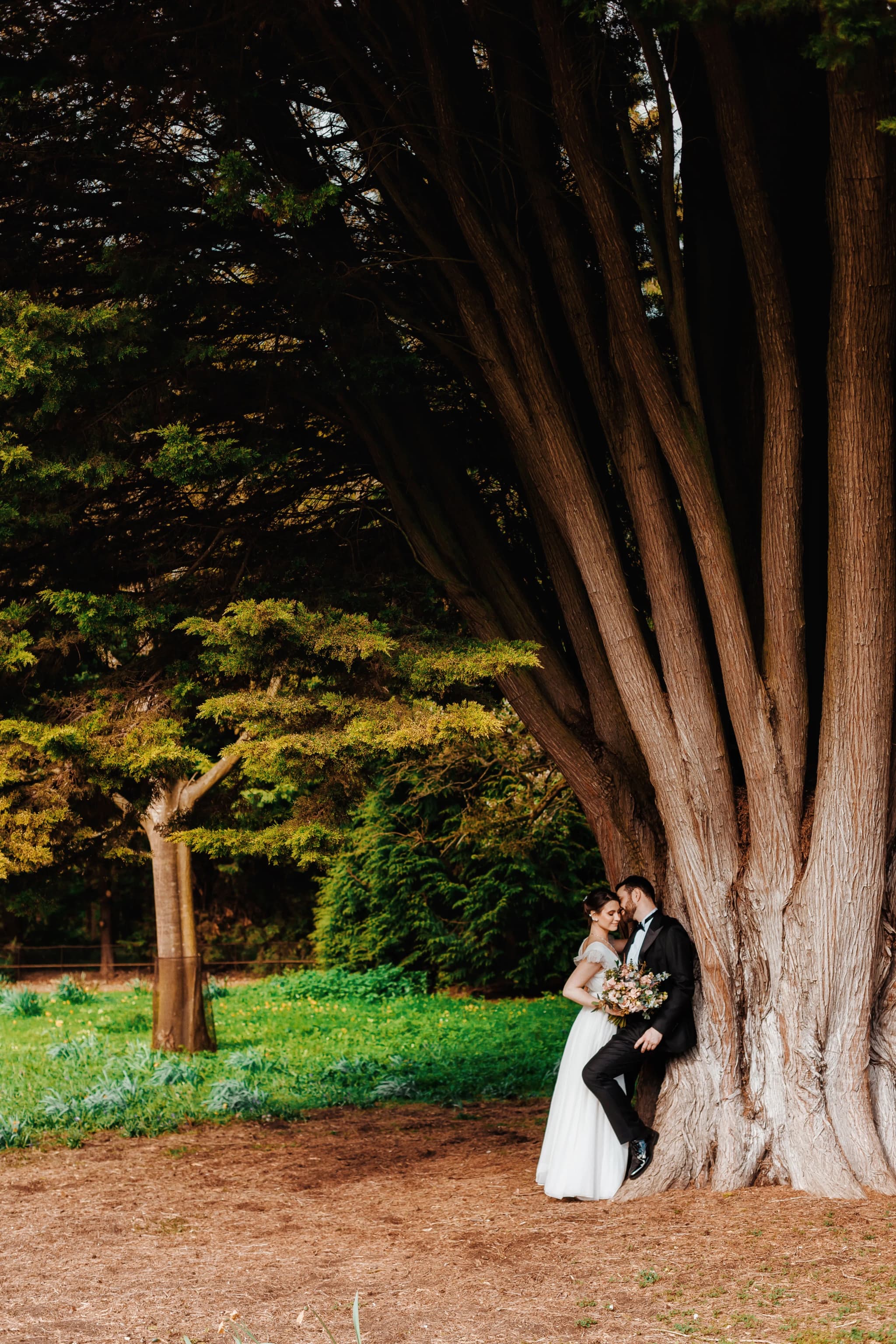
- ◆Forehead-to-forehead with eyes closed: One of the most intimate editorial frames available. Both partners close their eyes, foreheads touching, hands resting wherever they naturally fall. The closed eyes remove the self-consciousness of being watched. What you see in the resulting image is pure presence. I shoot this tight and wide — tight for the emotion, wide to show the architecture or landscape surrounding that private moment.
- ◆The slow dance without music: I ask couples to dance — not a rehearsed first dance, just a slow sway as if a song only they can hear is playing. The movement is small enough to keep the frame steady but large enough to create life in the image. Clothing catches the light differently every second. When one partner laughs or looks up unexpectedly, I already have the shutter half-pressed.
- ◆Leading by the hand through a doorway: One partner leads the other through a threshold — a barn door, a church porch, an archway in a walled garden. The geometry of a doorway frames the couple for free; the act of leading reads as tender rather than directed. Photographed from outside looking in, or from inside with the exterior light silhouetting them, this single move produces three or four distinctly different usable images.
- ◆Back-to-camera, leaning into each other: Both partners face away from the camera, shoulders touching or one leaning into the other. This removes every anxious thought about facial expression and replaces it with body language and surroundings. The image becomes about context — the venue, the countryside, the city — while the couple's posture carries all the intimacy.
- ◆The adjust and look away: One partner straightens the other's tie, tucks a strand of hair behind an ear, brushes a petal from a shoulder. A small act of care. The person being tended to looks slightly away or down. These functional gestures are inherently editorial — they appear in every fashion campaign and wedding magazine spread because they feel like a stolen private moment, even when they are gently directed.
Timing: When to Shoot Editorial Portraits on a UK Wedding Day
The most common mistake I see couples make when planning their day is allocating fifteen minutes for portraits and expecting them to carry the whole gallery. Editorial wedding photography requires a little room to breathe — not hours, but enough time to move through two or three locations on the venue grounds and wait for the right moment in each. In the UK, where weather is genuinely unpredictable, that also means building a contingency: knowing which covered colonnade, which stone barn interior, or which sheltered garden wall gives us the same quality of light if it rains.
My preferred portrait window is the forty minutes before sunset, which in a British summer can fall anywhere between 8:30 pm and 9:15 pm. The light at that hour is low and directional, turning even a flat Essex field into something with depth and atmosphere. For winter weddings — and I photograph many in Cambridge and the surrounding villages — the golden hour arrives by 3:30 pm, which means we often shoot portraits before the wedding breakfast rather than after. I discuss this in every pre-wedding consultation so the schedule is built around light, not despite it.
During the portrait session itself, I typically spend the first five minutes doing nothing except walking the couple around and chatting. No camera raised, no direction given. This is deliberate: people need time to stop performing "couple getting photographed" and return to simply being themselves. By the time I lift the camera, the self-consciousness has largely dissolved, and the poses that follow feel earned rather than forced.
How to Prepare as a Couple: Before the Wedding Day
If the idea of being posed makes you anxious, the most useful thing you can do is book an engagement session with your photographer beforehand. Not because you need practice smiling — you don't — but because you need to experience being in front of a camera in a low-stakes environment. By the time your wedding day arrives, you will already know roughly how I work, what my prompts feel like, and how to interpret "walk towards me but ignore me." That familiarity is worth more than any posing guide you could memorise.
I offer engagement sessions to all of my wedding clients as standard, and I strongly encourage them. We typically spend an hour in a location that means something to the couple — a park in Cambridge, the market town where they live, the venue itself. The resulting images are genuinely useful (save-the-dates, table plans, website headers) but the real value is relational. You trust me more on the wedding day. I understand your body language, which sides you prefer, what makes you both laugh without trying. That knowledge is what transforms a competent set of wedding portraits into something that actually feels like you.
On the day itself: wear what you planned to wear, move how you naturally move, and let me worry about the angles. The couples whose images read as most editorial are almost always the ones who stopped trying to look editorial and simply paid attention to each other.
Ready for Wedding Portraits That Actually Look Like You?
I photograph weddings across Cambridge, the UK, and Europe with an editorial eye — every portrait session is built around your personalities, your venue, and the available light. If you want images that feel lived-in rather than staged, I'd love to hear about your day.
Check Your Date →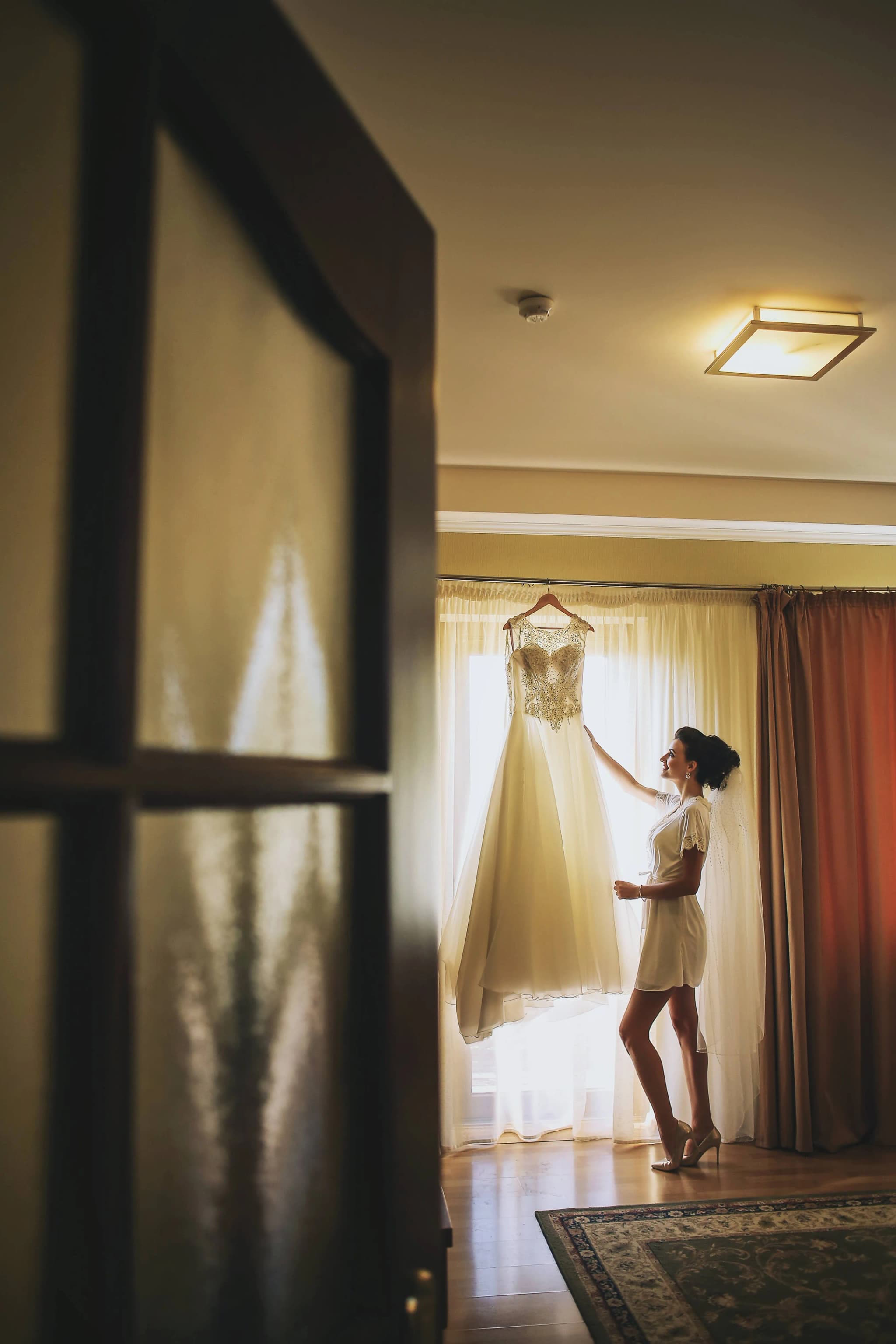

Yana Skakun
Photographer · England
Professional wedding, family and portrait photographer based in England. Passionate about capturing authentic emotions and timeless moments.
About Yana →editorialweddingposesmodern
Wedding Tips — Wedding Photography in Cambridge & England
Yana Skakun is a professional wedding photographer based in Cambridge, covering weddings across England — from intimate elopements to full-day ceremonies at country houses, barns, and city venues. Every couple receives a relaxed, documentary approach that captures the day as it truly unfolds. This guide — Editorial Wedding Poses for the Modern Couple — is part of the photography journal: practical, experience-based advice drawn from real sessions across England. Whether you arrived searching for editorial or wedding, the same care and attention shapes every session Yana photographs.
Wedding Photography sessions are available year-round, with bookings open across Cambridge, Ely, Huntingdon, Peterborough, and further afield — East England, London, the Midlands, and beyond. If you have specific questions about poses, mention it in your enquiry. Get in touch through the contact form above to check availability and discuss your session. Enquiries are welcomed from anywhere in the UK.
Frequently Asked Questions
How much does a wedding photographer cost in England?+
Wedding photography in England typically ranges from £1,500 to £4,000+ for a full day. Price depends on experience, coverage hours, and whether albums or engagement shoots are included. Most photographers charge between £2,000–£3,000 for 8–10 hours of coverage.
How early should you book a wedding photographer?+
For peak season (May–September), book 12–18 months in advance. For autumn and winter weddings, 9–12 months is usually sufficient. Popular photographers at popular venues fill up fast — as soon as you have a date and venue confirmed, start reaching out.
How many photos do you get from a wedding photographer?+
Most professional wedding photographers deliver 400–800 edited images for a full-day wedding. The exact number depends on coverage hours, how many guests there are, and the photographer's editing style. Quality matters more than quantity — a curated gallery of 500 images tells the story better than 1,500 unedited files.
Do you need a second photographer at your wedding?+
A second photographer is helpful if you want simultaneous coverage of getting-ready moments in different locations, multiple angles during the ceremony, or more candid coverage during the reception. It adds cost but significantly increases the variety and completeness of your gallery.
What is the difference between documentary and editorial wedding photography?+
Documentary (reportage) wedding photography captures moments as they happen — the photographer observes and doesn't intervene. Editorial photography involves deliberate direction: placing you in good light, shaping compositions, creating intentional portraits. Most photographers blend both styles throughout the day.
Continue Reading
Related Articles

Wedding Tips
Sustainable Eco-Friendly Wedding Guide — Planning a Green Celebration
15 min read · Read Article
Wedding Tips
Trash the Dress Session — Complete Planning and Photography Guide
14 min read · Read Article
Wedding Tips
Client Communication for Photographers — From Enquiry to Gallery Delivery
15 min read · Read Article
Get in Touch
Ready to Book Your Session?
Get in touch to discuss your vision — I'll reply within 24 hours.