Yana Skakun

How to Avoid a Double Chin in Your Wedding Photos
By Yana Skakun·10 June 2026·5 min read
Of all the concerns brides and grooms share with me before their wedding day, one comes up more than almost any other: “I always look like I have a double chin in photos.” The good news is that this is almost never about your actual chin — it's about angle, posture, and timing, and every single one of those things is within our control on the day.
Why the Double Chin Appears (and Why It's Not Your Fault)
The double chin in photographs is almost always a consequence of camera position rather than facial structure. When a lens sits at or below chin height and the subject's head tilts even slightly downward — perhaps to look at a bouquet, to listen to a reading, or simply to avoid direct eye contact with the camera — the soft tissue under the jaw compresses. It has nowhere to go except outward, and the flat, two-dimensional nature of a photograph amplifies that compression dramatically.
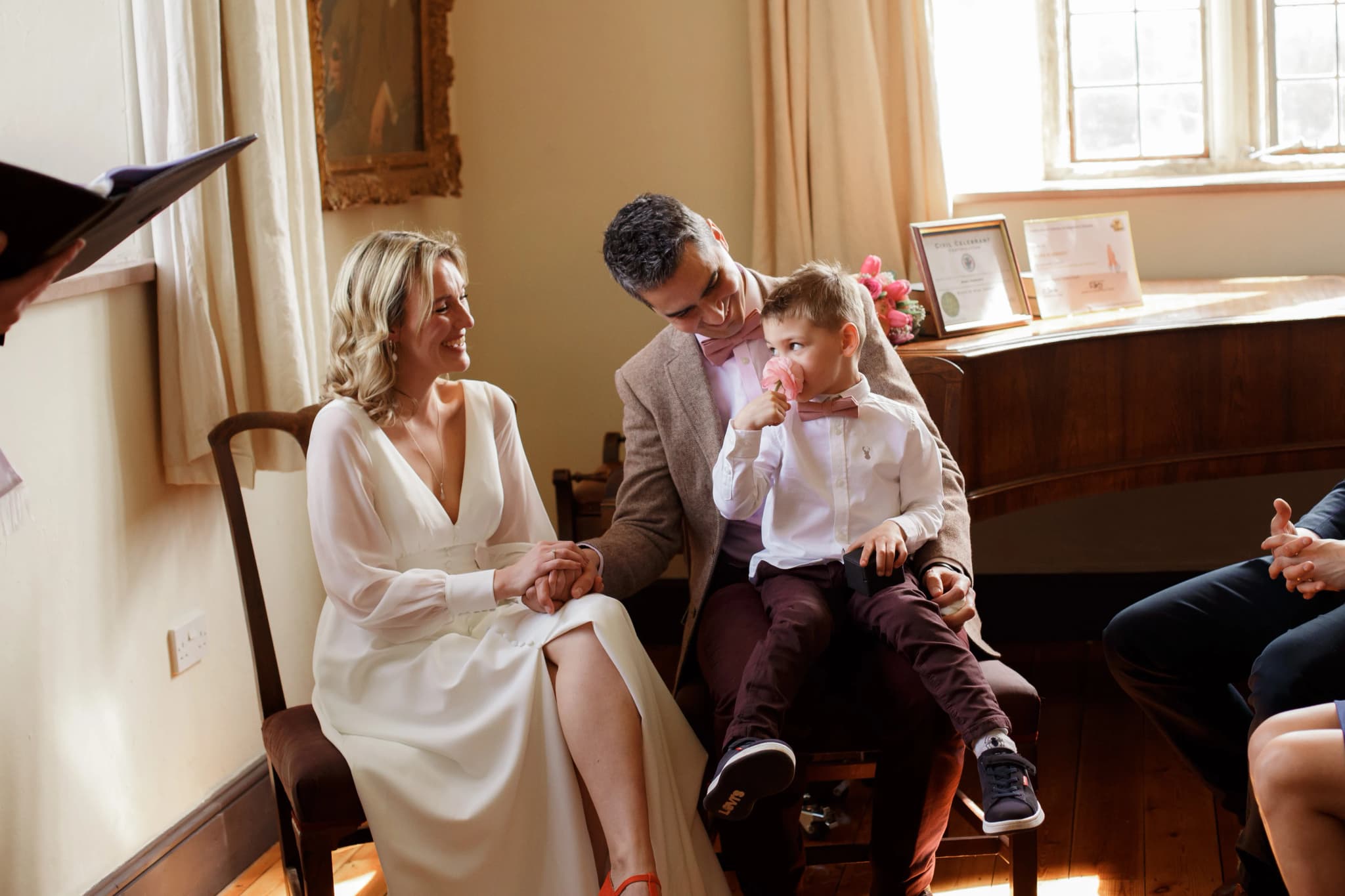
In a typical UK church wedding, this moment happens most often during the signing of the register. Everyone leans over the table, the vicar or registrar is talking, and guests are watching closely — so neither partner is thinking about posture. That is exactly when I position myself slightly above table height and wait for a natural upward glance before I press the shutter. The difference between a photo taken from below and one taken from eye level or slightly above can be extraordinary, even on the same person in the same second.
Understanding this dynamic frees you from worrying about your appearance and lets you focus on enjoying your day. Your photographer's job is to manage angles; your job is to be present.
The “Chin Forward and Down” Technique
The single most effective pose adjustment you can practise before your wedding is deceptively simple: extend your chin slightly forward and then angle it just a fraction downward. It will feel completely unnatural and slightly ridiculous when you do it in front of a mirror. But on camera it does two things simultaneously — it creates a small gap between the underside of your jaw and your neck, and it defines the jawline by stretching the skin taut. The result is a cleaner, more sculpted silhouette.
Think of it as a gentle “turtle neck” movement: you're pushing your face toward the camera rather than pulling your head back or tucking your chin. Pulling your head back is the instinctive reaction many people have when a camera is pointed at them — it is also the exact movement that causes the problem. If you only practise one thing in the weeks before your wedding, practise this. Do it every time you take a selfie or sit for a video call, and it will become second nature by the time you're standing in front of me on the day.
Six Situations Where Angle Problems Are Most Likely
Knowing which moments are highest risk lets us plan for them. Based on shooting weddings across Cambridge, Ely, Suffolk, and the wider East of England, these are the situations where I consistently see couples struggle with unflattering chin angles — and what we do to counter each one.
- ◆Signing the register: Both of you lean over a low table with your heads angled down. I shoot from a standing position slightly to the side, catching the moment you exchange a glance or smile rather than the moment of active writing.
- ◆First dance: The natural instinct during a slow dance is to look down at your partner or close your eyes. I coach couples beforehand to occasionally lift their gaze or rest their foreheads together rather than dropping their chins fully — this gives natural, intimate images without compression.
- ◆Sitting at the top table: Seated portraits are the most commonly overlooked risk. Sitting tends to round the shoulders and drop the chin. A gentle reminder to sit tall, shoulders back, and chin forward transforms these shots completely.
- ◆Reading a speech or vows: Looking down at a card or phone during vows compresses the jawline. If you are writing your own vows, I always suggest practising so well that you only need to glance at your notes, not stare at them — you get better portraits and a more powerful emotional moment.
- ◆Candid moments during the meal: Laughing with guests, looking down at your plate, or leaning in for conversation all create low-angle compression. For these I use a longer lens and higher shooting position, selecting frames where your face naturally lifts.
- ◆Car and carriage arrivals: Getting out of a vehicle is notoriously unflattering — the door frame dictates a downward angle and hunched posture. I always position myself outside and slightly elevated, and I direct the first look upward the moment you step clear of the door.
Posture: The Longer Game
Posture and chin angle are inseparable. Rounded shoulders pull the head forward and down, compressing the neck and jaw. Strong, relaxed posture — shoulders gently back, spine lengthened, sternum lifted — naturally raises the chin to a flattering angle without any conscious effort to “do something with your face.” If you are working with a personal trainer or doing Pilates in the run-up to your wedding, even a few weeks of postural awareness work will show in every single photograph.
On the day itself, I give gentle direction throughout — not in a way that feels like a studio shoot, but as quiet, brief cues during natural pauses. “Shoulders back a touch,” or “chin just slightly forward” takes two seconds and makes an enormous difference. Many of my Cambridge couples tell me afterwards that they barely noticed the direction while it was happening, which is exactly how it should feel.
What to Wear and How It Helps
Clothing choices contribute more than most couples expect. Necklines that sit close to the throat — high lace collars, choker-style necklaces, thick ties worn very snugly — can visually shorten the neck and draw attention to the chin area. A slightly open neckline, or a necklace that draws the eye downward toward the collarbone, elongates the neck and shifts visual attention away from the jawline entirely.
For grooms and partners in suits: a well-fitted collar is far more flattering than one that is too loose (which bunches under the chin) or too tight (which pushes skin upward). If you are hiring morning dress for a country house wedding or a cathedral ceremony in Cambridge, ask the tailor specifically about collar fit and bring this consideration to the fitting. These details rarely make it into wedding planning guides but they genuinely affect how you photograph.
A Photographer's Honest Promise
Every photographer will tell you they make people look their best. What I want to be specific about is how: I do not rely on significant post-processing to reshape faces, and I do not believe in delivering a version of you that doesn't exist. What I do instead is manage light, angle, and timing so carefully that the images you receive are genuinely flattering — not because anything has been altered, but because nothing unflattering was captured in the first place.
That distinction matters to me, and it tends to matter to my couples too. When you look at your wedding photographs thirty years from now, you want to recognise yourself — just yourself, at your very best, on the most important day so far.
Want to Look Your Best in Every Frame?
I work with every couple before and during the day to ensure posture, angle, and light are always working in your favour — so you never have to think about it yourself. If you're planning a wedding in Cambridge, Ely, or across East Anglia, let's talk about what that looks like for your day.
Check Your Date →

Yana Skakun
Photographer · England
Professional wedding, family and portrait photographer based in England. Passionate about capturing authentic emotions and timeless moments.
About Yana →howtoavoiddouble
Wedding Tips — Wedding Photography in Cambridge & England
Yana Skakun is a professional wedding photographer based in Cambridge, covering weddings across England — from intimate elopements to full-day ceremonies at country houses, barns, and city venues. Every couple receives a relaxed, documentary approach that captures the day as it truly unfolds. This guide — How to Avoid a Double Chin in Your Wedding Photos — is part of the photography journal: practical, experience-based advice drawn from real sessions across England. Whether you arrived searching for how or to, the same care and attention shapes every session Yana photographs.
Wedding Photography sessions are available year-round, with bookings open across Cambridge, Ely, Huntingdon, Peterborough, and further afield — East England, London, the Midlands, and beyond. If you have specific questions about avoid, mention it in your enquiry. Get in touch through the contact form above to check availability and discuss your session. Enquiries are welcomed from anywhere in the UK.
Frequently Asked Questions
How much does a wedding photographer cost in England?+
Wedding photography in England typically ranges from £1,500 to £4,000+ for a full day. Price depends on experience, coverage hours, and whether albums or engagement shoots are included. Most photographers charge between £2,000–£3,000 for 8–10 hours of coverage.
How early should you book a wedding photographer?+
For peak season (May–September), book 12–18 months in advance. For autumn and winter weddings, 9–12 months is usually sufficient. Popular photographers at popular venues fill up fast — as soon as you have a date and venue confirmed, start reaching out.
How many photos do you get from a wedding photographer?+
Most professional wedding photographers deliver 400–800 edited images for a full-day wedding. The exact number depends on coverage hours, how many guests there are, and the photographer's editing style. Quality matters more than quantity — a curated gallery of 500 images tells the story better than 1,500 unedited files.
Do you need a second photographer at your wedding?+
A second photographer is helpful if you want simultaneous coverage of getting-ready moments in different locations, multiple angles during the ceremony, or more candid coverage during the reception. It adds cost but significantly increases the variety and completeness of your gallery.
What is the difference between documentary and editorial wedding photography?+
Documentary (reportage) wedding photography captures moments as they happen — the photographer observes and doesn't intervene. Editorial photography involves deliberate direction: placing you in good light, shaping compositions, creating intentional portraits. Most photographers blend both styles throughout the day.
Continue Reading
Related Articles

Wedding Tips
Sustainable Eco-Friendly Wedding Guide — Planning a Green Celebration
15 min read · Read Article
Wedding Tips
Trash the Dress Session — Complete Planning and Photography Guide
14 min read · Read Article
Wedding Tips
Client Communication for Photographers — From Enquiry to Gallery Delivery
15 min read · Read Article
Get in Touch
Ready to Book Your Session?
Get in touch to discuss your vision — I'll reply within 24 hours.