Yana Skakun

How to Cut Down on Plastic at Your Wedding Reception
By Yana Skakun·17 April 2026·7 min read
Every wedding I photograph leaves some kind of physical trace behind, and over the years I have become increasingly aware of what that trace is actually made of. I see the reception room before the guests arrive, when the tables are dressed and the favours are laid out, and I see it again at the very end of the night, when the fairy lights are switched off and the venue staff begin clearing away. In between those two moments there is an enormous amount of single-use material moving through the room — cups, straws, confetti, cutlery, packaging around favours, the cellophane wrapped around flowers, the plastic sleeves protecting table plans from rain on a marquee lawn. None of this is anyone's fault exactly; it is simply the default that the events industry has settled into over decades. But increasingly, couples I work with are asking how to plan a day that looks and feels exactly as celebratory as they imagined, without quite so much of it ending up in a bin bag by midnight. This is not a lecture about guilt or perfection. It is a practical look, from someone who stands in the middle of these rooms all day, at where the plastic actually turns up at a typical UK wedding reception and what realistic alternatives look like.
Where the Plastic Actually Comes From
Before tackling the problem, it helps to know where it hides, because it is rarely in the places couples expect. Disposable plastic cups behind the bar are an obvious one, especially for outdoor or marquee receptions where venues worry about breakages on grass or gravel. Plastic drinking straws, though banned from sale in most retail settings in England since 2020, still turn up at weddings because some drinks suppliers and mobile bars keep old stock or default to plastic-backed paper straws that are not actually compostable. Confetti is a huge and often invisible culprit: shop-bought paper confetti frequently contains a metallic foil or plastic glitter coating that looks pretty in photographs but does not break down in soil, and many venues have banned it outright for exactly this reason.
Then there is the packaging layer that guests never really register: the individually wrapped sweets in favour boxes, the cellophane around bouquets and buttonholes before they are unwrapped for the ceremony, the plastic table number holders, the laminated menu cards, the disposable tablecloths some marquee companies supply as standard, and the plastic sleeves that protect seating plans and welcome signs from being blown about or rained on. Disposable cameras placed on tables, a lovely idea in principle, are almost entirely plastic-bodied and plastic-flashed, and a surprising number end up half-used and binned rather than developed. None of these individually feels significant, but stacked across a wedding of a hundred and fifty guests, they add up to a genuinely large volume of material that exists for a few hours and is then thrown away.
Drinks and the Bar: The Single Biggest Swap
If I had to point to one change that makes the biggest visible and practical difference, it would be the bar setup. Plastic cups are the single most common piece of disposable plastic at a UK wedding reception, largely because venues and mobile bar suppliers default to them for insurance and breakage reasons. The good news is that alternatives are now widely available and not especially expensive to source. Reusable polycarbonate or hard plastic cups, the kind that can be washed and used again and again by the bar supplier across multiple events, solve the breakage problem without creating single-use waste, and most professional mobile bar companies in the UK now offer this as a standard option if you simply ask. Proper glassware is, of course, the gold standard for both appearance and sustainability, and for a seated reception in a hall or building with a stable floor, there is rarely a real reason not to use it.
For outdoor drinks receptions and marquees on grass, where glass genuinely is a safety concern, compostable cups made from plant-based materials such as PLA are a reasonable middle ground, though it is worth checking with your venue or caterer whether they actually have industrial composting facilities to process them properly, because a compostable cup that ends up in general landfill offers little practical benefit over a standard plastic one. If straws are wanted at all, paper straws that are genuinely certified compostable, or reusable metal or glass straws for a smaller gathering, are simple swaps that guests barely notice in the moment but that remove one more disposable item from the room.
Confetti, Favours, and the Little Details
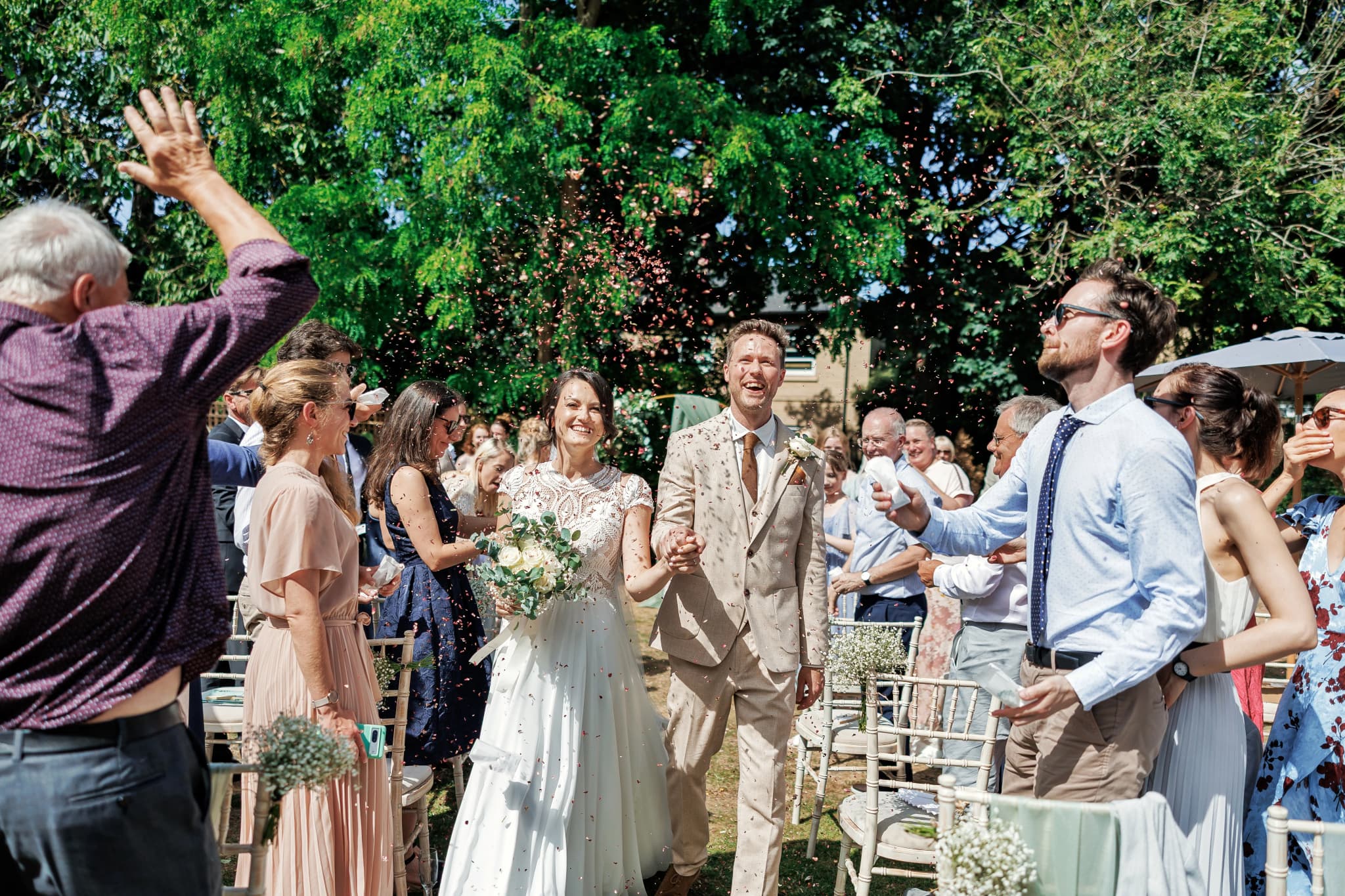
Confetti is worth thinking about specifically because it is thrown outdoors, often directly onto grass, gravel, or churchyard paths, and much of what is sold as decorative confetti in the UK contains plastic components that simply will not break down. Dried, biodegradable petal confetti, made from real flowers such as delphinium, rose, or larkspur that have been dried and had the colour set, photographs beautifully, catches the light in a way that paper simply does not, and returns to the ground as organic material. Many flower farms and specialist suppliers across the UK now sell it by the litre specifically for weddings, and increasingly venues that have restricted confetti entirely because of plastic content will permit it once they know it is genuinely biodegradable, so it is worth checking your venue's confetti policy in writing before you order any.
Favours are another place where good intentions and plastic packaging often collide. A small favour is a lovely gesture, but individually cellophane-wrapped sweets multiplied by a hundred and fifty guests is a meaningful amount of plastic film that cannot be recycled through most household collections. Favours packaged in paper bags, small fabric pouches, or unwrapped items placed in a simple box or jar that guests help themselves from tend to create almost no waste at all, and many couples are now choosing consumable favours such as a small bottle of something local, a packet of seeds, or a homemade treat presented without individual wrapping, letting the table styling itself carry the visual interest instead. Table numbers and place names in wood, painted card, or reused chalkboard rather than laminated plastic-coated card are another easy swap that photographs just as well and can often be reused for a second event or repurposed at home afterwards.
Planning a lower-waste day?
I photograph weddings across Cambridge and the wider UK and I am always glad to talk through how a more considered, lower-plastic reception actually looks in practice, from timings to the small details that photograph beautifully without the packaging.
Get in touch about your weddingFlowers, Styling, and What Happens Behind the Scenes
Florists often use a surprising amount of plastic behind the scenes that guests never see: floral foam, which is itself a plastic-based product that does not biodegrade and has come under growing scrutiny within the floristry industry, plastic-wrapped bouquet handles, and cellophane sleeves used to protect flowers in transit. Many UK florists have already moved away from floral foam in favour of chicken wire, moss, or reusable frog frames for structural support, and it is entirely reasonable to ask a florist directly about their approach before booking, since practice varies considerably between suppliers. Bouquets and buttonholes can be tied with ribbon, twine, or ribbon made from recycled materials rather than being finished in a plastic wrap, and many florists will happily deliver flowers loose in water-filled buckets rather than pre-wrapped if asked in advance.
Styling items more broadly are worth a second look too. Balloon arches and balloon displays have become hugely popular for backdrops and photo areas, but standard balloons are made from a slow-degrading latex or, worse, foil material, and any that escape outdoors during an outdoor reception can travel a long way and cause real harm to wildlife and livestock. Bunting made from offcut fabric, dried flower installations, greenery arches using cut or potted foliage, and fabric or paper decorations are all alternatives that hold up just as well in photographs and do not carry the same end-of-life problem. Disposable table runners and paper tablecloths, similarly, can usually be swapped for linen hire, which most catering and event hire companies already offer as standard and which often looks considerably better in photographs because fabric holds light and texture in a way that paper does not.
Talking to Suppliers and Setting Expectations Early
The single most effective thing any couple can do is raise the topic early and directly with every supplier involved, rather than assuming it will be addressed automatically. Caterers, in particular, vary enormously in their default practices: some already use compostable or reusable serviceware as standard, while others will only offer it if specifically asked and may charge slightly more for the option, so it is worth building the conversation into your very first enquiry rather than raising it a fortnight before the day. The same applies to your venue, who will usually have their own waste and recycling arrangements and can tell you what facilities actually exist on site, and to your florist, stationer, and favour supplier. Most UK wedding suppliers are used to fielding these questions now and many are genuinely enthusiastic about lower-waste options, because it is a request they receive with increasing frequency.
It is also worth being realistic about where trade-offs exist. A fully outdoor marquee reception on uneven grass, for instance, may have genuine safety reasons to avoid glassware even where a couple would prefer it, and a very tight budget may make hired linen less accessible than paper. The aim is not to achieve a perfectly plastic-free day at any cost, which is rarely realistic within a single wedding budget and timeline, but to look honestly at the areas where a swap is easy, low-cost, and makes a genuine difference, and to make deliberate choices there rather than defaulting to whatever a supplier happens to stock. Even addressing three or four of the areas above — the bar, the confetti, the favours, and the styling materials — removes the great majority of single-use plastic from a typical reception without requiring a wholesale rethink of the day.
What This Looks Like Through the Camera
From behind the lens, I can say honestly that lower-waste choices tend to photograph better, not worse. Dried petal confetti catches golden hour light in a way that shredded paper simply does not. Linen tablecloths hold soft shadow and texture that flat paper cannot replicate. Real glassware catches candlelight at the top table in a way that plastic never quite manages, however good the moulding. Loose, naturally tied flowers photograph with a relaxed, gathered-from-the-garden quality that heavily wrapped and structured arrangements sometimes lack. None of this is a coincidence: materials that are kinder to the environment tend to be materials with genuine texture, weight, and light-catching quality, which is exactly what makes a photograph feel rich rather than flat. Couples who have made these choices are often pleasantly surprised, looking back through their gallery, at how much more tactile and considered the details look compared with the more disposable, uniform alternatives.
None of this needs to be complicated, and it certainly does not need to compromise the atmosphere or the beauty of the day. It is simply a matter of asking a few more questions earlier in the planning process, choosing suppliers who already think this way or are happy to adapt, and paying attention to the handful of areas — the bar, the confetti, the favours, the styling — where the biggest volume of plastic tends to collect. If you are planning a wedding and would like to talk through how these choices might work for your particular venue and guest list, get in touch and I am always glad to share what I have seen work well across the weddings I have photographed.




Yana Skakun
Photographer · England
Professional wedding, family and portrait photographer based in England. Passionate about capturing authentic emotions and timeless moments.
About Yana →plastic free wedding uksustainable wedding receptioneco-friendly wedding ideasbiodegradable confetti UKlow waste wedding planning
Wedding Tips — Wedding Photography in Cambridge & England
Yana Skakun is a professional wedding photographer based in Cambridge, covering weddings across England — from intimate elopements to full-day ceremonies at country houses, barns, and city venues. Every couple receives a relaxed, documentary approach that captures the day as it truly unfolds. This guide — How to Cut Down on Plastic at Your Wedding Reception — is part of the photography journal: practical, experience-based advice drawn from real sessions across England. Whether you arrived searching for plastic free wedding uk or sustainable wedding reception, the same care and attention shapes every session Yana photographs.
Wedding Photography sessions are available year-round, with bookings open across Cambridge, Ely, Huntingdon, Peterborough, and further afield — East England, London, the Midlands, and beyond. If you have specific questions about eco-friendly wedding ideas, mention it in your enquiry. Get in touch through the contact form above to check availability and discuss your session. Enquiries are welcomed from anywhere in the UK.
Frequently Asked Questions
How much does a wedding photographer cost in England?+
Wedding photography in England typically ranges from £1,500 to £4,000+ for a full day. Price depends on experience, coverage hours, and whether albums or engagement shoots are included. Most photographers charge between £2,000–£3,000 for 8–10 hours of coverage.
How early should you book a wedding photographer?+
For peak season (May–September), book 12–18 months in advance. For autumn and winter weddings, 9–12 months is usually sufficient. Popular photographers at popular venues fill up fast — as soon as you have a date and venue confirmed, start reaching out.
How many photos do you get from a wedding photographer?+
Most professional wedding photographers deliver 400–800 edited images for a full-day wedding. The exact number depends on coverage hours, how many guests there are, and the photographer's editing style. Quality matters more than quantity — a curated gallery of 500 images tells the story better than 1,500 unedited files.
Do you need a second photographer at your wedding?+
A second photographer is helpful if you want simultaneous coverage of getting-ready moments in different locations, multiple angles during the ceremony, or more candid coverage during the reception. It adds cost but significantly increases the variety and completeness of your gallery.
What is the difference between documentary and editorial wedding photography?+
Documentary (reportage) wedding photography captures moments as they happen — the photographer observes and doesn't intervene. Editorial photography involves deliberate direction: placing you in good light, shaping compositions, creating intentional portraits. Most photographers blend both styles throughout the day.
Continue Reading
Related Articles

Wedding Tips
Sustainable Eco-Friendly Wedding Guide — Planning a Green Celebration
15 min read · Read Article
Wedding Tips
Trash the Dress Session — Complete Planning and Photography Guide
14 min read · Read Article
Wedding Tips
Client Communication for Photographers — From Enquiry to Gallery Delivery
15 min read · Read Article
Get in Touch
Ready to Book Your Session?
Get in touch to discuss your vision — I'll reply within 24 hours.