Yana Skakun
Barn Wedding Photography Guide: Challenges & Beautiful Results
By Yana Skakun·20 March 2026·6 min read
Barn weddings have become one of the most sought-after celebrations across the English countryside, and it is easy to understand why. The combination of exposed timber beams, warm candlelight, and that unmistakable sense of rustic romance creates something no purpose-built hotel ballroom can replicate. But photographing a barn wedding well demands a very different toolkit and mindset from shooting in a bright white Georgian manor house, and the couples who understand what to expect from their photographer — and what to do themselves to help — consistently end up with the most striking results.
Understanding the Light Inside a Barn
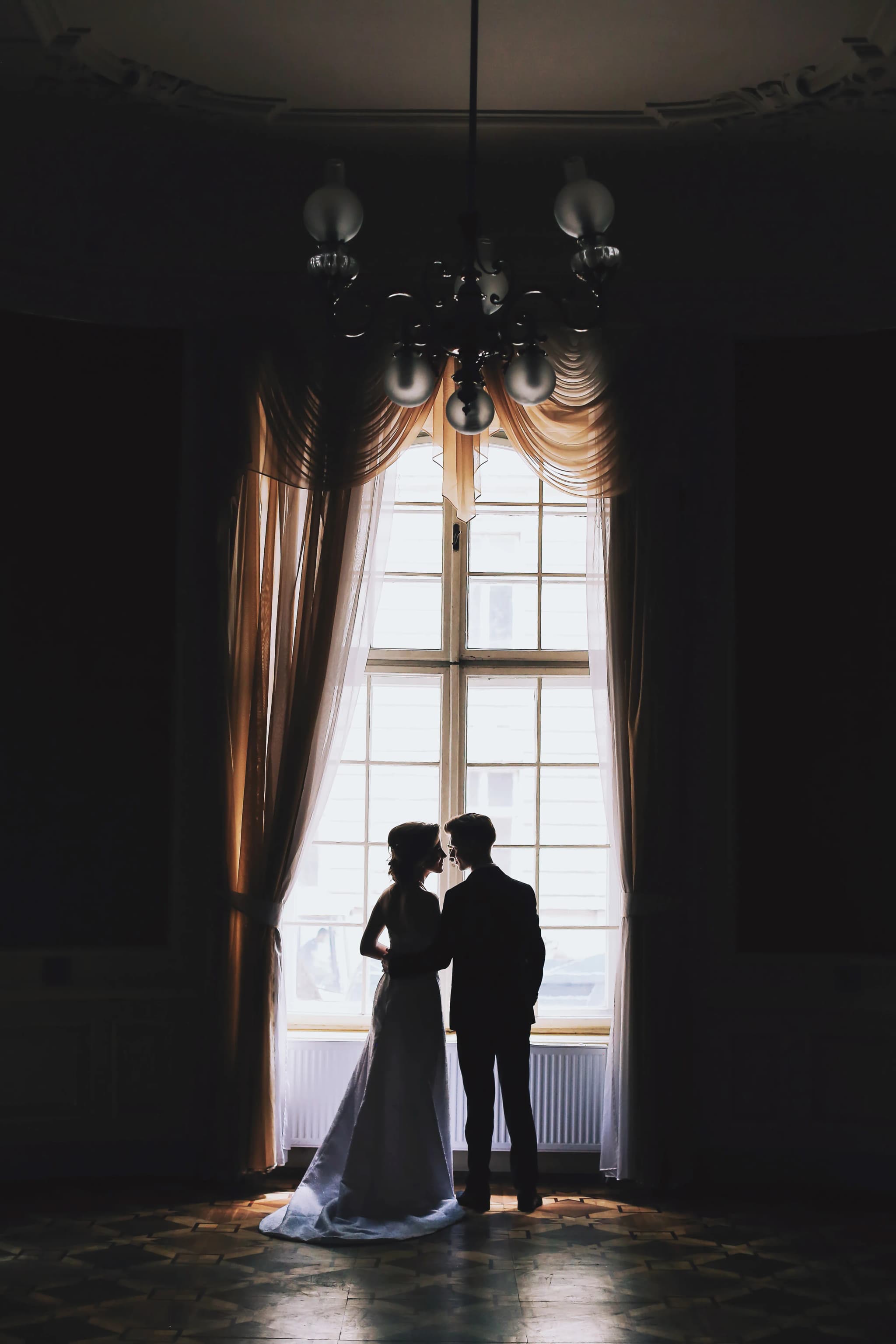
Light is always the starting point in photography, and barns make it genuinely complicated. Most barn venues in the UK — whether that is a converted agricultural building in the Cotswolds, a flint-and-timber barn in Suffolk, or one of the grand tithe barns tucked into the Chilterns — share the same fundamental challenge: the interior is dim and the exterior is comparatively very bright. That contrast means your eyes adjust constantly as you move between spaces, and so does a camera sensor, but not always elegantly.
The typical barn has three or four light sources all operating at once during an evening reception: fairy lights strung across the rafters, pillar candles on tables, uplighters placed by the venue team, and whatever comes through the main doors or any fixed windows. Each of these sources has a different colour temperature. Fairy lights are warm amber. Candles are even warmer. Venue uplighters can range from sodium yellow to cool white depending on the bulbs fitted. Managing all of these in a single exposure is why barn wedding photography rewards photographers who have spent years shooting in mixed artificial light and who understand when to embrace the warmth and when to correct it in post-processing.
In my experience, the single most important camera setting for barn reception photography is a willingness to push ISO higher than you might feel comfortable with and to accept a modest degree of grain in exchange for a natural, candle-lit look. Flooding the room with flash to achieve a technically cleaner image often kills exactly the atmosphere the couple chose this venue to create.
Ceremony Coverage: Position and Lens Choice
Barn ceremonies present a positioning challenge that is distinct from church or chapel photography. Many barns seat guests in a central aisle configuration with the couple at one end and the registrar or celebrant facing the congregation. This means the photographer shooting from behind the guests often has a clear sightline to the couple's faces, which is the opposite of a church setting where you can be shooting the backs of heads for most of the service.
I typically begin a barn ceremony with a 70-200mm lens from the rear of the space. This focal length is long enough to compress the scene, drawing the couple and their guests into an intimate frame without the distortion a wide angle would introduce. It also keeps me invisible during the vows, which is exactly where you want to be. The emotional moments — the trembling lip, the surprised laugh, the tear on the cheek — happen when the couple forgets anyone is watching, and a telephoto from thirty feet away makes that much easier to achieve than looming close with a wide lens.
That said, the wide angle has its moment in a barn ceremony too. Once the official proceedings are over and there is some movement in the room — the signing of the register, the recessional walk — stepping back to capture a 24mm frame showing the full barrel of the barn, the bunting or foliage overhead, the rows of smiling guests and the couple walking towards you creates one of those establishing images that sets the scene for the whole day. Always shoot both scales during a barn ceremony, never just one.
Working the Exterior: Golden Hour and the Farm Landscape
One of the great gifts of a barn wedding is what surrounds it. Barn venues in England are rarely hemmed in by car parks or urban sprawl. More often there are fields, hedgerows, old stone walls, orchard trees, or a farmyard with honest worn textures that simply do not exist in hotel grounds. These surroundings become your portrait location, and timing them well is everything.
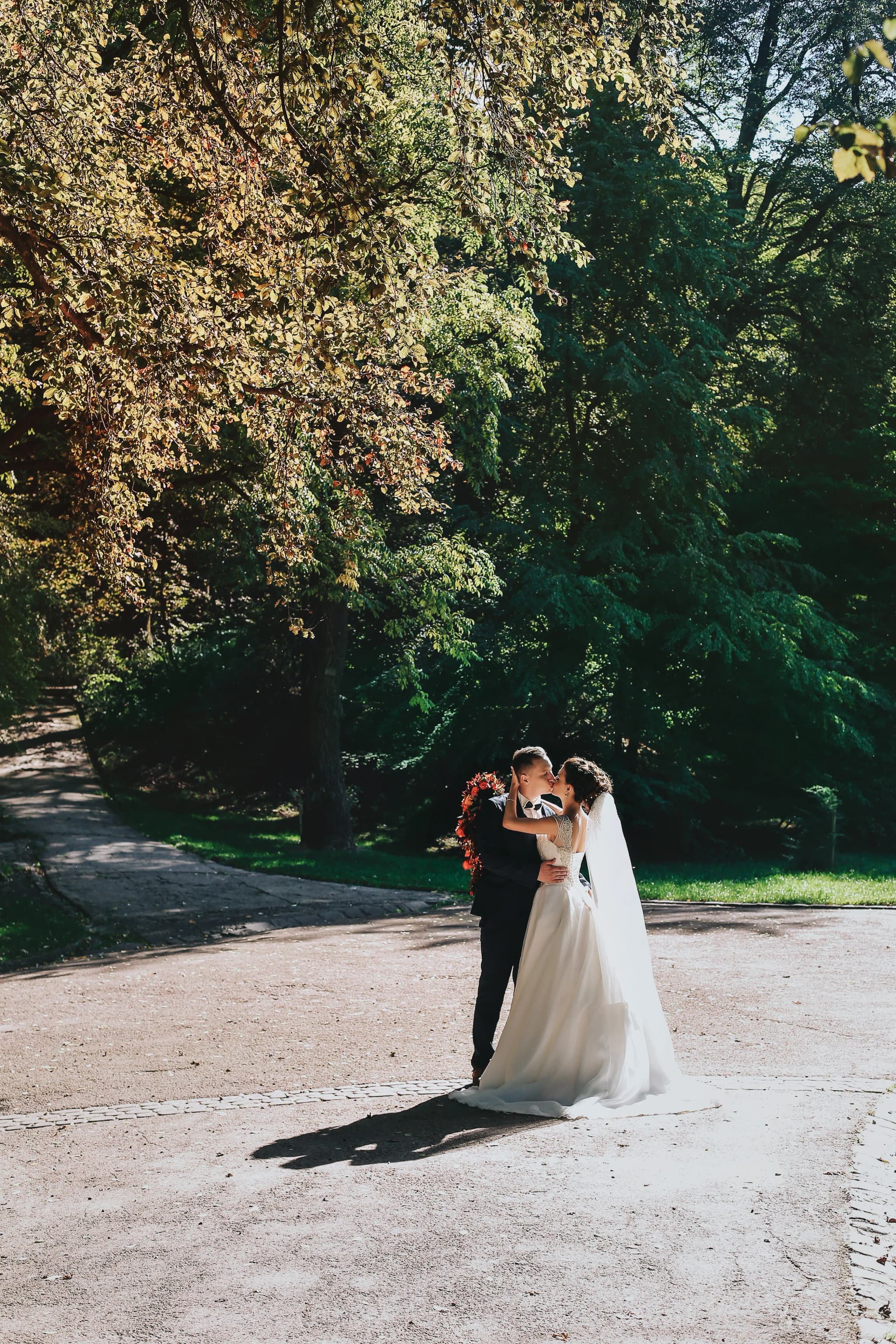
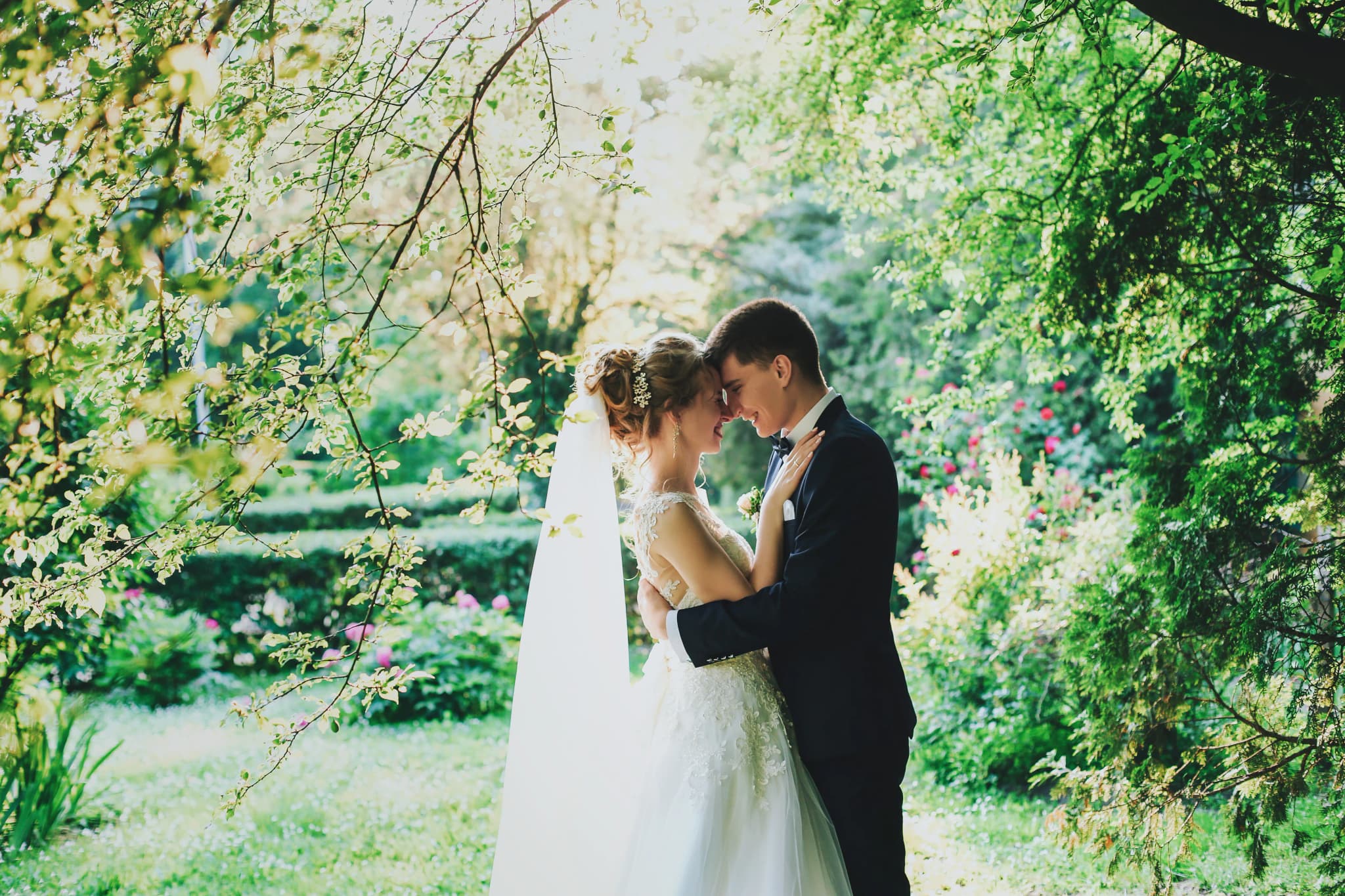
The forty-five minutes before sunset is the single best portrait window of a summer barn wedding. The light at that hour is low, warm, and directional — it catches the grain of old timber, skims across stone, and wraps around faces in a way that softens and flatters without losing shape. I always plan a portrait break of around fifteen to twenty minutes around this time, even if the couple feel reluctant to leave their guests. The images from this window are almost always the ones that make the album cover.
Venues like Dodmoor House in Northamptonshire, South Farm in Hertfordshire, or Millbridge Court in Surrey each have their own outdoor character that rewards exploration during the pre-wedding site visit. Knowing in advance where the light lands at 7pm, which field gate gives you a clean horizon, or where the old barn door faces west — that is the preparation that makes a golden-hour portrait session feel effortless on the day itself.
Flash, Bounce, and Supplementary Lighting
Even the most atmosphere-conscious barn photographer needs to understand flash. The question is never whether to use artificial light but when and how much. During the first dance, when the DJ's coloured moving-head lights are competing with near-total darkness everywhere else, relying purely on ambient exposure will give you a technically underexposed image with coloured blobs for faces. A small, well-controlled flash burst — balanced against the ambient so it supplements rather than overpowers — is the professional solution.
Bounce flash works well in barns with lower ceilings or pale walls, giving a soft, wrap-around quality that does not look flash-lit. In high-ceilinged barns with dark timber rafters, there is nothing to bounce from, and off-camera flash on a stand becomes the better option. I use a single off-camera unit placed to one side during the first dance and speeches, triggered wirelessly. This creates directional light that still reads as natural to the eye while giving the camera sensor enough to work with at a sensible ISO.
For couples planning a barn wedding, it is worth asking any prospective photographer exactly how they handle the reception lighting. A photographer who says they never use flash is making an aesthetic statement that may sound appealing but could leave your first dance poorly lit. The right answer is nuanced: flash used thoughtfully, sparingly, and always in service of the ambient look rather than replacing it.
Detail Shots That Define the Barn Wedding Aesthetic
Barn weddings lend themselves to a particular style of detail photography that is worth planning deliberately. The textures of this venue type — rough hewn timber, galvanised metal buckets, hessian ribbon, wildflower arrangements, kraft paper place names — photograph beautifully in the same warm light that fills the space at reception time. I dedicate thirty minutes during the room reveal (usually during the drinks reception when guests are outside) to working through the tables, centrepieces, and decorative touches before any of it is disturbed.
Flat-lay style shooting of stationery, rings, and personal items works particularly well in barns because you can often find a section of rough wooden table or a stone windowsill with soft directional light falling across it. The key is to identify your light source first and then bring the objects to the light, rather than trying to arrange the subject and then find a position where the light happens to suit it. In a barn, the light comes from specific points — a window, an open door — and is relatively fixed, so working with it rather than against it is the entire game.
Florals deserve special attention at a barn wedding. Whether the couple has chosen full-blown garden roses trailing from rafters or a more restrained meadow style with grasses and thistles, barn flowers are almost always designed to photograph well in warm, low light. Isolating an arrangement against a dark timber background with a wide aperture creates images that feel editorial rather than documentary, and they pair beautifully with the wider shots of the full decorated space.
Practical Advice for Couples Planning a Barn Wedding
The single most useful thing a couple can do to help their barn wedding photographer is to share the venue floor plan and, if possible, arrange a site visit together. Every barn is different. Some have a separate ceremony space, a bridal preparation room with good natural light, and a reception barn with high windows. Others are single-space barns where everything happens in one room and the light is purely artificial after 5pm. Knowing which you are dealing with well in advance shapes the entire photographic strategy for the day.
It is also worth being realistic about timings. Barn weddings with candle-lit ceremonies and late-summer evening light look extraordinary in photographs, but only if there is enough time in the schedule to capture both. A ceremony finishing at 4pm gives you several hours of useful daylight for outdoor portraits before the venue transitions into evening mode. A ceremony finishing at 6:30pm in October gives you perhaps fifteen minutes of usable outdoor light. Neither is wrong, but both need to be planned around honestly. I always review the sunset time for the specific wedding date when I am putting together a suggested order of the day, because those few minutes of golden-hour light are worth protecting in the schedule.
Finally, trust the atmosphere. Barn venues are chosen because they have a specific soul to them — a sense of warmth, impermanence and celebration that a photographer who understands the brief will want to capture rather than overpower. The most memorable barn wedding images are the ones where the light feels real, the faces feel unposed, and the building itself feels like a character in the story rather than just a backdrop.
Planning a barn wedding in the UK?
I have photographed barn weddings across Cambridgeshire, Hertfordshire, Suffolk, and the Cotswolds, and I understand exactly how to work with the light, the textures, and the atmosphere that makes these venues so special. Get in touch to talk through your wedding photography and we can walk through how the day might look together.
Barn weddings reward photographers who come prepared and couples who understand that the best images from these venues come from working with the space, not fighting it. With the right planning, the right timing, and the right light, a barn provides one of the most visually rich and emotionally resonant settings in British wedding photography.

Yana Skakun
Photographer · England
Professional wedding, family and portrait photographer based in England. Passionate about capturing authentic emotions and timeless moments.
About Yana →how to photograph barn weddingsbarn wedding photography guidebarn interior wedding photos
Wedding Tips — Wedding Photography in Cambridge & England
Yana Skakun is a professional wedding photographer based in Cambridge, covering weddings across England — from intimate elopements to full-day ceremonies at country houses, barns, and city venues. Every couple receives a relaxed, documentary approach that captures the day as it truly unfolds. This guide — Barn Wedding Photography Guide: Challenges & Beautiful Results — is part of the photography journal: practical, experience-based advice drawn from real sessions across England. Whether you arrived searching for how to photograph barn weddings or barn wedding photography guide, the same care and attention shapes every session Yana photographs.
Wedding Photography sessions are available year-round, with bookings open across Cambridge, Ely, Huntingdon, Peterborough, and further afield — East England, London, the Midlands, and beyond. If you have specific questions about barn interior wedding photos, mention it in your enquiry. Get in touch through the contact form above to check availability and discuss your session. Enquiries are welcomed from anywhere in the UK.
Frequently Asked Questions
How much does a wedding photographer cost in England?+
Wedding photography in England typically ranges from £1,500 to £4,000+ for a full day. Price depends on experience, coverage hours, and whether albums or engagement shoots are included. Most photographers charge between £2,000–£3,000 for 8–10 hours of coverage.
How early should you book a wedding photographer?+
For peak season (May–September), book 12–18 months in advance. For autumn and winter weddings, 9–12 months is usually sufficient. Popular photographers at popular venues fill up fast — as soon as you have a date and venue confirmed, start reaching out.
How many photos do you get from a wedding photographer?+
Most professional wedding photographers deliver 400–800 edited images for a full-day wedding. The exact number depends on coverage hours, how many guests there are, and the photographer's editing style. Quality matters more than quantity — a curated gallery of 500 images tells the story better than 1,500 unedited files.
Do you need a second photographer at your wedding?+
A second photographer is helpful if you want simultaneous coverage of getting-ready moments in different locations, multiple angles during the ceremony, or more candid coverage during the reception. It adds cost but significantly increases the variety and completeness of your gallery.
What is the difference between documentary and editorial wedding photography?+
Documentary (reportage) wedding photography captures moments as they happen — the photographer observes and doesn't intervene. Editorial photography involves deliberate direction: placing you in good light, shaping compositions, creating intentional portraits. Most photographers blend both styles throughout the day.
Continue Reading
Related Articles

Wedding Tips
Sustainable Eco-Friendly Wedding Guide — Planning a Green Celebration
15 min read · Read Article
Wedding Tips
Trash the Dress Session — Complete Planning and Photography Guide
14 min read · Read Article
Wedding Tips
Client Communication for Photographers — From Enquiry to Gallery Delivery
15 min read · Read Article
Get in Touch
Ready to Book Your Session?
Get in touch to discuss your vision — I'll reply within 24 hours.