Yana Skakun
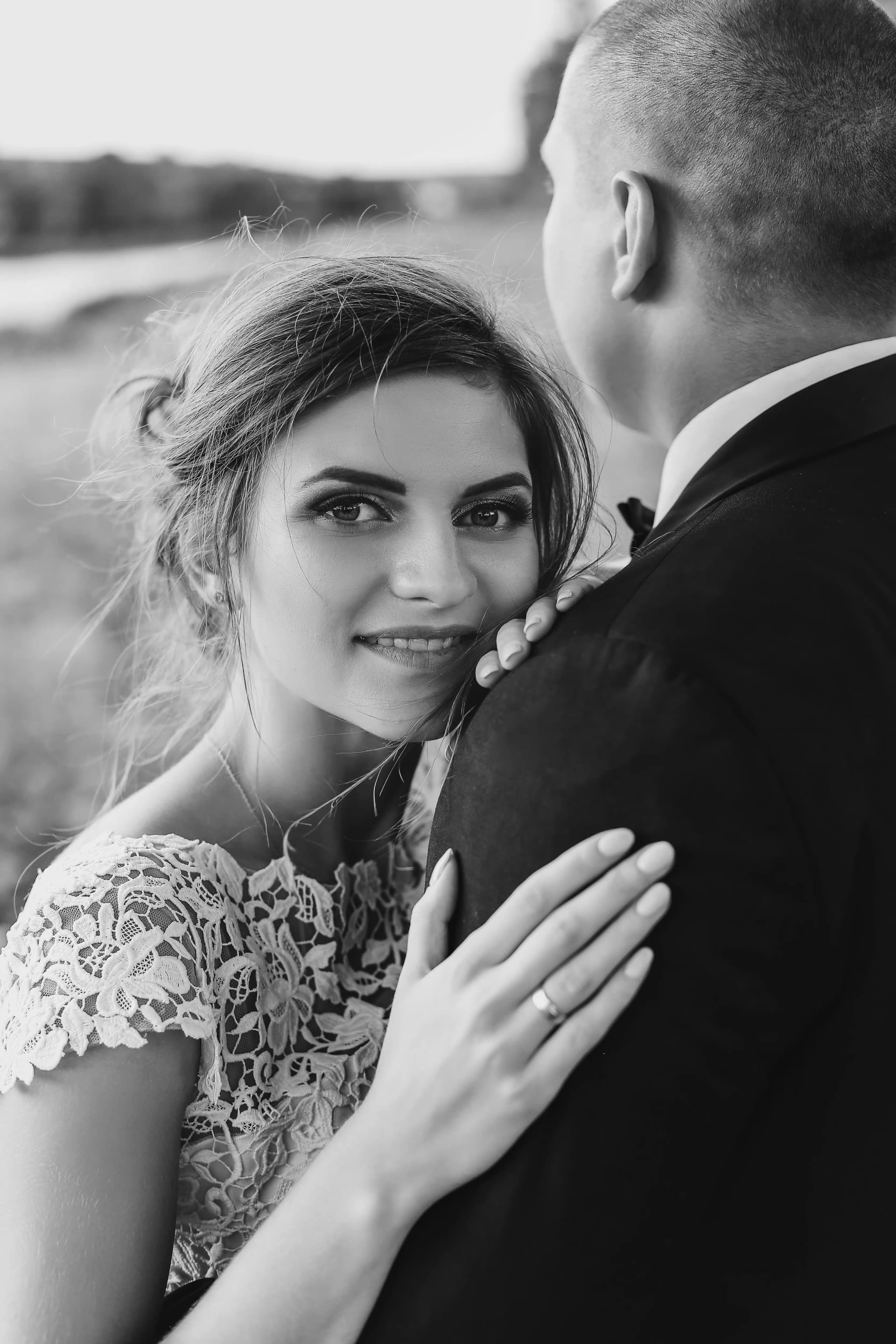
How to Pose in Your Wedding Dress to Show Off the Details
By Yana Skakun·13 March 2026·7 min read
Your wedding dress is likely the most intricate garment you'll ever wear — and yet most brides spend more time choosing it than learning how to move in it. The cathedral train, the hand-sewn lace, the row of silk-covered buttons running down the back: these details cost thousands of pounds and take skilled artisans weeks to make. A thoughtful pose, held for just a few seconds, is all it takes to ensure those details are seen in your photographs for generations to come.
Why Posing Intentionally Matters for Dress Details
There's a common assumption that a beautiful dress photographs itself. In reality, fabric behaves unpredictably. A cathedral train can bunch awkwardly if you stand still without guidance. A heavily beaded bodice can lose its texture entirely if the light hits it flat-on. Lace overlay disappears into a white void in direct midday sun, while the same lace glows like frosted glass in soft window light or open shade.
When I photograph weddings across Cambridgeshire, Norfolk, and Suffolk, I work with brides before the ceremony to identify the two or three details that matter most to them — and we build a handful of intentional moments around those specific features. This is not about forcing stiff, catalogue poses. It's about understanding your dress well enough to move naturally while I position us both to capture what you actually want remembered.
The difference between a photograph that shows a nice dress and one that shows your dress — every button, every thread — comes down to a few consistent principles that any bride can learn in minutes.
Showing Off the Train
Cathedral and chapel trains are designed to be seen from behind and from a slight elevation. The most effective approach is simple: stand still, let your bridesmaids or your partner fan the train out fully, then take two small steps forward without looking down. This creates a natural, relaxed separation between your body and the trailing fabric. I'll often shoot from a low angle behind you — looking up the length of the train toward the church aisle or a garden path — which makes even a modest train look dramatic.
For outdoor venues common at Cambridgeshire country houses and barn conversions, a gentle breeze is your ally. We time the shot to a gust of wind rather than fighting it. If there's no wind, a slow turn with the train already spread creates the same flowing effect. The key is committing to the movement — a tentative half-turn produces a limp result; a confident full rotation produces a swooping arc of fabric that fills the frame beautifully.
Highlighting Lace, Buttons, and Back Detail
The back of a wedding dress is often its most elaborate side — yet it's the side the bride almost never sees herself. Here are the specific approaches I use to capture back detail in a way that feels like a portrait rather than a product shot:
- ◆Chin over shoulder, not full face-turn: Looking directly back over your shoulder creates a flattering three-quarter profile while keeping your shoulders square to the camera — this keeps the button row or zip panel fully visible rather than twisted.
- ◆Slight forward lean from the hips: Leaning very gently forward elongates the back and lifts the train slightly off the ground, creating separation between the fabric layers and making lace applique pop rather than lying flat.
- ◆One hand holding the bouquet low: Dropping your bouquet to hip height rather than waist height removes a large block of colour from the mid-back area, letting the eye travel up the full length of a corset, zip, or button detail.
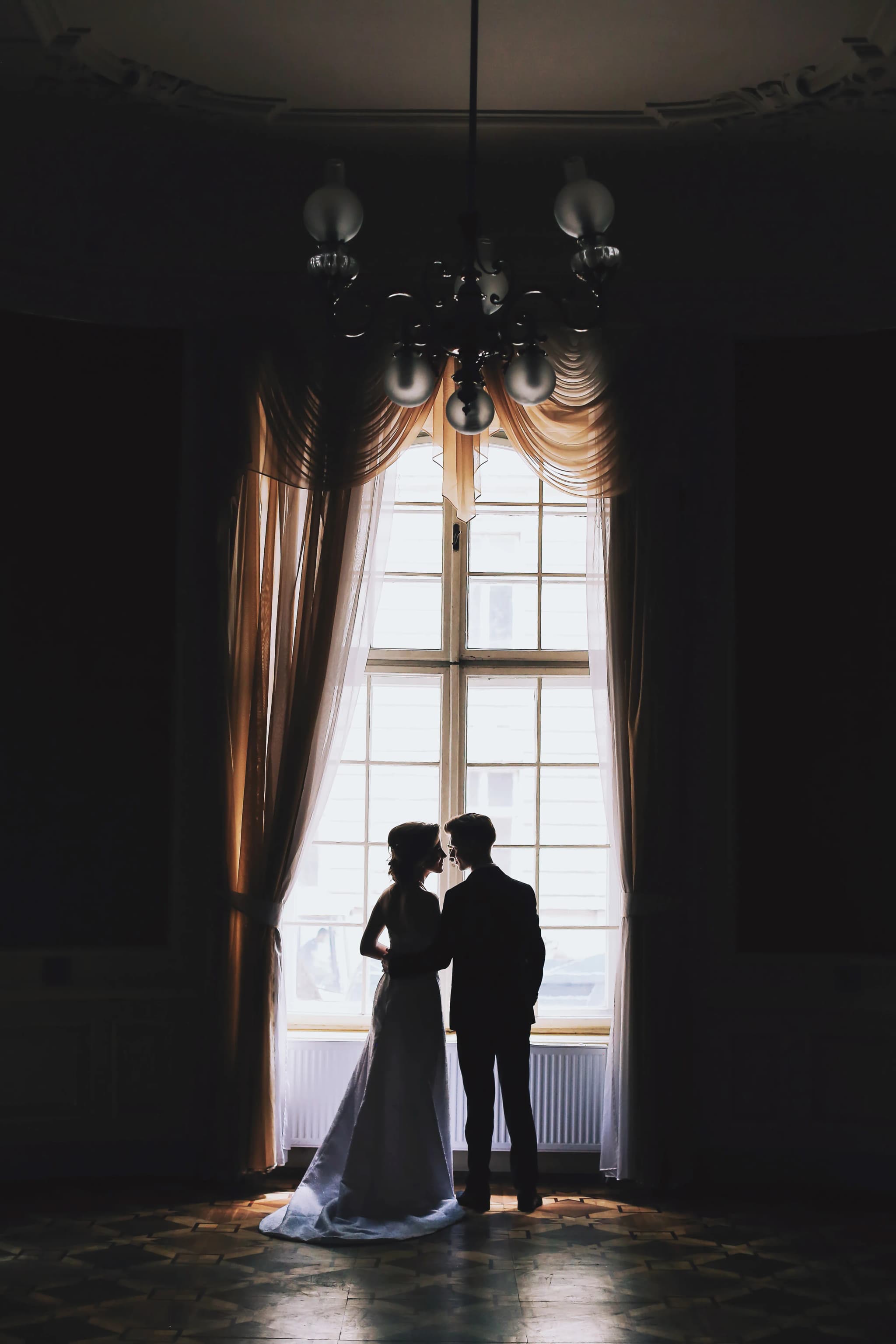
- ◆Window or doorway backlight for lace: For any lace overlay or sheer fabric, position yourself in front of a window or open doorway so the light passes through the fabric from behind. This reveals the weave of the lace in a way that front-lit photographs simply cannot replicate.
- ◆Close-up detail shot while relaxed: The best button photographs happen when you're genuinely talking or laughing — not holding a pose. I shoot detail close-ups as secondary frames while you're already positioned for a wider shot, so the fabric sits naturally rather than pulled taut.
- ◆Sitting on a staircase: At venue staircases — particularly popular at Cambridge colleges and country estates — sitting on a step and looking upward lets the dress pool naturally around you, revealing layers of petticoat, lace hem, and embroidery in a single frame.
Working With Your Dress Shape and Silhouette
Different silhouettes require different posing strategies. A ballgown creates volume that can overwhelm a small frame unless you angle your body at roughly 45 degrees to the camera and shift your weight to your back foot — this narrows the visual mass of the skirt while still showing its fullness. A fitted fishtail or mermaid dress photographs best when you take slow, deliberate steps rather than standing still, because movement creates the subtle pulls and tensions in the fabric that show its structure.
A-line dresses — by far the most common choice at UK weddings — are the most forgiving silhouette to photograph, but they benefit enormously from showing the waistline clearly. If you have a sash, bow, or belt, make sure it sits precisely where it should before every shot rather than allowing it to ride up or twist. A quick check in a phone camera or from your maid of honour takes ten seconds and makes the difference between a beautiful waist detail and an awkward bump of fabric.
Separates — a crop top paired with a high-waisted skirt — are increasingly popular at relaxed UK venues and require a slightly different approach. The join between top and skirt is a feature, not a flaw, so we position shots to show that deliberate gap rather than hiding it. A slight stretch upward, reaching toward your partner or toward a branch overhead, elongates the midriff and makes the pairing look intentional and editorial rather than mismatched.
Preparing on the Day: Practical Steps That Make a Real Difference
The most important preparation happens before you ever arrive at the venue. Walk around your home in your dress — including your heels — for at least thirty minutes before the wedding morning. This sounds trivial, but it teaches your body how to move without tripping over the hem, how wide your natural stride becomes, and whether you need to hold any part of the dress when navigating uneven ground. UK venues, particularly historic churches and garden marquees, almost always have cobblestones, gravel paths, or uneven flagstones that require confident navigation.
On the day itself, brief your bridesmaids on the specific details you want photographed. They are your second set of eyes throughout the day. When I signal that I'm moving in for a detail shot, a bridesmaid who already knows the plan can smooth the train, straighten a button, or subtly remove a safety pin from the hem far faster than anyone working from scratch. This teamwork means we lose no more than thirty seconds per shot to preparation, which keeps the day relaxed and unforced.
Finally, trust your photographer. The single most important posing advice I give every bride is this: tell me which dress details matter most to you, then follow my direction without second-guessing. You cannot see what the camera sees. I can. When I ask you to tilt your chin two centimetres to the left or shift your weight subtly onto your right heel, there is a specific reason — usually a shadow falling across a seam, or a beam of light hitting the beadwork at precisely the angle that makes it sparkle. Brides who trust that direction leave their wedding with photographs that genuinely surprise them with how exquisite their dress looks.
Let's Make Every Detail of Your Dress Count
Every bride deserves photographs that do justice to the dress she spent months choosing. I work with each couple before and during the day to ensure the train, the lace, the buttons — every detail you love — is captured beautifully and naturally. Check whether your date is still available and let's start planning.
Check Your Date →

Yana Skakun
Photographer · England
Professional wedding, family and portrait photographer based in England. Passionate about capturing authentic emotions and timeless moments.
About Yana →how to pose in wedding dresswedding dress posing guidebridal posing tipshow to show off wedding dress in photos
Wedding Tips — Wedding Photography in Cambridge & England
Yana Skakun is a professional wedding photographer based in Cambridge, covering weddings across England — from intimate elopements to full-day ceremonies at country houses, barns, and city venues. Every couple receives a relaxed, documentary approach that captures the day as it truly unfolds. This guide — How to Pose in Your Wedding Dress to Show Off the Details — is part of the photography journal: practical, experience-based advice drawn from real sessions across England. Whether you arrived searching for how to pose in wedding dress or wedding dress posing guide, the same care and attention shapes every session Yana photographs.
Wedding Photography sessions are available year-round, with bookings open across Cambridge, Ely, Huntingdon, Peterborough, and further afield — East England, London, the Midlands, and beyond. If you have specific questions about bridal posing tips, mention it in your enquiry. Get in touch through the contact form above to check availability and discuss your session. Enquiries are welcomed from anywhere in the UK.
Frequently Asked Questions
How much does a wedding photographer cost in England?+
Wedding photography in England typically ranges from £1,500 to £4,000+ for a full day. Price depends on experience, coverage hours, and whether albums or engagement shoots are included. Most photographers charge between £2,000–£3,000 for 8–10 hours of coverage.
How early should you book a wedding photographer?+
For peak season (May–September), book 12–18 months in advance. For autumn and winter weddings, 9–12 months is usually sufficient. Popular photographers at popular venues fill up fast — as soon as you have a date and venue confirmed, start reaching out.
How many photos do you get from a wedding photographer?+
Most professional wedding photographers deliver 400–800 edited images for a full-day wedding. The exact number depends on coverage hours, how many guests there are, and the photographer's editing style. Quality matters more than quantity — a curated gallery of 500 images tells the story better than 1,500 unedited files.
Do you need a second photographer at your wedding?+
A second photographer is helpful if you want simultaneous coverage of getting-ready moments in different locations, multiple angles during the ceremony, or more candid coverage during the reception. It adds cost but significantly increases the variety and completeness of your gallery.
What is the difference between documentary and editorial wedding photography?+
Documentary (reportage) wedding photography captures moments as they happen — the photographer observes and doesn't intervene. Editorial photography involves deliberate direction: placing you in good light, shaping compositions, creating intentional portraits. Most photographers blend both styles throughout the day.
Continue Reading
Related Articles

Wedding Tips
Sustainable Eco-Friendly Wedding Guide — Planning a Green Celebration
15 min read · Read Article
Wedding Tips
Trash the Dress Session — Complete Planning and Photography Guide
14 min read · Read Article
Wedding Tips
Client Communication for Photographers — From Enquiry to Gallery Delivery
15 min read · Read Article
Get in Touch
Ready to Book Your Session?
Get in touch to discuss your vision — I'll reply within 24 hours.