Yana Skakun

Layflat Wedding Photo Albums: Why They're Worth It
By Yana Skakun·20 May 2026·7 min read
Every couple I photograph receives, within a few weeks of their wedding, a beautifully edited online gallery full of hundreds of images. Almost every couple looks through it once, perhaps twice, in the days after it arrives — and then, if history is any guide, rarely opens it again. Digital galleries are wonderful for sharing and for choosing favourites, but they are not designed to be picked up on a rainy afternoon, passed between grandparents at Christmas, or opened by your own children in twenty years' time. That is what an album is for, and of the album formats available to couples now, the layflat album is the one I recommend more than any other. It is not the cheapest option and it is not always the fastest to produce, but the way it presents a photograph — flat, uninterrupted, printed onto a single continuous page — is simply a different experience from any other kind of book, and it is worth understanding why before you decide what to spend your album budget on.
What "Layflat" Actually Means
The term gets used loosely, so it is worth being precise. A true layflat album is constructed with thick, rigid pages, each one a single panel onto which an image or spread of images is printed directly and then bonded flat, rather than pages made of thin paper bound at a spine in the traditional book sense. Because each page is a solid panel rather than two thin sheets glued together at a fold, the book opens completely flat at any point, with no dome or curve rising up from the gutter and no loss of the image where it disappears into the spine. This matters enormously for wedding photography specifically, because so many of the images couples want to include are wide shots — a full bridal party across a lawn, a long table of guests, the view down the aisle — and any format that swallows part of that image into a curved spine is quietly ruining the photograph you paid to have printed.
Compare this to a standard photo book, the kind you might order from a high-street printing service for holiday snaps. Those are usually made from folded paper stock bound like a paperback, and when you open them, the pages arch upward at the centre. A double-page spread across a fold like that means the middle third of your photograph is distorted, shadowed, or simply lost into the curve. It works acceptably for single images placed away from the centre, but it is a poor match for the kind of storytelling spread that a wedding album relies on.
Why It Matters More for Weddings Than Any Other Kind of Photography
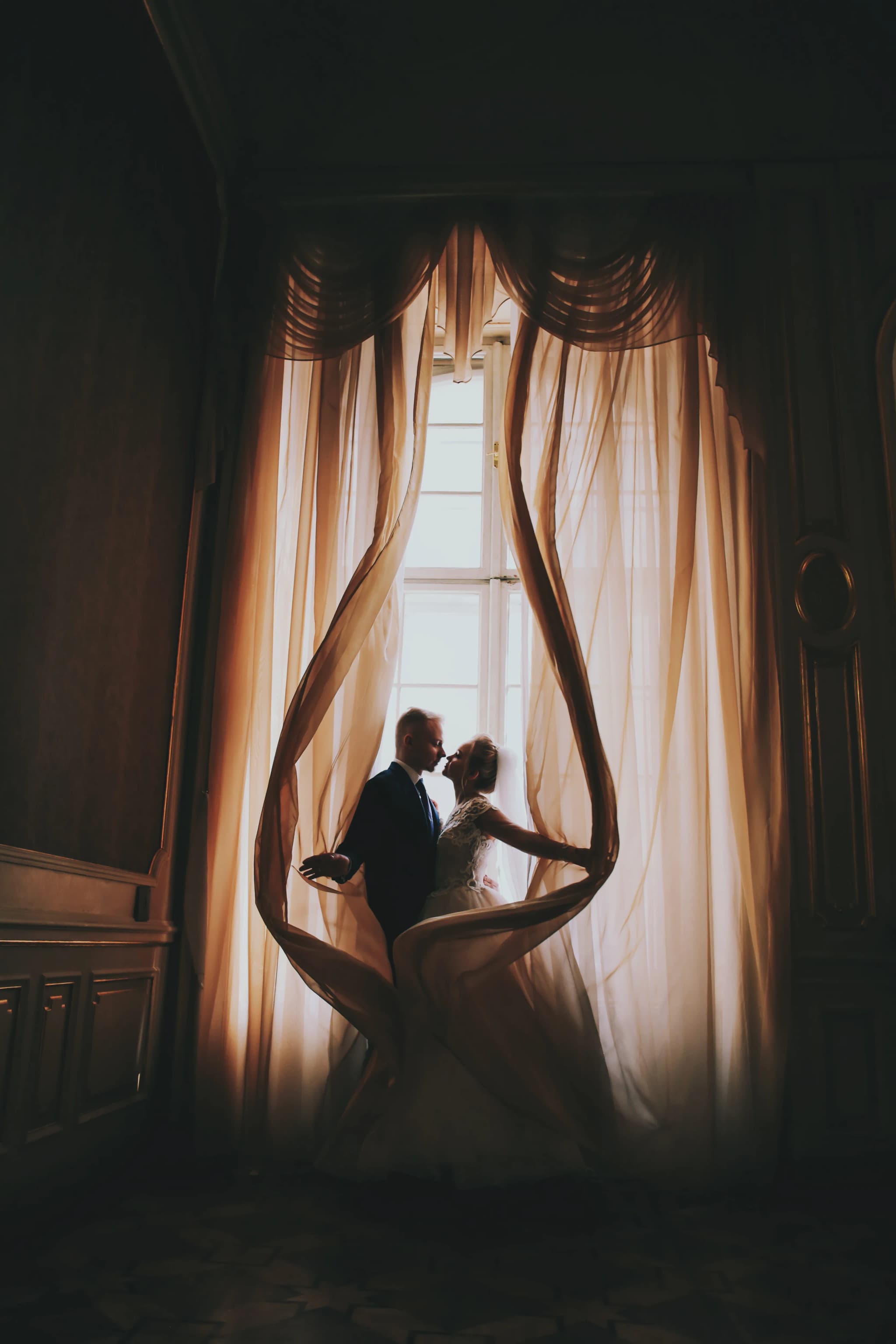
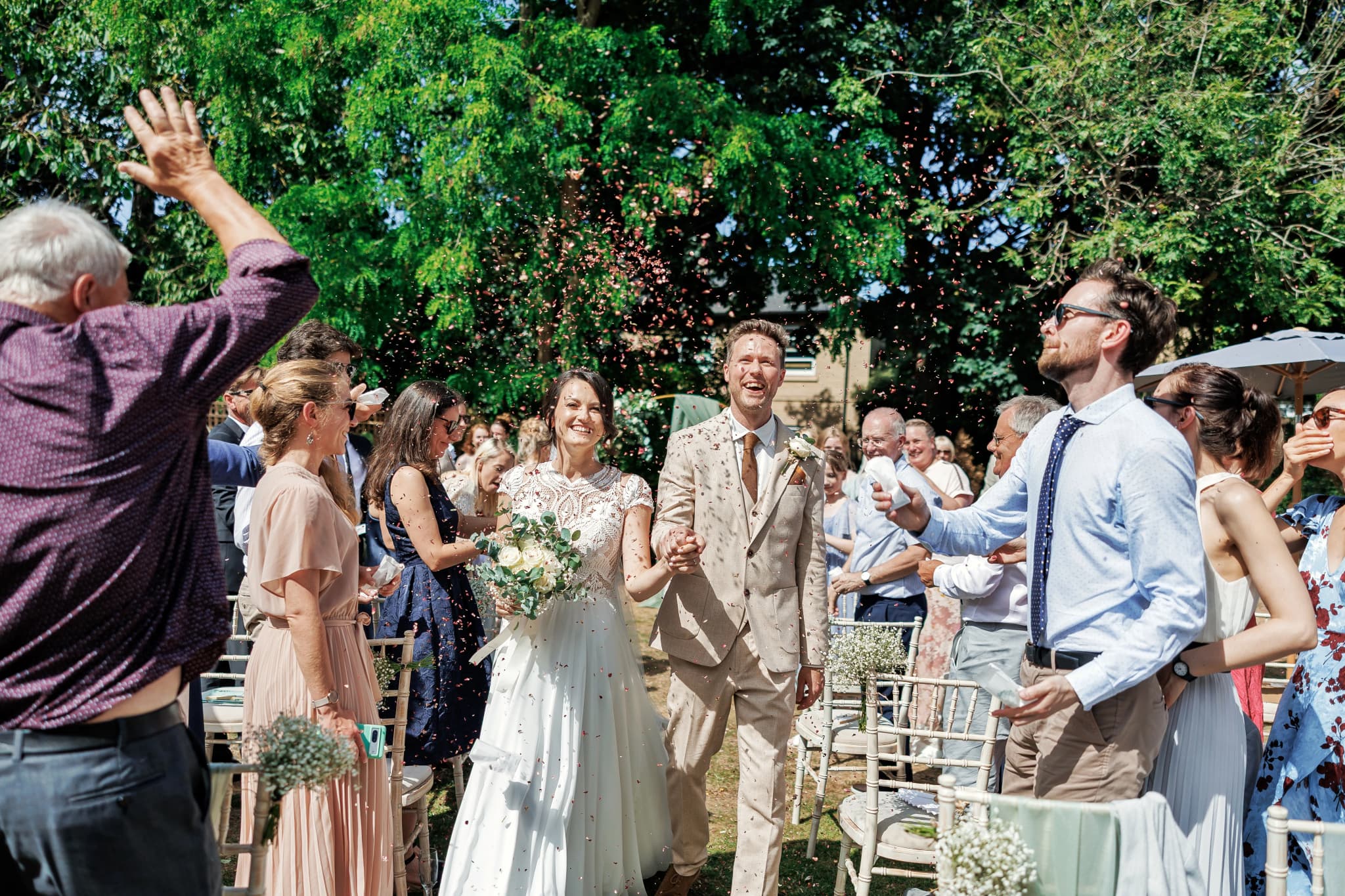
Wedding photography is unusual in how much of its best material is wide and panoramic in character. A family portrait session might produce lovely single portraits that sit comfortably on individual pages. A wedding day produces those too, but it also produces the kind of images that only work as a full spread: the room full of guests standing to applaud the newlyweds' entrance, the two of you walking away down a long drive with the venue behind you, the wide shot of a marquee interior lit for the evening. These images lose their impact if they are cropped down to fit a single page, and they lose their integrity if half of them disappears into a spine crease. A layflat album is really the only format that lets a wedding album breathe in the way the material demands.
There is also a tactile and durational point. A wedding album, unlike almost anything else you will buy connected to the day, is designed to be handled repeatedly over decades. It gets taken down from a shelf, opened, closed, passed to a relative, put away again, and taken out again the following year. A layflat album, built on rigid board rather than thin paper, tolerates that handling far better. The pages do not bend, dog-ear, or loosen at the spine the way a standard bound book eventually will. If you think of the album as an object your grandchildren might handle one day, the construction quality stops being a minor technical detail and becomes the entire point.
How the Design Process Actually Works
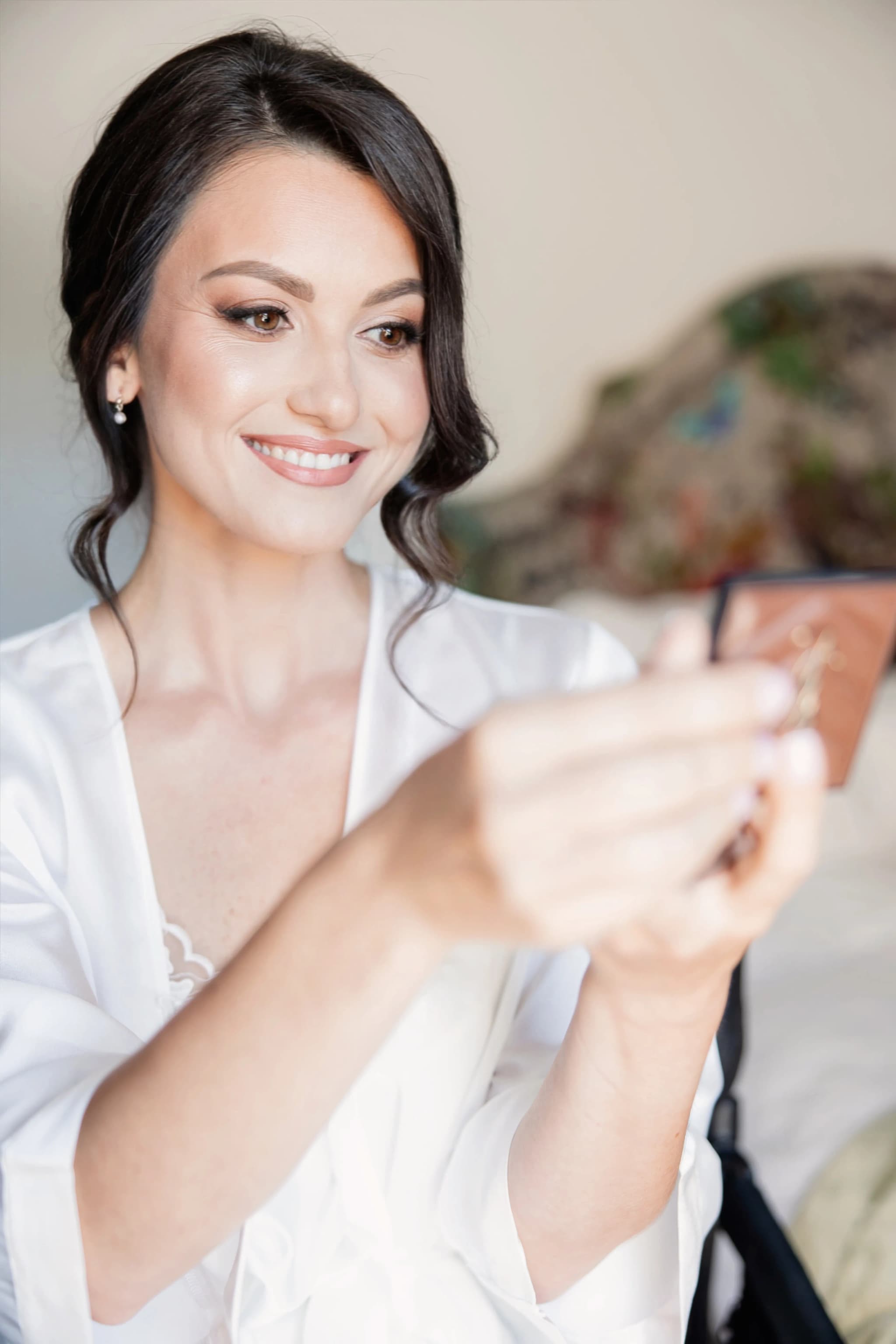
I design every album myself rather than handing the job to an automated template system, and the process starts with a genuinely difficult first step: narrowing several hundred delivered images down to the sixty or seventy that will make the cut. This is where a lot of couples benefit from a bit of distance, because on first viewing the instinct is often to want everything included, and an album crammed with too many images per spread stops reading as a considered piece of design and starts reading as a scrapbook. I work from the full gallery to build a shortlist, then design spreads that let the strongest images have room to be looked at properly — sometimes a single striking image filling an entire spread on its own, sometimes four or five smaller frames from getting-ready working together as a sequence.
The design draft comes to you as a digital proof, spread by spread, so you can see exactly how the album will read before anything is sent to print. This is the stage to be honest about what you love and what you would rather swap out. I would always rather revise a spread twice before printing than have a couple open a finished album and wish one particular image had been included instead of another. Most albums go through two or three rounds of revision before both of us are happy, and there is no rush applied to that process — it is far more important that the final object is right than that it arrives quickly.
Once a design is approved, the file goes to print, and this is genuinely the point of no return in terms of timeline, since production of a bound, layflat book with pages bonded and trimmed to size is not something that can be sped up meaningfully without compromising quality. I always build in enough lead time that couples are not waiting anxiously for a specific date — an anniversary, a house move, a gift occasion — only to find the album has not arrived. If there is a date the album needs to exist by, it is worth telling me at the very start of the design process rather than partway through.
Materials, Sizing, and Cover Choices
The cover is usually the first decision, and the main choice is between a linen or fabric-wrapped cover and a genuine leather cover, sometimes with a printed photograph set into the front as a cover image instead. Fabric covers come in a range of colours and read as slightly more contemporary and lighter in feel; leather covers age beautifully, develop character over years of handling, and tend to suit couples who married somewhere with a more traditional or heritage character to the venue. Neither is objectively better — it comes down to what will sit comfortably in your home and match the tone you want the object itself to carry, separate from the images inside it.
Size matters more than most couples expect going into the conversation. A smaller album, often marketed as a parent album or a duplicate for grandparents, is a lovely secondary item but is not, in my experience, satisfying as the only album a couple owns of their own wedding. The wide storytelling spreads that make a layflat album worth having need physical size to work — a large spread across two genuinely sizeable pages does something a smaller equivalent simply cannot, in the same way a large print on a wall does something a small one cannot. I generally guide couples toward the largest size that comfortably suits their budget as the main album, with smaller matching versions ordered afterwards as gifts for parents if wanted.
Page count and paper finish are the remaining variables. A matte finish reduces glare and handles fingerprints more gracefully over years of being picked up; a gloss finish gives slightly more punch and saturation to colour but shows fingerprints more readily. I tend to recommend matte for albums that will genuinely live on a coffee table and be handled often, and reserve gloss for albums that will be kept more carefully and looked at on more special occasions. Page count is really a function of how much story you want told — a tightly edited thirty-spread album focusing on the day itself reads very differently to a sixty-spread album that also includes engagement images and the morning preparations in detail, and both are valid depending on what you want the object to be.
Thinking about an album for your wedding
Album design is included as part of several of my wedding photography packages, and can also be added afterwards for couples I have already photographed. I am always happy to talk through sizes, covers, and layout options before you commit to anything.
Ask about wedding albumsWhen to Order, and How to Budget for It
The most common mistake I see is treating the album as an afterthought to be dealt with whenever there is spare time and spare money, months or even years after the wedding. I understand the instinct — there are a great many costs in the run-up to a wedding and the album genuinely can wait, unlike the venue or the catering. But in practice, "we will sort the album out later" often becomes a task that quietly never happens, not because couples do not want an album but because the immediate financial and mental pressure of the wedding has passed and other things fill the gap. The couples who end up with an album on their shelf, rather than a folder of good intentions, are almost always the ones who built it into the original budget or booked the design process for a set date shortly after the wedding.
My practical advice is to treat the album less like a purchase you might make and more like a deliverable you are choosing whether to include from the outset, in the same way you would decide on the number of hours of coverage or whether to add a second photographer. If budget is tight at the point of booking, it is entirely possible to book photography coverage now and add the album later once the day itself is behind you and there is a clearer picture of what is left in the pot — I keep the design process open to previous clients for exactly this reason. What I would gently discourage is deciding to skip the album altogether purely on cost grounds without having first seen a finished one in person. The difference between looking at a description of a layflat album and holding a finished one is considerable, and it is the reason I keep sample albums on hand for couples to look through during consultations.
Looking After the Album Once It Arrives
A layflat album, properly made, is a genuinely durable object, but a small amount of care extends its life considerably. Direct sunlight over years will fade even good-quality prints, so a shelf out of direct sun rather than a windowsill is the sensible home for it. The rigid pages tolerate being handled without gloves far better than older photographic prints do, and part of the point of the format is that it is meant to be picked up and enjoyed rather than treated as too precious to touch. If the album has a slipcase, using it during storage keeps dust and light exposure to a minimum between viewings, while still leaving the book itself easy to take out whenever you want to look through it.
It is also worth knowing that most of the layflat album systems I use allow for reprints of the same design later on, which means a parent album, a duplicate for the other side of the family, or a replacement copy years down the line if something happens to the original are all realistic possibilities rather than one-off, unrepeatable purchases. I keep design files on record specifically so that this remains an option long after the wedding itself.
An album is, in the end, the one piece of your wedding photography that exists as a physical object rather than a file on a device, and a layflat album is the format that treats the photographs inside it with the most respect — full spreads that show the whole scene, pages that survive decades of handling, and a design process that gives real thought to which sixty images out of several hundred deserve to be there. If you are getting married and want to talk through album options, either as part of your photography package or as something to add afterwards, get in touch and I would be glad to show you some finished examples and talk through what would suit your day.

Yana Skakun
Photographer · England
Professional wedding, family and portrait photographer based in England. Passionate about capturing authentic emotions and timeless moments.
About Yana →layflat wedding photo albumswedding album design UKwedding photography albumshow to choose a wedding albumCambridge wedding photographer albums
Wedding Tips — Wedding Photography in Cambridge & England
Yana Skakun is a professional wedding photographer based in Cambridge, covering weddings across England — from intimate elopements to full-day ceremonies at country houses, barns, and city venues. Every couple receives a relaxed, documentary approach that captures the day as it truly unfolds. This guide — Layflat Wedding Photo Albums: Why They're Worth It — is part of the photography journal: practical, experience-based advice drawn from real sessions across England. Whether you arrived searching for layflat wedding photo albums or wedding album design uk, the same care and attention shapes every session Yana photographs.
Wedding Photography sessions are available year-round, with bookings open across Cambridge, Ely, Huntingdon, Peterborough, and further afield — East England, London, the Midlands, and beyond. If you have specific questions about wedding photography albums, mention it in your enquiry. Get in touch through the contact form above to check availability and discuss your session. Enquiries are welcomed from anywhere in the UK.
Frequently Asked Questions
How much does a wedding photographer cost in England?+
Wedding photography in England typically ranges from £1,500 to £4,000+ for a full day. Price depends on experience, coverage hours, and whether albums or engagement shoots are included. Most photographers charge between £2,000–£3,000 for 8–10 hours of coverage.
How early should you book a wedding photographer?+
For peak season (May–September), book 12–18 months in advance. For autumn and winter weddings, 9–12 months is usually sufficient. Popular photographers at popular venues fill up fast — as soon as you have a date and venue confirmed, start reaching out.
How many photos do you get from a wedding photographer?+
Most professional wedding photographers deliver 400–800 edited images for a full-day wedding. The exact number depends on coverage hours, how many guests there are, and the photographer's editing style. Quality matters more than quantity — a curated gallery of 500 images tells the story better than 1,500 unedited files.
Do you need a second photographer at your wedding?+
A second photographer is helpful if you want simultaneous coverage of getting-ready moments in different locations, multiple angles during the ceremony, or more candid coverage during the reception. It adds cost but significantly increases the variety and completeness of your gallery.
What is the difference between documentary and editorial wedding photography?+
Documentary (reportage) wedding photography captures moments as they happen — the photographer observes and doesn't intervene. Editorial photography involves deliberate direction: placing you in good light, shaping compositions, creating intentional portraits. Most photographers blend both styles throughout the day.
Continue Reading
Related Articles

Wedding Tips
Sustainable Eco-Friendly Wedding Guide — Planning a Green Celebration
15 min read · Read Article
Wedding Tips
Trash the Dress Session — Complete Planning and Photography Guide
14 min read · Read Article
Wedding Tips
Client Communication for Photographers — From Enquiry to Gallery Delivery
15 min read · Read Article
Get in Touch
Ready to Book Your Session?
Get in touch to discuss your vision — I'll reply within 24 hours.