Yana Skakun

Why Letting Guests Take Photos During the Ceremony is a Mistake
By Yana Skakun·10 June 2026·5 min read
There is one photograph that couples most often say they wish they had — the moment they first saw each other at the altar. In almost every case where that image is missing or obscured, the reason is the same: a guest was standing in the aisle with a phone outstretched. The shot that cannot be staged, repeated, or recreated was lost forever because nobody had asked people to put their devices away.
What Actually Happens When Guests Photograph the Ceremony
From behind my camera I have a clear view of what the couple cannot see. During the processional, as a bride walks towards her partner, I watch guests twist out of their seats, lean into the aisle, and raise iPads and phones above head height. The result is a wall of glowing screens between me and the moment I am there to document. No amount of skill or repositioning fixes this — if the aisle is physically blocked, the photograph does not exist.
It is not just about obstructed sight lines. The ambient light from dozens of phone screens affects the natural look of the scene. Guests who are composing their own shot are not watching the ceremony — they are looking at a two-inch preview. Their own experience becomes mediated, and the noise of notifications, accidental shutter sounds, and fumbling with settings adds an undercurrent of distraction that the couple, the officiant, and every other guest has to absorb.
None of this is the fault of the guests. They are enthusiastic about your wedding. They want to capture something beautiful. The problem is that photographing a ceremony well is a skilled job, and two things cannot occupy the same space at once. When guests try to document the ceremony themselves, they diminish both their own experience of it and the professional photographs you have paid for.
The Specific Moments That Are Hardest to Recover
Not every moment is equally vulnerable to guest interference. Some shots can be recreated or approached from a different angle. Others cannot. These are the images that consistently suffer when a ceremony is not unplugged:
- ◆The first look down the aisle: This is a one-second window of pure, unguarded reaction. If someone is standing with a phone in the aisle, I cannot position myself for a clean shot. The moment passes before I can reframe.
- ◆The exchange of vows: Couples stand face-to-face during vows. Guests on either side who lean in with phones create a semi-circle of devices around the couple. The intimate, stripped-back quality of the moment is lost in every image.
- ◆Tears and spontaneous reactions: Emotional responses happen and resolve in seconds. The grandparent who breaks down during the vows, the groomsman who cannot hold it together — these take concentration to catch. If I am managing my position around a forest of raised phones, I will miss them.
- ◆The kiss: Every guest wants to photograph the kiss. If they all raise their phones simultaneously, the couple is photographed against a backdrop of devices rather than the faces of the people they love most.
- ◆The recessional walk: Couples often underestimate how important recessional images are — the first seconds of being married, walking out together. Guests crowding the aisle on both sides make this one of the most consistently difficult shots to get clean.
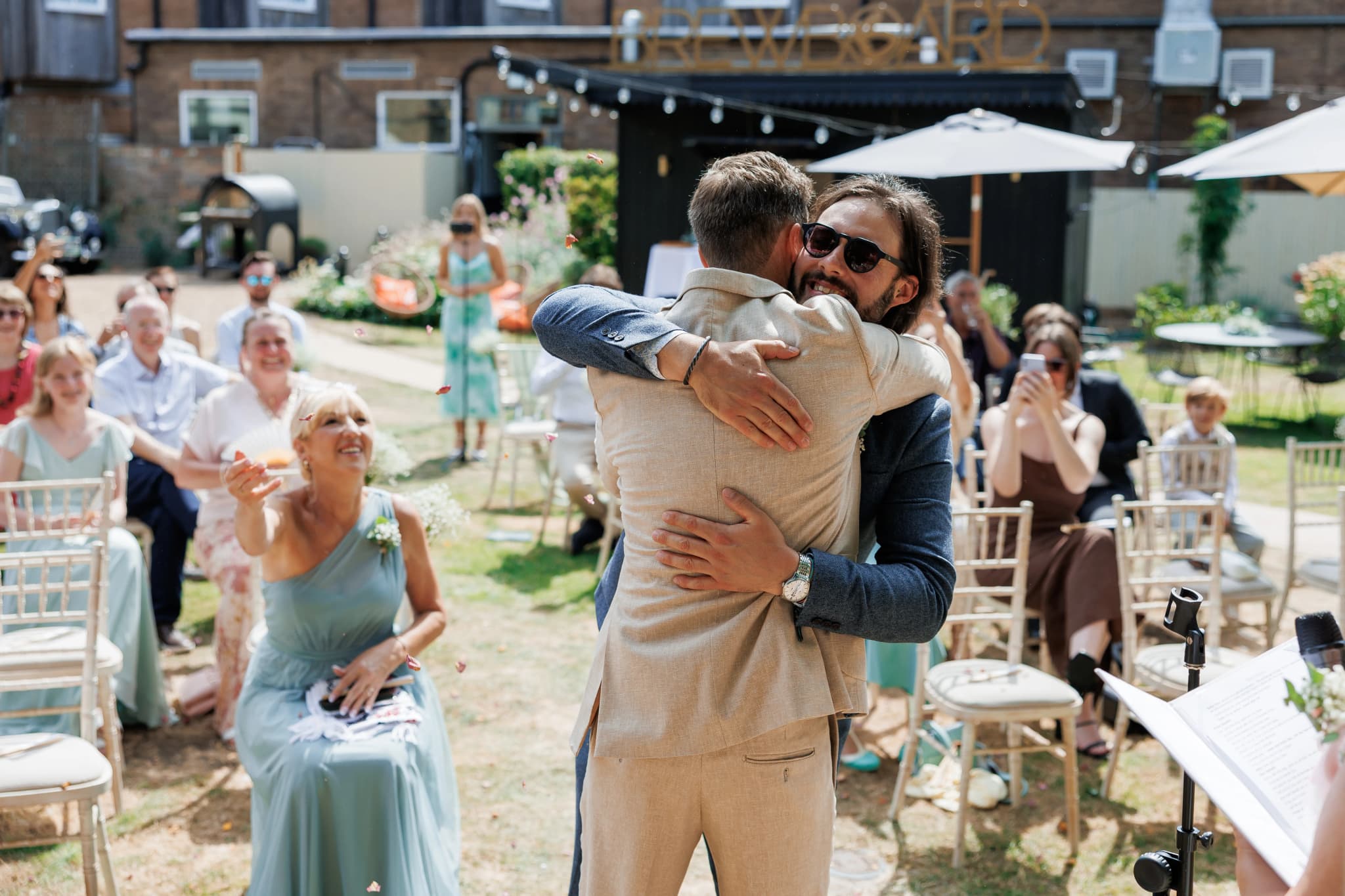
- ◆Candid reactions during the ring ceremony: The best wedding photographs are often the ones taken of the people watching rather than the people doing. Guests absorbed in their own photography are not available to be photographed in unguarded moments.
How to Ask for an Unplugged Ceremony Without Offending Anyone
The single most effective approach is a warm, personal announcement from the officiant immediately before the processional begins. Not a sign at the door (many guests will miss it or ignore it), not a line in the order of service (guests are often distracted at that point), but a spoken request from the person leading the ceremony. Something like: 'Before we begin, the couple has asked that everyone be fully present today. Please silence your phones and keep them in your pockets during the ceremony — their photographer is here to capture every moment on your behalf.'
The framing matters. Guests respond well when the request is explained in terms of presence and experience rather than restriction. Telling people that their full attention is the most meaningful gift they can give the couple is both true and effective. Telling people to put their phones away because the photographer said so is less likely to land well.
For UK weddings, where ceremonies are often shorter and more structured than their American counterparts — a civil ceremony at a licensed venue typically runs twenty to forty minutes — the ask is genuinely reasonable. Nobody is being asked to abstain from photography for a long time. The cocktail hour, the reception, the speeches, the first dance: all of these are entirely open for guest photography and always will be.
Some couples add a small card to each seat or on the ceremony programme: 'We are having an unplugged ceremony. Please enjoy the moment with us — our photographer will share the images soon.' This works well as a backup reminder and also signals to guests that images will actually be available to them afterwards, which addresses the underlying motivation for guest photography in the first place.
What Guests Can Do Instead — and When
An unplugged ceremony is not an unplugged wedding. The distinction is worth being explicit about with guests, because some people interpret a request to put phones away as a ban on photography altogether, which is not the intention and not the reality.
The cocktail hour is genuinely the ideal time for guest photography. The light at a UK venue in the late afternoon — whether that is a Cambridgeshire barn, a country house hotel in Suffolk, or a licensed manor in Bedfordshire — is often beautiful at that time of day. Guests can photograph each other, photograph the couple during the informal social time, and enjoy the freedom to document however they like. The formal portraits are handled separately; everything else is open.
It also helps to let guests know when they will receive the professional images. If you tell people in the ceremony programme or in your wedding website that gallery access will be shared within six weeks, the sense of urgency around capturing everything themselves reduces considerably. Part of why guests reach for their phones is the fear that they will otherwise have no images from the day. Remove that fear and the compulsion eases.
The Honest Case for Being Present
There is a version of your wedding ceremony that every guest will remember for the rest of their lives — not because they have a photograph of it, but because they were actually there. The couple who have made the decision to have an unplugged ceremony almost universally report that something felt different about it. Guests cried more openly. People laughed at the same moment. The energy in the room was concentrated rather than diffused.
As a photographer working at UK weddings, I find that unplugged ceremonies produce consistently stronger images — not only because the sight lines are clearer, but because the guests themselves are more emotionally available. Their faces are open. Their reactions are genuine and unmediated. The photographs of the people watching are often as moving as the photographs of the couple, and they are only possible when those people are actually watching.
You do not need to apologise for wanting your ceremony documented properly. Asking guests to be present is an act of generosity towards them as much as it is a practical decision about photography. It gives them back the experience of being at a wedding rather than documenting one.
Plan an Unplugged Ceremony With Full Confidence
When you book Yana for your wedding, she will walk you through exactly how to communicate the unplugged request to your officiant and guests — so every moment is documented cleanly, and your guests actually experience your day. Get in touch to check availability for your date.
Check Your Date →

Yana Skakun
Photographer · England
Professional wedding, family and portrait photographer based in England. Passionate about capturing authentic emotions and timeless moments.
About Yana →lettinggueststakephotos
Wedding Tips — Wedding Photography in Cambridge & England
Yana Skakun is a professional wedding photographer based in Cambridge, covering weddings across England — from intimate elopements to full-day ceremonies at country houses, barns, and city venues. Every couple receives a relaxed, documentary approach that captures the day as it truly unfolds. This guide — Why Letting Guests Take Photos During the Ceremony is a Mistake — is part of the photography journal: practical, experience-based advice drawn from real sessions across England. Whether you arrived searching for letting or guests, the same care and attention shapes every session Yana photographs.
Wedding Photography sessions are available year-round, with bookings open across Cambridge, Ely, Huntingdon, Peterborough, and further afield — East England, London, the Midlands, and beyond. If you have specific questions about take, mention it in your enquiry. Get in touch through the contact form above to check availability and discuss your session. Enquiries are welcomed from anywhere in the UK.
Frequently Asked Questions
How much does a wedding photographer cost in England?+
Wedding photography in England typically ranges from £1,500 to £4,000+ for a full day. Price depends on experience, coverage hours, and whether albums or engagement shoots are included. Most photographers charge between £2,000–£3,000 for 8–10 hours of coverage.
How early should you book a wedding photographer?+
For peak season (May–September), book 12–18 months in advance. For autumn and winter weddings, 9–12 months is usually sufficient. Popular photographers at popular venues fill up fast — as soon as you have a date and venue confirmed, start reaching out.
How many photos do you get from a wedding photographer?+
Most professional wedding photographers deliver 400–800 edited images for a full-day wedding. The exact number depends on coverage hours, how many guests there are, and the photographer's editing style. Quality matters more than quantity — a curated gallery of 500 images tells the story better than 1,500 unedited files.
Do you need a second photographer at your wedding?+
A second photographer is helpful if you want simultaneous coverage of getting-ready moments in different locations, multiple angles during the ceremony, or more candid coverage during the reception. It adds cost but significantly increases the variety and completeness of your gallery.
What is the difference between documentary and editorial wedding photography?+
Documentary (reportage) wedding photography captures moments as they happen — the photographer observes and doesn't intervene. Editorial photography involves deliberate direction: placing you in good light, shaping compositions, creating intentional portraits. Most photographers blend both styles throughout the day.
Continue Reading
Related Articles

Wedding Tips
Sustainable Eco-Friendly Wedding Guide — Planning a Green Celebration
15 min read · Read Article
Wedding Tips
Trash the Dress Session — Complete Planning and Photography Guide
14 min read · Read Article
Wedding Tips
Client Communication for Photographers — From Enquiry to Gallery Delivery
15 min read · Read Article
Get in Touch
Ready to Book Your Session?
Get in touch to discuss your vision — I'll reply within 24 hours.