Yana Skakun

London Anniversary Shoot Route: The Most Romantic Spots for Couples
By Yana Skakun·9 May 2026·7 min read
There is a particular kind of couple who books an anniversary shoot in London, and I have come to recognise them within the first few messages. They are not necessarily celebrating a milestone year — some are marking one year, some are marking twenty — but they share a wish to walk through a city that means something to them and be photographed doing it properly, rather than relying on a stranger's phone camera and a slightly awkward smile. London lends itself to this in a way few cities do. It has water, bridges, parkland, quiet residential streets, and grand architecture all within a short cab ride of one another, and if you plan the route with any care, you can move through an entire emotional register in a single afternoon: playful on a bridge, tender in a garden, grand in front of a skyline. I have spent years working out which corners of London actually deliver on their romantic promise once you are standing in front of them with a camera, as opposed to the ones that photograph beautifully on a postcard but feel crowded, harshly lit, or oddly sterile in person. This is my honest route through the city, built from what has actually worked for couples I have photographed, not from a generic tourist list.
Why the Route Matters More Than Any Single Location
Couples often arrive with one dream location in mind — a particular bridge, a particular skyline — and ask if we can "just do the shoot there." I always push back gently on this, because a single location, however beautiful, gives you one mood and one type of photograph repeated with minor variations. An anniversary shoot benefits enormously from a route: three or four locations within reasonably easy reach of each other, each offering a different kind of light, backdrop, and energy. You get wide architectural shots, intimate close-ups against greenery, reflective water shots, and golden-hour glow, all in the same afternoon, which gives you a set of images that actually varies when you look back through it in five years rather than twenty near-identical frames from one spot.
The practical logic of a route also matters. London traffic and the sheer size of the city mean that trying to cover locations that are miles apart leads to a shoot that is more about transport than photography. I plan routes around a walkable core — usually no more than twenty to thirty minutes between stops on foot — so the couple spends their afternoon actually being photographed and enjoying each other's company, not standing at bus stops. The route below is built around that principle, moving through areas that sit close enough together to flow naturally from one to the next.
South Bank and the Bridges: Grand and Playful
I nearly always start or anchor a London anniversary route somewhere along the South Bank, because it gives you two things at once: the grandeur of the skyline across the water and the informality of a riverside walk. Early morning, before the crowds build, the South Bank has a completely different character to its midday self — the light is softer, the pavement is quieter, and you can actually use the space without weaving around tour groups. Walking a couple slowly along the river with St Paul's or the Houses of Parliament in the background, depending on which stretch we are on, gives a set of images with genuine scale and grandeur behind two people who are simply holding hands and talking.
The bridges themselves are wonderful for a different reason: they put you above the water with unobstructed light from most directions, and there is something inherently romantic about a couple pausing halfway across a bridge, which is why it appears in every era of London film and literature about love. I favour photographing couples on a bridge in the early morning light when the crowds have not yet arrived, letting them lean against the railing, look at the view, and forget the camera is there for a moment. Those unguarded seconds, with the water and the skyline behind them, are consistently among the images couples tell me they love most a year or two later.
Hidden Garden Squares and Quiet Mews: Intimate and Green
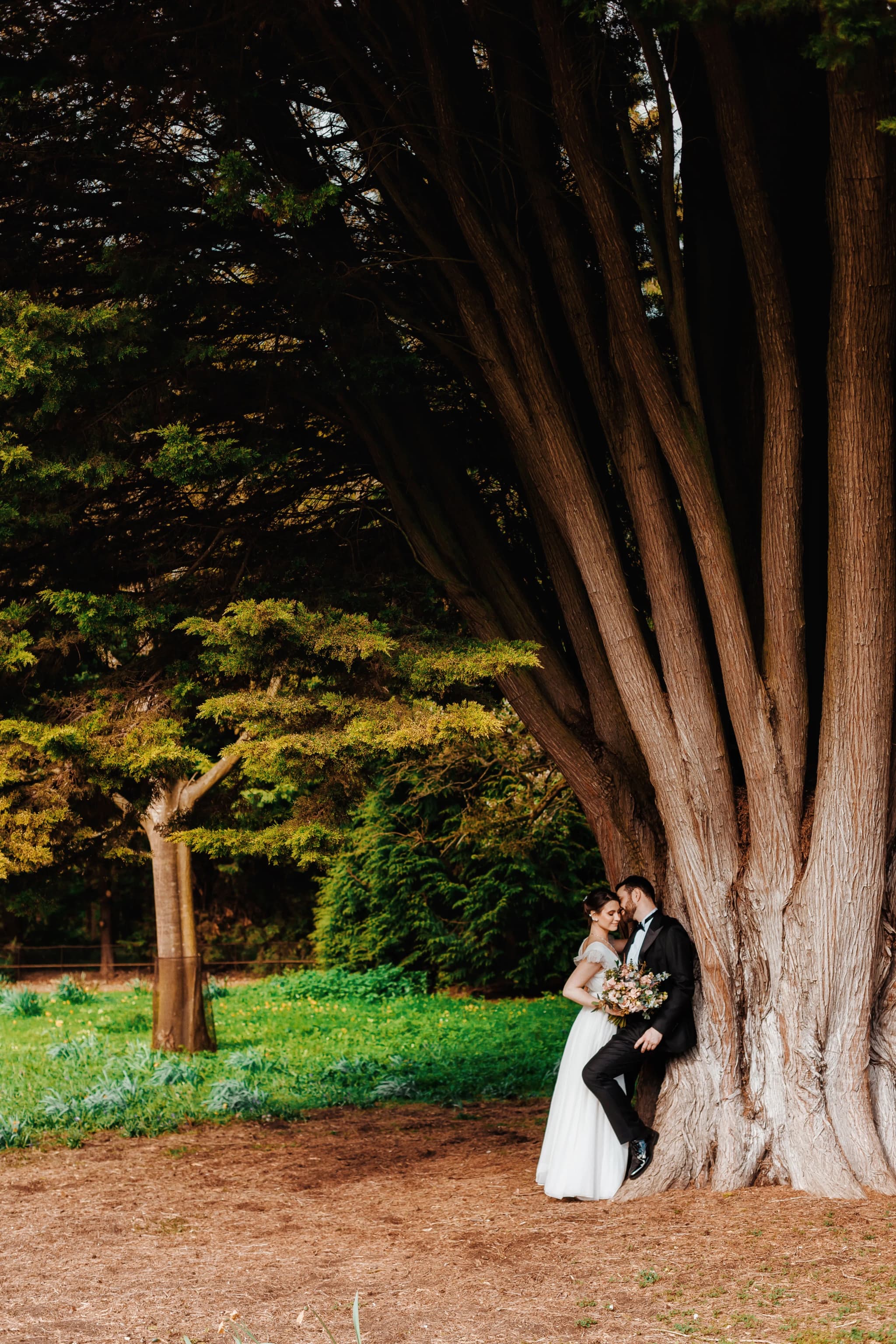
After the grandeur of the river, I like to move somewhere greener and far more intimate. London is full of garden squares, mews streets, and pocket parks that most visitors never find, tucked behind the main roads in areas like Chelsea, Kensington, and Bloomsbury. These spaces offer something the riverside cannot: soft, dappled light through mature trees, painted doorways and ironwork railings for texture, and an almost total absence of other people, which means the couple can relax properly rather than performing for onlookers. A narrow cobbled mews with wisteria climbing a wall, or a quiet garden square with a bench under plane trees, produces images with a completely different emotional register — softer, quieter, more private.
This part of the route is where I encourage couples to actually talk to each other rather than look at me. I will ask one partner to tell the other about a memory from the relationship, or simply ask them to walk slowly and see where they naturally end up standing. The best images from this stretch of a shoot are almost never posed in the traditional sense; they come from genuine laughter, a hand reaching for a hand, a moment of eye contact that has nothing to do with the camera. Spring and early summer bring blossom and wisteria to these streets, which adds a layer of colour and softness that is difficult to find elsewhere in the city, while autumn brings its own warmth through turning leaves against the brickwork.
Planning your own London route
Every couple's story is different, and the best anniversary route is one built around the places that actually mean something to you, not simply the most photogenic spots in the city. I put together a bespoke route for every couple I work with in London.
Get in touch about a London shootParks and Open Green Space: Room to Breathe
A route needs somewhere with genuine open space, and London's Royal Parks provide this better than almost anywhere else in a major capital city. Somewhere like a wide tree-lined avenue in one of the central parks, or a quiet spot along a lake, gives couples room to actually move — walking towards the camera, spinning, running through open grass if they are that sort of couple — rather than being confined to a tight urban frame. The light in open parkland is far more forgiving too, especially in the hour before sunset, when it comes in low and golden across open ground rather than being blocked and fragmented by buildings.
I also use parkland for a slower, quieter set of images: a couple sitting on a bench with a blanket, or simply standing together looking out over water with nothing else in the frame. These images work as a deliberate counterpoint to the busier architectural shots earlier in the route, and couples often find that the simplest, quietest images from a park are the ones they end up choosing for a large print at home, because they feel calm and timeless rather than tied to a specific dramatic backdrop.
Golden Hour on a Rooftop or High Viewpoint
If the route allows, I like to end an anniversary shoot somewhere elevated, timed for the last hour of light. London has a genuine advantage here over many cities because of how many public and semi-public high viewpoints exist across the centre — places where you can look out over rooftops, church spires, and the winding curve of the river as the sky turns from blue to gold to a deep dusky pink. Photographing a couple against that kind of skyline, with the low sun catching the edges of buildings and the city beginning to light up below, produces images that feel genuinely cinematic without any artificial staging required. The light does almost all of the work.
Logistically this stretch of the route needs the most planning, since access to elevated viewpoints varies and some require booking or have specific opening hours, so I always check this in advance rather than hoping we can simply turn up. When it works, though, it is consistently the part of the shoot couples talk about afterwards — the moment the whole city seemed to be glowing around them.
Practical Notes: Timing, Weather, and What to Wear
I plan London anniversary shoots around either early morning, starting not long after sunrise, or the two hours before sunset, and I avoid the middle of the day almost entirely. Midday light in a city full of glass and pale stone is harsh and flat, and the crowds at the most photogenic spots are at their thickest exactly when the light is least flattering. An early start also has the practical advantage of nearly empty streets and bridges, which means far more of the images feel like they belong to the couple alone rather than featuring dozens of strangers in the background.
London weather is famously unreliable, and I build flexibility into every booking for exactly that reason. Soft overcast light is actually wonderful for portraits — even, flattering, with none of the harsh shadows that direct sun creates — so a grey day is rarely a reason to cancel. Genuine heavy rain is the main thing I plan around, and if it looks likely I will suggest an alternative date or a route that leans more heavily on covered arcades, museum entrances, and undercover spots that still photograph beautifully. On clothing, I generally advise against busy patterns or logos, which date quickly and distract from the couple themselves, and suggest coordinating tones rather than matching outfits exactly — complementary colours read far better in a photograph than an identical colour worn by both people. A coat or jacket that can be removed partway through gives some visual variation across the shoot without a full outfit change.
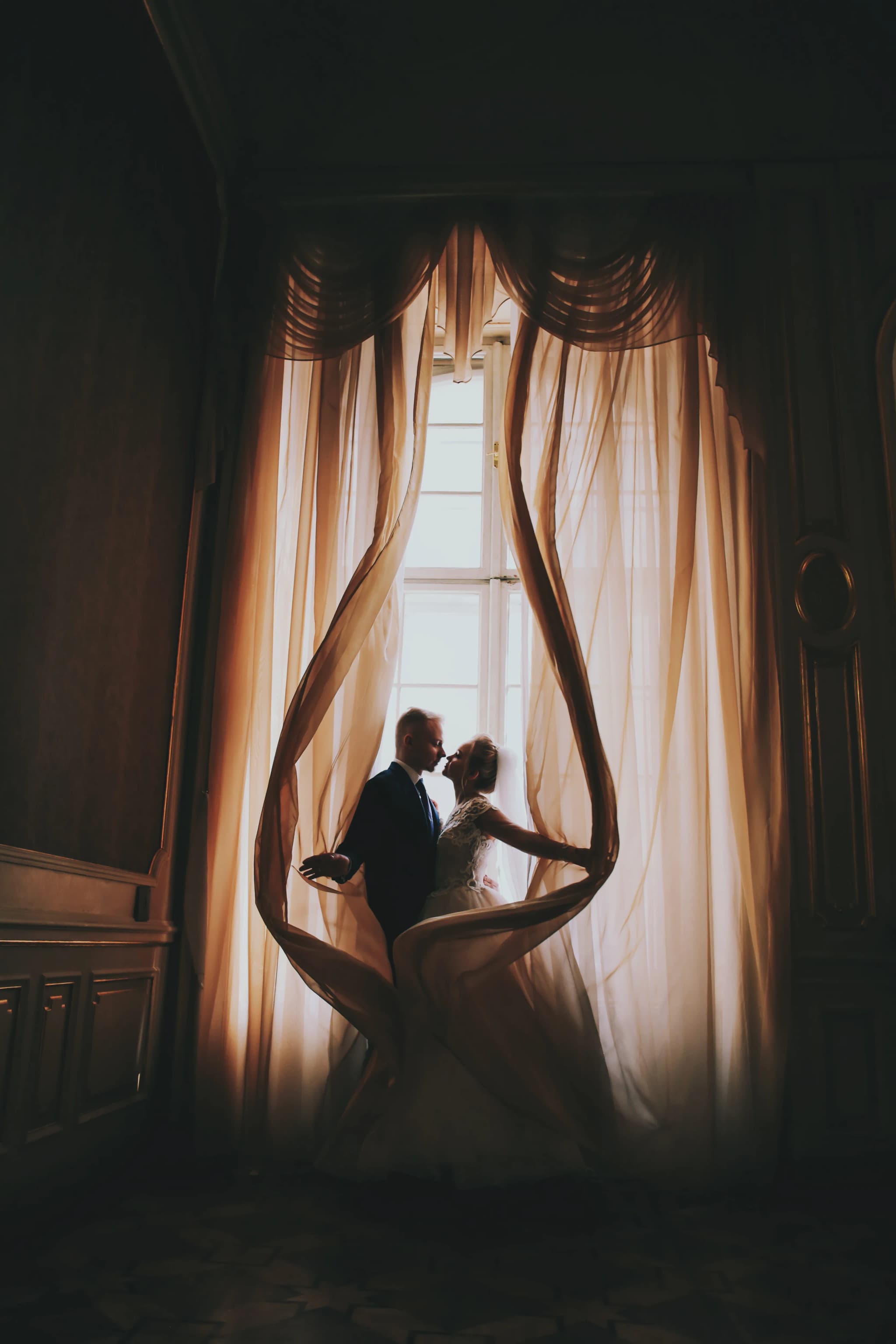
A London anniversary shoot, done properly, is not really about ticking off famous landmarks. It is about giving a couple a few unhurried hours to walk through a city together, be genuinely present with each other, and end up with a set of photographs that reflects the actual texture of their relationship — playful on a bridge, quiet in a garden, glowing at sunset. The route matters because it gives that afternoon shape and variety, but the heart of it is always the same: two people, a city that has seen centuries of love stories unfold on its streets, and an hour of light that will not come again in quite the same way. If you are celebrating an anniversary and would like to talk through a route built around the parts of London that matter to you, get in touch and we can start planning.


Yana Skakun
Photographer · England
Professional wedding, family and portrait photographer based in England. Passionate about capturing authentic emotions and timeless moments.
About Yana →romantic anniversary photoshoot londonlondon couple photographyanniversary photo locations londonlondon photoshoot routeromantic london photography spots
Wedding Tips — Wedding Photography in Cambridge & England
Yana Skakun is a professional wedding photographer based in Cambridge, covering weddings across England — from intimate elopements to full-day ceremonies at country houses, barns, and city venues. Every couple receives a relaxed, documentary approach that captures the day as it truly unfolds. This guide — London Anniversary Shoot Route: The Most Romantic Spots for Couples — is part of the photography journal: practical, experience-based advice drawn from real sessions across England. Whether you arrived searching for romantic anniversary photoshoot london or london couple photography, the same care and attention shapes every session Yana photographs.
Wedding Photography sessions are available year-round, with bookings open across Cambridge, Ely, Huntingdon, Peterborough, and further afield — East England, London, the Midlands, and beyond. If you have specific questions about anniversary photo locations london, mention it in your enquiry. Get in touch through the contact form above to check availability and discuss your session. Enquiries are welcomed from anywhere in the UK.
Frequently Asked Questions
How much does a wedding photographer cost in England?+
Wedding photography in England typically ranges from £1,500 to £4,000+ for a full day. Price depends on experience, coverage hours, and whether albums or engagement shoots are included. Most photographers charge between £2,000–£3,000 for 8–10 hours of coverage.
How early should you book a wedding photographer?+
For peak season (May–September), book 12–18 months in advance. For autumn and winter weddings, 9–12 months is usually sufficient. Popular photographers at popular venues fill up fast — as soon as you have a date and venue confirmed, start reaching out.
How many photos do you get from a wedding photographer?+
Most professional wedding photographers deliver 400–800 edited images for a full-day wedding. The exact number depends on coverage hours, how many guests there are, and the photographer's editing style. Quality matters more than quantity — a curated gallery of 500 images tells the story better than 1,500 unedited files.
Do you need a second photographer at your wedding?+
A second photographer is helpful if you want simultaneous coverage of getting-ready moments in different locations, multiple angles during the ceremony, or more candid coverage during the reception. It adds cost but significantly increases the variety and completeness of your gallery.
What is the difference between documentary and editorial wedding photography?+
Documentary (reportage) wedding photography captures moments as they happen — the photographer observes and doesn't intervene. Editorial photography involves deliberate direction: placing you in good light, shaping compositions, creating intentional portraits. Most photographers blend both styles throughout the day.
Continue Reading
Related Articles

Wedding Tips
Sustainable Eco-Friendly Wedding Guide — Planning a Green Celebration
15 min read · Read Article
Wedding Tips
Trash the Dress Session — Complete Planning and Photography Guide
14 min read · Read Article
Wedding Tips
Client Communication for Photographers — From Enquiry to Gallery Delivery
15 min read · Read Article
Get in Touch
Ready to Book Your Session?
Get in touch to discuss your vision — I'll reply within 24 hours.