Yana Skakun
Minimalist Wedding Photography: Less Is More
By Yana Skakun·19 March 2026·6 min read
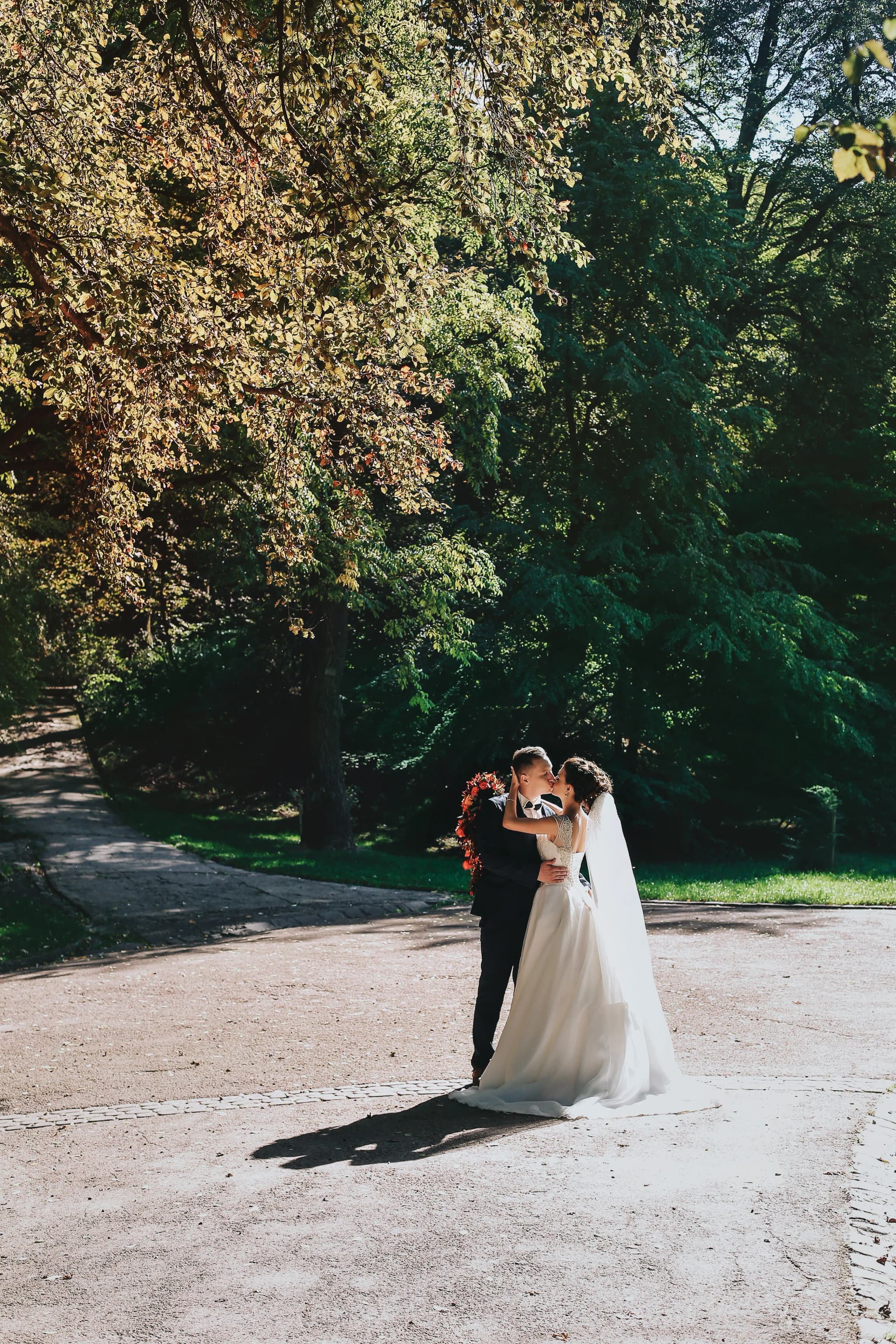
Minimalist wedding photography is the art of knowing what to leave out. In a culture where wedding imagery can sometimes feel overwhelming — too many details, too many posed moments, too much decoration crammed into a single frame — the minimalist approach finds its power in restraint. A single flower stem in a glass jar on a windowsill. A couple standing at the far edge of a wide, empty landscape. White space. Silence made visible. It is a way of photographing a wedding that trusts the moment itself to carry the image, rather than relying on volume, saturation, or clutter to make it feel significant. I am drawn to this approach because it tends to age well: a clean, quiet photograph taken today still looks considered and elegant in twenty years, in a way that heavily styled or trend-driven imagery sometimes does not.
What Minimalist Wedding Photography Actually Looks Like
When couples first ask me about a minimalist approach, they often already have a feeling for it — they know they do not want anything too busy or too sweet, even if they cannot quite articulate the technical side. In practice, a handful of consistent qualities define the style.
Clean backgrounds are the foundation. This means actively seeking out negative space — a plain sky, a bare stone wall, still water, an unbroken stretch of lawn — where the couple exists in the frame without competing visual noise pulling the eye away from them. It also means being deliberately selective about what enters the frame at all: no bins, no fire exit signs, no stray guests wandering through the background, no clutter of chairs and glasses left over from the meal. A minimalist photographer spends as much energy choosing what to exclude as what to include.
Simple, restrained palettes matter too. Minimalist wedding photography tends to favour white, cream, soft grey, and perhaps one accent colour, rather than a full, saturated spectrum. The images often feel cool and airy rather than warm and golden, which is part of what gives the style its calm, unhurried character. In editing, this translates to lifted shadows and clean, even tones rather than heavy contrast or the sun-warmed, amber look associated with more romantic or boho editing styles.
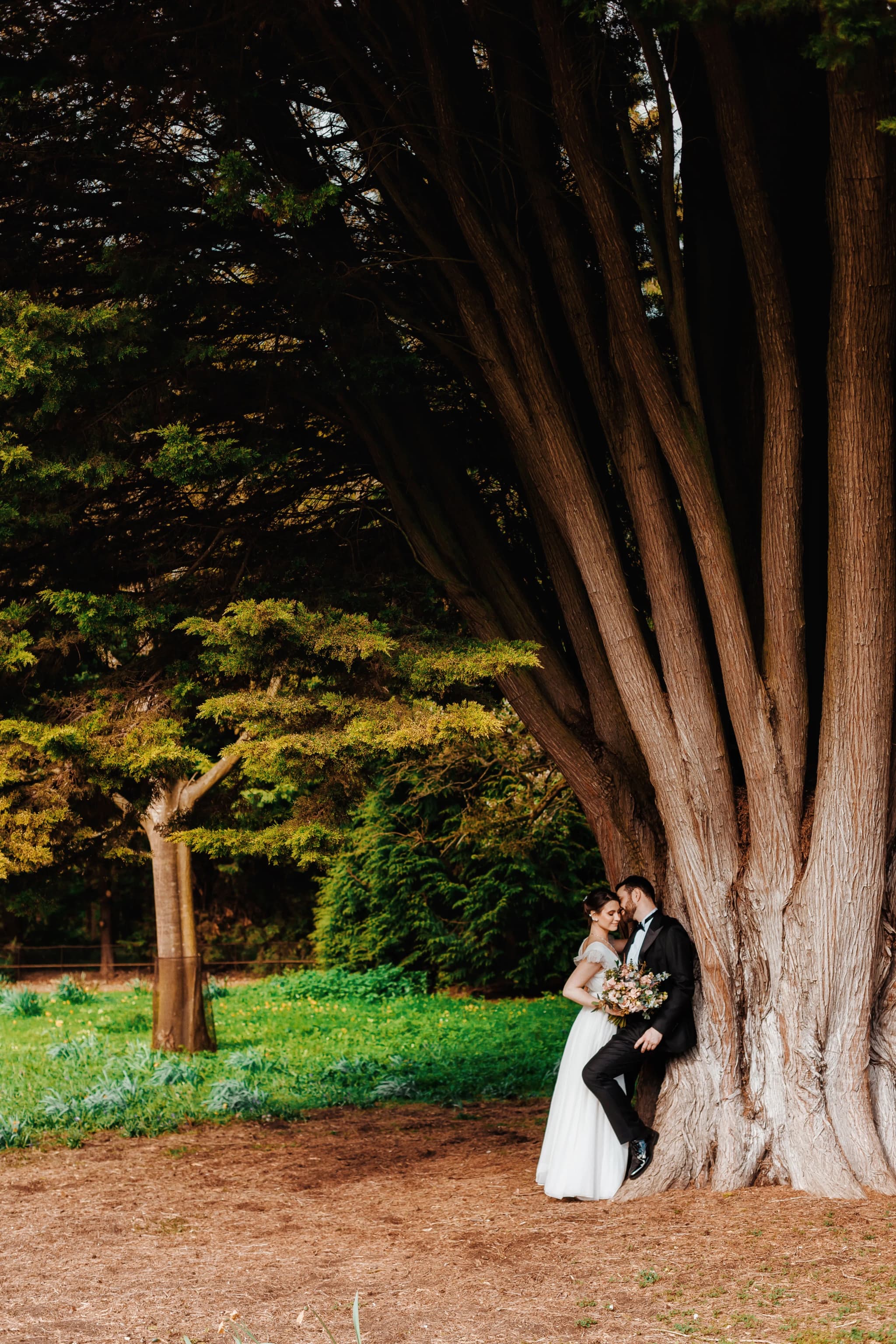
Composition leans on restraint as well — the rule of thirds taken to something close to its logical extreme, with the subject placed small and deliberate within a much larger frame, surrounded by generous breathing space. And where documentation-heavy wedding photography aims to capture abundance — the full table setting, the whole bouquet, every guest in the room — minimalist photography often prefers a single, perfectly lit detail: one stem rather than the full arrangement, the ring alone on a windowsill, the edge of a veil against plain white stone.
Weddings and Venues That Suit This Style
Minimalist photography is not a filter you apply after the fact — it works best when the wedding itself already leans toward a restrained aesthetic, and it can genuinely struggle against a day that is inherently maximalist in its styling. Registry office and courthouse ceremonies with small, intimate guest lists tend to suit the approach beautifully, because there is naturally less visual competition in the room and more focus on the couple themselves.
Elopements and small-scale ceremonies in clean natural settings are a particularly strong fit — open coastal cliffs, quiet hilltops, wide stretches of moorland or fenland, anywhere the horizon does most of the compositional work. Around Cambridge and further into the Fens, that openness is easy to find: flat, uninterrupted farmland under a big sky produces exactly the kind of scale and stillness minimalist photography thrives on. Modern venues with clean architectural lines — glass, concrete, restrained interiors without heavy period detail — also photograph well in this style, as does any wedding where the couple has consciously chosen understatement: no elaborate florals, no dense table styling, simply two people and the day itself as the statement.
It is worth saying plainly that a maximalist, richly decorated wedding with elaborate florals, patterned linens, and dense styling throughout the room is not necessarily wrong for minimalist photography, but it does mean the photographer has to work harder to find the quiet corners within a busy day — a doorway, a staircase, a moment stepped just outside the main room. I always have an honest conversation with couples early on about whether their venue and styling naturally support this look, because setting that expectation upfront leads to a gallery everyone is genuinely happy with.
The Power of White Space in a Wedding Photograph
White space — the empty, undecorated areas within a photograph — is often misunderstood as wasted space, but it is doing real work. It gives the eye somewhere to rest, it focuses attention onto the subject by removing distraction around them, and it lends an image a sense of calm and intentionality that a tightly cropped, detail-filled frame cannot replicate. A couple photographed small against a wide, empty landscape tells a story about scale — about the vastness of the world around two people, and the intimacy of their choosing each other within it. That particular emotional register, quiet and slightly wistful, is very hard to achieve with a full-frame, close-up approach, however technically accomplished the close-up might be.
Practically, this means I am often looking for locations before the wedding day itself — scouting for a stretch of open field, a plain gable end, a calm expanse of water — specifically because they offer that room to breathe. On the day, it also means resisting the instinct to fill every frame with as much information as possible. A single, well-placed silhouette against a pale sky can carry more genuine feeling than a dozen more literal, fully populated shots of the same moment.
Editing for a Minimalist Feel
The editing style matters as much as the composition in achieving a genuinely minimalist result. Where warmer, more romantic wedding editing pushes tones toward gold and amber and increases contrast for drama, minimalist editing tends to lift the shadows, keep the whites clean rather than creamy, and hold back on saturation so that colour recedes rather than announces itself. Skin tones stay natural and calm rather than sun-kissed. Blacks are rarely crushed to pure inky depth; there is usually a little more openness in the shadow detail, which keeps the whole image feeling airy rather than moody.
This is a deliberate, consistent choice applied across an entire gallery, not a one-off treatment on a handful of hero images. Consistency is what makes a minimalist gallery feel cohesive when a couple looks back through it as a whole body of work, rather than a set of individually nice but stylistically disconnected photographs.
Drawn to a clean, minimalist aesthetic?
If your wedding vision leans toward restraint, calm, and quiet elegance rather than abundance and decoration, I would love to talk through how a minimalist approach could suit your day.
Get in touch to discuss your visionLess Is More: Curation as Part of the Craft
Minimalist wedding photography does not stop at composition and editing — the philosophy extends naturally to how a finished gallery is delivered. Rather than handing over an enormous, unfiltered set of a thousand or more images, many of them near duplicates of the same moment, a minimalist approach favours a smaller, carefully curated gallery where every image has earned its place. A tightly edited set of a few hundred cohesive, considered photographs can carry far more weight and feel far more powerful to look back through than a much larger, more varied collection where the strongest images are diluted among weaker ones.
This curation is genuinely part of the craft, not a shortcut. It takes real editorial judgement to look at several near-identical frames from a single moment and choose the one where the composition, the light, and the expression align most closely with the restrained aesthetic the couple has chosen — and to have the discipline to leave the rest out of the final gallery entirely, even when they are perfectly good photographs in their own right.
Practical Ways to Bring a Minimalist Feel to Your Day
Couples who are drawn to this style can support it well before the photographer even arrives. Styling choices make a genuine difference: a smaller, single-stem or single-variety bouquet rather than a dense, multi-textured arrangement; simple stationery in plain type rather than heavily illustrated invitations; a pared-back table setting with one or two considered details rather than layers of decoration. None of this needs to feel austere — restraint and warmth are not opposites, and a minimalist wedding can still feel deeply personal and full of genuine emotion. It simply means choosing a few things to say clearly rather than saying everything at once.
Venue choice matters enormously too. A room with plain walls, good natural light, and uncluttered architecture will always give a minimalist approach more to work with than a heavily patterned or ornately decorated space. And timing helps: softer, more even light — overcast days, or the hour just after sunrise or before sunset — tends to suit the calm, lifted editing style far better than harsh midday sun, which pushes contrast up and works against the airy feel the whole approach is built around.
Minimalist wedding photography is, at its heart, a form of trust — trust that a quiet moment, honestly seen and cleanly presented, does not need embellishment to be moving. It asks a photographer to resist the urge to fill every frame and a couple to resist the urge to plan every surface, and in return it offers a set of images that feel calm, considered, and genuinely timeless rather than tied to a particular trend or season. If that quieter, more restrained way of documenting a wedding day sounds like the right fit for you, get in touch and we can talk through how it might work for your venue, your styling, and the day you are planning.


Yana Skakun
Photographer · England
Professional wedding, family and portrait photographer based in England. Passionate about capturing authentic emotions and timeless moments.
About Yana →minimalist wedding photographyclean simple wedding photos UKminimalist wedding photographer England
Wedding Tips — Wedding Photography in Cambridge & England
Yana Skakun is a professional wedding photographer based in Cambridge, covering weddings across England — from intimate elopements to full-day ceremonies at country houses, barns, and city venues. Every couple receives a relaxed, documentary approach that captures the day as it truly unfolds. This guide — Minimalist Wedding Photography: Less Is More — is part of the photography journal: practical, experience-based advice drawn from real sessions across England. Whether you arrived searching for minimalist wedding photography or clean simple wedding photos uk, the same care and attention shapes every session Yana photographs.
Wedding Photography sessions are available year-round, with bookings open across Cambridge, Ely, Huntingdon, Peterborough, and further afield — East England, London, the Midlands, and beyond. If you have specific questions about minimalist wedding photographer england, mention it in your enquiry. Get in touch through the contact form above to check availability and discuss your session. Enquiries are welcomed from anywhere in the UK.
Frequently Asked Questions
How much does a wedding photographer cost in England?+
Wedding photography in England typically ranges from £1,500 to £4,000+ for a full day. Price depends on experience, coverage hours, and whether albums or engagement shoots are included. Most photographers charge between £2,000–£3,000 for 8–10 hours of coverage.
How early should you book a wedding photographer?+
For peak season (May–September), book 12–18 months in advance. For autumn and winter weddings, 9–12 months is usually sufficient. Popular photographers at popular venues fill up fast — as soon as you have a date and venue confirmed, start reaching out.
How many photos do you get from a wedding photographer?+
Most professional wedding photographers deliver 400–800 edited images for a full-day wedding. The exact number depends on coverage hours, how many guests there are, and the photographer's editing style. Quality matters more than quantity — a curated gallery of 500 images tells the story better than 1,500 unedited files.
Do you need a second photographer at your wedding?+
A second photographer is helpful if you want simultaneous coverage of getting-ready moments in different locations, multiple angles during the ceremony, or more candid coverage during the reception. It adds cost but significantly increases the variety and completeness of your gallery.
What is the difference between documentary and editorial wedding photography?+
Documentary (reportage) wedding photography captures moments as they happen — the photographer observes and doesn't intervene. Editorial photography involves deliberate direction: placing you in good light, shaping compositions, creating intentional portraits. Most photographers blend both styles throughout the day.
Continue Reading
Related Articles

Wedding Tips
Sustainable Eco-Friendly Wedding Guide — Planning a Green Celebration
15 min read · Read Article
Wedding Tips
Trash the Dress Session — Complete Planning and Photography Guide
14 min read · Read Article
Wedding Tips
Client Communication for Photographers — From Enquiry to Gallery Delivery
15 min read · Read Article
Get in Touch
Ready to Book Your Session?
Get in touch to discuss your vision — I'll reply within 24 hours.