Yana Skakun
Misty Morning Autumn Wedding Photography: Ethereal & Unforgettable
By Yana Skakun·16 March 2026·6 min read
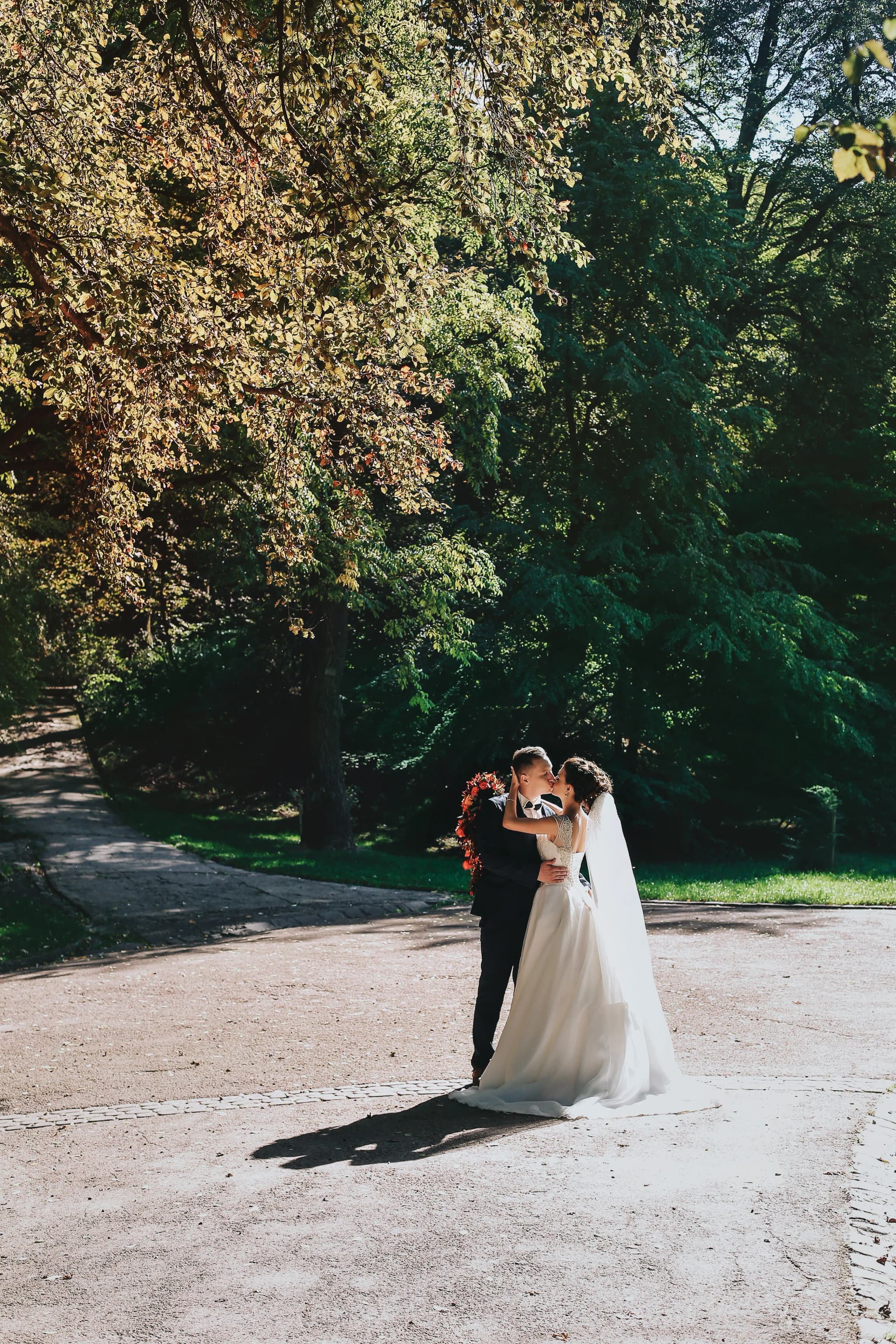
There is a specific kind of autumn morning — usually somewhere in October, occasionally straying into late September or early November — that produces some of the most breathtaking wedding photographs of the entire year. Mist lying low in the fields and river valleys, the sun not yet high enough to burn it off, the tops of trees emerging from a sea of white while their trunks stay hidden, and the whole world reduced to soft shapes, graduated tones, and a quality of light that is genuinely difficult to describe to anyone who has not stood in it. If your wedding date happens to fall on a misty autumn morning, I will be quietly delighted, and I want you to understand exactly why, and how we make the most of it together.
The Science of Autumn Morning Mist
Mist forms on still, clear autumn nights when the ground and the air just above it cool far more quickly than the air higher up. As the temperature drops, the moisture held in that ground-level air condenses into the tiny suspended water droplets we see as mist or fog. It needs specific conditions to happen well: a calm night with little or no wind to stir the air, a clear sky so heat can radiate away freely rather than being trapped by cloud cover, and enough residual moisture in the ground or nearby water to feed the effect. Valleys, riversides, water meadows, and low-lying fields are the classic locations, because cold air is denser than warm air and sinks into these lower points overnight, pooling there until the sun gets to work.
That last part matters enormously for wedding planning. Mist typically begins to thin and lift within an hour or two of sunrise, as the sun's warmth reaches the ground and starts to evaporate the moisture back into the air. Some mornings it burns off in twenty minutes. Others, particularly when the mist is thick and the air stays cool, it can linger for two hours or more, especially in sheltered valley locations that the early sun does not reach directly. The photographic window is genuinely real, but it is also genuinely brief and somewhat unpredictable, which is exactly why having a photographer who is watching the forecast and ready to adapt matters more on a misty morning than on almost any other kind of wedding day.
September and October are the prime months for this in the UK. The ground and shallow water bodies still hold a good deal of warmth from summer, while the nights are growing steadily longer and cooler as we move into autumn. That widening gap between daytime warmth retained in the landscape and overnight cooling in the air is precisely the moisture differential that produces dramatic, photogenic mist. A run of clear, calm nights after a mild day is the combination to watch for, and it is one I keep an eye on for every autumn wedding on the calendar, not just the ones with obvious river or valley settings.
What Misty Light Actually Does to Wedding Photographs
Photographers talk about mist in slightly reverent tones, and it can sound like exaggeration until you have seen the results for yourself. The first thing mist does is create genuine atmospheric depth. Objects at different distances from the camera take on graduated tones as the mist thickens with distance — a couple standing close to the lens reads dark, detailed, and vivid, while a treeline or hedgerow further back fades to pale grey and eventually disappears altogether into white. Clear conditions cannot replicate this layering effect no matter how the light is arranged; it is something mist alone provides, and it gives even a fairly ordinary field or driveway a sense of scale and mystery that flat, clear morning light simply does not have.
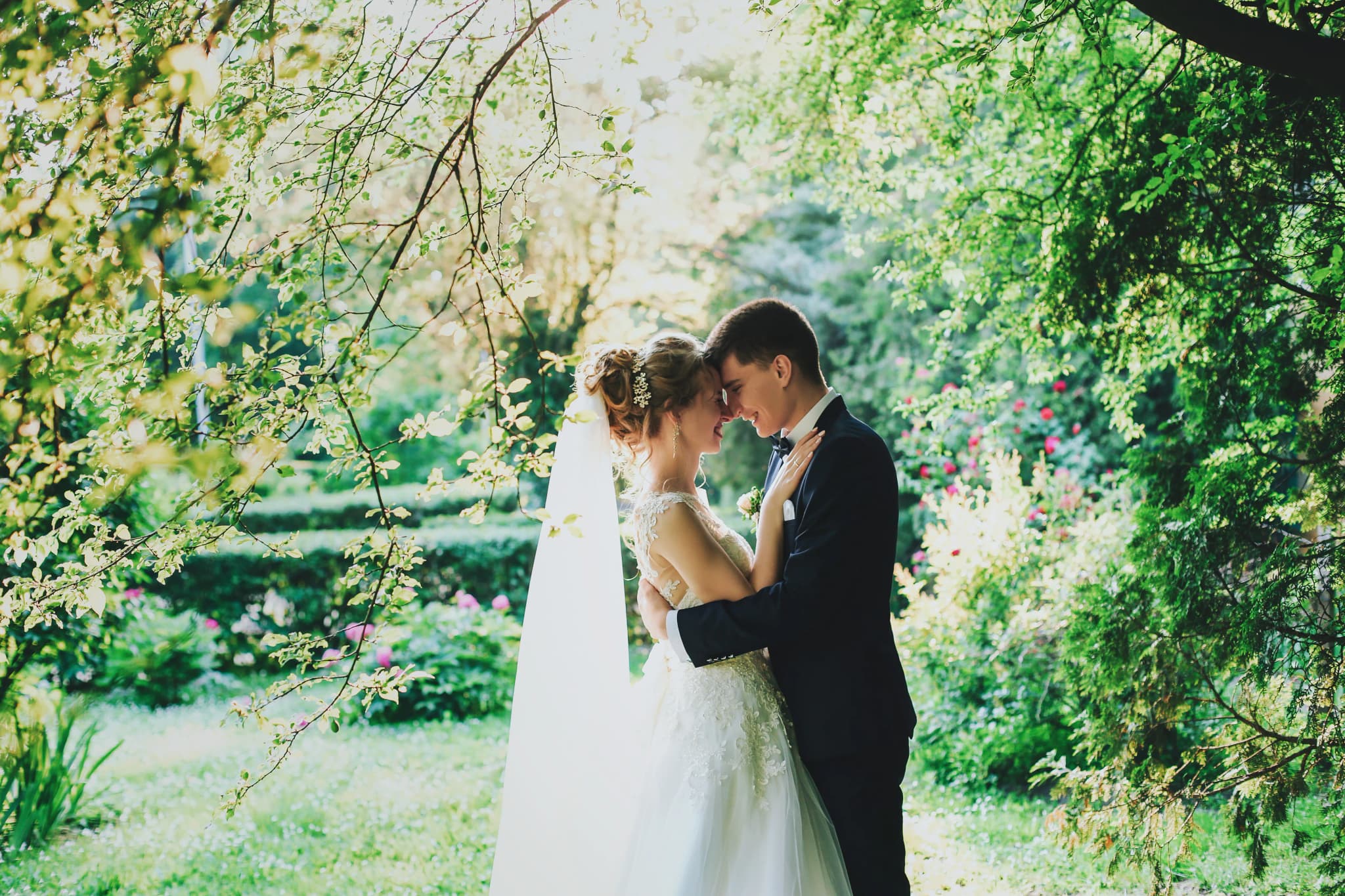
The second effect is on the quality of light itself. Mist scatters sunlight in every direction rather than letting it travel in a single hard beam, which means faces are lit softly and evenly with none of the harsh shadowing that direct sun produces, even at a low autumn angle. The sky effectively becomes one enormous diffuser. This is part of why misty portraits are so consistently flattering — the light wraps around a face rather than carving it up with shadow, and skin tones read smoothly without the need for reflectors or additional lighting equipment.
Mist is also wonderfully good at hiding the things you would rather were not in the frame. Car parks, portable toilet blocks, a neighbouring farm building, a distant road with traffic on it — all of these tend to vanish into the white when mist is thick enough, leaving only the essential elements of trees, fields, hedgerows, and the two of you. I have photographed couples at venues where the outlook is genuinely unremarkable on a clear day and utterly transformed on a misty one, simply because everything distracting has been quietly edited out by the weather itself.
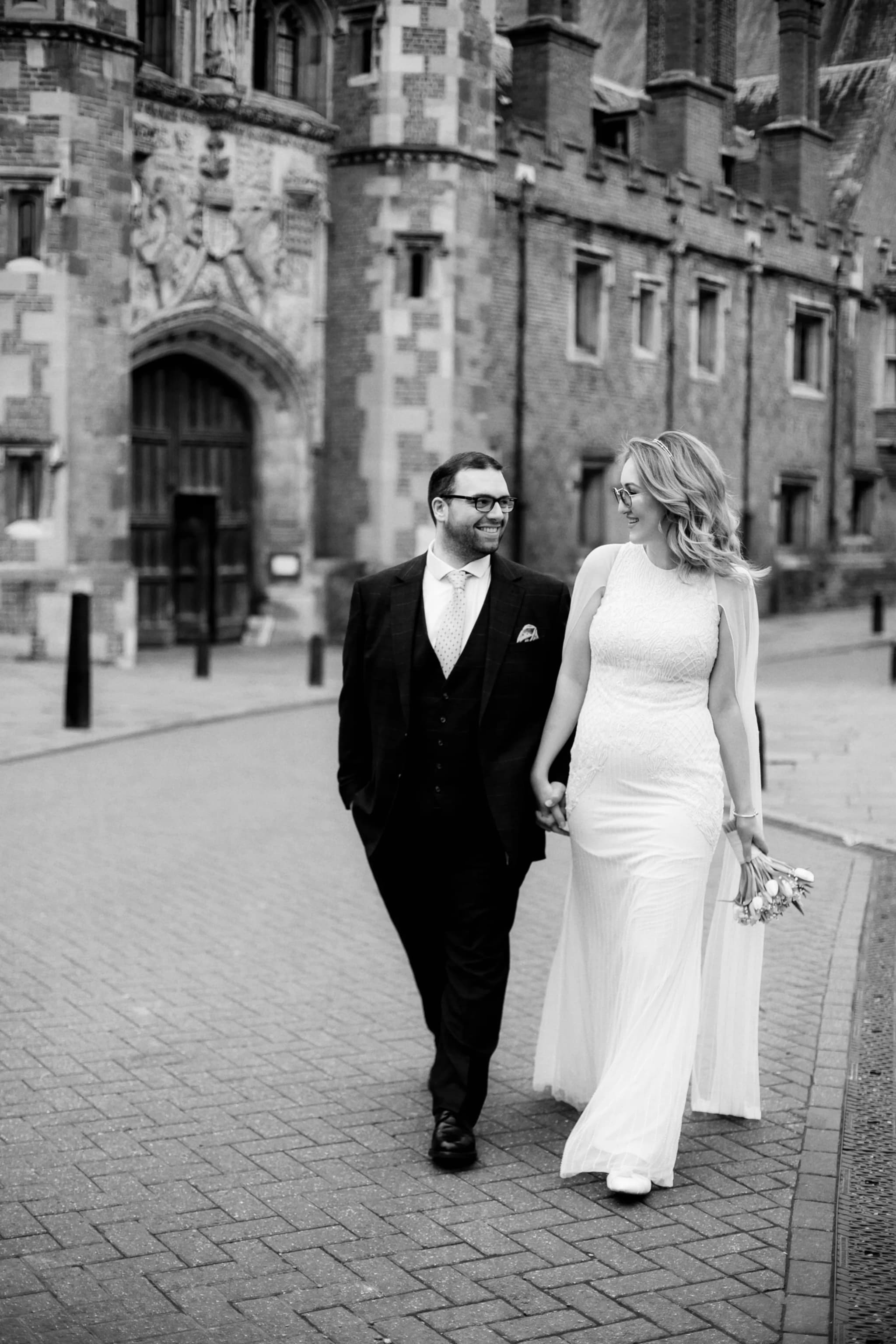
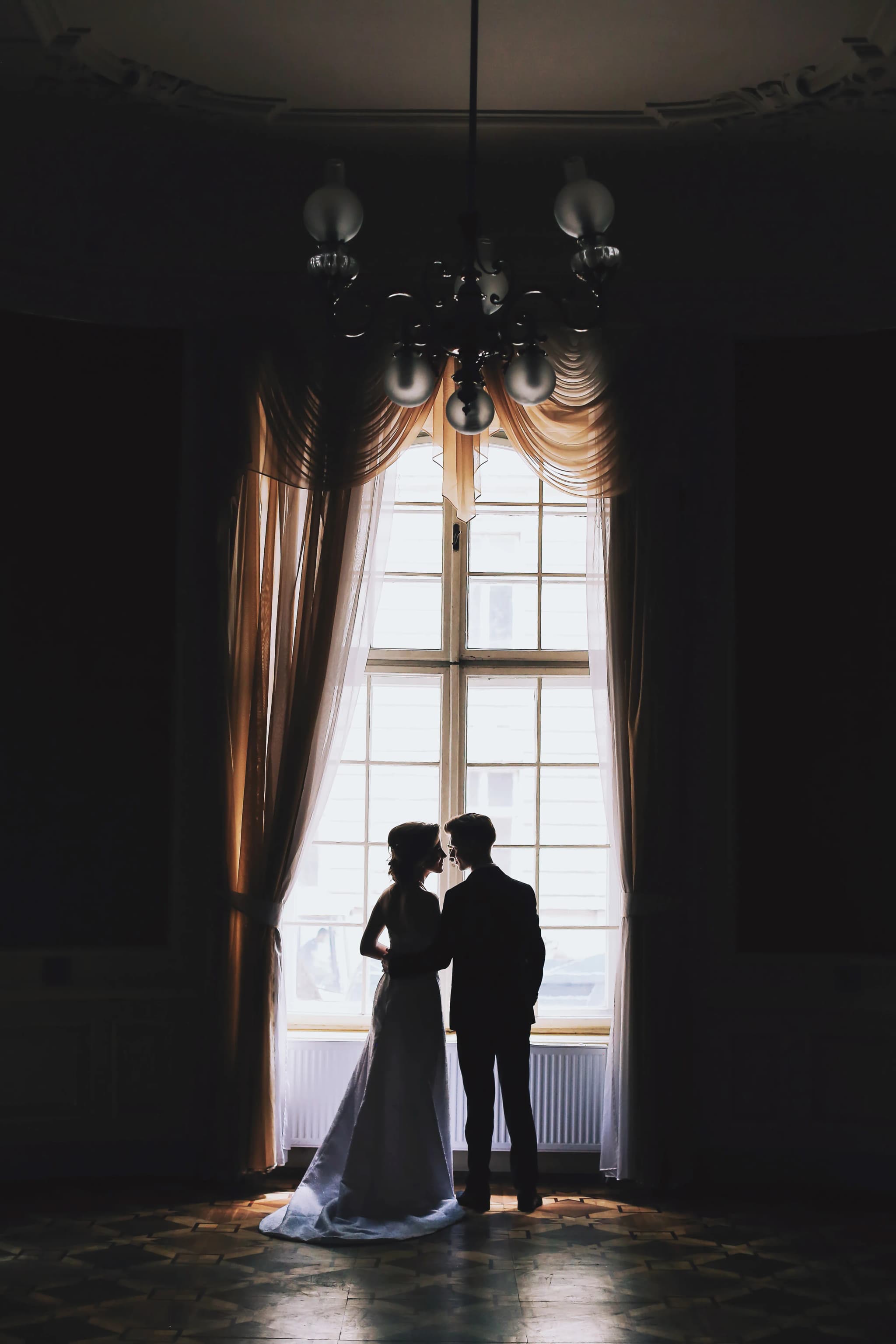
And then there is the emotional quality, which is harder to explain but unmistakable once you see it. There is something about mist photographs that captures transience — the sense that this exact moment, this exact light, will not last the morning and cannot be recreated on demand. That is, in a very direct way, the emotional truth of a wedding day itself: a specific, unrepeatable morning that will not come again in quite this form. Silhouettes work particularly well in these conditions too — a couple standing at a mist-veiled treeline, or walking hand in hand toward a field gateway with the white behind them, produces images that are simultaneously dramatic and quietly intimate.
Cambridgeshire and Wider UK Venues Where Mist Is Most Likely
Venues that sit in a river valley, back onto a lake or mere, or are surrounded by low-lying farmland are the ones most likely to see genuine morning mist through September and October. Around Cambridge, anywhere close to the Cam valley — the meadows near Grantchester, riverside venues along the Cam itself, and the low ground to the south and west of the city — can produce striking effects on a still, clear autumn night. The wider Fens to the north and east of Cambridgeshire are famously flat and famously prone to mist sitting for long stretches over the drained farmland, which can be spectacular around venues that back onto open fen countryside.
Further afield, venues in river valleys such as those along the Thames, the Ouse, or the Stour in Suffolk share the same conditions, as do many lowland Suffolk and Essex venues surrounded by farmland and hedgerow. Hill-top or elevated venues are a slightly different story: they rarely sit in mist themselves, but on the right morning they can offer a remarkable view down into a valley that has filled with mist below, with the couple standing on clear ground above it. I have photographed exactly this from a raised terrace with the whole landscape below reduced to a white sea — a completely different but equally beautiful use of the same weather.
If you are choosing a venue with autumn photographs specifically in mind, it is worth asking whether the grounds include any low-lying meadow, riverside path, or field edge a short walk from the getting-ready rooms. You do not need an entire misty landscape to get the benefit — even a modest stretch of damp lawn or a paddock beyond the car park can hold enough mist on the right morning to transform a set of portraits.
Planning Your Timeline Around the Mist
Because the mist window can close quickly, timing is the single most important practical consideration. In the days before an autumn wedding where mist is a realistic possibility, I watch the forecast closely — specifically overnight temperature drops, wind speed, and cloud cover — and I stay in contact with you or your wedding planner about what we might adjust. This sometimes means suggesting an earlier start to hair and makeup so there is a genuine window for a short outdoor session before the ceremony, while the mist is still doing its best work. Other times it means simply being ready to step outside for fifteen or twenty minutes during a natural gap in the day — between the ceremony and the wedding breakfast, for instance — if the mist has held longer than expected.
I never build a wedding day timeline that depends entirely on the mist showing up, because weather in England is exactly as reliable as its reputation suggests. Instead, I treat a misty morning as a bonus opportunity layered on top of a timeline that already works perfectly well without it. If the forecast points toward a strong chance of mist, we might build in a slightly earlier couple's session as a specific slot; if the morning turns out clear, that same slot still produces beautiful photographs, just with a different quality of light. Either way, nothing about your day depends on the weather cooperating — it simply becomes something wonderful if it does.
Planning an autumn wedding?
Misty morning photographs are one of the loveliest things an autumn wedding can offer, and a little forward planning around timing and location makes a real difference to whether we can use it well.
Talk through your autumn wedding timelineWhat to Wear and Prepare For on a Misty Morning
Misty autumn mornings are, almost without exception, cold ones — the same clear, still conditions that create the mist also mean there is no cloud cover holding any warmth in overnight. If you are planning an early outdoor session, warm layers that can come off easily are essential: a coat or wrap over the dress or suit right up until the moment the camera comes out, and something warm to put back on the instant we are done. Grooms in shirtsleeves and brides in sleeveless dresses can hold a smile for a few minutes in genuinely cold air, but comfort makes a visible difference to how relaxed and natural you look in the images, so do not be shy about layering up between shots.
Footwear matters too. Misty ground is, by definition, damp ground, and often dew-soaked grass or a slightly muddy field edge as well. Wellies or sturdy boots to walk to the spot in, with the wedding shoes carried and swapped in at the last moment, keep both the shoes and the mood in much better condition than trudging across a wet meadow in heels. A blanket or two in the car for a quick warm-up, and a flask of something hot for the wedding party waiting their turn, are the kind of small practical touches that make an early misty session feel like an adventure rather than an ordeal.
It is also worth accepting, gently, that mist cannot be guaranteed. I will always watch the conditions and flag a strong possibility where I see one, but nights that look perfect on paper sometimes produce nothing at all, and nights with a lower forecast probability occasionally deliver something extraordinary. Building the excitement around the wedding day itself, with misty photographs as a wonderful possible bonus rather than an expectation, keeps the morning stress-free regardless of what the weather actually does.
Misty autumn mornings are, in my experience, one of the true gifts of a UK wedding season — unplanned, unrepeatable, and capable of turning even a familiar landscape into something that looks like it belongs in a different world entirely. If your wedding is booked for September, October, or early November and you would like to talk through timings, venue grounds, or simply how we would approach the morning if the mist rolls in, get in touch and we can plan for it properly, well ahead of the day itself.

Yana Skakun
Photographer · England
Professional wedding, family and portrait photographer based in England. Passionate about capturing authentic emotions and timeless moments.
About Yana →misty autumn wedding photographyfoggy morning wedding photos UKautumn mist wedding photographer
Wedding Tips — Wedding Photography in Cambridge & England
Yana Skakun is a professional wedding photographer based in Cambridge, covering weddings across England — from intimate elopements to full-day ceremonies at country houses, barns, and city venues. Every couple receives a relaxed, documentary approach that captures the day as it truly unfolds. This guide — Misty Morning Autumn Wedding Photography: Ethereal & Unforgettable — is part of the photography journal: practical, experience-based advice drawn from real sessions across England. Whether you arrived searching for misty autumn wedding photography or foggy morning wedding photos uk, the same care and attention shapes every session Yana photographs.
Wedding Photography sessions are available year-round, with bookings open across Cambridge, Ely, Huntingdon, Peterborough, and further afield — East England, London, the Midlands, and beyond. If you have specific questions about autumn mist wedding photographer, mention it in your enquiry. Get in touch through the contact form above to check availability and discuss your session. Enquiries are welcomed from anywhere in the UK.
Frequently Asked Questions
How much does a wedding photographer cost in England?+
Wedding photography in England typically ranges from £1,500 to £4,000+ for a full day. Price depends on experience, coverage hours, and whether albums or engagement shoots are included. Most photographers charge between £2,000–£3,000 for 8–10 hours of coverage.
How early should you book a wedding photographer?+
For peak season (May–September), book 12–18 months in advance. For autumn and winter weddings, 9–12 months is usually sufficient. Popular photographers at popular venues fill up fast — as soon as you have a date and venue confirmed, start reaching out.
How many photos do you get from a wedding photographer?+
Most professional wedding photographers deliver 400–800 edited images for a full-day wedding. The exact number depends on coverage hours, how many guests there are, and the photographer's editing style. Quality matters more than quantity — a curated gallery of 500 images tells the story better than 1,500 unedited files.
Do you need a second photographer at your wedding?+
A second photographer is helpful if you want simultaneous coverage of getting-ready moments in different locations, multiple angles during the ceremony, or more candid coverage during the reception. It adds cost but significantly increases the variety and completeness of your gallery.
What is the difference between documentary and editorial wedding photography?+
Documentary (reportage) wedding photography captures moments as they happen — the photographer observes and doesn't intervene. Editorial photography involves deliberate direction: placing you in good light, shaping compositions, creating intentional portraits. Most photographers blend both styles throughout the day.
Continue Reading
Related Articles

Wedding Tips
Sustainable Eco-Friendly Wedding Guide — Planning a Green Celebration
15 min read · Read Article
Wedding Tips
Trash the Dress Session — Complete Planning and Photography Guide
14 min read · Read Article
Wedding Tips
Client Communication for Photographers — From Enquiry to Gallery Delivery
15 min read · Read Article
Get in Touch
Ready to Book Your Session?
Get in touch to discuss your vision — I'll reply within 24 hours.