Yana Skakun
National Trust Wedding Venues: Historic Properties for Your Big Day
By Yana Skakun·20 March 2026·6 min read
The National Trust cares for some of England's most extraordinary houses, gardens, and landscapes — and a number of them are licensed to host weddings. Choosing a National Trust property means choosing a setting of genuine historical and cultural significance, maintained to conservation standards that commercial venues simply cannot match. For couples who want their wedding photographs to feel rooted in something enduring and authentically British, these venues offer a quality of backdrop that is very difficult to replicate anywhere else.
Why National Trust Properties Make Such Compelling Wedding Venues
When I photograph a wedding at a National Trust property, what strikes me every time is the layered quality of the light and the texture. These are buildings and gardens that have accumulated centuries of care. Original plasterwork, oak-panelled rooms, stone floors worn smooth by generations of footsteps — the craftsmanship is visible in every detail, and it photographs beautifully. There is nothing applied or artificial about it; the patina is real.
For portrait work, the variety of settings within a single property is remarkable. Many National Trust houses offer a formal drawing room, a walled kitchen garden, an orangery, a parkland avenue, and a lake — all within walking distance of one another. That breadth of environment means that a two-hour portrait session can move through genuinely different visual registers without a couple ever needing to get in a car. I always plan a rough sequence with the couple in advance, identifying three or four distinct locations within the property so that the photographs tell a richer story of the day.
The horticultural standard at National Trust gardens is also worth singling out. Properties like Sissinghurst Castle Garden in Kent, Hidcote Manor Garden in the Cotswolds, and Bodnant Garden in North Wales represent some of the finest planting in the country. The structure, the seasonal colour, and the sheer maturity of the planting create portrait backdrops that no modern venue garden can compete with. If a spring or early-summer wedding date aligns with peak bloom, the results can be extraordinary.
Licensed National Trust Venues: What to Know Before You Book
Not every National Trust property holds a civil marriage licence, and those that do vary considerably in capacity, layout, and what they permit on the day. Waddesdon Manor in Buckinghamshire — the Rothschild chateau set in formal gardens — is one of the most celebrated, offering grand interior rooms and an immaculate parterre garden. Ickworth House in Suffolk combines a grand Rotunda with sweeping parkland and works well for couples who want scale. Knightshayes in Devon, Anglesey Abbey in Cambridgeshire, and Cliveden House in Berkshire are other properties that have at various times offered wedding ceremonies or exclusive hire arrangements.
Because National Trust venues prioritise conservation, the logistics on the day can differ from a conventional wedding hotel. Some rooms have restrictions on the use of tripods, flash, or moving furniture. As a photographer I liaise with the venue coordinator well in advance to understand any access constraints, and I plan lighting accordingly. In practice, the interiors at these properties are usually well lit by tall windows and the natural light is beautiful — so working with available light rather than supplementary flash is both technically sound and aesthetically preferable.
Availability at licensed National Trust properties tends to be limited. Many hold only a small number of wedding days per year to protect the visitor experience and the fabric of the building. If you have a specific property in mind, I would encourage you to approach them as early as possible — eighteen months to two years ahead is not unusual for the most sought-after dates. The National Trust website maintains an up-to-date directory of wedding-licensed properties, which is the best starting point for availability enquiries.
Portrait Sessions in National Trust Landscapes: Making the Most of the Setting
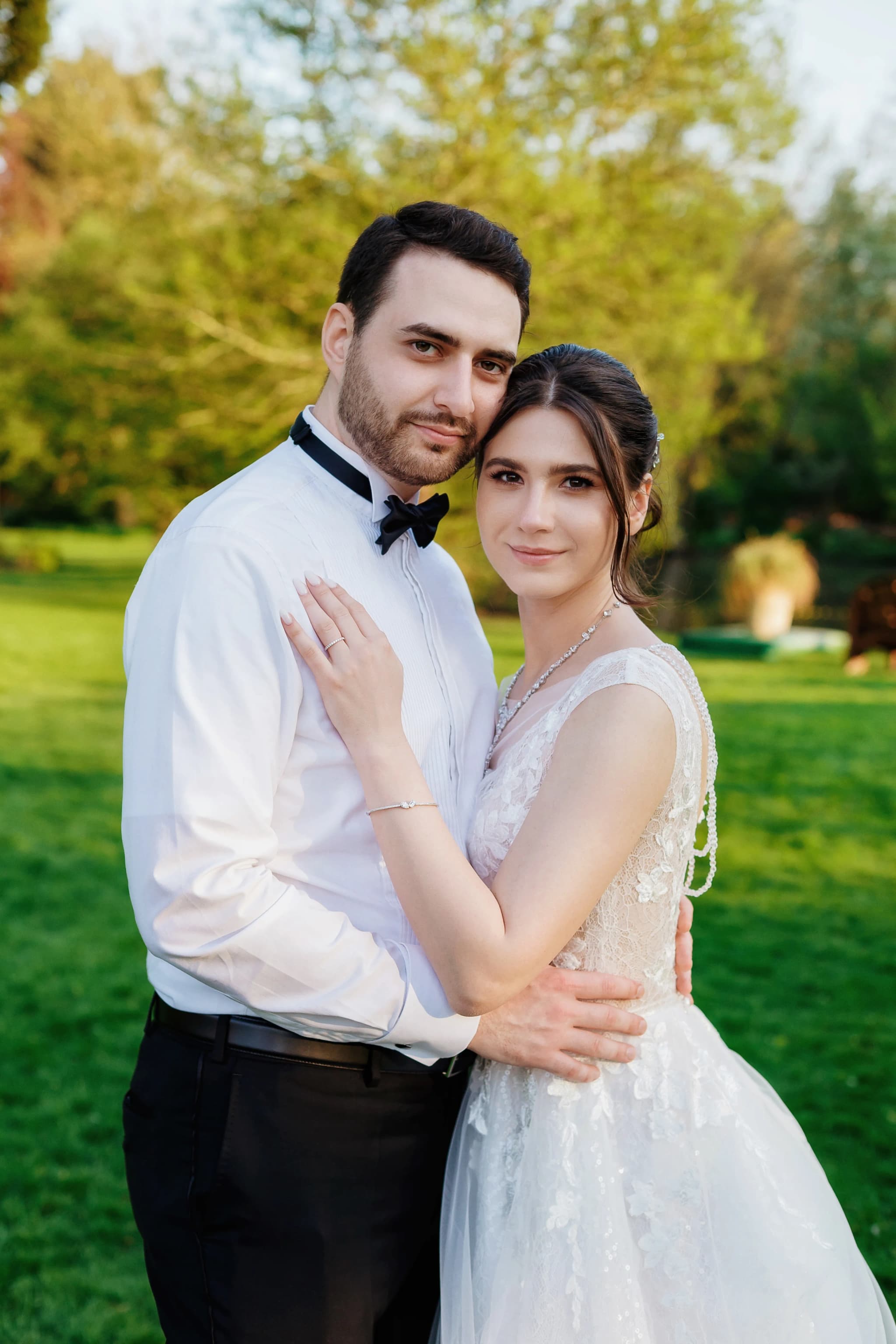
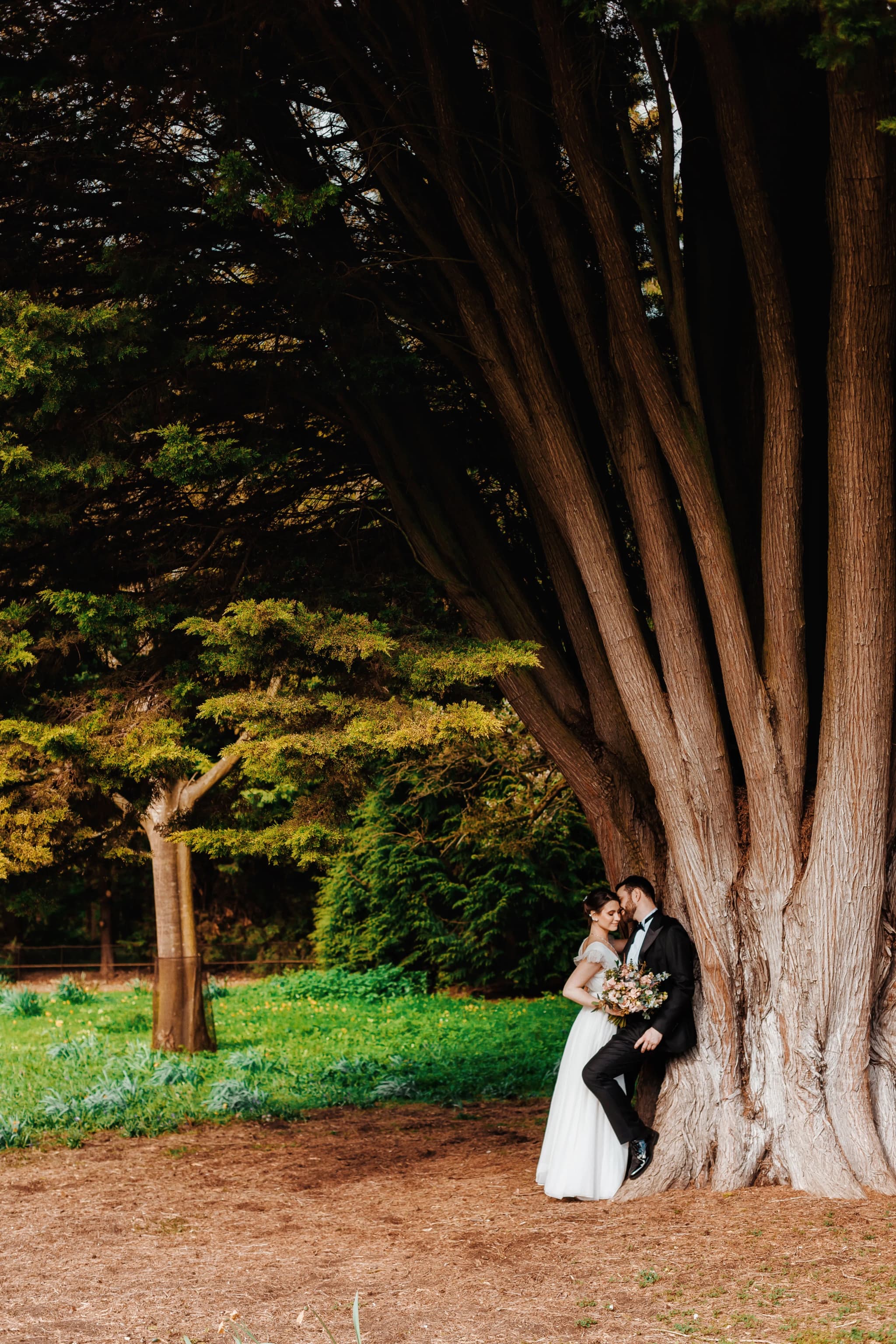
Beyond the ceremony room, it is the wider landscape of a National Trust property that offers the greatest photographic opportunities. Parkland with ancient trees, ha-has, lakes and reflecting ponds, kitchen gardens with espalier fruit, topiary walks and yew hedges — each of these elements creates a different visual quality. My approach is to read the landscape on the morning of the wedding and identify where the light will be working best at the time we plan to take the couple away for their portraits.
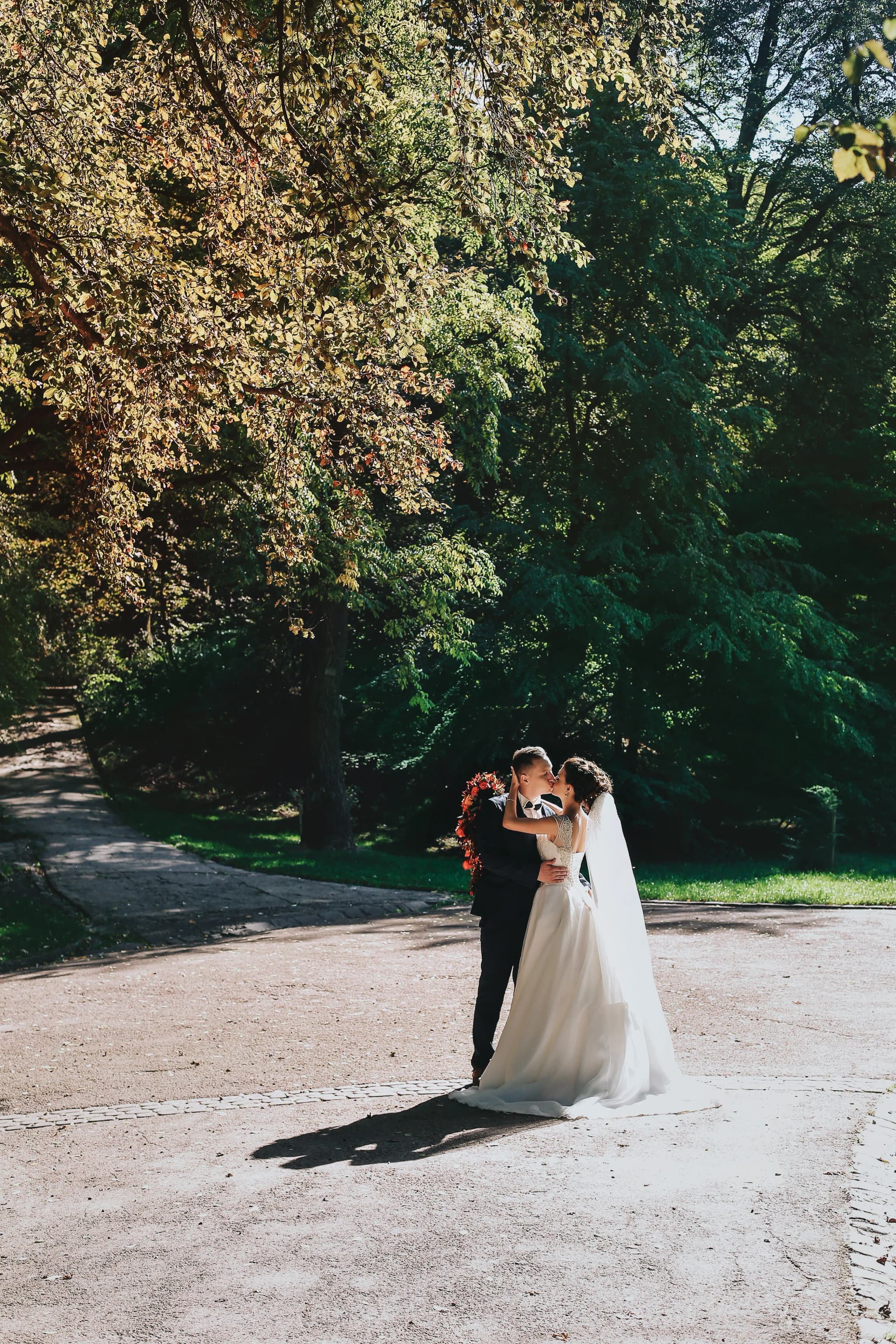
For late-afternoon or golden-hour sessions — which I always recommend at National Trust venues when logistics allow — the combination of warm directional light and mature landscaping is particularly effective. Long shadows across a grass avenue, light filtering through the canopy of an old oak, the reflection of an historic facade in still water: these are the kinds of images that are simply not possible to manufacture at a purpose-built wedding venue. The setting does a large part of the work; my job is to position the couple within it at the right moment and to move quickly as the light evolves.
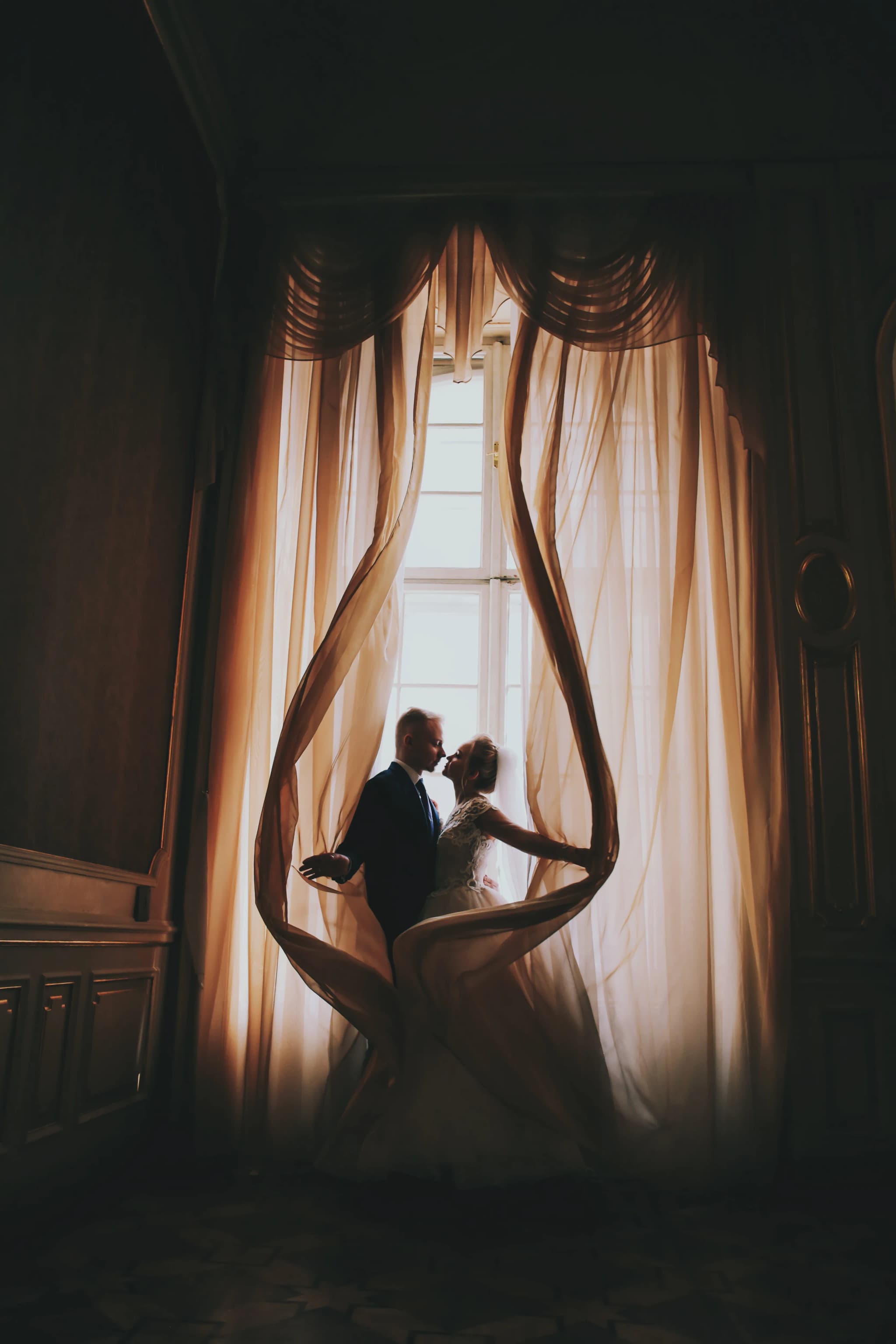
I also pay close attention to architectural details — ironwork, keystones, doorways, arched windows — that provide beautifully framed portrait locations without requiring any equipment at all. Some of my favourite portraits from National Trust weddings have been made in a doorway or beneath an arch where the ambient light from the garden creates a natural fill and the stonework frames the couple perfectly.
Practical Preparation: What Couples Should Arrange in Advance
A venue visit before the wedding day is strongly advisable at a National Trust property, and ideally this visit should include the photographer. Properties that are open to the public can be visited on a standard member or entry ticket, which makes reconnaissance relatively straightforward. I use a venue visit to identify portrait locations, check access routes between areas of the property, note any conservation restrictions, and establish where the light falls at different times of day. Arriving on the wedding day knowing exactly where I am going and what I am looking for makes a measurable difference to the quality of the work.
It is also worth discussing with the venue coordinator whether any areas of the property will be closed to the public on the wedding day, and whether any seasonal maintenance work — tree surgery, restoration scaffolding, or garden clearance — is scheduled that might affect the appearance of a key location. National Trust properties are working conservation sites, and occasional works are simply part of that. Knowing in advance allows us to plan around any restrictions rather than encounter them as a surprise.
Couples should also think about timing the portrait session to take advantage of the property at its best. A walled rose garden at Mottisfont in Hampshire is at its height in late June; the parkland at Petworth in West Sussex in autumn has a quality of light that is unmatched at any other season. If you have flexibility in your date and the specific character of the photography matters to you, building the date choice around the seasonal peak of the venue is worth considering.
Planning a National Trust wedding?
I have photographed weddings at historic houses and heritage gardens across England and understand how to work within conservation environments to make the most of extraordinary settings. If you are considering a National Trust property for your ceremony or reception, I would love to hear about your plans. Get in touch to discuss your wedding or explore my wedding photography work.
The Storytelling Value of Historic Settings
One quality that distinguishes National Trust wedding photography from images made at modern venues is the sense of narrative weight that historic architecture brings. When a couple stands beneath a painted ceiling that has been there since the seventeenth century, or walks through a kitchen garden that has been cultivated for three hundred years, the photographs carry a particular kind of resonance. There is a feeling of being part of an ongoing story rather than simply consuming a product — and that feeling translates into imagery with real emotional depth.
In my experience, couples who choose National Trust venues tend to share a genuine connection to that history and landscape. They are not simply looking for a beautiful backdrop; they are drawn to the sense of place, to the conservation values, and to the idea that their wedding contributes in a small way to the preservation of something important. That intentionality shows in the photographs. The most compelling wedding images are always the ones where the setting and the couple feel genuinely connected — and at a National Trust property, that connection is almost always authentic.
Finding the Right National Trust Venue for Your Wedding
England's National Trust portfolio spans everything from intimate manor houses to vast country estates, from coastal properties to urban historic buildings. The right choice depends on guest numbers, the atmosphere you want, and the visual character that matters most to you photographically. A couple drawn to formal grandeur might look at Waddesdon Manor or Ickworth House; a couple who want a wilder, more pastoral quality might consider a property with significant parkland such as Petworth or Lyme Park in Cheshire.
Geography also matters. If you are marrying in the East of England and want a manageable distance for guests, Anglesey Abbey in Cambridgeshire or Blickling Estate in Norfolk offer strong options. For couples in the South East, Chartwell, Knole, or Scotney Castle in Kent bring very different architectural characters to choose between. The best approach is to visit several properties in person before committing — photographs on a website give only a partial sense of what a place actually feels like, and the atmosphere of a building and its grounds is something that has to be experienced directly.
Whichever property you choose, the combination of genuine heritage, outstanding gardens, and the quiet pride of having married somewhere of lasting significance makes a National Trust wedding one of the most photogenically rewarding choices available in England. I would be delighted to be part of that day.


Yana Skakun
Photographer · England
Professional wedding, family and portrait photographer based in England. Passionate about capturing authentic emotions and timeless moments.
About Yana →National Trust wedding venuesNT wedding photographer Englandhistoric property wedding photography
Wedding Tips — Wedding Photography in Cambridge & England
Yana Skakun is a professional wedding photographer based in Cambridge, covering weddings across England — from intimate elopements to full-day ceremonies at country houses, barns, and city venues. Every couple receives a relaxed, documentary approach that captures the day as it truly unfolds. This guide — National Trust Wedding Venues: Historic Properties for Your Big Day — is part of the photography journal: practical, experience-based advice drawn from real sessions across England. Whether you arrived searching for national trust wedding venues or nt wedding photographer england, the same care and attention shapes every session Yana photographs.
Wedding Photography sessions are available year-round, with bookings open across Cambridge, Ely, Huntingdon, Peterborough, and further afield — East England, London, the Midlands, and beyond. If you have specific questions about historic property wedding photography, mention it in your enquiry. Get in touch through the contact form above to check availability and discuss your session. Enquiries are welcomed from anywhere in the UK.
Frequently Asked Questions
How much does a wedding photographer cost in England?+
Wedding photography in England typically ranges from £1,500 to £4,000+ for a full day. Price depends on experience, coverage hours, and whether albums or engagement shoots are included. Most photographers charge between £2,000–£3,000 for 8–10 hours of coverage.
How early should you book a wedding photographer?+
For peak season (May–September), book 12–18 months in advance. For autumn and winter weddings, 9–12 months is usually sufficient. Popular photographers at popular venues fill up fast — as soon as you have a date and venue confirmed, start reaching out.
How many photos do you get from a wedding photographer?+
Most professional wedding photographers deliver 400–800 edited images for a full-day wedding. The exact number depends on coverage hours, how many guests there are, and the photographer's editing style. Quality matters more than quantity — a curated gallery of 500 images tells the story better than 1,500 unedited files.
Do you need a second photographer at your wedding?+
A second photographer is helpful if you want simultaneous coverage of getting-ready moments in different locations, multiple angles during the ceremony, or more candid coverage during the reception. It adds cost but significantly increases the variety and completeness of your gallery.
What is the difference between documentary and editorial wedding photography?+
Documentary (reportage) wedding photography captures moments as they happen — the photographer observes and doesn't intervene. Editorial photography involves deliberate direction: placing you in good light, shaping compositions, creating intentional portraits. Most photographers blend both styles throughout the day.
Continue Reading
Related Articles

Wedding Tips
Sustainable Eco-Friendly Wedding Guide — Planning a Green Celebration
15 min read · Read Article
Wedding Tips
Trash the Dress Session — Complete Planning and Photography Guide
14 min read · Read Article
Wedding Tips
Client Communication for Photographers — From Enquiry to Gallery Delivery
15 min read · Read Article
Get in Touch
Ready to Book Your Session?
Get in touch to discuss your vision — I'll reply within 24 hours.