Yana Skakun
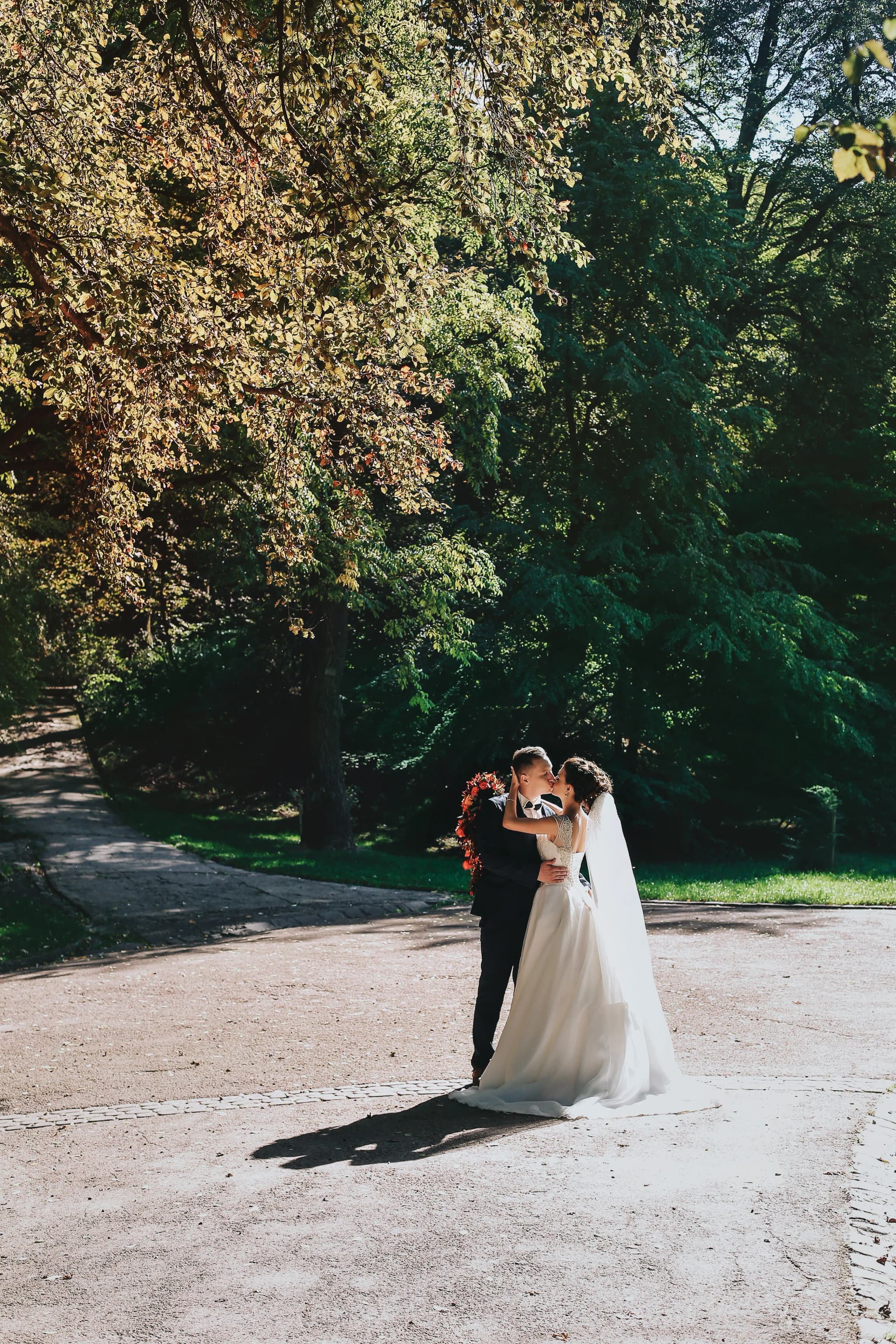
New Year's Eve Wedding Photography: Champagne Midnight Countdown & Fireworks
By Yana Skakun·18 March 2026·6 min read
A New Year's Eve wedding is one of the boldest and most celebratory choices a couple can make. You are not just getting married — you are turning the most anticipated night of the year into yours, inviting your people to share the midnight countdown with you, and beginning married life at the exact moment a new year begins. As a photographer, I find these weddings genuinely different to shoot from any other date on the calendar. There is a build of energy through the evening that culminates in a single, unrepeatable moment, and everyone in the room feels it happening in real time. Planning the photography around that arc — rather than around a conventional wedding-day structure — is what makes the images from a New Year's Eve wedding feel so distinct from a June or September wedding album.
Why Couples Choose a New Year's Eve Wedding
Most couples who marry on the thirty-first of December are drawn to the symbolism as much as the party. Starting a marriage in the final hour of one year and the first hour of the next has an obvious poetry to it, and I have photographed couples who chose the date specifically because it gave their anniversary a permanent, unmissable place on the calendar — one that friends and family were already gathering to celebrate anyway. There is a practical side too. Guests who might otherwise be difficult to pin down for a wedding are often free over the festive period, and a New Year's Eve wedding effectively folds two celebrations into one long, memorable evening.
There is also the simple fact that no other date on the calendar comes with a built-in countdown, a guaranteed moment of collective anticipation, and a natural climax at midnight. Photographically, that is a gift. Most weddings build towards a first dance or a speech as their emotional peak. A New Year's Eve wedding builds towards a moment the entire room is watching the clock for, together, which tends to produce some of the most unguarded and genuinely joyful expressions I capture all year.
Designing the Timeline Around Midnight
New Year's Eve weddings run on a different clock to a typical Saturday wedding, and the timeline needs to be built backwards from midnight rather than forwards from the ceremony. In Cambridgeshire, where December daylight is gone by mid-afternoon, I generally recommend an early ceremony — often between one and three in the afternoon — so there is still usable natural light for the couple portraits and family groups immediately afterwards. That leaves a long, unhurried evening for the wedding breakfast, speeches, and first dance, with plenty of room before the pace changes as midnight approaches.
The hour or so before midnight has its own rhythm. Dancing tends to intensify, drinks flow more freely, and there is a palpable sense of the room turning its attention towards the countdown. I like to be positioned well before the final minutes begin, because the seconds immediately before midnight move fast and there is no second take on a first kiss of the new year. After midnight, many couples keep the party going for another hour or two, and those images — guests still buzzing from the countdown, the couple visibly relaxed now that the big moment has passed — are often some of the warmest of the whole day.
A rough shape that has worked well for couples I have photographed: ceremony in early afternoon, wedding breakfast and speeches through the mid-afternoon and early evening, a natural lull for guests to freshen up before the evening reception, dancing building from around nine or ten, the countdown and midnight moment itself, and then coverage continuing for a further hour or so into the new year. Every couple's evening looks slightly different, and I always talk through the specific shape of the day at the planning stage so the timeline matches how you actually want the evening to feel.
Working With December Light in Cambridgeshire
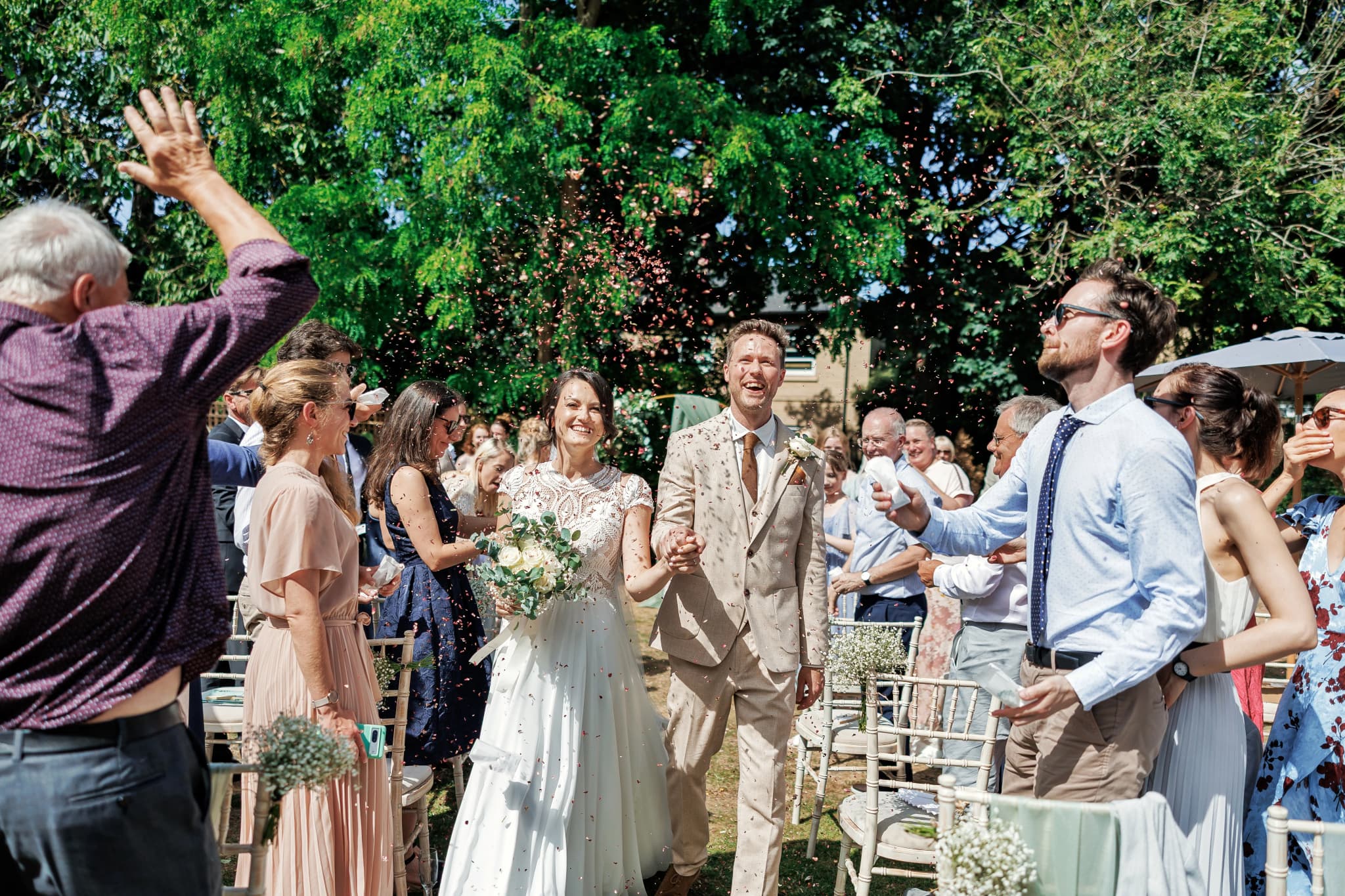
Winter light in Cambridgeshire has its own character, and it rewards a photographer who plans around it rather than fighting it. The sun sits low in the sky even at midday in late December, which means the window for outdoor portraits is short but the light within that window is often beautifully soft and directional — nothing like the harsh overhead sun of a summer wedding. I aim to use the hour or so either side of the ceremony for any outdoor images, whether that is confetti shots on the steps of a college or country house, or a short walk with the couple to a quiet corner of the grounds while family and friends are gathering for drinks.
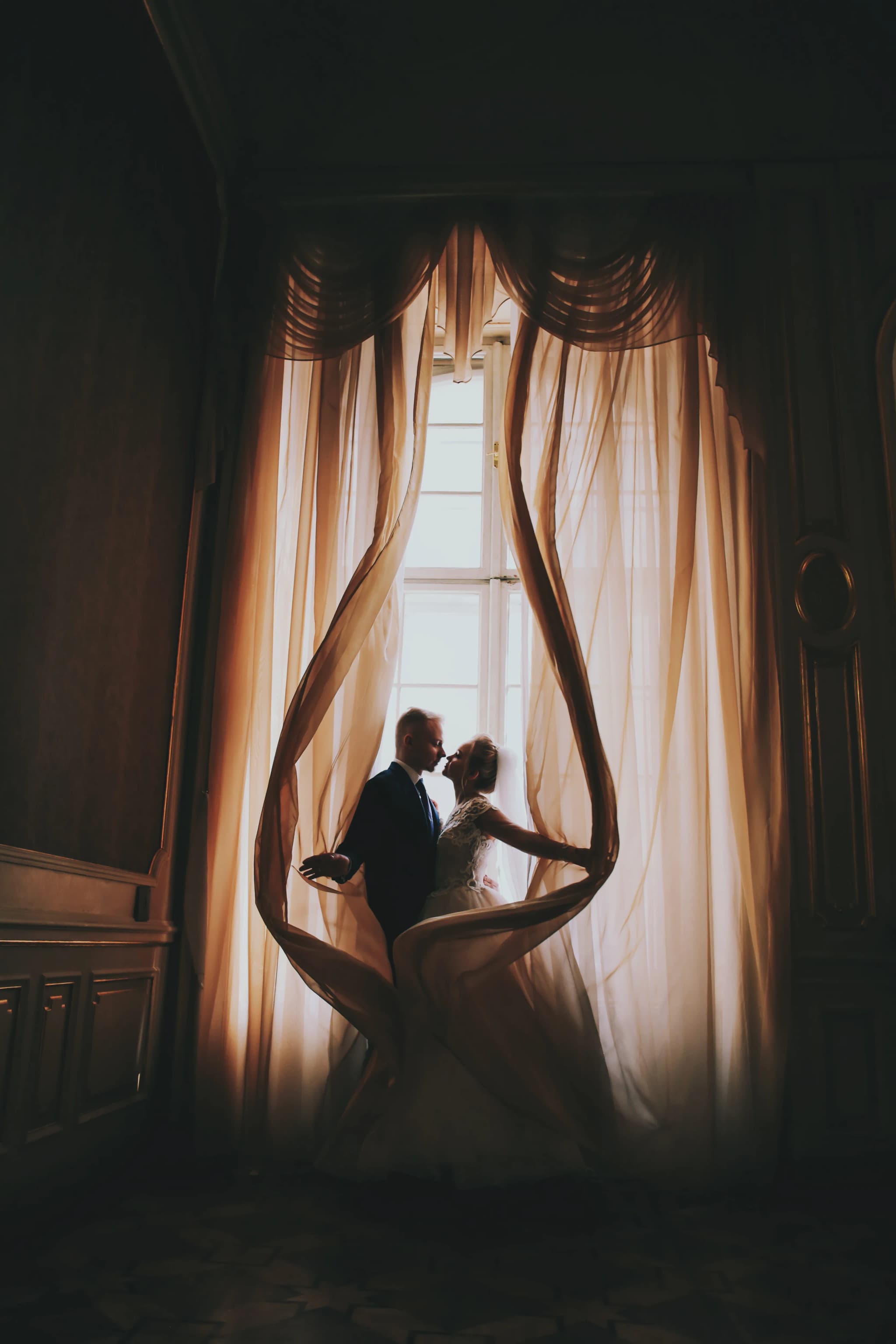
Once the light has gone, usually by mid-afternoon in December, the photography moves indoors and becomes almost entirely about the ambient light of the venue itself — candlelight on tables, string lights, the warm glow of a fireplace, uplighting on a dance floor. This is where New Year's Eve weddings genuinely come into their own visually. The low light and warm interior tones suit the aesthetic of the evening perfectly: champagne catching candlelight, sequins and metallics picking up highlights from fairy lights, and a general richness to the images that a bright summer wedding simply cannot replicate.
I also plan for the possibility of poor December weather. Rain, fog, or an early winter sunset are all realistic possibilities, and rather than treating them as a problem to work around, I try to use them. A misty courtyard or a rain-slicked pavement reflecting the lights of a venue can make for some genuinely striking images, provided everyone is dressed warmly enough to be comfortable outside for the few minutes it takes.
Capturing the Countdown and the Midnight Kiss
The final minute before midnight is the single moment in the entire day that cannot be recreated, so I treat it with the same seriousness as the ceremony vows themselves. In the run-up, I try to capture the room as a whole — guests gathering, glasses being filled, the visible anticipation on people's faces — alongside close attention on the two of you. As the countdown itself begins, I position myself to get both the couple and enough of the surrounding room to convey the scale of the moment, because part of what makes a New Year's Eve wedding photograph so powerful is the sense of an entire room sharing it with you.
The kiss at midnight is inevitably the single most requested image from a New Year's Eve wedding, and getting it right means having settings and positioning sorted well in advance, with no scope for fumbling in the final seconds. I also make a point of capturing the moments immediately either side of the kiss — the countdown itself, the cheer that follows, the first embrace from parents or close friends — because those surrounding frames often end up meaning as much to couples as the kiss photograph itself.
Fireworks and Sparklers: What Actually Works
Many couples ask about fireworks, whether that means a private display arranged through the venue or simply stepping outside to catch the ambient fireworks that go up across the local area at midnight. Both can be photographed successfully, but they need different handling to a typical indoor reception shot. Fireworks require a slower shutter speed and a stable position, which is straightforward with a private display timed to a known moment, and more a matter of instinct and quick reaction with ambient displays happening unpredictably in the distance.
Sparklers are the more reliable option if you want that celebratory, glowing-light aesthetic without the logistics of arranging a fireworks display, and they work particularly well as a send-off later in the evening rather than exactly at midnight, when hands are often full of champagne glasses. If sparklers are something you would like included, I plan the timing and positioning with you in advance — ideally somewhere with a dark enough background that the light trails read clearly, and with enough space that the group is not standing in a crowd.
Whatever combination of fireworks, sparklers, or simply the indoor countdown you choose, I would always rather talk it through at the planning stage than improvise on the night. December weather and venue restrictions on fireworks can both affect what is realistic, and knowing the plan in advance means I can be in exactly the right position when it matters rather than reacting after the fact.
Venues Around Cambridgeshire for a Winter Wedding
Cambridgeshire has a strong run of venues that suit a New Year's Eve wedding particularly well, largely because they combine handsome interiors with the kind of warm, atmospheric lighting that a winter evening celebration benefits from. College settings in Cambridge itself — with their candlelit halls, dark wood panelling, and grand fireplaces — lend themselves naturally to the aesthetic of a New Year's Eve celebration. Country house hotels out towards Ely, Newmarket, and the surrounding villages offer a similar warmth, often with the additional advantage of extensive grounds for that short window of daylight portraits, and function spaces designed with an evening reception very much in mind.
Barn and rural venues across the county can also work beautifully for a winter wedding, provided the heating and lighting are handled well — exposed beams strung with fairy lights and a well-lit dance floor create exactly the kind of glowing, celebratory backdrop that suits midnight photography. Whatever venue you have chosen, I always visit or research it in advance of a New Year's Eve wedding specifically, because the lighting plan for a winter evening reception needs more consideration than a bright summer marquee wedding, and I want to know exactly where the best available light will be when midnight arrives.
Marrying on New Year's Eve?
It is one of the most spectacular and demanding wedding days to photograph, and dates around the year's end are naturally limited. If you are planning a New Year's Eve wedding anywhere in Cambridgeshire or the wider UK, I would love to hear about your plans.
Check availability for your dateA New Year's Eve wedding asks a little more of the planning than a conventional wedding day — a timeline built around a fixed and unmoveable midnight moment, a shorter window of natural light, and a mood that shifts noticeably as the evening builds towards its climax. But that extra planning is exactly what makes the resulting photographs so distinctive. There is a warmth, an energy, and a genuine sense of occasion running through a New Year's Eve wedding album that is very hard to find on any other date in the calendar, and it is one of my favourite kinds of wedding to photograph precisely because of that. If you are considering marrying as one year turns into the next, get in touch and let's talk through how the evening could look.

Yana Skakun
Photographer · England
Professional wedding, family and portrait photographer based in England. Passionate about capturing authentic emotions and timeless moments.
About Yana →New Year eve wedding UKNYE wedding photographymidnight countdown wedding photographer
Wedding Tips — Wedding Photography in Cambridge & England
Yana Skakun is a professional wedding photographer based in Cambridge, covering weddings across England — from intimate elopements to full-day ceremonies at country houses, barns, and city venues. Every couple receives a relaxed, documentary approach that captures the day as it truly unfolds. This guide — New Year's Eve Wedding Photography: Champagne Midnight Countdown & Fireworks — is part of the photography journal: practical, experience-based advice drawn from real sessions across England. Whether you arrived searching for new year eve wedding uk or nye wedding photography, the same care and attention shapes every session Yana photographs.
Wedding Photography sessions are available year-round, with bookings open across Cambridge, Ely, Huntingdon, Peterborough, and further afield — East England, London, the Midlands, and beyond. If you have specific questions about midnight countdown wedding photographer, mention it in your enquiry. Get in touch through the contact form above to check availability and discuss your session. Enquiries are welcomed from anywhere in the UK.
Frequently Asked Questions
How much does a wedding photographer cost in England?+
Wedding photography in England typically ranges from £1,500 to £4,000+ for a full day. Price depends on experience, coverage hours, and whether albums or engagement shoots are included. Most photographers charge between £2,000–£3,000 for 8–10 hours of coverage.
How early should you book a wedding photographer?+
For peak season (May–September), book 12–18 months in advance. For autumn and winter weddings, 9–12 months is usually sufficient. Popular photographers at popular venues fill up fast — as soon as you have a date and venue confirmed, start reaching out.
How many photos do you get from a wedding photographer?+
Most professional wedding photographers deliver 400–800 edited images for a full-day wedding. The exact number depends on coverage hours, how many guests there are, and the photographer's editing style. Quality matters more than quantity — a curated gallery of 500 images tells the story better than 1,500 unedited files.
Do you need a second photographer at your wedding?+
A second photographer is helpful if you want simultaneous coverage of getting-ready moments in different locations, multiple angles during the ceremony, or more candid coverage during the reception. It adds cost but significantly increases the variety and completeness of your gallery.
What is the difference between documentary and editorial wedding photography?+
Documentary (reportage) wedding photography captures moments as they happen — the photographer observes and doesn't intervene. Editorial photography involves deliberate direction: placing you in good light, shaping compositions, creating intentional portraits. Most photographers blend both styles throughout the day.
Continue Reading
Related Articles

Wedding Tips
Sustainable Eco-Friendly Wedding Guide — Planning a Green Celebration
15 min read · Read Article
Wedding Tips
Trash the Dress Session — Complete Planning and Photography Guide
14 min read · Read Article
Wedding Tips
Client Communication for Photographers — From Enquiry to Gallery Delivery
15 min read · Read Article
Get in Touch
Ready to Book Your Session?
Get in touch to discuss your vision — I'll reply within 24 hours.