Yana Skakun

Why Not Having a Toastmaster is the Biggest Mistake for Large Weddings
By Yana Skakun·10 June 2026·5 min read
After photographing weddings across Cambridgeshire and beyond, I can tell you with certainty that the single most common reason beautiful moments go unrecorded is not bad weather, not a nervous couple, and not even poor lighting — it's an unmanaged timeline. And the most reliable way to destroy a wedding timeline is to skip the toastmaster. For large weddings of 80 guests or more, a toastmaster is not a luxury add-on; it is the structural backbone that makes everything — including your photographs — possible.
What a Toastmaster Actually Does on a Wedding Day
Many couples picture a toastmaster as someone in a red coat who announces dinner and says "pray be upstanding." That's the ceremonial surface. Underneath, a good toastmaster is a professional crowd controller, a human logistics engine, and — crucially for me as a photographer — a schedule keeper who stops the entire day from drifting sideways by the third hour.
At a large UK wedding, guests arrive with different relationships to the couple, different social circles, and different levels of willingness to be where they are supposed to be. Without someone empowered to herd people politely and authoritatively, the couple ends up doing it themselves. I have watched brides spend forty-five minutes of their drinks reception locating a grandmother who wandered to the car park. I have watched grooms miss the golden-hour window entirely because they were negotiating seating disputes. None of that happens when a toastmaster is in charge.
A toastmaster liaises directly with the venue coordinator, the catering team, the band or DJ, and with me. They are the single communication hub. When I need the couple at a specific spot because the light is perfect for the next twelve minutes, I tell the toastmaster and it happens — rather than me chasing through a crowd of 120 people with a camera bag on my shoulder.
How a Missing Toastmaster Directly Damages Your Wedding Photos
Photography is a time-based craft. Every shot I plan — the confetti exit, the first dance entrance, the family group portraits, the couple portraits at golden hour — depends on people being in the right place within a narrow window. When that window closes, it does not reopen. Here is exactly what happens to the photographs when there is no one managing the day:
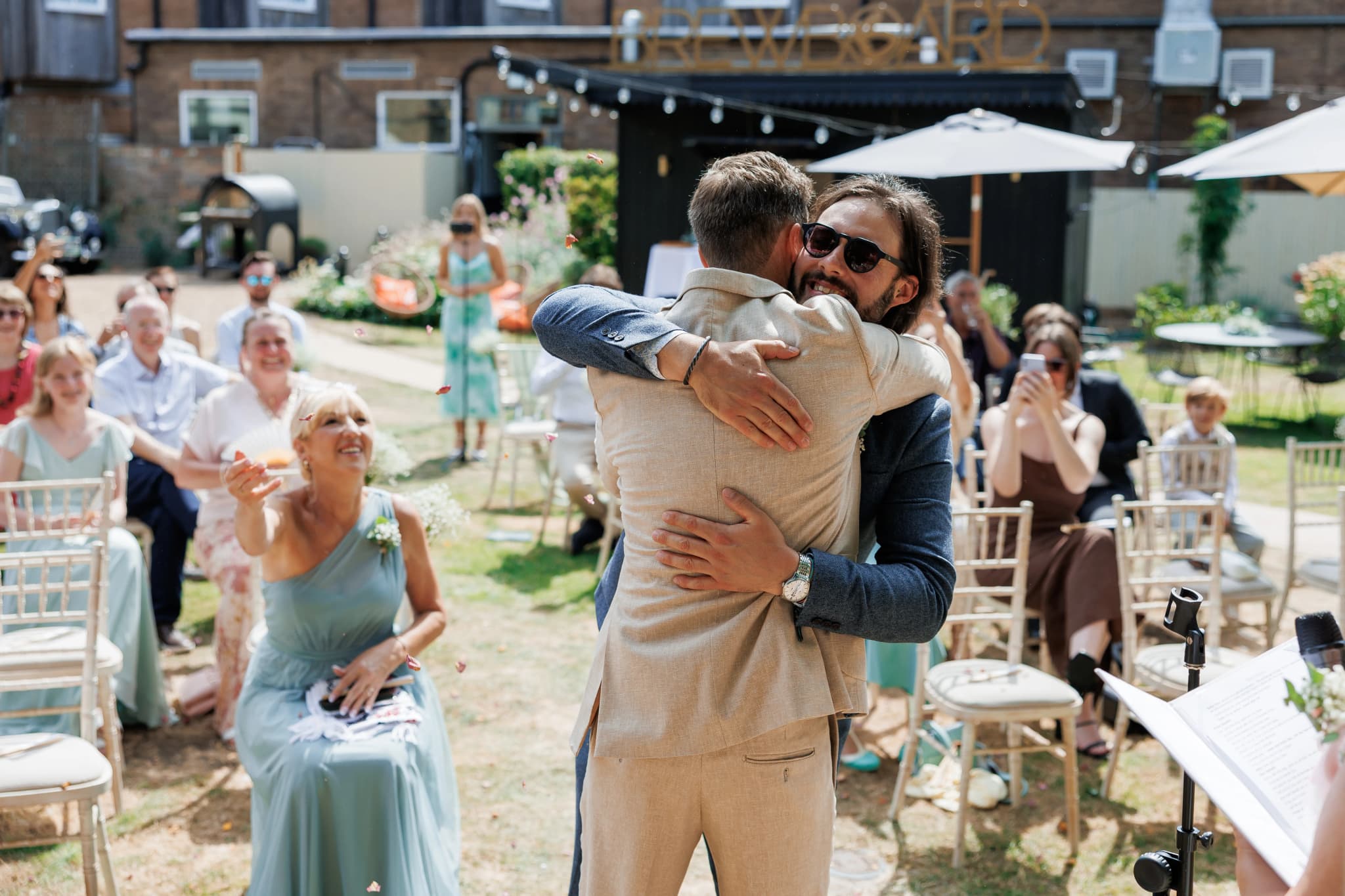
- ◆The confetti moment becomes chaos: Confetti shots require guests to form two lines with the couple walking through. Without a toastmaster briefing guests and physically positioning them, you get a loose crowd throwing confetti at random. The result looks messy on camera and the couple's faces are obscured.
- ◆Group portraits run 40 minutes late: Family formals are the most logistically demanding part of any wedding. Calling specific family groups from a 100-person reception requires authority and a list. Without that, guests disappear to the bar and each group takes five minutes to assemble instead of one. You lose the light.
- ◆The golden-hour window is wasted: I schedule couple portraits at golden hour deliberately — typically 45 to 60 minutes before sunset. If speeches have overrun because no one kept them on track, that window evaporates. I cannot manufacture that warm, low, directional light at 9pm.
- ◆The first dance entrance is missed: A great first dance photograph depends on capturing the moment the couple walks onto the floor, before guests crowd around. A toastmaster clears the space, holds guests back, and gives me a 10-second warning. Without that, I am shooting over shoulders.
- ◆Suppliers miss their cues: The band, the cake-cutting, the fireworks, the sparkler send-off — every timed moment depends on coordinated communication. When no one is coordinating, suppliers act on instinct or give up waiting, and the moments happen without me in position.
- ◆The couple carries the stress: When couples manage their own day, it shows in their faces. My job is to photograph relaxed, joyful people. A toastmaster removes logistical anxiety from the couple so they can actually be present — and present people photograph beautifully.
The UK Wedding Context: Why It Matters More Here
British wedding culture has particular dynamics that make a toastmaster even more valuable than in some other traditions. UK receptions tend to run long — a typical Cambridge or Cotswolds wedding has a ceremony at 2pm, a drinks reception, a wedding breakfast, speeches, evening buffet, and a band until midnight. That is ten hours of managed time. British guests, more than most, will politely drift rather than gather on cue. The culture of not wanting to be seen to be pushy means that without an authoritative figure directing people, nothing happens efficiently.
UK wedding venues, particularly country houses and barns in Cambridgeshire and surrounding counties, also tend to have multiple spaces — a ceremony room, a garden for drinks, a dining room, and a barn or marquee for the evening. Moving 100 guests between these spaces three or four times across an afternoon requires someone with a megaphone (metaphorically) and the confidence to use it. Venue coordinators are focused on the venue's operations, not on cueing your photographer. That gap is exactly what a toastmaster fills.
How to Choose the Right Toastmaster and Brief Them Properly
Not all toastmasters are equal. For a large wedding, look for a member of the National Association of Toastmasters or the Guild of Professional Toastmasters — these have formal training and vetted experience. Ask specifically whether they have worked at your venue before, and whether they are comfortable liaising with suppliers rather than just making announcements.
When you book a toastmaster, give them a supplier contact sheet with my mobile number on it. I always ask couples to do this in advance. The toastmaster and I will typically exchange messages on the morning of the wedding and coordinate at key transition points throughout the day. A toastmaster who has never spoken to the photographer before the ceremony is not being used to full effect.
Brief your toastmaster on the specific photographs you want and the windows you need. If you want golden-hour couple portraits, tell the toastmaster the exact time I need you available and for how long. If you want a large confetti exit, tell them the number of guests involved and where it will happen so they can brief guests during the drinks reception. The more information the toastmaster has, the more effectively they can protect the moments that matter most.
What Happens When You Do Have a Toastmaster: A Real Difference
I want to be specific about the difference this makes, because I have photographed weddings both ways. At a 130-person wedding at a country house near Ely last summer, the toastmaster arrived before the guests, briefed the ushers on their roles, held the confetti bags back until the couple was in position, kept the speeches to their allotted times, and gave me a three-minute warning before every key transition. The result was that I had the couple outside for golden-hour portraits exactly when I had planned — 6:45pm — for 25 uninterrupted minutes. Every shot I had planned was possible. The group portraits were done in 28 minutes instead of the 60+ minutes I have experienced at unmanaged weddings of the same size.
Contrast that with a 90-person wedding where the couple decided a toastmaster was an unnecessary cost. Speeches ran 45 minutes over because no one was managing the speakers. By the time we finished the wedding breakfast, the light was flat and grey. The confetti exit happened spontaneously as the couple left the dining room — no lines, no briefing, guests still holding plates. I salvaged what I could, but the images from that day are fundamentally weaker because the moments I needed were never set up. The couple spent money saving on the toastmaster and lost far more in the photographic record of their day.
Planning a large wedding and want photographs that match the day you've imagined?
I work closely with toastmasters, venue coordinators, and couples to plan a photographic timeline that protects every key moment — from confetti to golden hour. If you're planning a wedding in Cambridge or across the UK, let's talk about your date and how we can make your day work beautifully on camera.
Check Your Date →

Yana Skakun
Photographer · England
Professional wedding, family and portrait photographer based in England. Passionate about capturing authentic emotions and timeless moments.
About Yana →nothavingtoastmastermistake
Wedding Tips — Wedding Photography in Cambridge & England
Yana Skakun is a professional wedding photographer based in Cambridge, covering weddings across England — from intimate elopements to full-day ceremonies at country houses, barns, and city venues. Every couple receives a relaxed, documentary approach that captures the day as it truly unfolds. This guide — Why Not Having a Toastmaster is the Biggest Mistake for Large Weddings — is part of the photography journal: practical, experience-based advice drawn from real sessions across England. Whether you arrived searching for not or having, the same care and attention shapes every session Yana photographs.
Wedding Photography sessions are available year-round, with bookings open across Cambridge, Ely, Huntingdon, Peterborough, and further afield — East England, London, the Midlands, and beyond. If you have specific questions about toastmaster, mention it in your enquiry. Get in touch through the contact form above to check availability and discuss your session. Enquiries are welcomed from anywhere in the UK.
Frequently Asked Questions
How much does a wedding photographer cost in England?+
Wedding photography in England typically ranges from £1,500 to £4,000+ for a full day. Price depends on experience, coverage hours, and whether albums or engagement shoots are included. Most photographers charge between £2,000–£3,000 for 8–10 hours of coverage.
How early should you book a wedding photographer?+
For peak season (May–September), book 12–18 months in advance. For autumn and winter weddings, 9–12 months is usually sufficient. Popular photographers at popular venues fill up fast — as soon as you have a date and venue confirmed, start reaching out.
How many photos do you get from a wedding photographer?+
Most professional wedding photographers deliver 400–800 edited images for a full-day wedding. The exact number depends on coverage hours, how many guests there are, and the photographer's editing style. Quality matters more than quantity — a curated gallery of 500 images tells the story better than 1,500 unedited files.
Do you need a second photographer at your wedding?+
A second photographer is helpful if you want simultaneous coverage of getting-ready moments in different locations, multiple angles during the ceremony, or more candid coverage during the reception. It adds cost but significantly increases the variety and completeness of your gallery.
What is the difference between documentary and editorial wedding photography?+
Documentary (reportage) wedding photography captures moments as they happen — the photographer observes and doesn't intervene. Editorial photography involves deliberate direction: placing you in good light, shaping compositions, creating intentional portraits. Most photographers blend both styles throughout the day.
Continue Reading
Related Articles

Wedding Tips
Sustainable Eco-Friendly Wedding Guide — Planning a Green Celebration
15 min read · Read Article
Wedding Tips
Trash the Dress Session — Complete Planning and Photography Guide
14 min read · Read Article
Wedding Tips
Client Communication for Photographers — From Enquiry to Gallery Delivery
15 min read · Read Article
Get in Touch
Ready to Book Your Session?
Get in touch to discuss your vision — I'll reply within 24 hours.