Yana Skakun
November Wedding Photography: Misty, Magical & Underrated
By Yana Skakun·16 March 2026·6 min read
November has an undeserved reputation as a difficult month for weddings. People think of grey skies and short days and cold, and their minds go straight to the practicalities they imagine will be a problem. What they forget is the misty, magical quality of November light; the extraordinary intimacy of candlelit venues on November evenings; the beautiful starkness of bare trees against pewter skies; and the fact that a November wedding carries a sense of occasion, romance, and intent that a standard June Saturday never quite matches. Couples who choose November are not settling for a fallback date — they are choosing a season with its own distinct visual character, and as a photographer I find those weddings consistently produce some of the most striking images of the year. This guide sets out what to actually expect from a November wedding in terms of light, timing, venue choices, and photography planning, so you can go into the day with a realistic and genuinely exciting picture of what is possible.
The Case for November
November's practical advantages are real and worth taking seriously rather than treating as a consolation prize. Venue availability is the first and most obvious. November sits firmly outside the traditional wedding season, which means venues that are booked solid eighteen months in advance for a June Saturday often have genuine availability for a November date with far less lead time. This matters enormously if you are planning on a shorter timeline, or if you have your heart set on a particular venue that would otherwise be out of reach.
Pricing tends to follow availability. Many venues and suppliers, photographers included, price their off-peak dates more accessibly than their summer Saturdays, simply because demand is lower. This does not mean November weddings are somehow lesser — it means the same budget can often stretch further, whether that goes towards a better venue, a longer photography package, or simply keeping costs down without compromising on quality.
Guest commitment is a quieter but real advantage. A wedding on a July Saturday competes with garden parties, other weddings, holidays, and the general pull of good weather elsewhere. A November wedding does not have that competition. Guests who travel for a November wedding are making a deliberate choice to be there, and there is a different quality of attention and presence in a room full of people who came specifically for this, rather than fitting it in around a busy summer social calendar.
Then there is the intimacy of the season itself. Everything moves inside earlier in November. Fires are lit, candles are lit, curtains are drawn against the early dark, and there is a cosiness to a winter wedding venue that a marquee full of guests fanning themselves in July heat simply cannot replicate. Photographically, this intimacy translates directly into the images — warmer tones, closer groupings, a natural gathering-in that summer weddings, with their sprawling gardens and long light evenings, do not tend to produce in the same way.
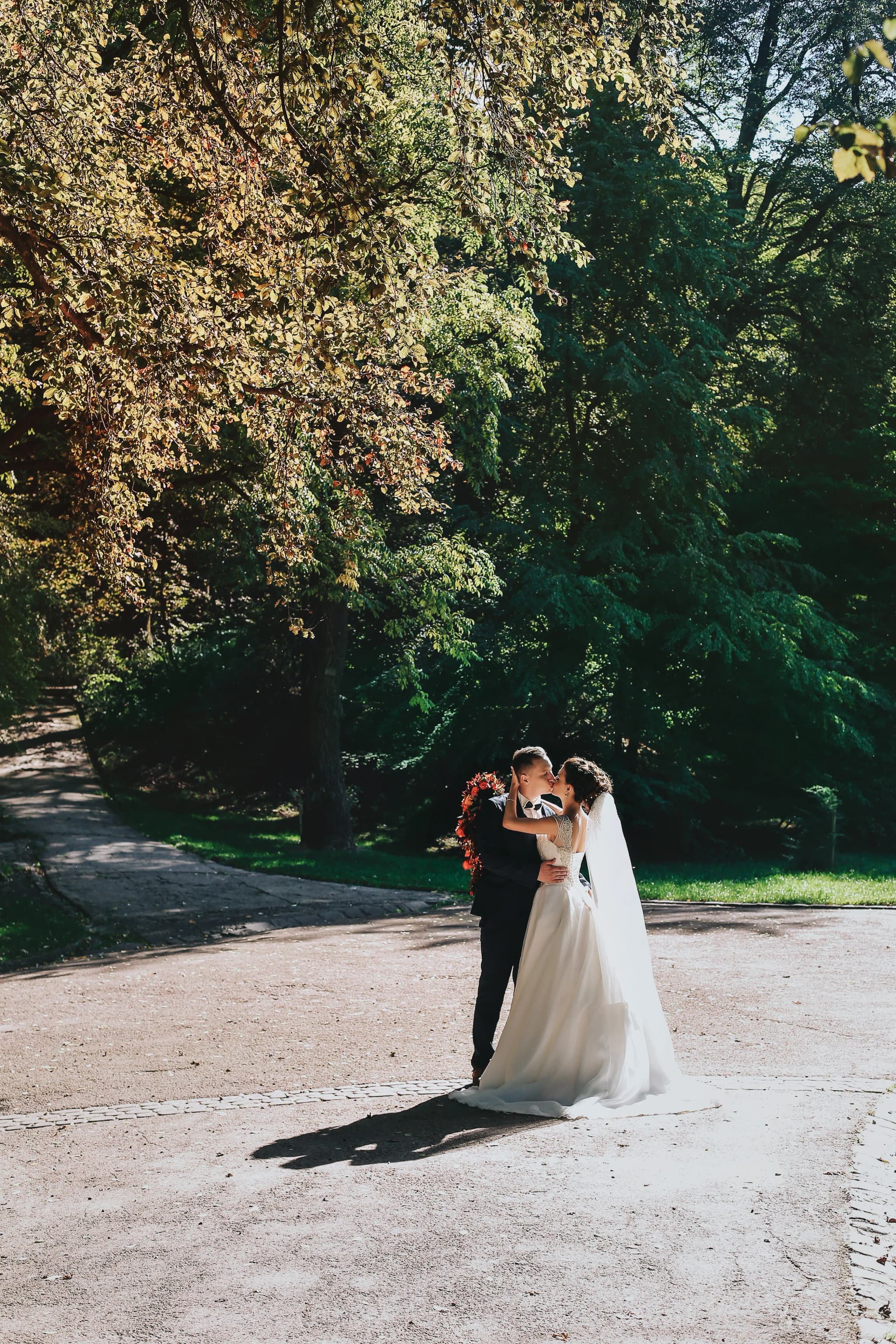
And finally, the visuals themselves are genuinely unique to the month. No other time of year looks quite like November. The bare architecture of trees against a pale or dramatic sky, the possibility of the last stubborn oak leaves still clinging on in gold and rust, the frost on morning grass if the date falls late enough in the month, mist rising off water or low-lying fields at dawn — these are images that are simply not available in June, however good the weather.
Understanding November Light
November light is low, soft, and often diffuse — genuinely beautiful for portrait photography once you understand how to use it, and one of the things I most enjoy working with across the wedding year. The sun in Cambridgeshire and the wider East of England rises around 7am in early November and has set by around 4:15pm by the end of the month, which means the whole day sits within a much narrower band of daylight than a summer wedding. Golden hour, rather than arriving inconveniently at nine or ten in the evening as it does in midsummer, lands naturally in the middle of the afternoon.
This has a real practical benefit that couples do not always anticipate. Because golden hour falls in mid-afternoon, couple portraits can happen at a point in the day when the wedding breakfast is finishing or drinks and early evening entertainment are underway, rather than requiring guests to be pulled away from a reception at an awkward late hour to make way for photographs. The best light of the day and the natural lull in proceedings tend to line up far more conveniently in November than they do in high summer.
Overcast November days, which are common, produce extraordinarily soft and even light for portraits. There are no harsh shadows under eyes or noses, no squinting into direct sun, none of the contrast problems that a bright cloudless June afternoon can create. An overcast sky essentially becomes a giant softbox, wrapping light evenly around faces in a way that is consistently flattering. Photographers who only associate good light with sunshine are missing one of the genuine advantages of a low, grey November sky.
On the rarer clear November day, the low sun angle throughout produces a quality of directional, golden light that in summer is confined to the first and last hour of daylight. In November it can persist for a much larger portion of the afternoon, giving a longer working window for outdoor portraits with warm, raking light rather than the brief and often rushed golden hour of a June evening.
Indoor-Outdoor Balance in November
November weddings tend to be more indoor-focused by necessity, and rather than being a limitation, this shift creates a different and genuinely rich set of photography opportunities that summer weddings, with their emphasis on gardens and outdoor drinks receptions, rarely offer in the same way.
Candlelight becomes available from early evening rather than late at night, simply because the sky is already dark by five o'clock. This means candlelit tables, candlelit aisles, and candlelit corners of a room are all photographable throughout the reception rather than only in the final hour, and the warm pools of light candles create alongside the intimate atmosphere they generate are some of the most romantic elements a November wedding has to offer.
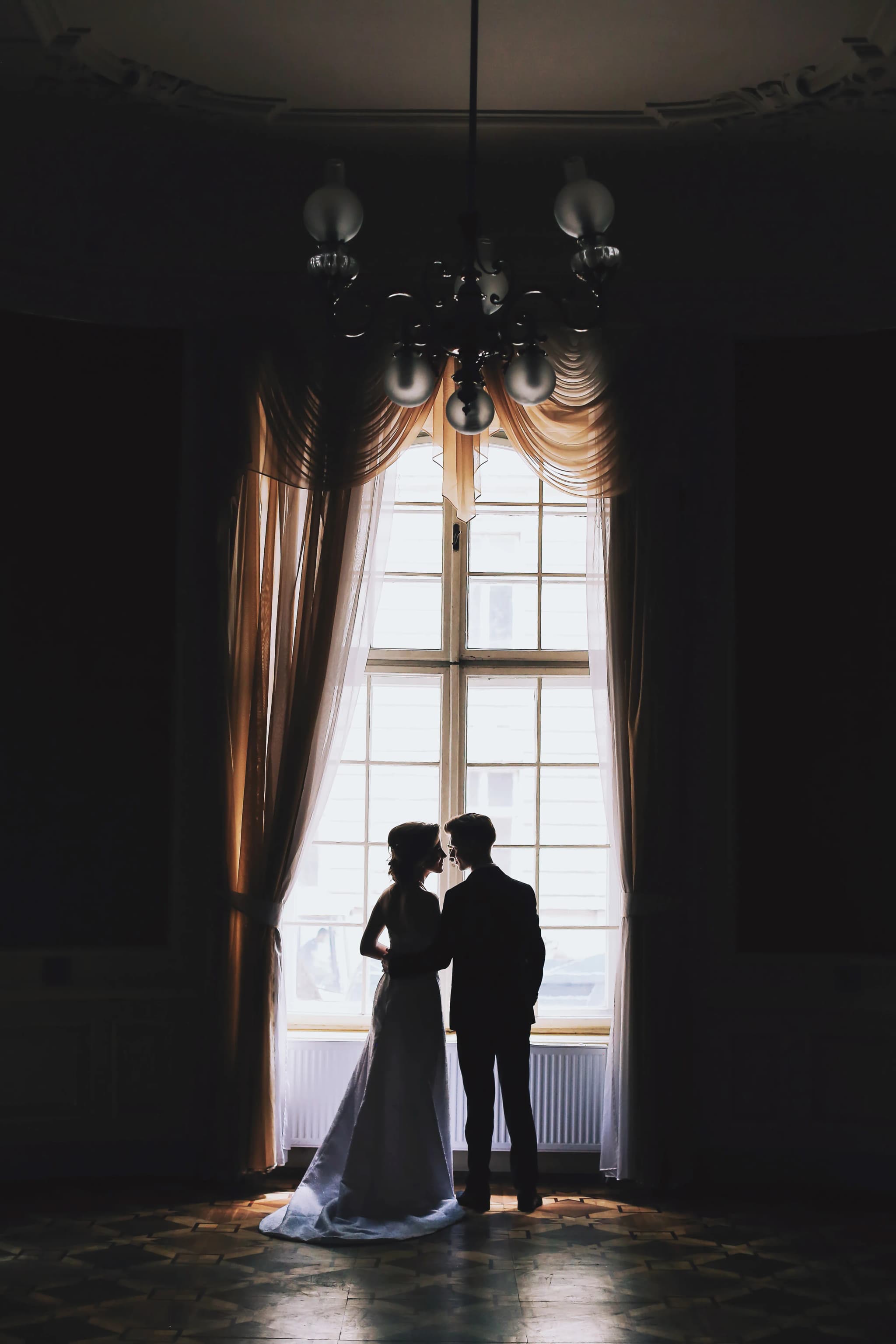
Window light through large sash or leaded windows, common in the country houses, manor venues, and converted barns popular for weddings across Cambridgeshire, becomes a genuine asset. The low angle of November sun streaming through tall windows creates beautiful directional light for formal portraits taken indoors — bridal preparation shots in particular benefit enormously from this soft, low, north-facing quality of light that a room simply does not have in the same way during summer.
A working fireplace, where a venue has one, becomes a real photographic feature in November in a way it is largely irrelevant in June. The warm, flickering, low light of a fire is extraordinary for intimate couple portraits, and I always ask in advance whether a venue's fireplace will be lit on the day so I can plan for it.
None of this means abandoning the outdoors entirely. Stepping outside briefly for a focused set of portraits — bare trees, possibly frost, possibly a light mist rolling across a field or a lake — creates a dramatic visual contrast with the warm interior of the reception, and these brief outdoor sets are often among the most memorable images from the whole day precisely because they look so different from anything a summer wedding could produce.
Bonfire Night and Early November Dates
Weddings held on or near the 5th of November occupy a slightly unusual position, and it is worth addressing directly. On one hand, many public and organised firework displays across the region take place that week, which can occasionally mean traffic or noise considerations for a venue nearby. On the other hand, couples marrying on or close to Bonfire Night sometimes choose to lean into the coincidence deliberately, arranging a small private fireworks display or sparkler send-off as part of their own celebration.
Fireworks and sparklers, when planned properly, are among the most spectacular elements in wedding photography. A sparkler exit photographed correctly — with the right shutter speed, the right positioning of guests, and enough sparklers lit in sequence rather than all at once so the light does not burn out before the shot is taken — produces genuinely dramatic, high-energy images. If your venue or caterer can arrange a proper fireworks display as part of the evening, even a modest one, the photography opportunities that come with it are considerable, and I plan specifically for this when I know a display is happening, positioning myself in advance to capture both the display itself and your reactions to it.
Planning Your Timeline Around a Short Day
The single biggest practical difference between a November wedding and a summer one is the length of usable daylight, and it deserves proper planning rather than being left to chance. With the sun setting by mid-afternoon, a ceremony that starts at two or three o'clock leaves a genuinely narrow window before natural light is gone entirely. I always recommend couples marrying in November think carefully about ceremony timing with this in mind — an earlier ceremony, even by an hour, can make a meaningful difference to how much can be achieved in natural light afterwards.
Group photographs benefit from being scheduled promptly after the ceremony rather than pushed later, simply because the light to work with will only diminish as the afternoon goes on. Couple portraits, similarly, work best slotted into that mid-afternoon golden hour window discussed earlier, which on a November date might only last thirty to forty minutes before the light drops toward blue hour and then full darkness.
None of this is a reason to worry — it is simply a reason to plan with intention. A well-structured November timeline, worked out in advance between couple, venue, and photographer, comfortably accommodates a full and beautiful set of images across the day. It is only when timings are left loose and assumed to work themselves out, as they might more forgivingly in June, that a short November day can catch people out.
Planning a November wedding?
I love November weddings — the light, the intimacy, and the sense of occasion the season brings are things I genuinely enjoy photographing. If you have a November date in mind, or you are weighing it up against a more traditional summer booking, I am happy to talk through what is realistic for your venue and timeline.
Get in touch to check availabilityWhat to Wear and What to Expect on the Day
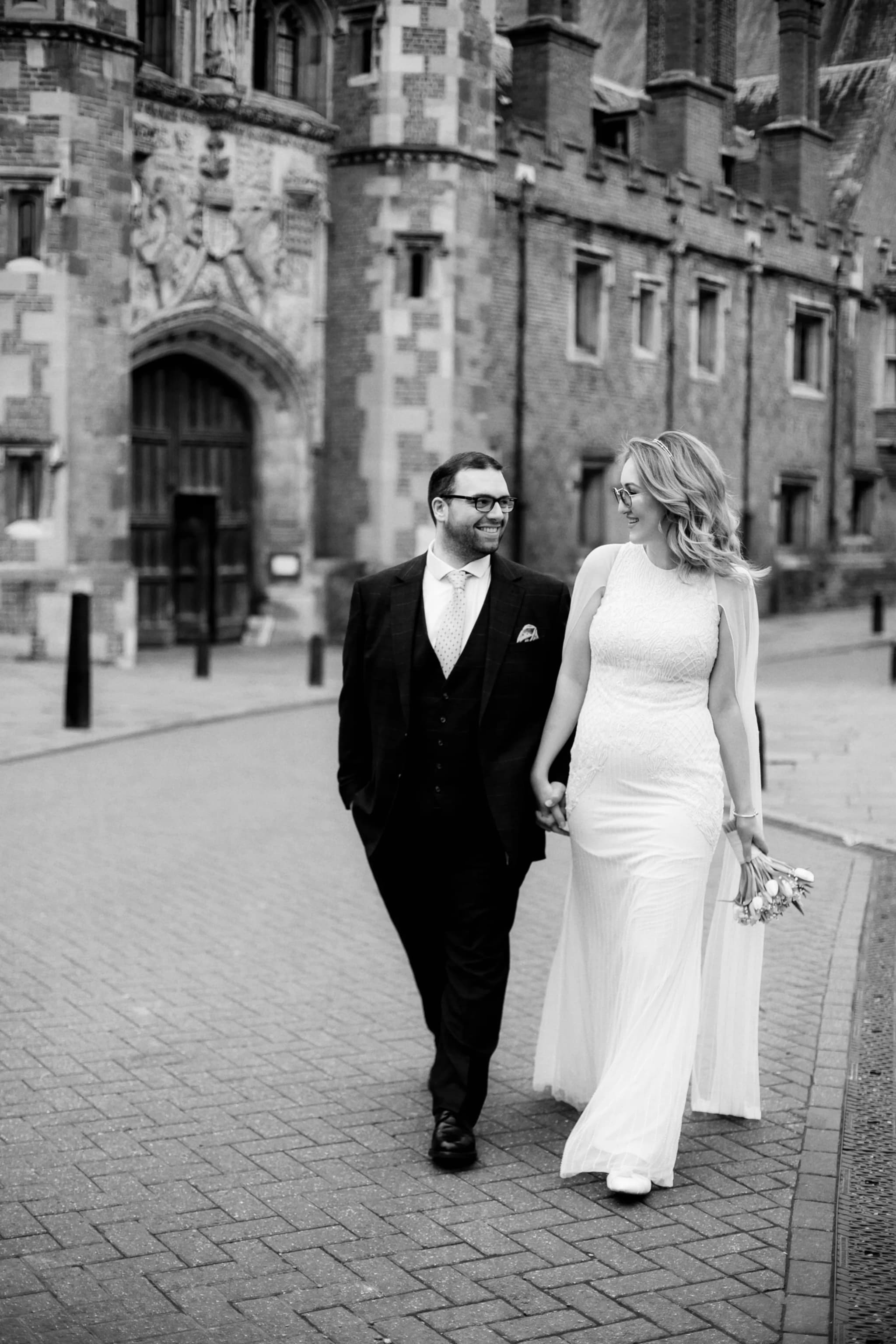
Colder weather calls for practical thinking around clothing, particularly for anyone planning outdoor portraits. Brides often add a faux fur stole, a tailored coat, or a wrap to their look for the walk between venue and portrait location, and these additions photograph beautifully rather than detracting from the dress underneath — a stole draped over the shoulders in a misty courtyard has a timeless, cinematic quality that a bare-armed summer portrait does not have. Grooms and wedding parties benefit from proper coats rather than simply enduring the cold in shirtsleeves for the sake of a photograph; a well-cut overcoat adds structure and presence to group shots rather than undermining them.
Guests should be told, gently, in advance that some portions of the day will involve brief spells outside, so that footwear and layers can be planned accordingly. A wedding party that has been warned in advance to bring a coat is a wedding party that looks comfortable and present in outdoor images, rather than visibly hunched against the cold.
On the practical side, I always carry additional lighting equipment to November weddings as standard, simply because the working day is darker for longer than in summer months. This ensures that reception photography, evening portraits, and any late-afternoon or early-evening formal shots remain sharp and well-lit regardless of how quickly natural light fades, so you are never left with a compromised set of images purely because of the time of year.
A November wedding is not a smaller or lesser version of a summer one — it is a different kind of day, with its own atmosphere, its own visual palette, and its own particular beauty that couples marrying in June simply do not have access to. Misty mornings, candlelit evenings, bare trees against dramatic skies, and a guest list that has made a real effort to be there all combine into a day that photographs with a depth and intimacy that is genuinely distinct. If you are considering a November date, or you already have one booked and want to talk through how to make the most of the light and the season, get in touch and we can plan a timeline that works with November rather than against it.

Yana Skakun
Photographer · England
Professional wedding, family and portrait photographer based in England. Passionate about capturing authentic emotions and timeless moments.
About Yana →November wedding photography UKlate autumn wedding photographerNovember wedding England benefits
Wedding Tips — Wedding Photography in Cambridge & England
Yana Skakun is a professional wedding photographer based in Cambridge, covering weddings across England — from intimate elopements to full-day ceremonies at country houses, barns, and city venues. Every couple receives a relaxed, documentary approach that captures the day as it truly unfolds. This guide — November Wedding Photography: Misty, Magical & Underrated — is part of the photography journal: practical, experience-based advice drawn from real sessions across England. Whether you arrived searching for november wedding photography uk or late autumn wedding photographer, the same care and attention shapes every session Yana photographs.
Wedding Photography sessions are available year-round, with bookings open across Cambridge, Ely, Huntingdon, Peterborough, and further afield — East England, London, the Midlands, and beyond. If you have specific questions about november wedding england benefits, mention it in your enquiry. Get in touch through the contact form above to check availability and discuss your session. Enquiries are welcomed from anywhere in the UK.
Frequently Asked Questions
How much does a wedding photographer cost in England?+
Wedding photography in England typically ranges from £1,500 to £4,000+ for a full day. Price depends on experience, coverage hours, and whether albums or engagement shoots are included. Most photographers charge between £2,000–£3,000 for 8–10 hours of coverage.
How early should you book a wedding photographer?+
For peak season (May–September), book 12–18 months in advance. For autumn and winter weddings, 9–12 months is usually sufficient. Popular photographers at popular venues fill up fast — as soon as you have a date and venue confirmed, start reaching out.
How many photos do you get from a wedding photographer?+
Most professional wedding photographers deliver 400–800 edited images for a full-day wedding. The exact number depends on coverage hours, how many guests there are, and the photographer's editing style. Quality matters more than quantity — a curated gallery of 500 images tells the story better than 1,500 unedited files.
Do you need a second photographer at your wedding?+
A second photographer is helpful if you want simultaneous coverage of getting-ready moments in different locations, multiple angles during the ceremony, or more candid coverage during the reception. It adds cost but significantly increases the variety and completeness of your gallery.
What is the difference between documentary and editorial wedding photography?+
Documentary (reportage) wedding photography captures moments as they happen — the photographer observes and doesn't intervene. Editorial photography involves deliberate direction: placing you in good light, shaping compositions, creating intentional portraits. Most photographers blend both styles throughout the day.
Continue Reading
Related Articles

Wedding Tips
Sustainable Eco-Friendly Wedding Guide — Planning a Green Celebration
15 min read · Read Article
Wedding Tips
Trash the Dress Session — Complete Planning and Photography Guide
14 min read · Read Article
Wedding Tips
Client Communication for Photographers — From Enquiry to Gallery Delivery
15 min read · Read Article
Get in Touch
Ready to Book Your Session?
Get in touch to discuss your vision — I'll reply within 24 hours.