Yana Skakun
October Wedding Photography in England: The Golden Month
By Yana Skakun·16 March 2026·6 min read
October is the golden month. If I were asked which single month of the English wedding year produces the most consistently beautiful photography, October would be a serious contender, and it is the month I quietly hope more couples will choose when they ask me for advice on timing. The autumn colour is at its most intense, the light sits low and warm for most of the day rather than for just an hour either side of sunrise and sunset, the weather is often crisp and settled, and there is a richness to the season — in the colours, in the produce on the tables, in the whole atmosphere of the day — that shows up in photographs without any effort on anyone's part. I have photographed enough October weddings now, across country houses, Cambridge college venues, and small intimate barns, to know that this is not a coincidence of a few lucky years. It is a genuine, repeatable seasonal advantage, and it is worth understanding in some detail if you are choosing a date or already have one booked.
Why October Works So Well for Wedding Photography
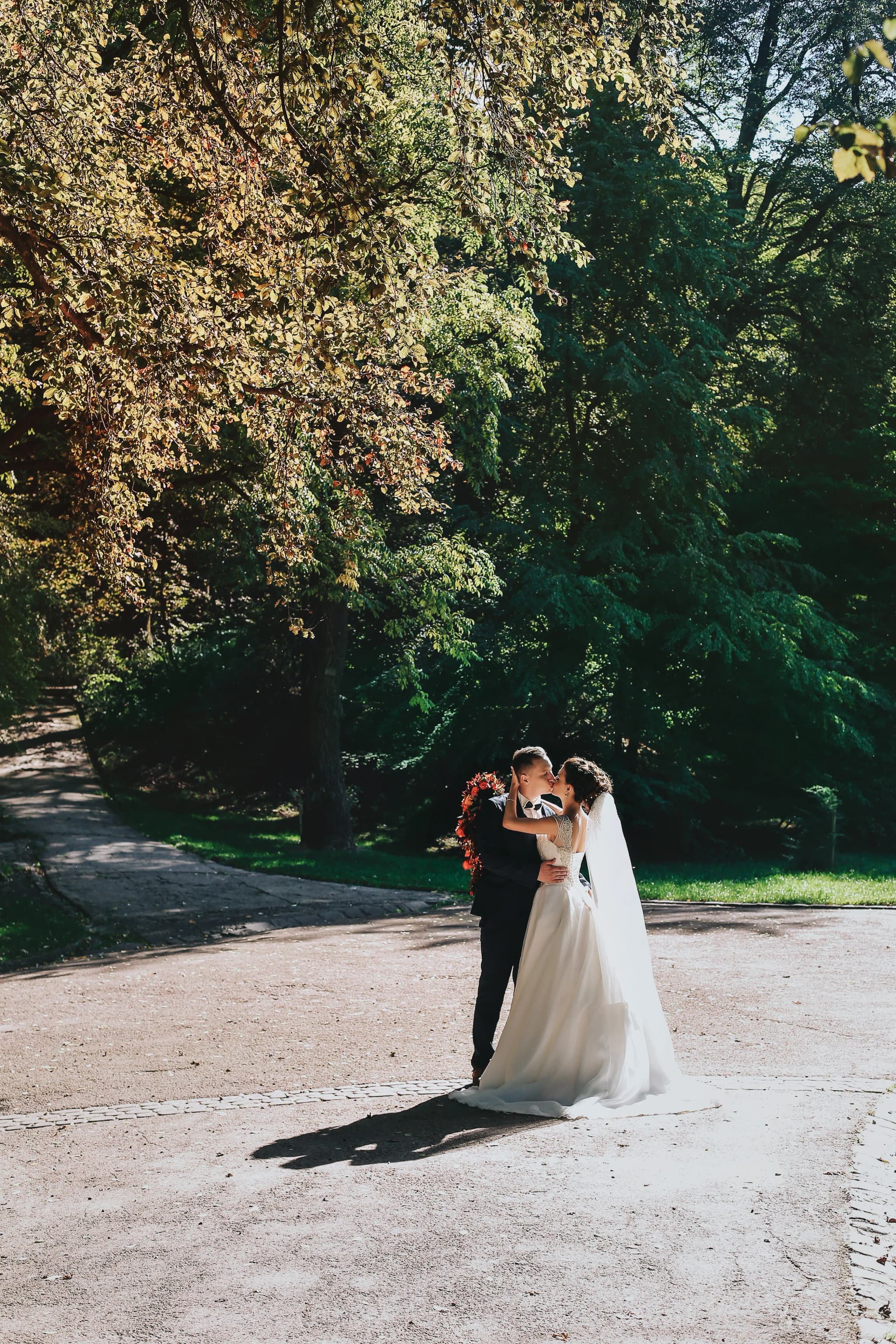
A number of conditions come together in October that simply do not exist at the same time in any other month. The autumn colour reaches its peak intensity across most of the UK in the middle two or three weeks of the month — oaks, beeches, limes, and horse chestnuts moving through russet red, amber, and deep gold in a way that turns any garden, avenue, or woodland edge into a naturally styled backdrop. No florist or stylist can quite replicate what a mature beech hedge does on its own in mid-October.
The quality of the light itself is the bigger factor, and the one couples notice even without being told to look for it. By October the sun sits noticeably lower in the sky than it does even in early September, and because it never climbs particularly high even at midday, the light arrives at an angle for the entire day rather than only at the edges of it. This produces fewer of the harsh, unflattering overhead shadows that a bright July afternoon creates under people's eyes and along the sides of noses, and instead gives a soft, warm, directional light that flatters faces consistently from morning through to late afternoon.
Cold, clear October air also tends to produce more vivid colour and better clarity in photographs than the warm, often slightly hazy air of high summer. There is a transparency to a crisp autumn day that shows up as genuine sharpness and depth in wide landscape shots, distant views, and anything shot with the sky in frame. And October weather, while never guaranteed in England, is more often settled and dry than people expect — a cold, clear, blue-skied October Saturday is a genuinely common outcome, not a rare stroke of luck.
Finally, golden hour arrives conveniently early in October, generally somewhere between half past four and six depending on exactly where in the month you are and where in the country you are getting married. That timing lines up naturally with the end of a wedding breakfast or the beginning of the evening reception, meaning couples do not need to be pulled away from their guests at nine in the evening the way a June wedding sometimes requires — the best light of the day arrives at a point when stepping outside for twenty minutes feels natural rather than disruptive.
Planning Your Timeline Around October Light
October days are noticeably shorter than summer ones, and this genuinely changes how a wedding day timeline should be built. Sunrise sits around half past seven at the start of the month and sunset is closer to half past six; by the end of October, once the clocks have gone back, sunset can be as early as quarter to five. This is the single biggest planning difference between an October wedding and a June one, and it is worth discussing properly with your photographer and your venue coordinator rather than leaving your running order as a copy of a summer template.
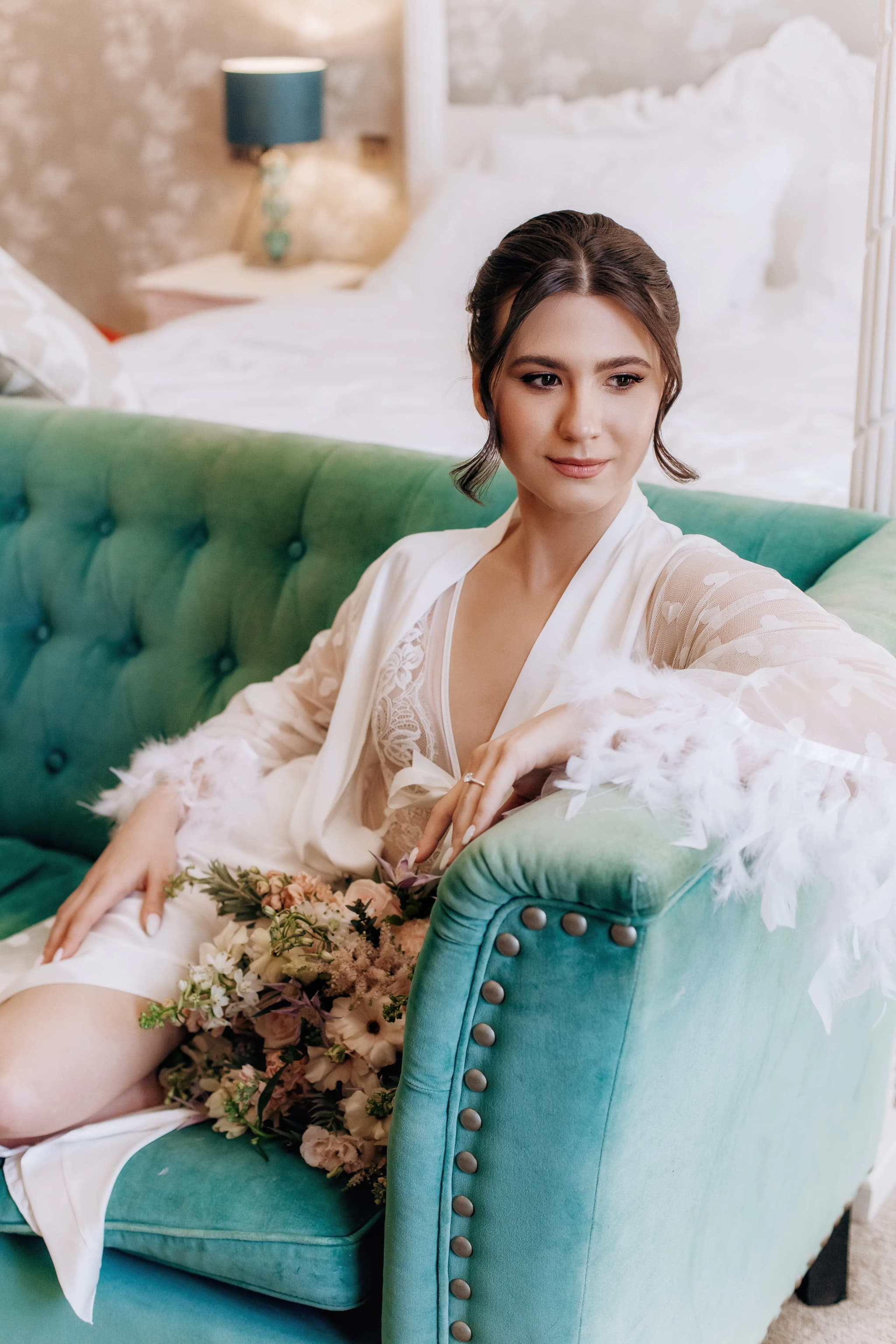
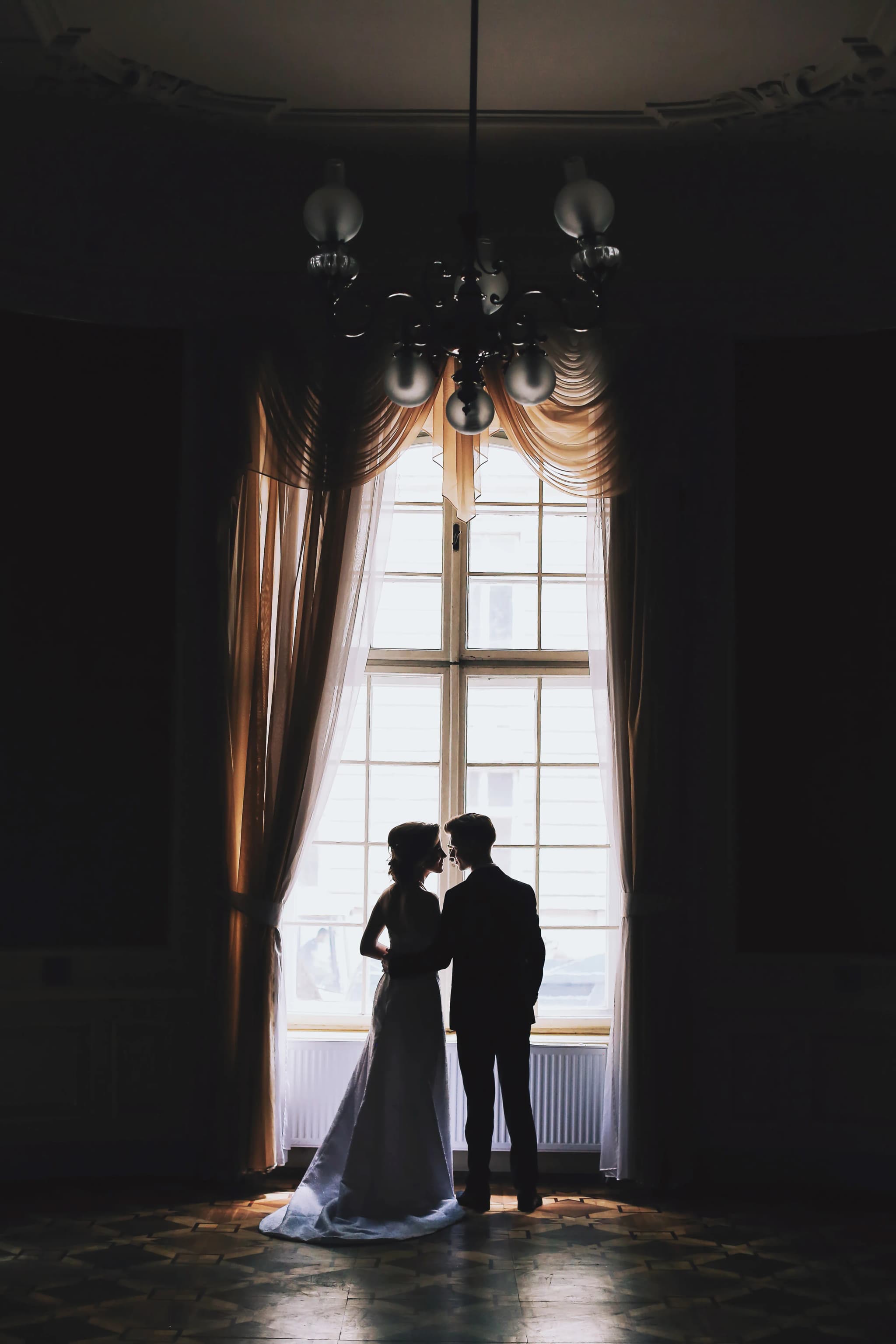
In the morning, getting-ready photography benefits enormously from the low autumn sun coming in through east-facing windows — the directional quality of that light through a window is something I actively look for when I arrive, and it often produces some of the most naturally beautiful images of the whole day, well before hair and makeup are even finished. Through the ceremony and into midday, the light stays warm and low even at noon, which means outdoor confetti shots, group photographs, and couple portraits taken around lunchtime carry a golden quality that a summer wedding simply cannot produce at the same hour.
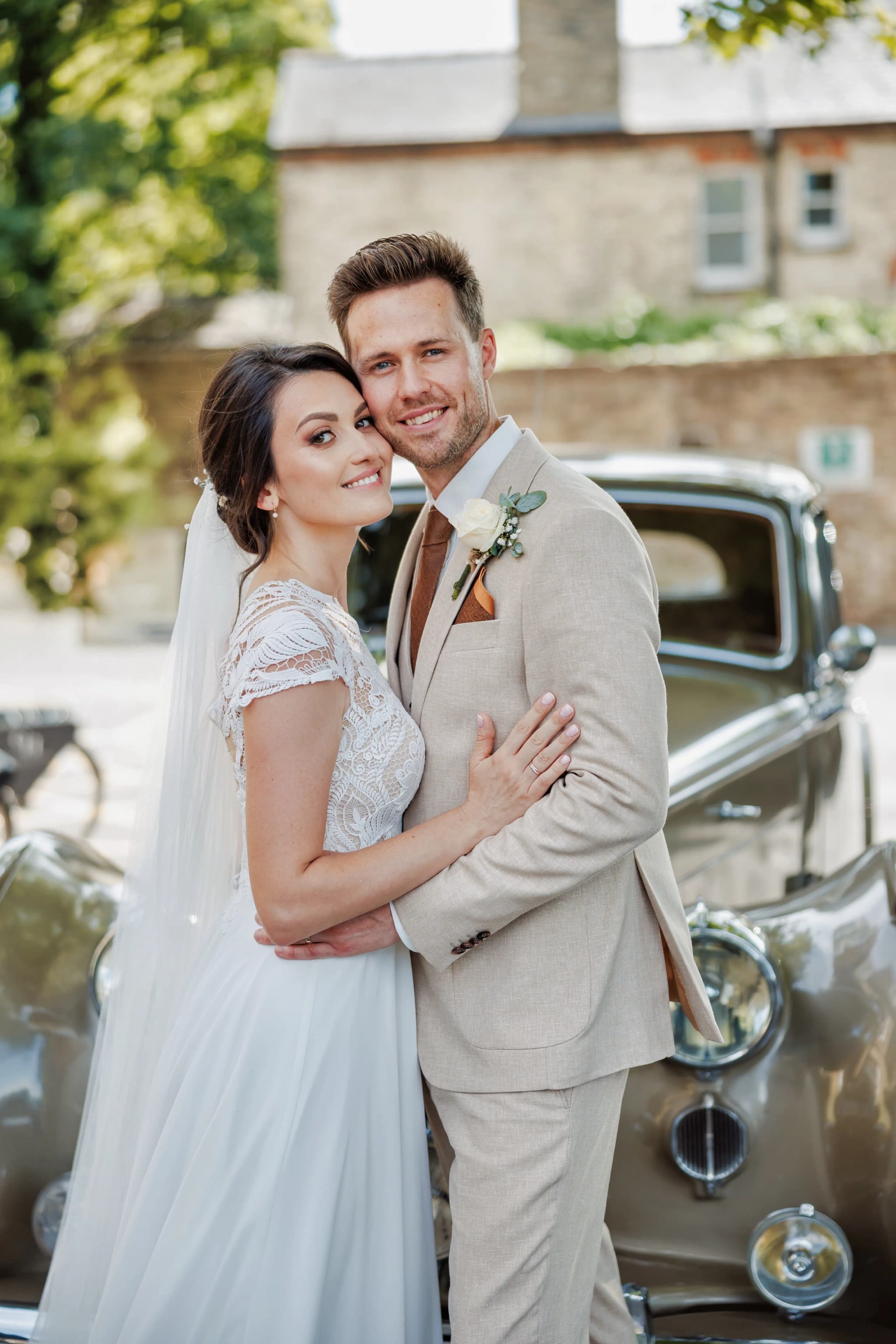
The window between about half past two and half past four is, in my experience, the critical one for outdoor couple portraits on an October wedding day. This is generally after the formal group photographs and before the light starts to fade properly, and it is worth protecting deliberately in the timeline rather than letting it get eaten by a long wedding breakfast or a delayed ceremony start. Golden hour itself, once it arrives, is short and intense — the light turns deeply amber quite quickly as the sun drops towards the horizon, and it is worth having a rough plan already agreed for where the couple will step outside to for those few minutes, because there usually is not time to improvise a new location once the light starts to go. After sunset, blue hour brings a lovely, brief period where the sky deepens to a rich blue while venue lighting, candles, and fairy lights indoors start to glow — a contrast that photographs beautifully if the venue has good ambient lighting to work with.
Best October Wedding Photography Locations
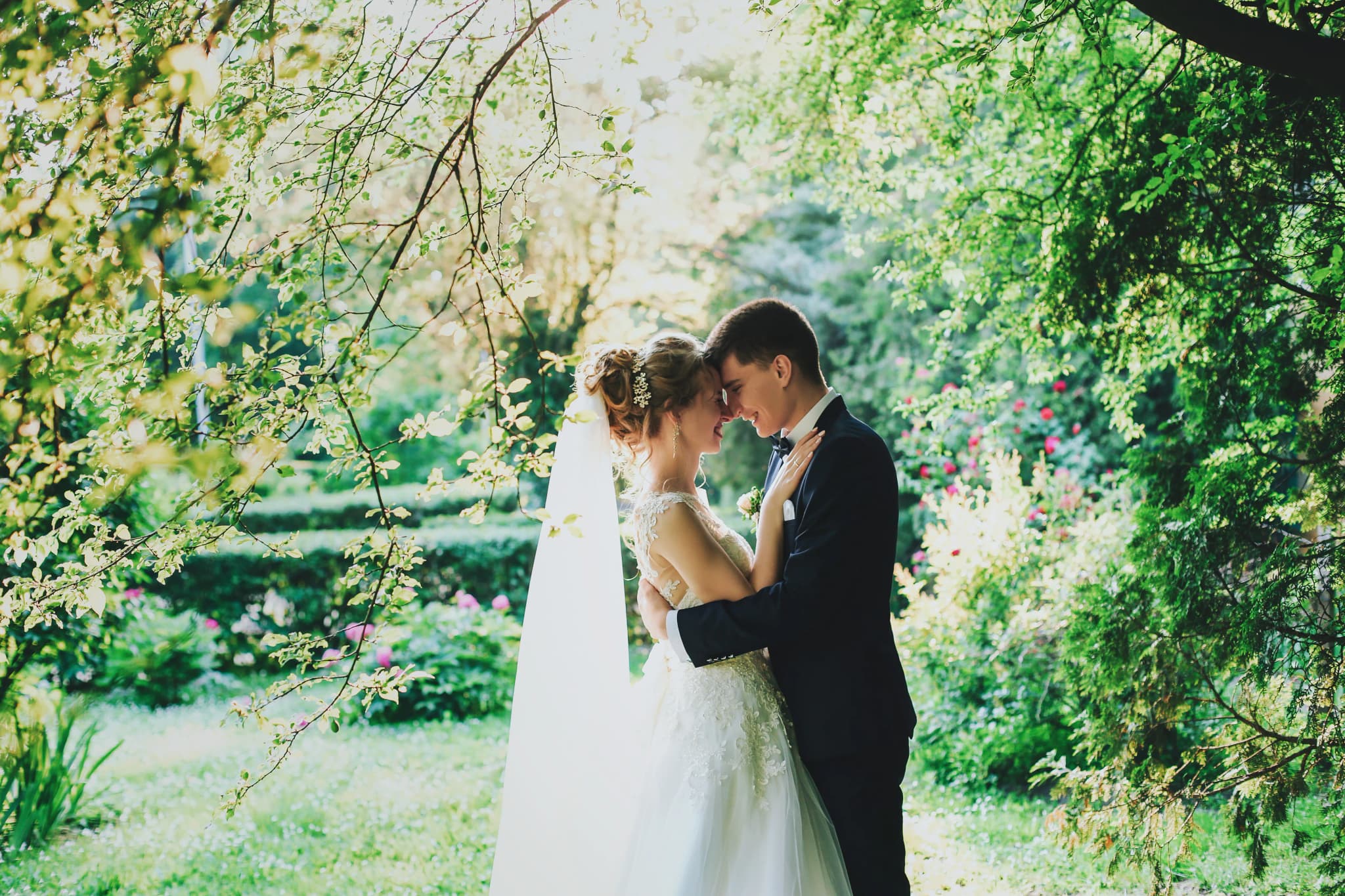
Beech woodlands and avenues are, for me, the standout October location. Beech trees hold their leaves later into autumn than most other British native species and colour beautifully as they go, moving from green through to a deep coppery gold that can last for several weeks depending on the year's weather. A mature beech avenue or a woodland edge in the third week of October, with low sun coming through the canopy, is about as good as English wedding photography backdrops get, and it needs almost no additional styling to look extraordinary.
Country house gardens come into their own in October too, often in ways couples do not expect when they book a venue primarily for its summer planting. Late-flowering plants such as asters, sedums, and the last of the dahlias are often still going in early-to-mid October, and combined with turning trees and the particular quality of autumn light, a walled garden or parterre at a country house venue can look genuinely different, and arguably richer, than it does in high summer.
Riverside and lakeside settings are worth seeking out specifically for October weddings, because still water reflecting autumn colour produces some of the most striking images of the whole season — a calm stretch of river lined with turning trees, photographed on a still, cold morning, has a stillness and symmetry that is genuinely hard to achieve at any other time of year. And for couples marrying at a venue with any elevation or view, clear October air makes for exceptional long-distance visibility — a hilltop, a tower, or simply an upper-floor window with a view over open countryside can produce a crisp, wide shot with colour and detail visible for miles, in a way that summer haze rarely allows.
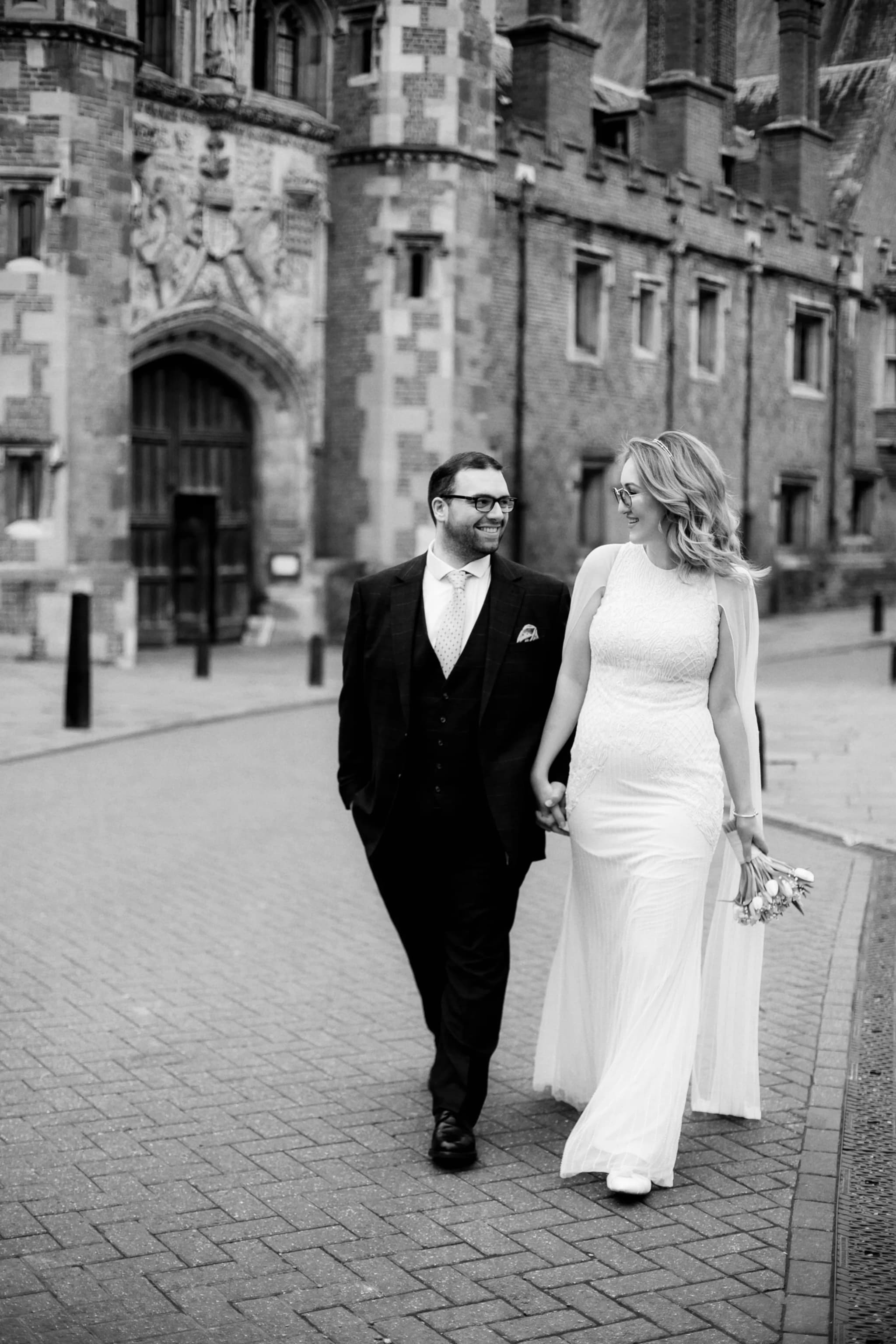
Closer to home, for couples marrying in or around Cambridge, the Backs and the college gardens deserve a specific mention. The mature planting along the Backs, and the walled gardens of several of the colleges, hold a huge number of trees that turn at slightly different times through October, meaning there is very often something at genuine peak colour somewhere along the river even if a particular avenue has already turned. Combined with the architecture, an October college wedding has a quality of light and colour that I find genuinely difficult to match anywhere else in the county.
Getting married in October?
It is one of the most beautiful months of the year to be photographed in, and dates go quickly once couples realise it. If you have a date in mind, or you are still deciding when to get married, I would love to talk through timing and what the light will be doing on your day.
Check availability for your October weddingWhat to Wear and Pack for an October Wedding
October weather in England can genuinely span the full range from crisp and bright to grey and damp, sometimes within the same day, so it is worth planning outfits and accessories with some flexibility built in. For the couple, a coat or wrap that photographs well is worth thinking about in advance rather than being a last-minute addition — a good wool coat, cape, or shawl in a colour that complements the dress or suit can become a lovely part of the outdoor portraits rather than an awkward afterthought thrown on because it is cold. Brides in particular are often reluctant to cover a dress for photographs, and my usual advice is to have the coat or wrap ready but not worry about wearing it for every single shot — five or ten minutes outside in October cold is entirely manageable, and I work quickly and know when to call it and get everyone back inside to warm up.
For the wedding party and guests, layers are the sensible answer given how much temperature can vary through an October day — a cold, bright morning can turn into a genuinely mild early afternoon before dropping quickly again once the sun starts to set. Footwear is worth a mention too if any part of the day involves grass, gravel, or woodland paths: October ground is often damp even after a dry spell, and low block heels or flats travel much better across a lawn or path than delicate heels, which tend to sink and become a source of stress rather than photographing well.
On the practical side, I always suggest couples ask their venue about a plan B for outdoor portraits — not because October weather is unreliable exactly, but because having a covered terrace, an orangery, or even a large porch as a fallback location means a sudden shower does not derail the portrait session entirely. Umbrellas, incidentally, can produce lovely images in their own right if a little rain does appear on the day — some of the most memorable October wedding photographs I have taken involved exactly that kind of unplanned weather, handled calmly rather than treated as a disaster.
Making the Most of a Shorter Day
Because October daylight is shorter and more precious than summer daylight, the wedding day timeline benefits from a little more deliberate planning than it might in June, when there is light to spare almost regardless of what time things run. I always ask couples for their draft running order in advance specifically so we can identify where the light is going to be at each stage of the day, and adjust small things — the order of the confetti exit and the group photographs, for instance, or exactly when the couple portrait slot happens — so that nothing important ends up scheduled for a moment when the light has already gone flat or disappeared behind the building.
If the clocks have changed and sunset is falling before five in the afternoon, this is also worth factoring into how early a ceremony is scheduled. A ceremony starting at one o'clock leaves a very different amount of usable daylight afterwards than one starting at three, and for couples who want a proper outdoor portrait session as part of their coverage, that difference matters more in late October than it would at almost any other point in the year.
October gives English wedding photography something that no amount of planning or styling can quite manufacture in any other month — a season at its richest, light that flatters everyone in it, and colours that most couples only ever see at their weddings once. If you are weighing up dates, or you already have an October wedding booked and want to talk through how the day and the light will work together, get in touch and we can start planning around exactly what the season has to offer on your date.

Yana Skakun
Photographer · England
Professional wedding, family and portrait photographer based in England. Passionate about capturing authentic emotions and timeless moments.
About Yana →October wedding photographyautumn wedding October EnglandOctober wedding photographer UK
Wedding Tips — Wedding Photography in Cambridge & England
Yana Skakun is a professional wedding photographer based in Cambridge, covering weddings across England — from intimate elopements to full-day ceremonies at country houses, barns, and city venues. Every couple receives a relaxed, documentary approach that captures the day as it truly unfolds. This guide — October Wedding Photography in England: The Golden Month — is part of the photography journal: practical, experience-based advice drawn from real sessions across England. Whether you arrived searching for october wedding photography or autumn wedding october england, the same care and attention shapes every session Yana photographs.
Wedding Photography sessions are available year-round, with bookings open across Cambridge, Ely, Huntingdon, Peterborough, and further afield — East England, London, the Midlands, and beyond. If you have specific questions about october wedding photographer uk, mention it in your enquiry. Get in touch through the contact form above to check availability and discuss your session. Enquiries are welcomed from anywhere in the UK.
Frequently Asked Questions
How much does a wedding photographer cost in England?+
Wedding photography in England typically ranges from £1,500 to £4,000+ for a full day. Price depends on experience, coverage hours, and whether albums or engagement shoots are included. Most photographers charge between £2,000–£3,000 for 8–10 hours of coverage.
How early should you book a wedding photographer?+
For peak season (May–September), book 12–18 months in advance. For autumn and winter weddings, 9–12 months is usually sufficient. Popular photographers at popular venues fill up fast — as soon as you have a date and venue confirmed, start reaching out.
How many photos do you get from a wedding photographer?+
Most professional wedding photographers deliver 400–800 edited images for a full-day wedding. The exact number depends on coverage hours, how many guests there are, and the photographer's editing style. Quality matters more than quantity — a curated gallery of 500 images tells the story better than 1,500 unedited files.
Do you need a second photographer at your wedding?+
A second photographer is helpful if you want simultaneous coverage of getting-ready moments in different locations, multiple angles during the ceremony, or more candid coverage during the reception. It adds cost but significantly increases the variety and completeness of your gallery.
What is the difference between documentary and editorial wedding photography?+
Documentary (reportage) wedding photography captures moments as they happen — the photographer observes and doesn't intervene. Editorial photography involves deliberate direction: placing you in good light, shaping compositions, creating intentional portraits. Most photographers blend both styles throughout the day.
Continue Reading
Related Articles

Wedding Tips
Sustainable Eco-Friendly Wedding Guide — Planning a Green Celebration
15 min read · Read Article
Wedding Tips
Trash the Dress Session — Complete Planning and Photography Guide
14 min read · Read Article
Wedding Tips
Client Communication for Photographers — From Enquiry to Gallery Delivery
15 min read · Read Article
Get in Touch
Ready to Book Your Session?
Get in touch to discuss your vision — I'll reply within 24 hours.