Yana Skakun

The Perfect 2pm Ceremony Wedding Timeline
By Yana Skakun·10 June 2026·5 min read
A 2pm ceremony is the most popular start time for UK weddings — it gives the morning room to breathe, keeps the evening reception running well past dark, and sits perfectly in the golden-hour window that makes outdoor portraits genuinely spectacular. But without a clear timeline written down, that generous schedule evaporates faster than you expect. Here is the detailed 2pm wedding ceremony timeline I share with every couple I photograph, built from hundreds of weddings across Cambridge, London, and the wider UK.
Morning Preparations: 8:00am – 12:30pm
I always recommend that hair and makeup begins no later than 8:00am for the bride and wedding party. Most stylists work through the group sequentially, and with four or more people that easily takes four hours. Starting at 8:00am means everyone is camera-ready by noon — not rushing, not stressed, and with time to actually enjoy a glass of something before leaving for the venue.
I arrive at the bridal suite at around 9:00am to capture the detail shots — the dress hanging in the window light, rings on the invitation, shoes, perfume, and the small objects that tell your particular story. These quiet early frames are among my favourites from any wedding day because the room is calm and the light is clean. Once details are done I move through candid moments: laughter with bridesmaids, a quiet word with a parent, the final look in the mirror.
The second photographer (or I, if working solo) covers the groom's preparations separately, typically 10:00am – 11:30am. Grooms rarely need four hours of prep, but the best images come from unhurried time — a walk outside, cufflinks being fastened, a toast with the best man. By 12:30pm both parties should be fully dressed and composed.
Arrivals and Pre-Ceremony: 1:00pm – 1:55pm
Guests are typically asked to arrive by 1:30pm for a 2:00pm ceremony. That half-hour window is gold for documentary photography — people greeting each other, ushers directing, children running across manicured lawns. I use this time to shoot the venue exterior, the ceremony room before it fills, and guest arrivals without anyone feeling posed or self-conscious.
The groom and wedding party should be in position inside the venue by 1:45pm. Having the groom already at the front of the aisle when guests filter in creates a natural, relaxed atmosphere and gives me clean reaction shots when the music begins. The bridal party usually holds just outside until 1:55pm — enough time for a final veil adjustment and a deep breath before the doors open.
The Ceremony: 2:00pm – 3:00pm
Most UK ceremonies — civil or religious — run between 45 minutes and one hour. A Church of England service with hymns often reaches the full hour; a registry office civil ceremony can be as short as 20 minutes, though most couples add readings and music to bring it closer to 30–40 minutes. Build your timeline around the version your officiant confirms, not a hopeful estimate.
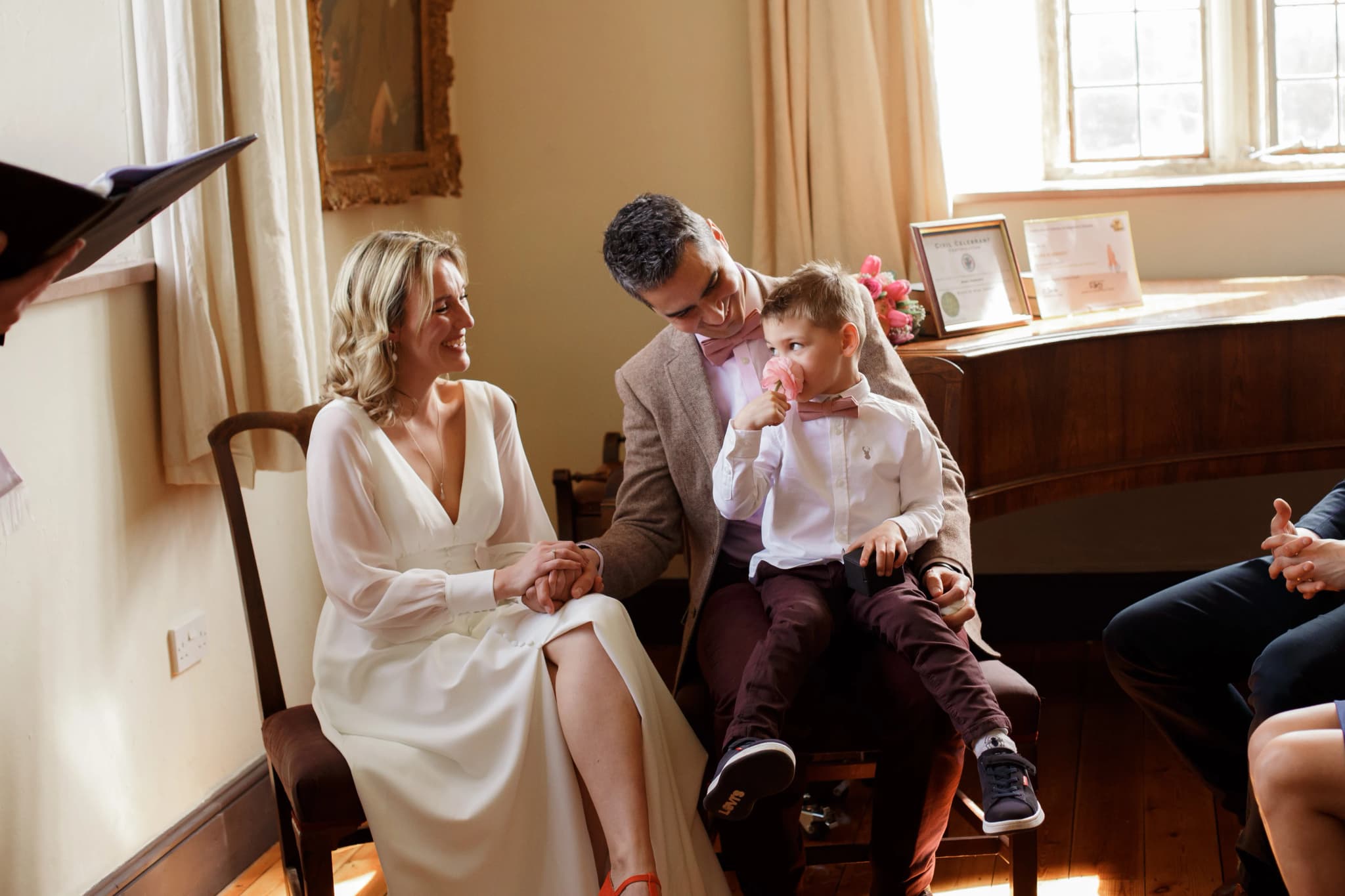
During the ceremony I work quietly and unobtrusively, positioning myself to capture the processional, the exchange of vows, the ring moment, and the first kiss without ever crossing in front of a guest's sightline. I do not use flash during the ceremony at most UK venues — available light and a fast prime lens produce warmer, more intimate results and cause zero distraction.
The signing of the register is often overlooked as a photography moment, but it is one of the most naturally emotional beats of the day. Plan for two to three minutes at the register table and let that moment breathe — it photographs beautifully and gives guests a natural pause before the recessional.
Drinks Reception and Couple Portraits: 3:00pm – 5:30pm
After the ceremony, guests move to the drinks reception — usually a lawn, a courtyard, or a dedicated lounge inside the venue. This is the most documentary-rich part of the day: congratulations, champagne, canapés, and the unscripted interactions that define a wedding's atmosphere. I spend the first 45 minutes entirely on guests and candid coverage before pulling the couple away for portraits.
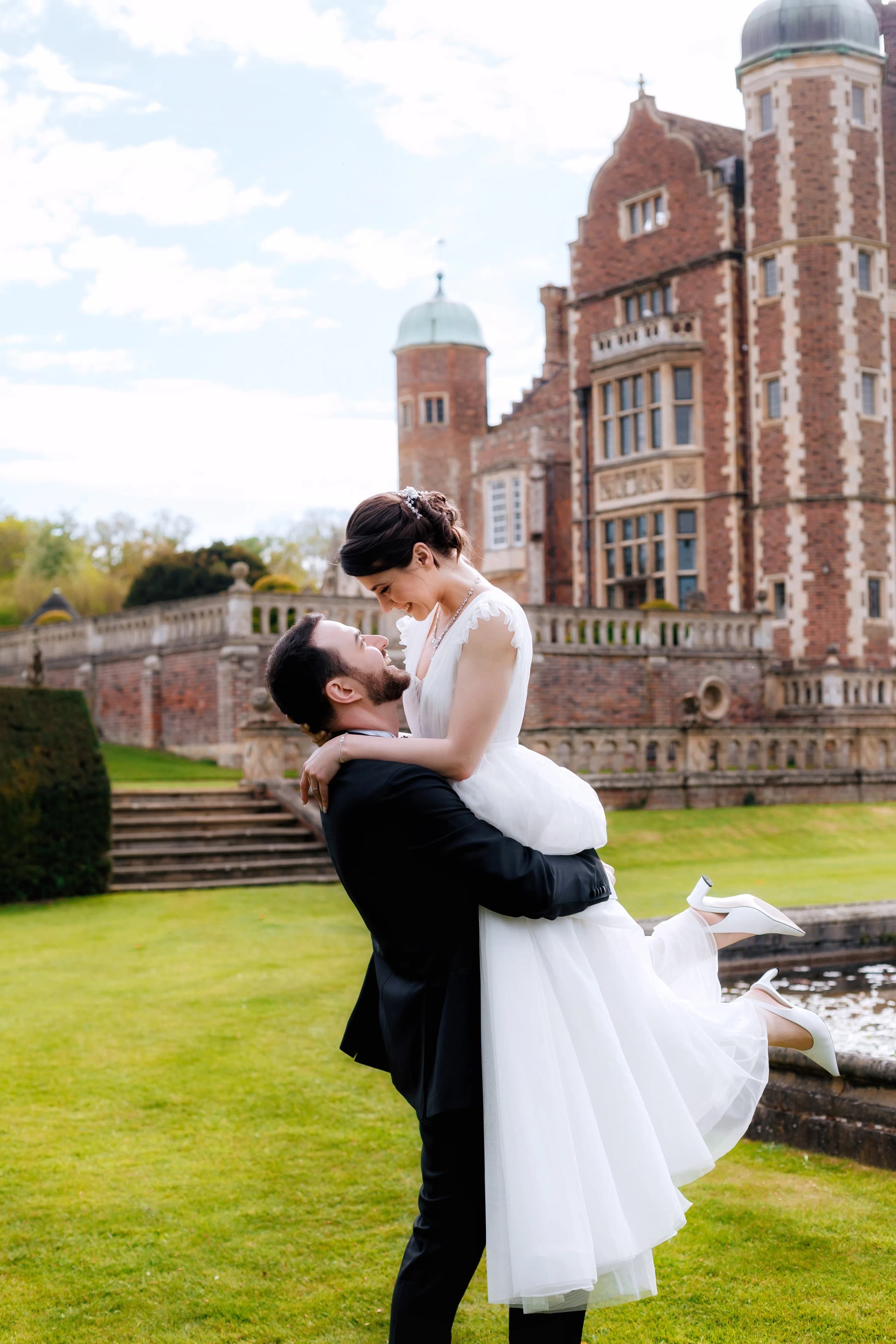
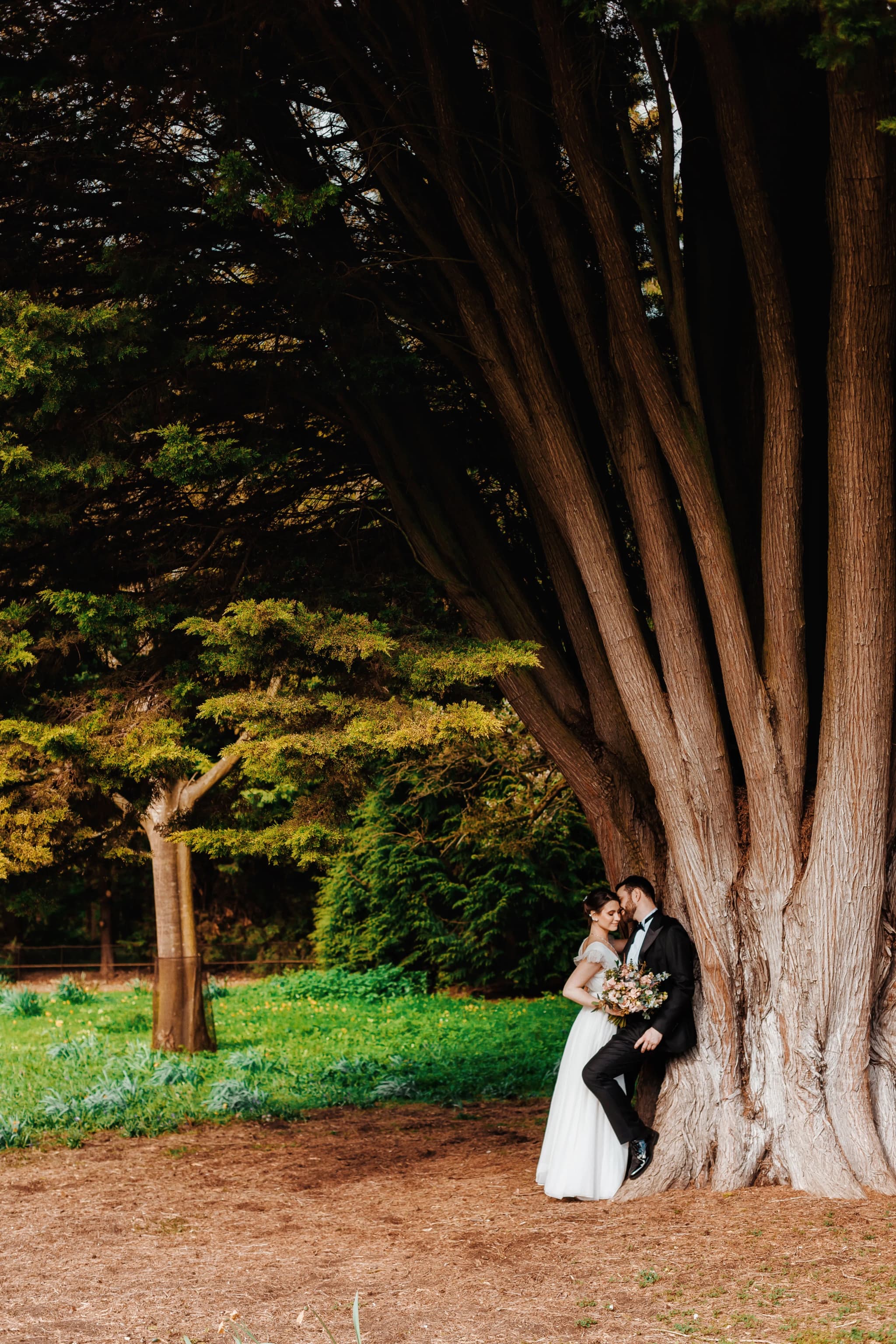
For a 2pm ceremony in the UK, late-afternoon light between 4:00pm and 5:00pm is exceptional — soft, directional, and flattering in a way that harsh midday sun simply is not. I schedule the couple portrait session for approximately 3:45pm – 4:30pm to take full advantage of that window. Twenty to thirty minutes is genuinely enough time for a relaxed, varied set of images; you do not need to disappear from your guests for an hour.
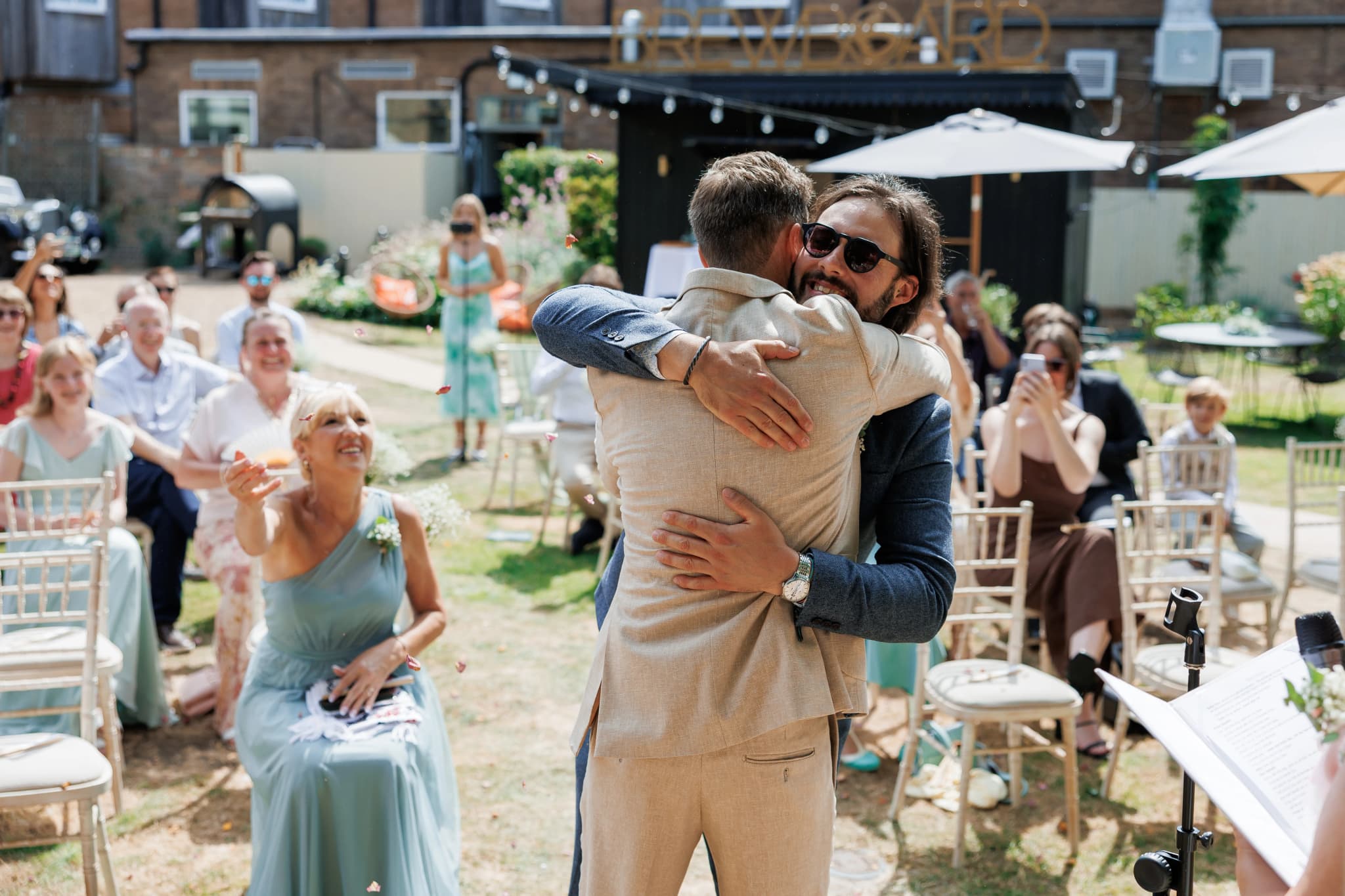
- ◆3:00pm – 3:45pm: Drinks reception opens; documentary coverage of guests, confetti throw if planned, group photographs with immediate family
- ◆3:45pm – 4:30pm: Couple portrait session — ideally in the venue garden or a nearby location with open sky and interesting foreground
- ◆4:30pm – 5:00pm: Larger group photographs (wedding party, extended family); I work from a pre-agreed shot list to keep this efficient
- ◆5:00pm – 5:30pm: Couple rejoins reception; guests begin moving toward the wedding breakfast room; room details and table styling shots
Wedding Breakfast and Speeches: 5:30pm – 8:00pm
Guests are usually called in for the wedding breakfast at around 5:30pm, with the couple's grand entrance shortly after. Speeches in the UK most commonly happen before the meal begins or between courses — confirm the order with your venue coordinator early, because it affects both the catering schedule and the photography coverage. A top table that faces the room will always photograph better than one set against a window; it is worth mentioning to your venue if you care about the images.
The wedding breakfast itself typically runs two to two-and-a-half hours including speeches. I capture table details, the couple's reactions during speeches, and candid moments between courses without becoming intrusive. Many photographers step out during the meal itself — I stay, because some of the most genuine laughter and emotion happens over dinner when everyone has relaxed.
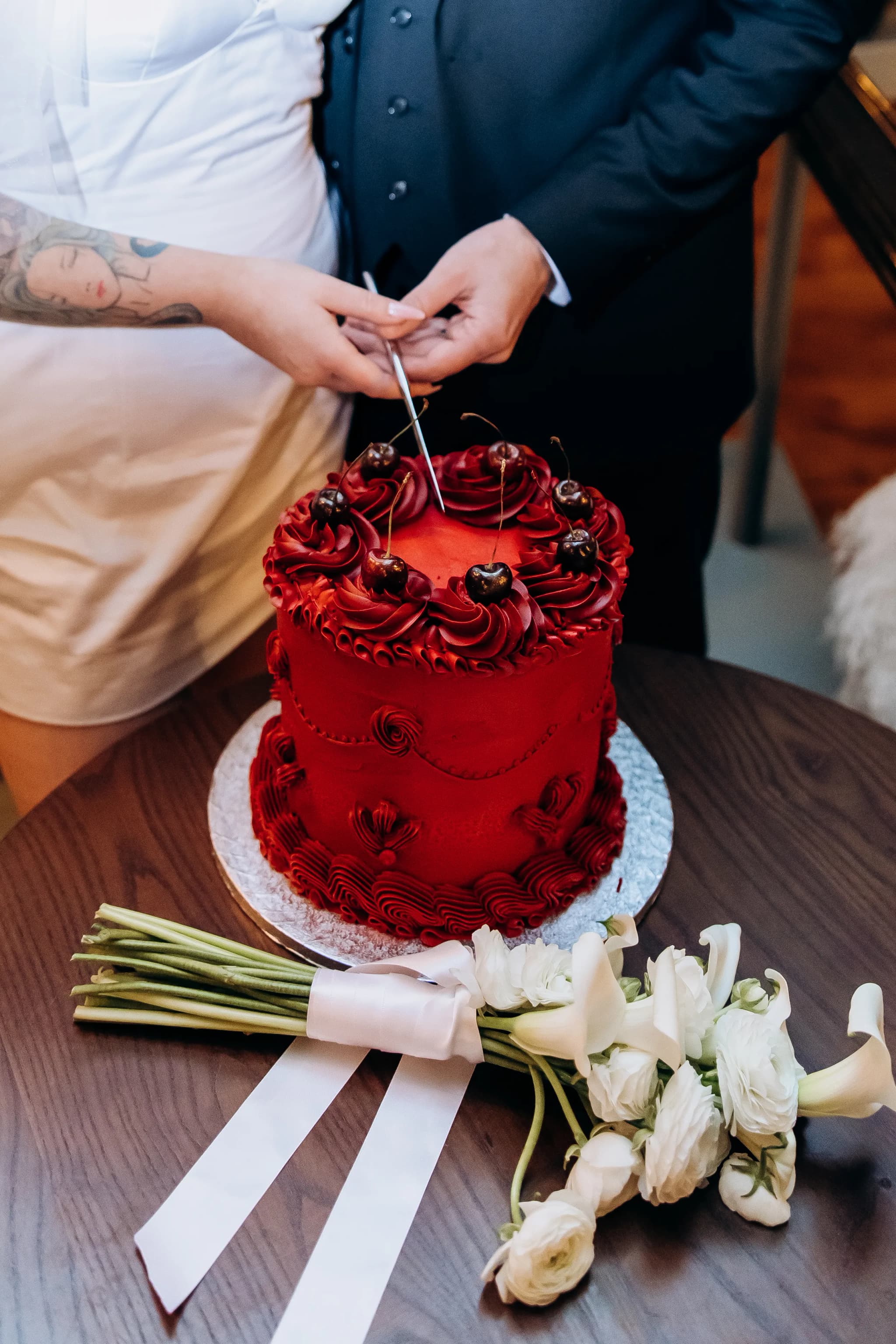
The cake cutting generally happens at around 7:30pm – 7:45pm, bridging the gap between the wedding breakfast and the evening reception. Position the cake in front of a window or against a plain, uncluttered background rather than in a corner — it makes an enormous difference to the final image.
Evening Reception: 8:00pm Onwards
Evening guests typically arrive from 7:30pm or 8:00pm. The first dance usually opens the evening formalities and is followed by the parent dances where planned. I schedule a short golden-hour or blue-hour portrait session at around 8:15pm – 8:30pm if the time of year allows — summer UK evenings stay light until well past 9pm, which produces extraordinary ambient-lit portraits that look nothing like flash photography.
For coverage, I recommend a minimum of 10–11 hours from bridal prep through to approximately one hour into the evening dancing. That captures the full arc of the day without cutting off before the atmosphere really builds on the dance floor. Many of my Cambridge couples opt for full-evening coverage precisely because the candid energy after 9pm is unlike anything earlier in the day.
- ◆Build in buffers: Add 15 minutes of buffer after each major transition — ceremonies run long, relatives arrive late, and a tight timeline turns small delays into a cascade
- ◆Confirm sunset time: Check the actual sunset for your date and location at timeanddate.com; UK sunset varies from 4pm in December to 9:30pm in June, which completely changes portrait timing
- ◆Brief your wedding party: Tell bridesmaids and groomsmen the portrait schedule before the day — hunting for people wastes more time than any other single factor
- ◆Share the timeline with your venue: Your venue coordinator and catering team need the same timeline you give your photographer; misalignment between kitchen and photography is the most common source of schedule drift
- ◆Protect the first look or processional: If you want a first look before the ceremony, build an extra 20 minutes into the pre-ceremony slot — it is worth it for the relaxed portraits that follow
- ◆Leave the evening open: Do not over-schedule the evening reception; the best moments happen spontaneously when guests feel the night is unhurried
A Complete Sample Timeline at a Glance
Every wedding is different, but this skeleton gives you a working starting point for a 2pm ceremony at a UK venue with on-site accommodation or a separate bridal suite nearby.
- ◆8:00am: Hair and makeup begins; photographer arrives at 9:00am for detail and prep shots
- ◆12:30pm: Full wedding party dressed and ready; light lunch if not already arranged
- ◆1:00pm: Bridal party departs for venue; groom and wedding party in position by 1:45pm
- ◆1:30pm: Guests asked to arrive; ushers in place; guest arrival photography begins
- ◆2:00pm: Ceremony begins
- ◆3:00pm: Ceremony ends; confetti, congratulations, drinks reception opens
- ◆3:45pm – 4:30pm: Couple portrait session in best available light
- ◆4:30pm – 5:00pm: Group and family photographs from shot list
- ◆5:30pm: Guests called in for wedding breakfast; couple's entrance
- ◆5:45pm – 6:00pm: Speeches (or between courses — confirm with venue)
- ◆7:30pm: Cake cutting
- ◆7:30pm – 8:00pm: Evening guests arrive
- ◆8:00pm: First dance; evening reception opens
- ◆8:15pm – 8:30pm: Blue-hour/evening portrait session (summer dates especially)
- ◆9:00pm onwards: Dance floor and candid evening coverage
Use this as a template, not a contract. The right timeline is the one that fits your venue, your guest list, and your priorities — and the best way to build it is in conversation with your photographer and venue coordinator together, ideally six to eight months before the date.
Ready to plan your 2pm wedding day together?
As a Cambridge-based wedding photographer I work through the timeline with every couple I book — so you arrive on the day knowing exactly where to be and when the light will be perfect. Check whether your date is still available and let's start planning.
Check Your Date →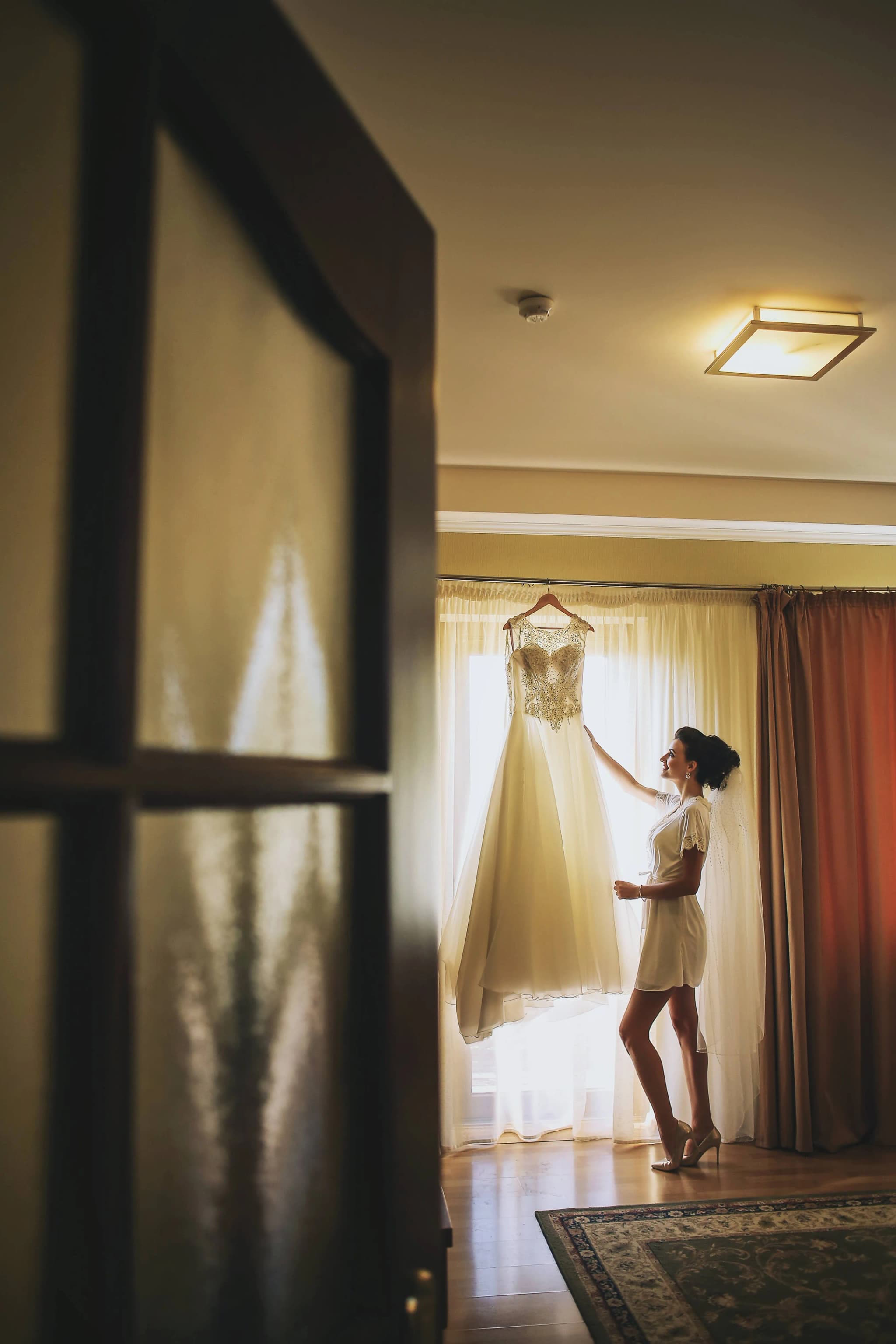

Yana Skakun
Photographer · England
Professional wedding, family and portrait photographer based in England. Passionate about capturing authentic emotions and timeless moments.
About Yana →perfect2pmceremonywedding
Wedding Tips — Wedding Photography in Cambridge & England
Yana Skakun is a professional wedding photographer based in Cambridge, covering weddings across England — from intimate elopements to full-day ceremonies at country houses, barns, and city venues. Every couple receives a relaxed, documentary approach that captures the day as it truly unfolds. This guide — The Perfect 2pm Ceremony Wedding Timeline — is part of the photography journal: practical, experience-based advice drawn from real sessions across England. Whether you arrived searching for perfect or 2pm, the same care and attention shapes every session Yana photographs.
Wedding Photography sessions are available year-round, with bookings open across Cambridge, Ely, Huntingdon, Peterborough, and further afield — East England, London, the Midlands, and beyond. If you have specific questions about ceremony, mention it in your enquiry. Get in touch through the contact form above to check availability and discuss your session. Enquiries are welcomed from anywhere in the UK.
Frequently Asked Questions
How much does a wedding photographer cost in England?+
Wedding photography in England typically ranges from £1,500 to £4,000+ for a full day. Price depends on experience, coverage hours, and whether albums or engagement shoots are included. Most photographers charge between £2,000–£3,000 for 8–10 hours of coverage.
How early should you book a wedding photographer?+
For peak season (May–September), book 12–18 months in advance. For autumn and winter weddings, 9–12 months is usually sufficient. Popular photographers at popular venues fill up fast — as soon as you have a date and venue confirmed, start reaching out.
How many photos do you get from a wedding photographer?+
Most professional wedding photographers deliver 400–800 edited images for a full-day wedding. The exact number depends on coverage hours, how many guests there are, and the photographer's editing style. Quality matters more than quantity — a curated gallery of 500 images tells the story better than 1,500 unedited files.
Do you need a second photographer at your wedding?+
A second photographer is helpful if you want simultaneous coverage of getting-ready moments in different locations, multiple angles during the ceremony, or more candid coverage during the reception. It adds cost but significantly increases the variety and completeness of your gallery.
What is the difference between documentary and editorial wedding photography?+
Documentary (reportage) wedding photography captures moments as they happen — the photographer observes and doesn't intervene. Editorial photography involves deliberate direction: placing you in good light, shaping compositions, creating intentional portraits. Most photographers blend both styles throughout the day.
Continue Reading
Related Articles

Wedding Tips
Sustainable Eco-Friendly Wedding Guide — Planning a Green Celebration
15 min read · Read Article
Wedding Tips
Trash the Dress Session — Complete Planning and Photography Guide
14 min read · Read Article
Wedding Tips
Client Communication for Photographers — From Enquiry to Gallery Delivery
15 min read · Read Article
Get in Touch
Ready to Book Your Session?
Get in touch to discuss your vision — I'll reply within 24 hours.