Yana Skakun

Plus-Size Wedding Photography: Celebrating Every Body
By Yana Skakun·14 April 2026·7 min read
I have photographed brides in size six sample dresses and brides in size twenty-six custom gowns, grooms who spent the morning worrying about their double chin in every mirror and grooms who never gave their body a second thought, and the images that came out of those days were, without exception, determined by the same things: the direction of the light, the angle of the camera, the comfort of the pose, and whether the couple in front of me felt at ease. Body size was never the variable that decided whether a photograph worked. It is one of the most persistent myths in wedding photography that plus-size couples need a fundamentally different approach, a special set of tricks, a photographer who specialises in "flattering the larger figure." What plus-size couples actually need is a photographer who is simply good at their job — who understands light, who poses people naturally rather than rigidly, and who has genuinely photographed enough different bodies to have stopped treating any of them as a problem to be solved. This guide is about what that actually looks like in practice, and what to look for and ask for as you plan your own wedding photography.
The Truth About "Flattering" Photography
The techniques that get labelled as flattering are not specific to any body type. They are physical principles that apply identically to every subject a camera is pointed at: the direction light comes from, the height and angle of the camera relative to the subject, the distance between camera and subject, and the position of the body relative to the lens. A photographer who understands these principles applies them to everyone, automatically, without needing to think consciously about who is standing in front of them. A photographer who does not understand them will produce awkward, unflattering images of a slim size-eight bride just as readily as of a plus-size one — the shadows will fall wrong, the angle will be unflattering, the pose will look stiff, regardless of who is wearing the dress. This is worth saying plainly because plus-size couples are so often sold the idea that they need a specialist, when what they actually need is competence, applied evenly.
Where I do think experience matters is confidence and calm. A photographer who has photographed hundreds of different bodies across hundreds of weddings has already worked through every practical question — how does this fabric move, where does this pose feel most comfortable for a fuller figure, how do I frame a group shot so nobody feels tucked awkwardly behind someone else — and that fluency shows up as ease on the day. There is no hesitation, no fumbling, no visible working-out of the "how do I photograph this person" problem in real time. That calm confidence is genuinely reassuring for couples who have spent years being made to feel like their body is a photographic challenge rather than simply a body.
Light Is the Foundation, Not the Afterthought
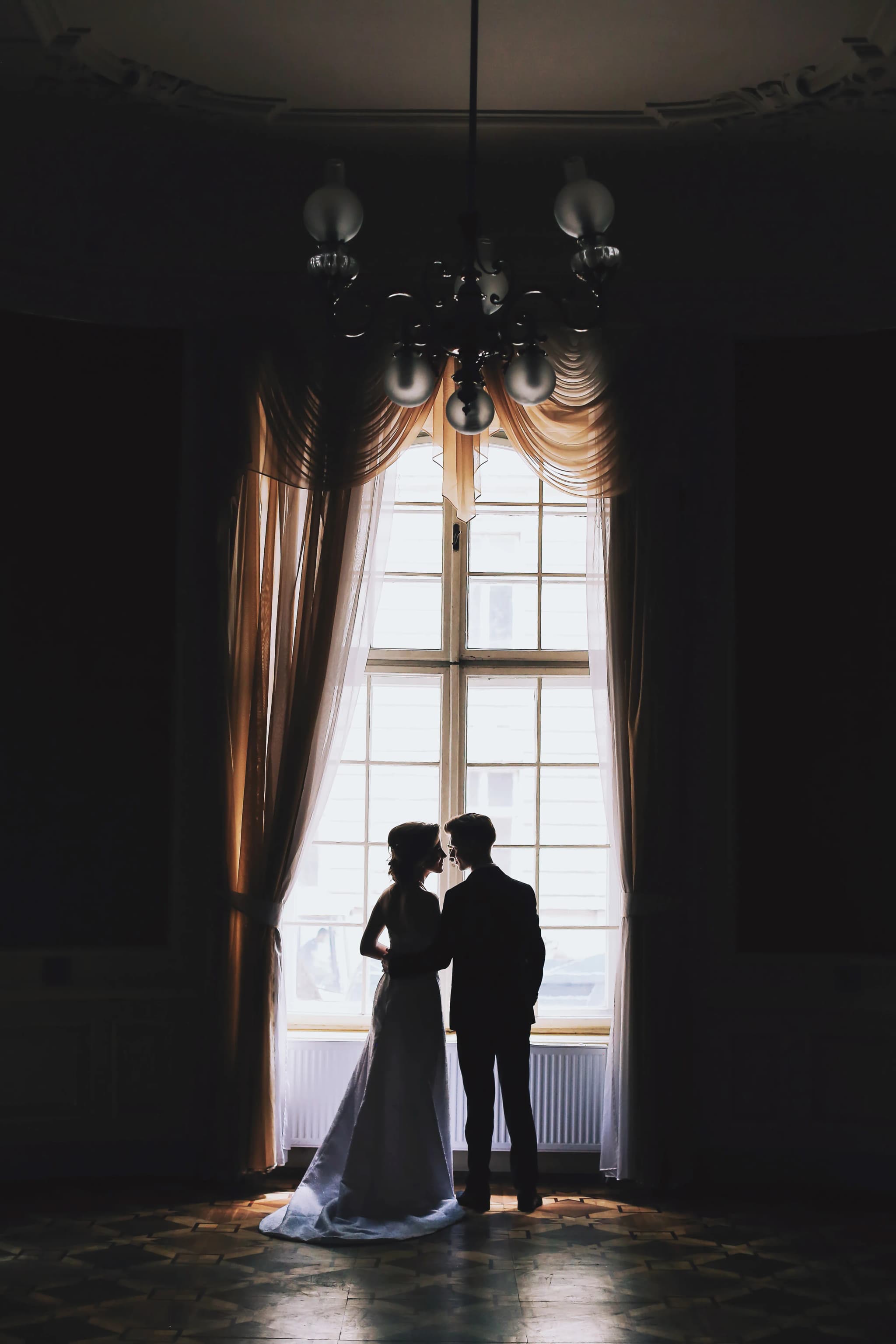
If there is one single factor that determines whether a portrait looks flattering, it is light — specifically, soft and directional light rather than harsh and flat light. Overcast daylight, open shade, a large window with diffused sunlight, or the low warm side-light of golden hour all wrap gently around a subject's features, soften the transition between light and shadow, and reduce the appearance of texture and contour lines. Harsh midday sun directly overhead, or an on-camera flash pointed straight at a subject, does the opposite for every single person it touches: it creates hard shadows under the eyes and chin, flattens depth, and picks out every texture on the skin and clothing. This is true of every body. It is simply more visible in photographs of larger bodies because there is more surface area for those harsh shadows to fall across, which is exactly why so many plus-size people have accumulated a lifetime of bad experiences with cameras pointed at them in bright sun or bounced flash at a family barbecue, and have understandably concluded that cameras themselves are the enemy. They are not. Bad light is the enemy, for everyone.
On a wedding day, this means I am actively managing where portraits happen and when. If the ceremony is at midday in full summer sun, I will look for a covered walkway, the shaded side of a building, or a spot beneath trees rather than posing a couple in direct overhead light. If we are shooting the couple portraits in the early evening, I will position people so the sun is behind or to the side of them, using it as a soft rim light rather than shooting them squarely into it. None of this is a special adaptation for plus-size couples — it is simply how good outdoor portrait photography is done, and it benefits everyone in the frame, but I am conscious that getting it right matters even more for couples who have spent years feeling like the camera was against them.
Posing That Feels Natural, Not Forced
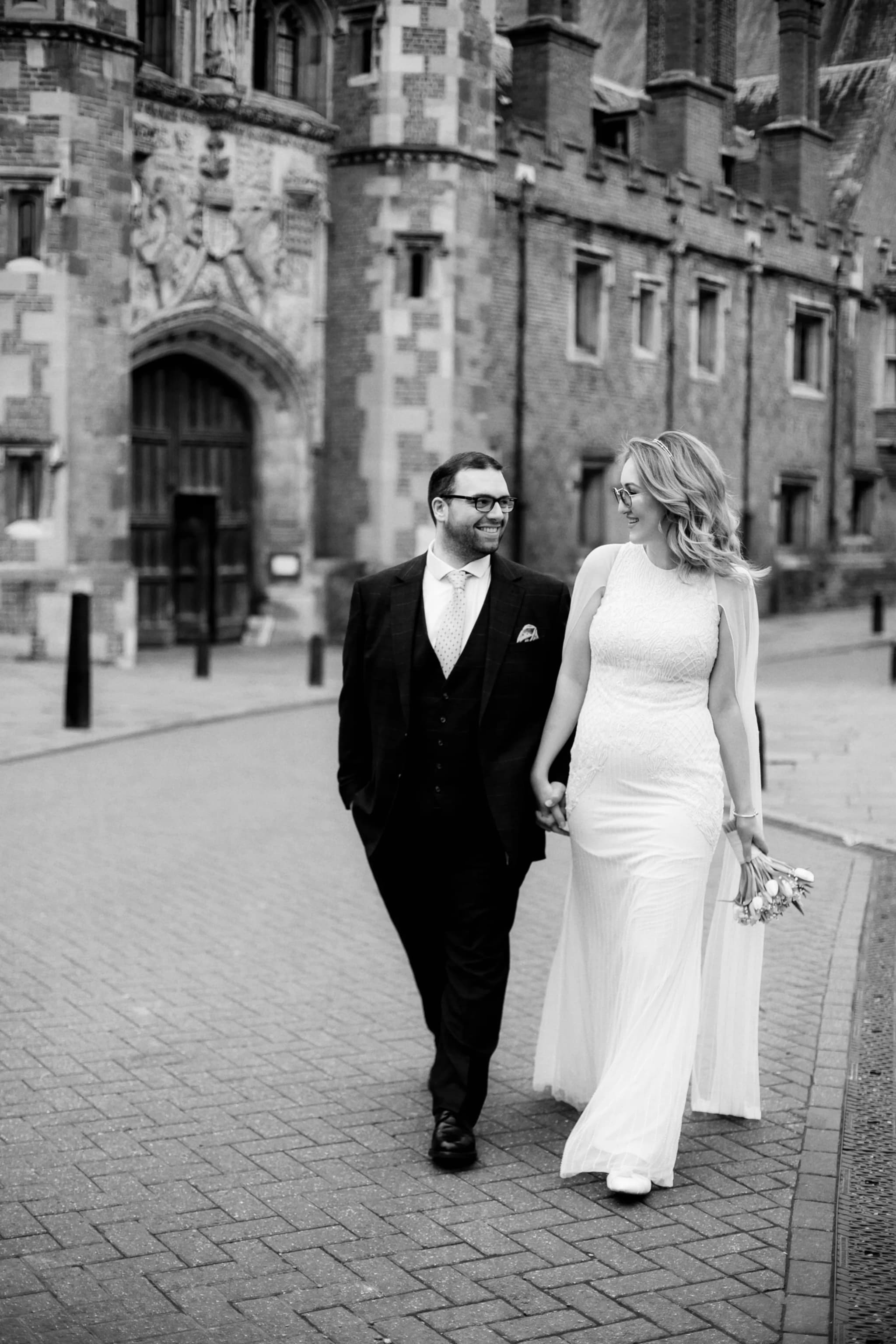
The most flattering poses across every body type are, almost without exception, the poses that feel the most natural and require the least effort to hold. A rigid, square-on stance facing the camera directly is uncomfortable to hold and photographically unflattering for nearly everyone — it compresses the body into its widest possible silhouette. Turning slightly at an angle, so one shoulder is a little closer to the camera than the other, immediately creates a more dynamic, more comfortable, and more slimming line, and it is a far more natural way for a body to stand than dead square. Shifting weight onto the back foot, letting the front knee soften, creates a gentle curve through the body that reads as relaxed rather than posed. Hands are usually more comfortable and more photogenic resting lightly — on a partner's chest, laced loosely together, tucked into a pocket — than pressed flat against the sides of the body, which tends to widen the appearance of the arms and looks stiff regardless of who is holding the pose.
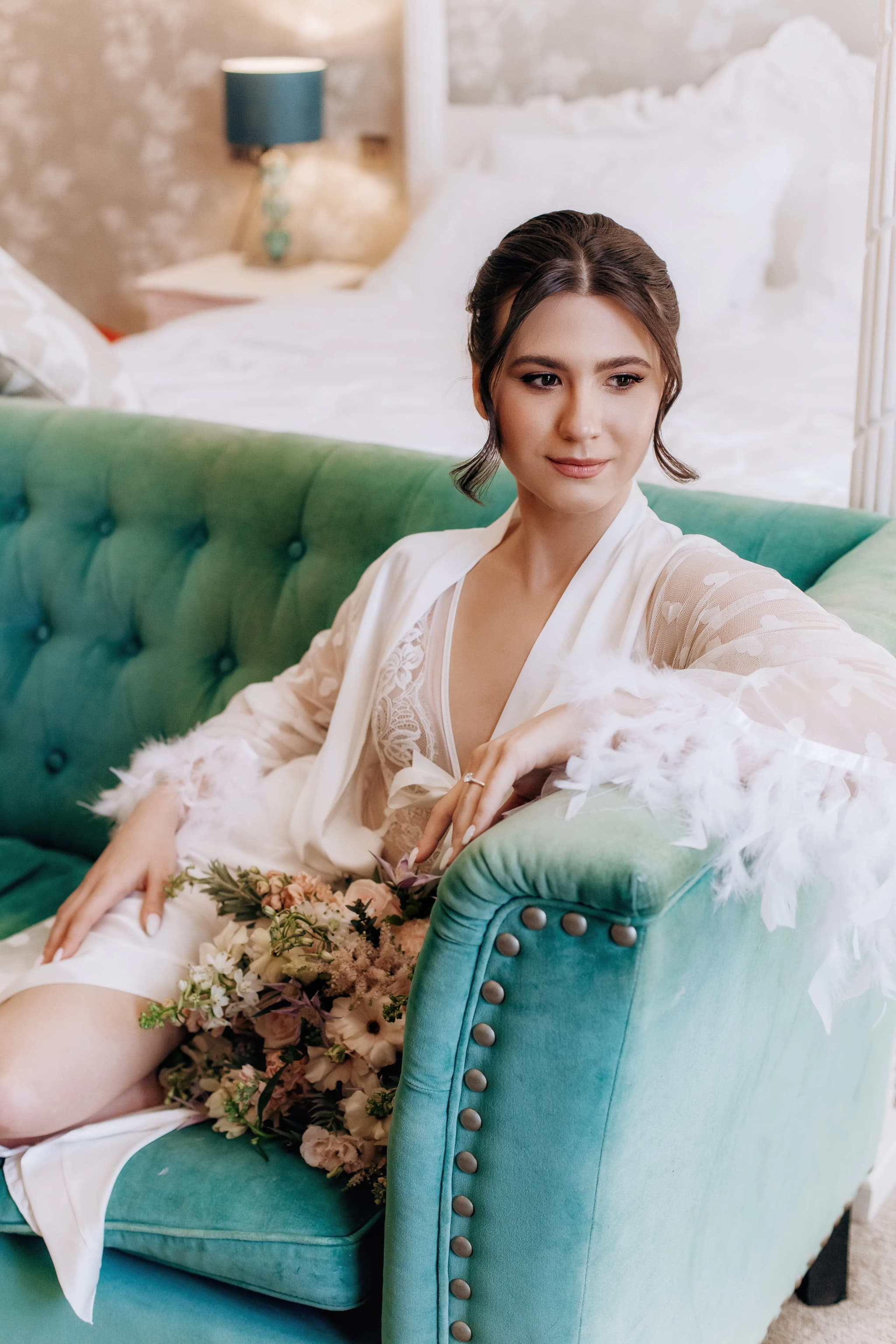
For seated portraits, which come up constantly at receptions and during getting-ready coverage, I pay particular attention to posture and the angle of the camera. Shooting from slightly above eye level while a subject leans forward a little, elbows resting on knees, tends to be far more flattering than shooting straight-on or from below, which can compress and widen the middle of the body in a way that feels unflattering to almost anyone. Again, none of this is a secret plus-size trick — it is basic portrait posing knowledge that a genuinely experienced wedding photographer applies to every single subject, all day, without needing to be asked.
The instruction I give every couple, regardless of size, is the same: find the position that feels the most comfortable to hold for several seconds without straining, and let me adjust the small details from there. A pose that feels forced almost always looks forced in the final image. A pose that feels easy almost always photographs as ease.
Fabric, Fit, and What to Wear
Clothing choices genuinely affect how photographs turn out, for the couple and for the wider bridal party, and this is worth thinking about ahead of the day rather than leaving to chance. Structured fabrics that hold their own shape — a well-tailored jacket, a corseted or boned bodice, a dress with some structure through the waist — tend to photograph with cleaner lines than very soft, clingy jersey fabrics, which can crease and cling in ways that read unflatteringly in stills even when they feel perfectly comfortable to wear. This applies to bodies of every size, though the effect is often more visible on a fuller figure simply because there is more fabric in play. A well-fitted dress in a size that matches the body rather than one chosen a size smaller "to motivate weight loss" before the wedding will almost always photograph better and feel more comfortable to move and dance in.
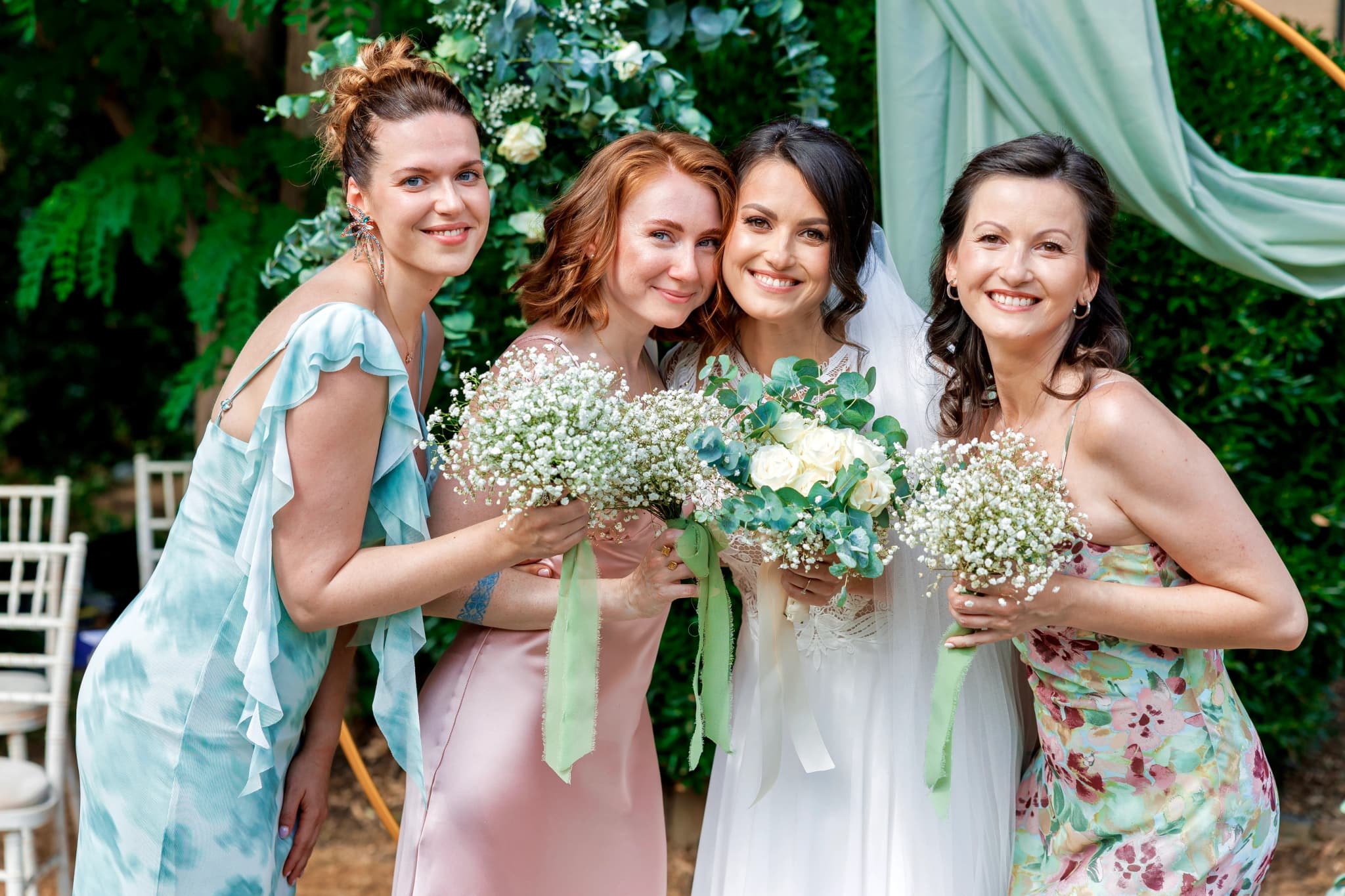
For bridal party coordination, I always encourage couples to let each member of the party choose the specific cut and style of a coordinating colour or fabric that suits their own body, rather than forcing an identical style onto every bridesmaid or groomsman regardless of shape. A group of bridesmaids in the same fabric and colour but different flattering cuts photographs beautifully and cohesively; a group forced into an identical cut that suits some bodies and not others creates a very visible unevenness in every group photograph, and that unevenness has nothing to do with any individual's body and everything to do with a styling decision made without their input.
Choosing a Photographer Who Actually Gets It Right
The most reliable way to judge whether a photographer will do right by you is to look carefully at their existing portfolio, not just at the handful of images they lead with. Scroll through several full wedding galleries, not just the highlight reel. Are there couples of a range of different body types represented across those galleries? Are those couples photographed with the same warmth, the same technical quality, and the same apparent ease and confidence as everyone else in the portfolio, or is there a visible dip in quality — awkward angles, harsher light, more distant or less engaged-looking couples — whenever a larger body appears in frame? That pattern, when it exists, is very telling, and it is far more informative than anything a photographer says about themselves in an "about me" page.
It is also entirely reasonable to ask a prospective photographer directly, during a consultation call, how they approach posing and lighting for different body types, and to pay attention not just to what they say but to how comfortable and unbothered they seem answering the question. A photographer who has genuinely thought about this will answer easily, specifically, and without treating the question as awkward or unusual. A photographer who seems flustered, or who leans on vague reassurance rather than any specific technical answer, may simply not have the experience yet.
Wedding photography for every couple, at every size
I photograph every couple who books with me with exactly the same care, the same technical attention, and the same creative investment. Your body is never a problem to be solved — it is simply what I am photographing, with the same skill I bring to every wedding.
Get in touch about your weddingQuestions Worth Asking Before You Book
A short, practical list of questions can save a great deal of anxiety later. Ask to see two or three full wedding galleries rather than a curated highlight reel, so you can judge consistency rather than just peak moments. Ask how the photographer handles posing for group and family shots, particularly if your bridal party includes a wide range of body types — a photographer who has a thoughtful, practised answer for arranging groups so that nobody is left standing awkwardly at the back or half-hidden behind someone else is a photographer who has clearly done this before. Ask how much time is allocated for couple portraits, since rushed portraits tend to produce stiffer, less natural poses regardless of who is in them, and a relaxed pace generally benefits every couple. And ask, plainly, whether they are comfortable giving direction during posing — the couples who feel most at ease in their photographs are almost always the ones who were given clear, kind, specific guidance throughout the session, rather than being left to guess what to do with their hands.
None of these questions are really about body size at all. They are simply the questions that separate a genuinely experienced, thoughtful wedding photographer from one who is not, and that experience benefits every couple who books them, whatever their size, whatever their body, whatever their history with cameras. Good wedding photography has never been about who has the "right" body for it. It is about a photographer who knows how to use light, angle, and genuine rapport to make any two people look like themselves on the best day of their lives. If you would like to talk through your wedding day and how I would approach photographing it, get in touch and we can arrange a time to talk.

Yana Skakun
Photographer · England
Professional wedding, family and portrait photographer based in England. Passionate about capturing authentic emotions and timeless moments.
About Yana →plus size wedding photographer ukplus size bride photography tipsbody positive wedding photographywedding photography every body type
Wedding Tips — Wedding Photography in Cambridge & England
Yana Skakun is a professional wedding photographer based in Cambridge, covering weddings across England — from intimate elopements to full-day ceremonies at country houses, barns, and city venues. Every couple receives a relaxed, documentary approach that captures the day as it truly unfolds. This guide — Plus-Size Wedding Photography: Celebrating Every Body — is part of the photography journal: practical, experience-based advice drawn from real sessions across England. Whether you arrived searching for plus size wedding photographer uk or plus size bride photography tips, the same care and attention shapes every session Yana photographs.
Wedding Photography sessions are available year-round, with bookings open across Cambridge, Ely, Huntingdon, Peterborough, and further afield — East England, London, the Midlands, and beyond. If you have specific questions about body positive wedding photography, mention it in your enquiry. Get in touch through the contact form above to check availability and discuss your session. Enquiries are welcomed from anywhere in the UK.
Frequently Asked Questions
How much does a wedding photographer cost in England?+
Wedding photography in England typically ranges from £1,500 to £4,000+ for a full day. Price depends on experience, coverage hours, and whether albums or engagement shoots are included. Most photographers charge between £2,000–£3,000 for 8–10 hours of coverage.
How early should you book a wedding photographer?+
For peak season (May–September), book 12–18 months in advance. For autumn and winter weddings, 9–12 months is usually sufficient. Popular photographers at popular venues fill up fast — as soon as you have a date and venue confirmed, start reaching out.
How many photos do you get from a wedding photographer?+
Most professional wedding photographers deliver 400–800 edited images for a full-day wedding. The exact number depends on coverage hours, how many guests there are, and the photographer's editing style. Quality matters more than quantity — a curated gallery of 500 images tells the story better than 1,500 unedited files.
Do you need a second photographer at your wedding?+
A second photographer is helpful if you want simultaneous coverage of getting-ready moments in different locations, multiple angles during the ceremony, or more candid coverage during the reception. It adds cost but significantly increases the variety and completeness of your gallery.
What is the difference between documentary and editorial wedding photography?+
Documentary (reportage) wedding photography captures moments as they happen — the photographer observes and doesn't intervene. Editorial photography involves deliberate direction: placing you in good light, shaping compositions, creating intentional portraits. Most photographers blend both styles throughout the day.
Continue Reading
Related Articles
Wedding Tips
Sustainable Eco-Friendly Wedding Guide — Planning a Green Celebration
15 min read · Read Article
Wedding Tips
Trash the Dress Session — Complete Planning and Photography Guide
14 min read · Read Article
Wedding Tips
Client Communication for Photographers — From Enquiry to Gallery Delivery
15 min read · Read Article
Get in Touch
Ready to Book Your Session?
Get in touch to discuss your vision — I'll reply within 24 hours.