Yana Skakun

Shooting in Small Bridal Prep Rooms: Why a Wide Lens is Crucial
By Yana Skakun·25 June 2026·7 min read
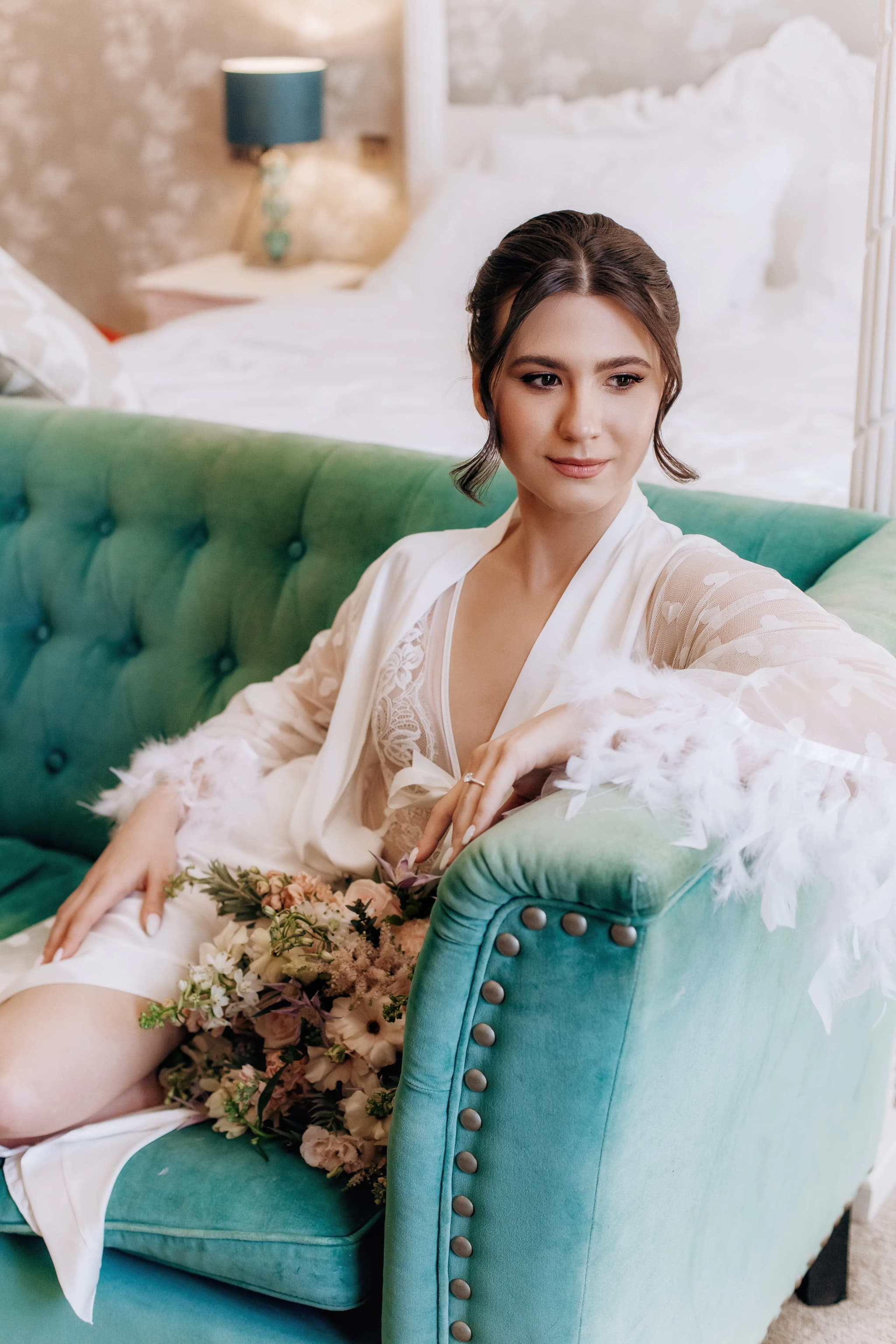
There is a particular moment on almost every wedding morning when I walk into the room where the bride is getting ready, take one look around, and start doing mental arithmetic. Where is the window. Where is the mirror. How many people are already in here, and how many more are about to arrive with dresses, curling wands, and prosecco. Is there a wardrobe door swinging open that is going to end up in every frame unless I move it. Some getting ready rooms are wonderful — high ceilings, good light, space to breathe. Many, particularly in the smaller guest houses, converted barns, and older hotels that make up a lot of the Cambridgeshire and wider East Anglian wedding scene, are not. They are a spare bedroom, a hotel double, or a corner of a farmhouse that was never designed to hold six adults, a rail of bridesmaid dresses, and a photographer all trying to occupy the same twelve square metres at once. Over years of shooting these mornings I have come to think of the small prep room not as a problem to complain about but as the single situation where lens choice matters more than almost anywhere else in the wedding day. This is why a wide-angle lens, used carefully, is not a luxury for these rooms — it is the difference between photographs that feel calm and spacious and photographs that feel like everyone is standing on top of each other.
Why Small Rooms Break the Usual Rules of Portrait Photography
Most wedding portraiture is shot on longer focal lengths — something in the 50mm to 135mm range on a full-frame body — because that range compresses the background gently and flatters faces without any of the distortion you get up close with a wide lens. That approach works beautifully outdoors, in a spacious reception room, or anywhere you have distance to work with. The entire logic depends on being able to physically step back from your subject far enough for the lens to do its job.
A small prep room removes that option entirely. If the room is fifteen feet by twelve feet and already has a bed, a dressing table, two suitcases, and four people in it, there is often nowhere to stand more than six or seven feet from the bride even with your back against the wall. Try to shoot a normal three-quarter portrait on an 85mm lens in that space and you physically cannot get the shot — you would need to be standing in the corridor with the door open, which brings its own problems of light, sound, and dignity. The room simply will not allow the working distance that longer lenses require, so the lens has to change to suit the room rather than the room bending to suit the lens.
There is also the question of what a small room does to light and to a sense of claustrophobia in the final images. Getting ready mornings are meant to feel relaxed, intimate, and a little bit indulgent — dressing gowns, laughter, someone's mother crying happily in the corner. If every photograph is tightly cropped because there was nowhere to stand back, the whole set can end up feeling cramped and anxious rather than warm, even if the actual mood in the room was lovely. Lens choice directly shapes the emotional read of the finished gallery, and in a small room that choice becomes unavoidable rather than optional.
What a Wide Lens Actually Solves
A wide-angle lens, typically somewhere in the 16mm to 24mm range on a full-frame camera, changes the maths of the room. Because the angle of view is so much broader, I can stand in a corner, with my back nearly against the wallpaper, and still fit the bride, her dress on its hanger, the window light, and two or three people around her into a single frame. Where an 85mm lens needs seven or eight feet of clear space to work, a 20mm lens can produce a full, well-composed image from a working distance of three or four feet. In a room where every foot of space is precious, that difference is everything.
The wider field of view also lets me tell the story of the room itself, not just the person in it. A getting ready room is full of detail that matters to the couple later — the dress hanging in the window, shoes lined up by the door, a grandmother's handkerchief on the dressing table, siblings doing each other's hair in the mirror. A longer lens isolates one small piece of that scene at a time. A wide lens can hold several of those elements together in one honest, contextual frame, which tends to produce the images that couples describe as capturing "what the morning actually felt like" rather than a series of disconnected close-ups.
There is a practical side too. Wide lenses generally let more light in relative to their physical size and tend to perform well even at moderate apertures, which matters in rooms that often have limited natural light — a single north-facing window, heavy curtains, or overhead lighting that does nothing flattering for skin tones. Being able to shoot handheld at a reasonably fast shutter speed without needing flash preserves the soft, natural quality of whatever daylight the room does have, which almost always looks better than a flash bounced awkwardly off a low ceiling.
The Genuine Risks of Shooting Wide, and How I Manage Them
None of this means a wide lens is a simple fix you can point and shoot without thought. Wide-angle lenses distort what is near the edges of the frame, and the effect gets more pronounced the closer the subject is to the camera and the closer to the edge of the frame they sit. A face positioned near the corner of a wide shot can look subtly stretched in a way that is unflattering and, if you are not careful, quite noticeable to the person looking at their own photograph months later. This is the single biggest risk of the approach and the reason some photographers avoid wide lenses for people altogether.
I manage this in a few deliberate ways. First, I keep faces as close to the centre of the frame as the composition allows, since distortion is mildest there and increases toward the edges. Second, I am careful about distance — getting too close to a face with a wide lens is where the worst distortion happens, so even in a tight room I try to find a few extra inches of working distance rather than pressing right up against my subject. Third, I use wide shots selectively rather than as the only tool in the room. A prep room set works best as a mix: some genuinely wide, environmental frames that show the whole space and everyone in it, combined with tighter details shot on a standard lens for hands, jewellery, the dress fabric, and close portrait moments where a wide lens would do faces no favours at all.
Straight lines are the other thing to watch. Wide lenses can bow doorframes, window edges, and furniture if the camera is angled up or down rather than held level, an effect that is subtle in a wide scene but obvious the moment there is a door frame or mirror in shot. I try to keep the camera as level as possible and correct minor convergence in editing afterwards, but the best fix is simply shooting it right in camera — checking the edges of the frame before pressing the shutter, not just the subject in the middle.
How I Actually Work a Small Room on the Morning
The first thing I do on arrival, usually before I have even said a proper good morning to everyone, is a quick scan of the room for light and space. Where is the window, and which way is it facing. Is there a mirror I can use for a reflection shot, which is often the single best way to make a small room feel larger and more interesting in a photograph. Where is the least cluttered wall I can use as a clean background. Small adjustments made in the first two minutes — moving a suitcase out of shot, opening a curtain fully, asking for a chair to be moved six inches — save far more time than trying to work around clutter for the next hour.
Through the morning I move constantly between wide and standard focal lengths depending on what is happening. Getting into a dress is a moment I often shoot wide, because it usually involves two or three people helping and the whole choreography of the moment is worth keeping in frame. A quiet moment of the bride looking in the mirror alone, by contrast, is often better on a slightly longer lens from whatever distance the room allows, even if that means a tighter crop than I would choose outdoors. Jewellery, shoes, invitations, and other flat lay details get shot separately, usually near the window where the light is best, regardless of how tight the rest of the room is.
I also make a point of asking, gently, for the room to be tidied of anything that will not be needed again before the morning is over — empty coffee cups, phone chargers, the box the dress arrived in. It sounds like a small thing, but in a room where every square foot appears in nearly every wide photograph, a cluttered surface in the background of one frame tends to show up in several. A minute of tidying at the start of the morning does more for the final gallery than almost any amount of skilful lens work later on.
Planning your getting ready morning
If you are choosing where to get ready, or wondering whether your room will work for photographs, I am always happy to talk it through before the day — window direction, room size, and timings all make a genuine difference to how the morning looks in your gallery.
Ask about your getting ready roomWhat Couples Can Do to Help Their Photographer in a Small Room
A handful of simple decisions made before the morning even begins can transform how a small room photographs. Keeping the guest list for the prep room itself modest is the biggest one — a room that comfortably fits four people for photographs can feel completely unworkable with nine, however welcome and lovely all nine of them are. I always suggest that the people who genuinely need to be in the room for the practical business of getting ready — the person doing hair, the person doing makeup, perhaps one or two close family or friends — are the priority, with others popping in for particular moments rather than staying for the whole morning.
Choosing a room with a window, even a small one, matters enormously. Artificial overhead lighting in most guest houses and hotels is not designed with photography in mind, and no lens, wide or otherwise, fully compensates for a room lit only by a single yellow-toned ceiling bulb. If there is a choice of rooms on the morning, the one with the best natural light is almost always worth choosing over the one with slightly more floor space.
Finally, building in a realistic amount of time helps more than anything else. A rushed morning in a small room compounds every other challenge — there is no time to tidy a cluttered surface, no time to wait for a cloud to pass and soften harsh window light, no time to gently ask two people to step into the hallway for five minutes so I can get a clean, spacious-looking shot. A morning with breathing room lets me use the space thoughtfully rather than working against the clock as well as against the walls.
A small prep room is never going to photograph exactly like a bright, spacious suite, and I do not pretend otherwise to couples when we are planning the day. But a small room, worked well, produces its own kind of photograph — intimate, a little chaotic in the best way, full of the genuine closeness that comes from everyone being pressed into one space together on a morning that matters. The wide lens is simply the tool that makes that honest, cosy version of the morning possible to capture properly, rather than forcing a set of cropped, disconnected close-ups because there was nowhere left to stand. If you are planning your wedding morning and want to talk through your venue, your room, or anything else about how the day will be photographed, get in touch and we can go through it together well before the morning itself arrives.

Yana Skakun
Photographer · England
Professional wedding, family and portrait photographer based in England. Passionate about capturing authentic emotions and timeless moments.
About Yana →getting ready room photographybridal prep photographywedding photography tipswide angle wedding lenssmall hotel room wedding photos
Wedding Tips — Wedding Photography in Cambridge & England
Yana Skakun is a professional wedding photographer based in Cambridge, covering weddings across England — from intimate elopements to full-day ceremonies at country houses, barns, and city venues. Every couple receives a relaxed, documentary approach that captures the day as it truly unfolds. This guide — Shooting in Small Bridal Prep Rooms: Why a Wide Lens is Crucial — is part of the photography journal: practical, experience-based advice drawn from real sessions across England. Whether you arrived searching for getting ready room photography or bridal prep photography, the same care and attention shapes every session Yana photographs.
Wedding Photography sessions are available year-round, with bookings open across Cambridge, Ely, Huntingdon, Peterborough, and further afield — East England, London, the Midlands, and beyond. If you have specific questions about wedding photography tips, mention it in your enquiry. Get in touch through the contact form above to check availability and discuss your session. Enquiries are welcomed from anywhere in the UK.
Frequently Asked Questions
How much does a wedding photographer cost in England?+
Wedding photography in England typically ranges from £1,500 to £4,000+ for a full day. Price depends on experience, coverage hours, and whether albums or engagement shoots are included. Most photographers charge between £2,000–£3,000 for 8–10 hours of coverage.
How early should you book a wedding photographer?+
For peak season (May–September), book 12–18 months in advance. For autumn and winter weddings, 9–12 months is usually sufficient. Popular photographers at popular venues fill up fast — as soon as you have a date and venue confirmed, start reaching out.
How many photos do you get from a wedding photographer?+
Most professional wedding photographers deliver 400–800 edited images for a full-day wedding. The exact number depends on coverage hours, how many guests there are, and the photographer's editing style. Quality matters more than quantity — a curated gallery of 500 images tells the story better than 1,500 unedited files.
Do you need a second photographer at your wedding?+
A second photographer is helpful if you want simultaneous coverage of getting-ready moments in different locations, multiple angles during the ceremony, or more candid coverage during the reception. It adds cost but significantly increases the variety and completeness of your gallery.
What is the difference between documentary and editorial wedding photography?+
Documentary (reportage) wedding photography captures moments as they happen — the photographer observes and doesn't intervene. Editorial photography involves deliberate direction: placing you in good light, shaping compositions, creating intentional portraits. Most photographers blend both styles throughout the day.
Continue Reading
Related Articles

Wedding Tips
Sustainable Eco-Friendly Wedding Guide — Planning a Green Celebration
15 min read · Read Article
Wedding Tips
Trash the Dress Session — Complete Planning and Photography Guide
14 min read · Read Article
Wedding Tips
Client Communication for Photographers — From Enquiry to Gallery Delivery
15 min read · Read Article
Get in Touch
Ready to Book Your Session?
Get in touch to discuss your vision — I'll reply within 24 hours.