Yana Skakun
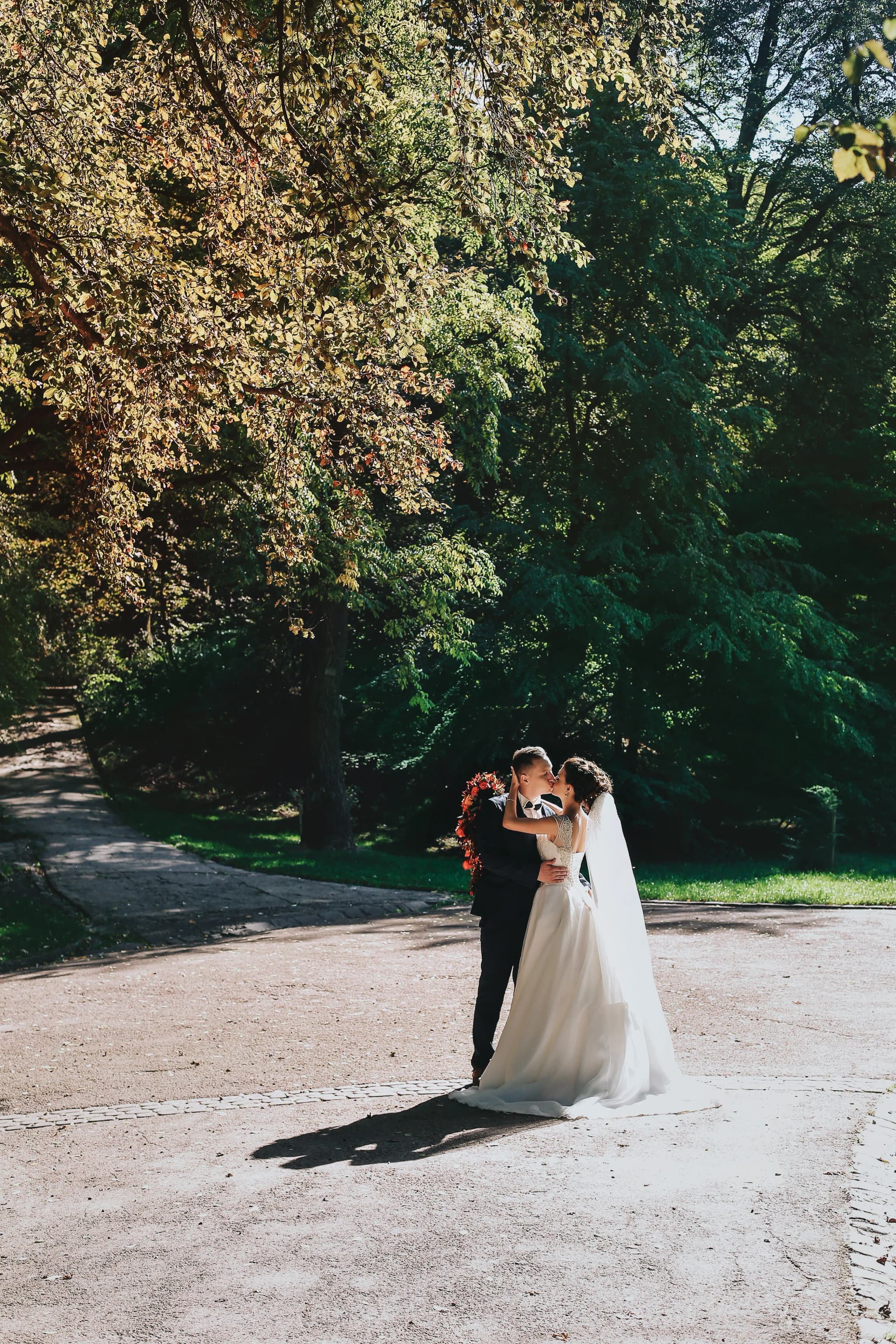
Siena Wedding Photography: Medieval City & Palio Country
By Yana Skakun·10 April 2026·7 min read
Siena is medieval Tuscany at its most authentic — a city of rose-red brick rising dramatically above the Crete Senesi, its historic centre virtually unchanged for six hundred years. There is no glass, no steel, no visible modernity anywhere within the old walls, which is precisely what makes it such a remarkable place to photograph a wedding. The Campo, one of Europe's greatest public squares, the black-and-white striped Duomo, the narrow contrada lanes hung with painted flags, and the panoramas from the Fortezza walls all create wedding photography of a richness that is genuinely difficult to find anywhere else in Italy. I travel from Cambridge for a handful of Tuscan weddings each season, and Siena is consistently one of the destinations I look forward to most — it photographs beautifully in almost any light, at almost any time of year, which is not something you can say about every historic city.
Il Campo — Europe's greatest square
The Campo is Siena's shell-shaped central piazza, a sloping expanse of herringbone red brick divided into nine segments in honour of the medieval Government of the Nine, encircled by austere medieval palazzi and overlooked by the Torre del Mangia, which rises 102 metres above the Palazzo Pubblico. In the middle of the day, in high season, it is thronged with visitors and can feel more like a stage set than a place to work quietly. But early in the morning, before the cafes have set out their tables, or in the last hour of light when the crowds thin and the brick turns amber, the Campo becomes one of the most extraordinary portrait environments in Italy. The slope of the piazza itself is useful photographically — it lets me shoot down the incline toward the Palazzo Pubblico with the whole sweep of the square behind a couple, or from below looking up at the tower against the sky, without a single visible sign of the twenty-first century anywhere in frame.
For couples who want that unbroken medieval backdrop — no cars, no modern signage, no obvious tourist clutter — the Campo at dawn is worth the early alarm. I generally build a short window into the morning-after-ceremony timeline, or into the day-before scouting, specifically to catch the square close to empty. It is also, practically speaking, one of the few genuinely flat, open spaces in a city built almost entirely on steep inclines, which makes it forgiving for a couple in heels or a long train.
The Duomo and Piazza del Duomo
Siena's Duomo — one of the finest Gothic cathedrals in Italy, its facade and campanile striped in alternating bands of black and white marble — provides graphic, monumental architecture unlike any other Tuscan wedding backdrop. Where Florence's Duomo reads as pale and geometric, Siena's reads as almost heraldic, with a boldness of pattern that holds up beautifully in black and white as well as colour. The steps leading up to the west front, the inlaid marble floor inside (when access allows), and the adjoining Piazza del Duomo all offer distinct portrait settings within a very compact footprint, which is genuinely useful when you are trying to cover a range of looks in limited time.
The Facciatone — the unfinished nave wall of what would have been an even larger cathedral, now with a staircase you can climb to a viewing platform — is a location I use often for couples willing to make the climb. From the top, the whole roofscape of Siena spreads out in warm terracotta, with the Torre del Mangia visible in the distance and the Tuscan hills beyond the walls. It is one of the few spots in the city where you get both intimate architectural detail and a genuine landscape view in the same frame.
The contrada streets and the walk between locations
Beyond the Campo and the Duomo, Siena's real photographic strength lies in its narrow contrada streets — the medieval lanes of ochre and burnt sienna (the pigment, appropriately, is named after this city) that wind between the seventeen historic neighbourhoods, each with its own flag, its own fountain, and its own centuries-old rivalries that still animate the Palio horse race twice a year. These streets are steep, cobbled, often barely wide enough for two people abreast, and hung with the painted banners of whichever contrada you happen to be walking through. They make for some of the most naturally atmospheric walking portraits I photograph anywhere — a couple simply moving from one location to the next, with no posing required, produces images that feel unmistakably like Siena and nowhere else.
I build deliberate walking time into every Siena timeline for exactly this reason. Rather than treating the transfer between the Campo and the Duomo as dead time, I treat it as one of the richest parts of the day — the light falling into a narrow lane, a doorway with peeling ochre paint, a fountain in a quiet contrada square away from the main tourist routes. Comfortable shoes matter more in Siena than in almost any other Tuscan city I work in, given how consistently the ground pitches uphill and down.
The Fortezza and the surrounding countryside
The Fortezza Medicea, a sixteenth-century fortress on raised ground at the edge of the old city, gives genuinely 360-degree views over Siena's rooftops in one direction and the rolling, cypress-lined countryside of the Crete Senesi in the other. It is my usual choice for golden hour portraits when a couple wants something more open and less enclosed than the medieval streets — wide sky, warm evening light, the silhouette of the city behind them. The grounds are informal parkland rather than a manicured monument, which means access is generally easy and unhurried even close to sunset.
Many Siena weddings I photograph are not held in the city itself but at agriturismo estates and villas scattered through the surrounding hills — the Crete Senesi, with its bare clay ridges and single cypress-lined driveways, or the vineyard country toward Montalcino and Montepulciano. In those cases, Siena becomes the location for the couple portrait session on the day before or the morning after the wedding, giving a completely different visual register to sit alongside the softer, greener countryside images from the ceremony and reception venue. Pairing a rural estate wedding with a half-day in the city is one of the combinations I recommend most often to couples planning a Tuscan wedding, precisely because the two settings contrast so well with each other in a finished gallery.
Planning a Siena wedding
Whether your ceremony is inside the city walls or at a countryside estate nearby, I can help you build a timeline that makes the most of Siena's light and architecture. Get in touch to talk through dates and locations.
Discuss your Siena weddingGetting to Siena and choosing a season
Siena is most easily reached from Florence, around ninety minutes by road or coach, or from Rome, roughly two and a half hours by car. There is no direct rail line into the historic centre for large vehicles or wedding cars, so most ceremonies and receptions at city venues involve some careful logistics around where guests are dropped and how far anyone needs to walk in formal shoes over cobbles. I always recommend couples build in extra time for this in the schedule — Tuscany rewards an unhurried day far more than a tightly timed one.
Late spring and early autumn are the seasons I recommend most often for a Siena wedding. May and June bring long evenings and wildflowers still visible on the surrounding hills; September and early October bring the same warm evening light with slightly cooler daytime temperatures, which matters more than people expect when a wedding day involves several hours of walking between locations in formal dress. July and August in central Siena can be genuinely hot, and the Campo in particular offers very little shade in the middle of the day, so if a summer date is unavoidable I generally push the couple portrait session later into the afternoon to avoid the harshest hours.
Venues and legal requirements
Siena has a small number of licensed wedding venues within the old city, including rooms in the Palazzo Pubblico itself for couples wanting a civil ceremony in one of the most historic settings in Tuscany, alongside several boutique hotels with courtyards or terraces suited to smaller receptions. Most of the weddings I photograph, however, take place at agriturismo estates and villas in the countryside just outside the city, with a portrait session in Siena itself built in as a highlight of the day before or the morning after.
For British couples marrying in Italy, the paperwork is worth starting early. A civil ceremony generally requires a Declaration of Intent (Nulla Osta) processed through the Italian consulate in the UK, and this needs to be arranged well in advance of the wedding date — many couples choose to have their legal ceremony registered in the UK beforehand and treat the Italian event as a symbolic or blessing ceremony, which removes a good deal of the paperwork pressure and gives more flexibility over venue and officiant. A wedding planner based in Tuscany, if you are using one, will usually be familiar with exactly what is required and by when, and I am always happy to coordinate directly with a planner on timeline and locations ahead of the day.
How I approach coverage in Siena
For a full day of coverage in or around Siena, I typically build the schedule around two or three distinct visual chapters rather than trying to cover every possible location in one pass. The getting-ready and ceremony coverage happens wherever the couple is staying, whether that is a countryside estate or a hotel within the walls. Couple portraits are then scheduled specifically around the light — early morning in the Campo if the ceremony allows for it, or golden hour at the Fortezza or a viewpoint on the edge of the old city if the ceremony itself is later in the day. Reception coverage returns to documentary, unposed photography once the formal portrait work is done.
I always scout in person, usually the day before, walking the specific route we will take on the wedding day itself at roughly the time of day we will be shooting it, so there are no surprises with light, crowds, or access on the day that actually matters. For a city as photogenic and as consistently busy with visitors as Siena, that scouting time is not optional extra polish — it is what allows the couple portrait session to run smoothly rather than being spent working out where to go next.
Siena is one of Italy's most compelling wedding destinations — medieval, atmospheric, and visually extraordinary in a way that photographs beautifully in almost any season and almost any light. If you are planning a wedding in Siena or the surrounding Tuscan countryside and would like to talk through dates, venues, and how a day might come together, please get in touch and I would be glad to help you plan it.


Yana Skakun
Photographer · England
Professional wedding, family and portrait photographer based in England. Passionate about capturing authentic emotions and timeless moments.
About Yana →Siena wedding photographySiena wedding photographerTuscany wedding SienaIl Campo weddingmedieval Tuscany wedding
Wedding Tips — Wedding Photography in Cambridge & England
Yana Skakun is a professional wedding photographer based in Cambridge, covering weddings across England — from intimate elopements to full-day ceremonies at country houses, barns, and city venues. Every couple receives a relaxed, documentary approach that captures the day as it truly unfolds. This guide — Siena Wedding Photography: Medieval City & Palio Country — is part of the photography journal: practical, experience-based advice drawn from real sessions across England. Whether you arrived searching for siena wedding photography or siena wedding photographer, the same care and attention shapes every session Yana photographs.
Wedding Photography sessions are available year-round, with bookings open across Cambridge, Ely, Huntingdon, Peterborough, and further afield — East England, London, the Midlands, and beyond. If you have specific questions about tuscany wedding siena, mention it in your enquiry. Get in touch through the contact form above to check availability and discuss your session. Enquiries are welcomed from anywhere in the UK.
Frequently Asked Questions
How much does a wedding photographer cost in England?+
Wedding photography in England typically ranges from £1,500 to £4,000+ for a full day. Price depends on experience, coverage hours, and whether albums or engagement shoots are included. Most photographers charge between £2,000–£3,000 for 8–10 hours of coverage.
How early should you book a wedding photographer?+
For peak season (May–September), book 12–18 months in advance. For autumn and winter weddings, 9–12 months is usually sufficient. Popular photographers at popular venues fill up fast — as soon as you have a date and venue confirmed, start reaching out.
How many photos do you get from a wedding photographer?+
Most professional wedding photographers deliver 400–800 edited images for a full-day wedding. The exact number depends on coverage hours, how many guests there are, and the photographer's editing style. Quality matters more than quantity — a curated gallery of 500 images tells the story better than 1,500 unedited files.
Do you need a second photographer at your wedding?+
A second photographer is helpful if you want simultaneous coverage of getting-ready moments in different locations, multiple angles during the ceremony, or more candid coverage during the reception. It adds cost but significantly increases the variety and completeness of your gallery.
What is the difference between documentary and editorial wedding photography?+
Documentary (reportage) wedding photography captures moments as they happen — the photographer observes and doesn't intervene. Editorial photography involves deliberate direction: placing you in good light, shaping compositions, creating intentional portraits. Most photographers blend both styles throughout the day.
Continue Reading
Related Articles

Wedding Tips
Sustainable Eco-Friendly Wedding Guide — Planning a Green Celebration
15 min read · Read Article
Wedding Tips
Trash the Dress Session — Complete Planning and Photography Guide
14 min read · Read Article
Wedding Tips
Client Communication for Photographers — From Enquiry to Gallery Delivery
15 min read · Read Article
Get in Touch
Ready to Book Your Session?
Get in touch to discuss your vision — I'll reply within 24 hours.