Yana Skakun
Villa del Balbianello Wedding Photography: Star Wars & Romance on Lake Como
By Yana Skakun·12 April 2026·7 min read
There are wedding venues that are beautiful, and then there is Villa del Balbianello, which occupies a category entirely of its own. Set on the wooded promontory of Punta di Balbianello on the western shore of Lake Como, the villa is arguably the single most photographed wedding location in Italy — a Franciscan loggia open to the lake, terraced gardens sculpted with the precision of a formal painting, and a panorama of the Alps rising behind water so still in early morning that it doubles the mountains in reflection. If the setting looks familiar even to people who have never been to Lake Como, that is because it has appeared on screen many times over — most famously as a filming location for Star Wars: Attack of the Clones and for Casino Royale. Photographing a wedding here is a genuine privilege, and also a logistical undertaking that rewards careful planning far more than almost any other venue I work at. I travel from Cambridge to photograph destination weddings across Lake Como several times a year, and Balbianello is the booking that generates the most questions from couples in the early planning stages — understandably, because almost nothing about a Balbianello wedding day works quite like a wedding day anywhere else.
The Loggia and the Terraced Gardens
The image most people associate with Balbianello is the loggia itself — an eighteenth-century open arcade of stone arches on the lake-facing side of the villa, built specifically to frame the view rather than to shelter from it. Ceremonies conducted beneath the loggia have the lake and the Alps directly behind the couple, and because the arcade is open on both long sides, the light moves through it in a way that changes character across the day: soft and even in the early morning, sharper and more dramatic as the sun climbs, then warm and low again as the afternoon draws on. I generally scout the exact ceremony time against the sun's position weeks in advance, because a ceremony an hour later or earlier can mean the difference between backlit silhouettes and beautifully lit faces with the lake glowing behind them.
Below the loggia, the terraced gardens descend toward the water in a sequence of clipped box hedges, stone balustrades, and gravel paths that were laid out with an almost architectural sense of proportion. Each terrace offers a slightly different portrait environment — some framed tightly by topiary and stone, others opening out to wide, uninterrupted views across the water toward Isola Comacina and the mountains beyond. I like to work through several of these terraces during the couple's portrait session, partly because the garden itself has so much visual variety within a small footprint, and partly because the light on each terrace shifts slightly depending on the angle of the surrounding hedges and trees, giving a set of images with real range rather than repetition.
Arriving by Boat
Balbianello has no road access. The only ways in are a private water taxi across the lake or a walk along a wooded path from the nearest car park, and almost every wedding party arrives by boat. This is not simply a practical detail — it is one of the defining photographic moments of the entire day. Stepping off a private launch onto the stone landing stage, with the villa rising through the trees above and the water still churned white from the boat's wake, is an arrival sequence that genuinely cannot be replicated at a venue you can drive to. I photograph this from multiple positions where possible: from the boat itself as it approaches, from the landing stage as guests and the couple step ashore, and from slightly further along the shoreline where the whole scene — boat, water, villa, and headland — comes together in a single frame.
Because the boat crossing is unavoidable, it also shapes the whole day's logistics. Guest numbers affect how many boat transfers are needed and how long that takes, which in turn affects the ceremony start time and how much flexibility there is later in the day. I always ask couples for the boat transfer plan as early as possible in the planning process, because it determines when I need to be on site, where I position myself for arrivals, and how much daylight remains afterwards for portraits and the reception.
Booking Through FAI
Villa del Balbianello is owned and administered by FAI — Fondo Ambiente Italiano, Italy's equivalent of the National Trust — which preserves the villa as a heritage property open to the public for most of the year. Weddings are permitted only in a limited number of slots annually, booked directly through the FAI office rather than through a conventional venue booking system, and demand for those slots is intense. Couples who want a specific date, particularly a weekend date in the peak late-spring or early-autumn season, should expect to enquire twelve to eighteen months ahead, and sometimes longer for the most sought-after dates. I always recommend confirming the venue booking itself before locking in a photographer, caterer, or any other supplier, simply because the venue date is the one element genuinely outside anyone's control.
The villa does not provide in-house catering, and the ceremony and photography window on site is typically time-limited as part of the FAI agreement, since the property continues to operate as a public heritage attraction around the wedding booking. Most couples hold their ceremony and portrait session at Balbianello itself, then move by boat to a restaurant or private villa along the shore — Lenno and Tremezzo, both a short crossing away, have several waterfront restaurants well used to hosting wedding parties for the reception that follows. Building a realistic timeline around these transitions matters enormously for photography, because every boat transfer takes time away from the portrait session, and I would always rather a couple know that trade-off in advance than discover it on the day.
Season, Light and Weather on the Lake
Lake Como's weather is genuinely changeable, and Balbianello's open, elevated position means it feels every shift in wind and light more directly than a sheltered venue would. Late spring and early autumn are generally the most reliable windows — warm without the haze that can settle over the lake in high summer, and with a lower sun angle that flatters the loggia and gardens for longer stretches of the afternoon. Midsummer days can bring beautiful clear light but also a midday haze that softens the mountain backdrop in photographs, so if a couple has flexibility over their date, I usually steer the conversation toward late May, June mornings, or September, when the air tends to be clearer and the light more defined.
Because the ceremony location is entirely outdoors and exposed to the lake, I always build a contingency conversation into the planning process — not because bad weather is likely, but because a plan that exists in advance removes a huge amount of stress if conditions do turn. The loggia itself offers some shelter from light rain, and I have photographed genuinely beautiful weddings under grey skies at Balbianello, where the diffused light across the water produced a completely different, quieter kind of atmosphere to the postcard-blue-sky version most people imagine.
Planning a Balbianello wedding from the UK
I travel from Cambridge for destination weddings across Lake Como and know Villa del Balbianello's light, logistics, and FAI booking process well. If you are planning a wedding here, I am happy to talk through timelines, boat transfers, and how the day can be structured around the venue's restrictions.
Discuss your Balbianello weddingWhat a Wedding Day at Balbianello Actually Looks Like
A typical Balbianello wedding day, from a photography perspective, breaks into several distinct phases rather than flowing as one continuous block the way a UK venue wedding often does. There is the arrival by boat, which I treat as its own dedicated sequence rather than a transitional moment. There is the ceremony beneath or near the loggia, where I position myself to capture both the formality of the setting and the smaller, unposed moments — a father's expression as his daughter arrives, a groom's reaction, the officiant's hands. There is the portrait session across the terraced gardens, which benefits from being unhurried; the gardens reward slow movement between locations rather than a rushed circuit. And there is the departure, often by boat again, sometimes timed to catch the last of the afternoon light across the water before the party moves on to dinner elsewhere on the lake.
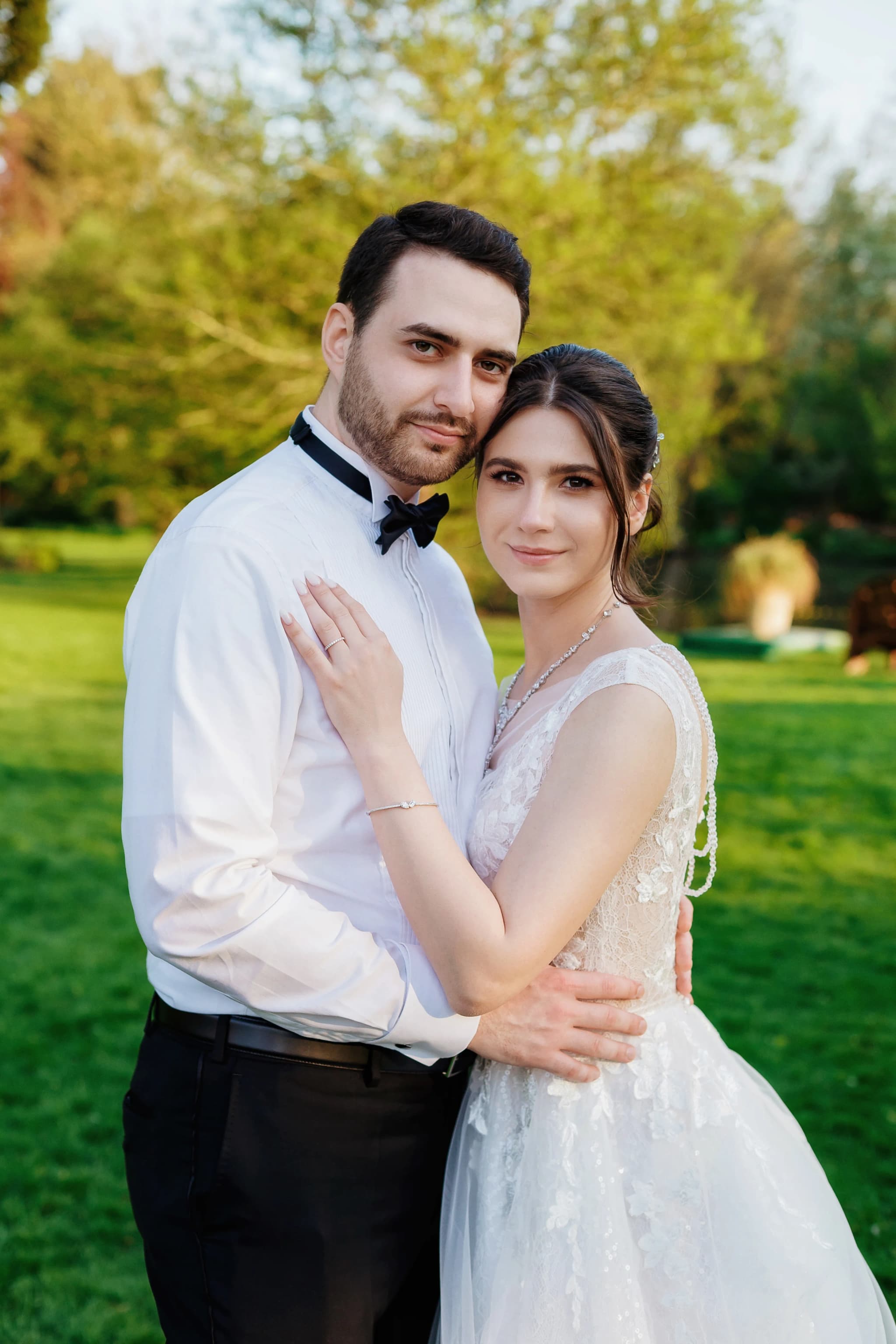
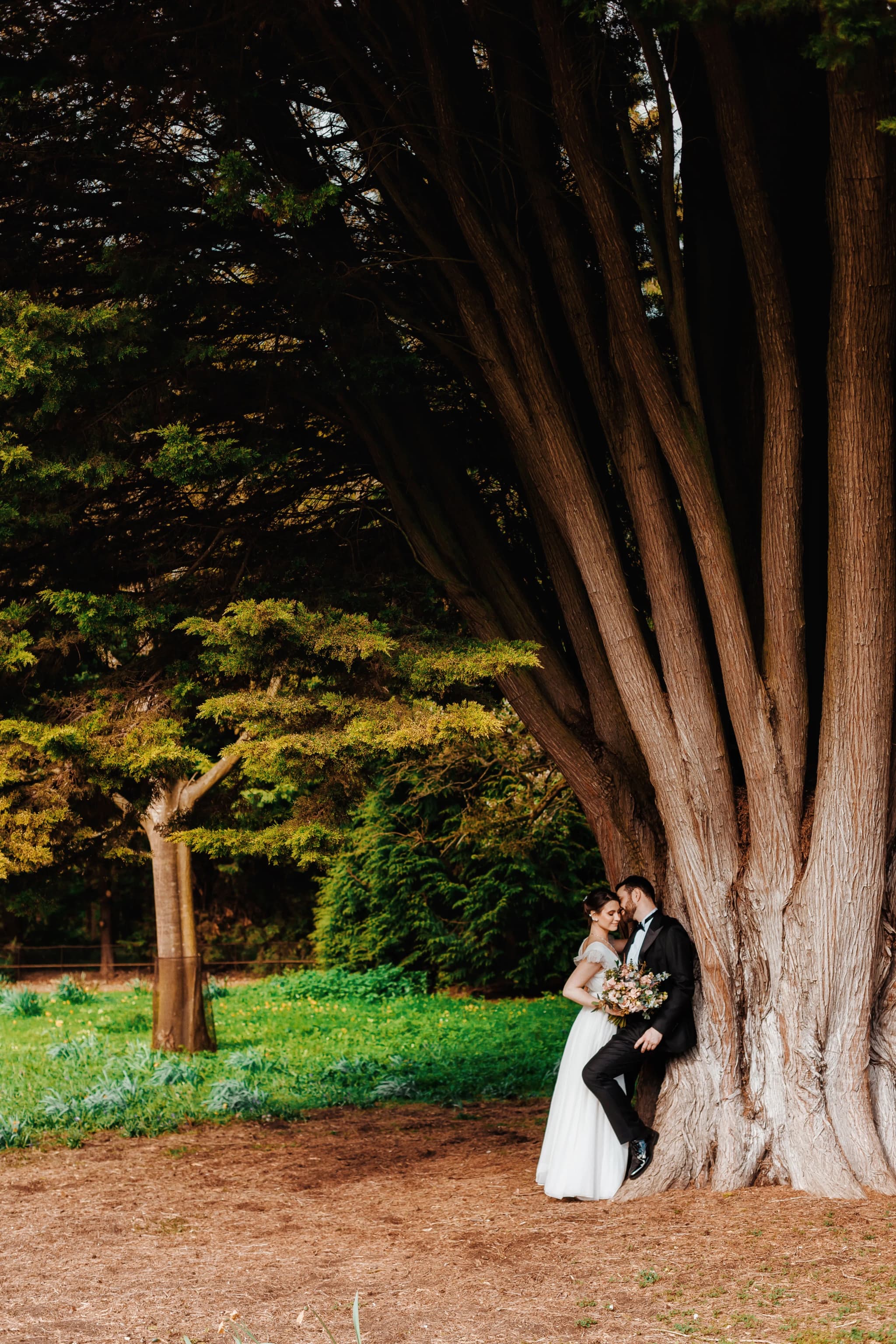
Because the venue itself does so much visual work, I try not to over-direct couples once we are in the gardens. The setting carries a scene on its own, and some of the strongest images from a Balbianello wedding come from simply giving a couple a moment to take in where they are — the lake, the mountains, the fact that they are getting married somewhere genuinely extraordinary — and photographing that instead of a posed arrangement. Guests, too, tend to be visibly struck by the place, and candid reactions during the ceremony and the boat crossings often become some of the most treasured images from the whole day.
Villa del Balbianello is not an easy venue to plan around, and it is not meant to be — its restrictions exist precisely because it is a protected heritage site rather than a purpose-built wedding business, and that is part of what makes a wedding held there feel so genuinely special. The boat arrival, the loggia, the terraces falling away toward the water, and the Alps beyond are not staged for weddings; they simply exist, and a wedding here becomes a small, privileged part of a much older setting. If you are planning a Lake Como wedding at Balbianello or considering the venue and want to talk through what the day could look like, get in touch and I would be glad to help you plan around it properly.


Yana Skakun
Photographer · England
Professional wedding, family and portrait photographer based in England. Passionate about capturing authentic emotions and timeless moments.
About Yana →Villa del Balbianello weddingBalbianello wedding photographyLake Como wedding BalbianelloFAI wedding Lake ComoVilla del Balbianello photographer
Wedding Tips — Wedding Photography in Cambridge & England
Yana Skakun is a professional wedding photographer based in Cambridge, covering weddings across England — from intimate elopements to full-day ceremonies at country houses, barns, and city venues. Every couple receives a relaxed, documentary approach that captures the day as it truly unfolds. This guide — Villa del Balbianello Wedding Photography: Star Wars & Romance on Lake Como — is part of the photography journal: practical, experience-based advice drawn from real sessions across England. Whether you arrived searching for villa del balbianello wedding or balbianello wedding photography, the same care and attention shapes every session Yana photographs.
Wedding Photography sessions are available year-round, with bookings open across Cambridge, Ely, Huntingdon, Peterborough, and further afield — East England, London, the Midlands, and beyond. If you have specific questions about lake como wedding balbianello, mention it in your enquiry. Get in touch through the contact form above to check availability and discuss your session. Enquiries are welcomed from anywhere in the UK.
Frequently Asked Questions
How much does a wedding photographer cost in England?+
Wedding photography in England typically ranges from £1,500 to £4,000+ for a full day. Price depends on experience, coverage hours, and whether albums or engagement shoots are included. Most photographers charge between £2,000–£3,000 for 8–10 hours of coverage.
How early should you book a wedding photographer?+
For peak season (May–September), book 12–18 months in advance. For autumn and winter weddings, 9–12 months is usually sufficient. Popular photographers at popular venues fill up fast — as soon as you have a date and venue confirmed, start reaching out.
How many photos do you get from a wedding photographer?+
Most professional wedding photographers deliver 400–800 edited images for a full-day wedding. The exact number depends on coverage hours, how many guests there are, and the photographer's editing style. Quality matters more than quantity — a curated gallery of 500 images tells the story better than 1,500 unedited files.
Do you need a second photographer at your wedding?+
A second photographer is helpful if you want simultaneous coverage of getting-ready moments in different locations, multiple angles during the ceremony, or more candid coverage during the reception. It adds cost but significantly increases the variety and completeness of your gallery.
What is the difference between documentary and editorial wedding photography?+
Documentary (reportage) wedding photography captures moments as they happen — the photographer observes and doesn't intervene. Editorial photography involves deliberate direction: placing you in good light, shaping compositions, creating intentional portraits. Most photographers blend both styles throughout the day.
Continue Reading
Related Articles

Wedding Tips
Sustainable Eco-Friendly Wedding Guide — Planning a Green Celebration
15 min read · Read Article
Wedding Tips
Trash the Dress Session — Complete Planning and Photography Guide
14 min read · Read Article
Wedding Tips
Client Communication for Photographers — From Enquiry to Gallery Delivery
15 min read · Read Article
Get in Touch
Ready to Book Your Session?
Get in touch to discuss your vision — I'll reply within 24 hours.