Yana Skakun

Walking Poses: How to Get That Effortless Editorial Look
By Yana Skakun·10 June 2026·5 min read
Walking wedding photo poses are the single most underused tool in wedding photography — and the couples who discover them always end up with the images they actually hang on the wall. When you move together with intention, the camera catches something rigid posing never can: the quiet confidence of two people genuinely at ease with each other.
Why Movement Produces Better Portraits Than Standing Still
There's a moment that happens every time I ask a couple to walk — usually about three steps in — when they stop thinking about where to put their hands and just start talking to each other. That's the moment I'm waiting for. Every image from that point forward has something the posed shots rarely achieve: genuine ease.
Static poses require conscious effort to hold. Your shoulders creep up, your smile starts to set, and after ninety seconds you both look like you're waiting for a bus rather than celebrating your wedding day. Walking breaks that cycle because the body has something real to do. The brain shifts its attention from "am I doing this right" to the physical act of moving, and your face relaxes accordingly.
For UK weddings in particular — where overcast skies and lush greenery dominate the backdrop — movement adds visual energy that compensates for softer, flatter light. A couple strolling through the grounds of a Cambridge college or across a meadow in the Cotswolds creates natural leading lines and draws the eye through the frame in a way that a posed standing shot simply doesn't.
The One Direction That Changes Everything
If there's a single piece of technical advice I give every couple before their couple portraits, it's this: walk toward the camera at a slight diagonal, not straight at it and not parallel to it. That 20-to-30 degree angle does several things simultaneously — it keeps both faces visible without forcing an awkward turn, it creates genuine depth in the background as the scene recedes behind you, and it means each step brings you slightly closer, giving me a sequence of frames that move from environmental to intimate without stopping.
Walking directly toward the lens tends to flatten the image and creates an "approaching threat" dynamic that reads oddly in print. Walking parallel to the camera is better but puts you both in profile, which works for some moments but not as a primary pose. The diagonal is the editorial sweet spot — it's how fashion photographers shoot runway walks, and it translates directly to wedding portraiture.
How to Make Walking Poses Look Natural on the Day
The biggest misconception couples have about walking shots is that they require choreography. They don't — they require conversation. Here are the specific techniques I use during portrait sessions to get authentic walking images without anyone feeling self-conscious:
- ◆Give yourselves something to talk about: I ask couples to tell each other one thing they're looking forward to about married life. It sounds simple, but it immediately produces genuine expressions — laughter, eye contact, the odd nervous glance — that no posing prompt can manufacture.
- ◆Hold hands loosely, not gripped: A tight hand-hold looks tense in photographs and reads as anxious rather than connected. I ask couples to imagine they're strolling to a favourite pub — that slightly loose, swinging connection photographs as relaxed and genuinely affectionate.
- ◆Slow down by half: Natural walking pace is almost always too fast for the shutter. I ask couples to walk at roughly half their normal speed, which feels theatrical but looks completely natural in the final image. This gives me time to compose, track, and catch the right frame.
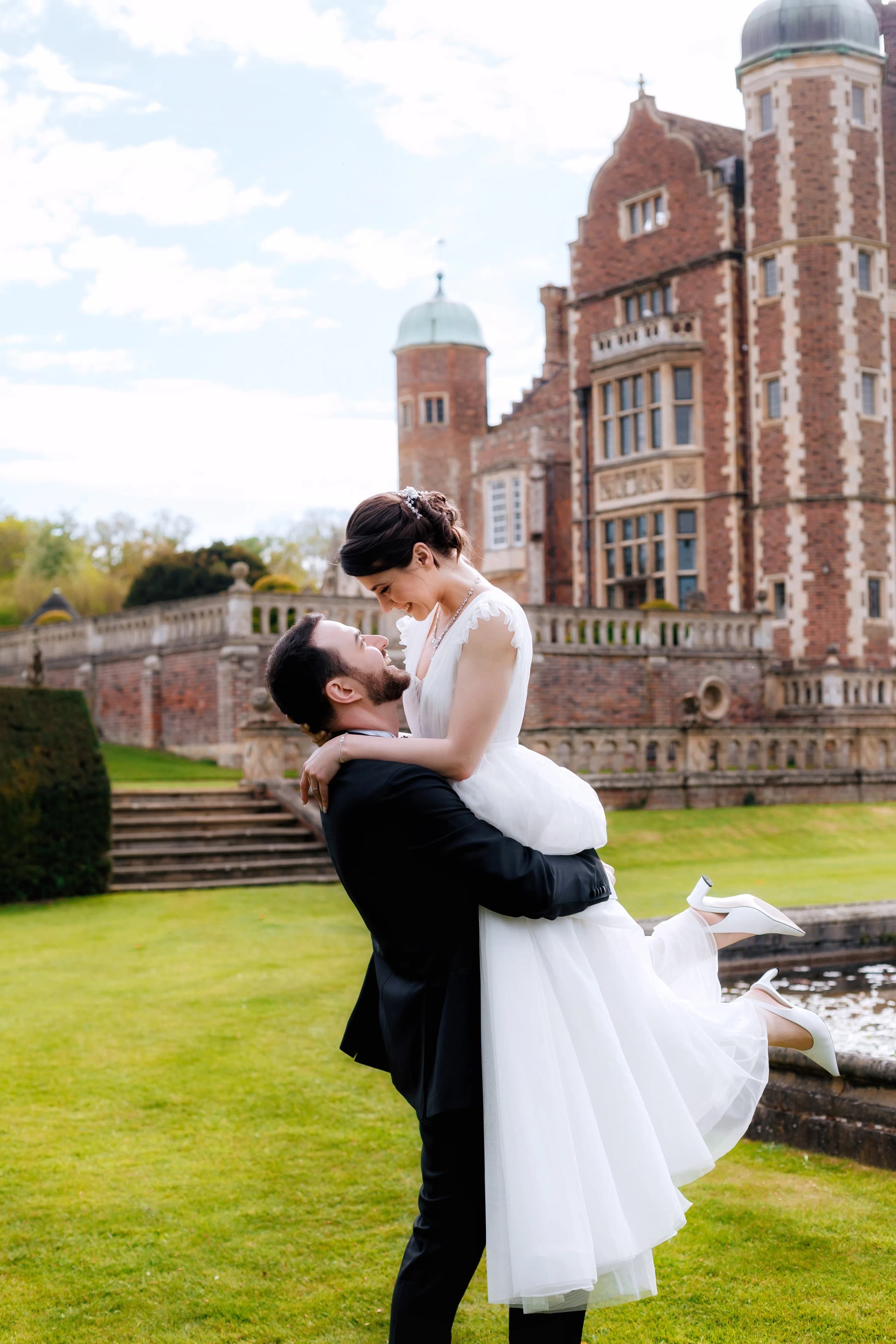
- ◆Let the dress lead on turns: For brides in full skirts or long trains — particularly common at English country house and estate weddings — a slow turn-and-look-back move generates beautiful fabric movement. The key is to turn away first, let the dress settle, then look back over the shoulder. Trying to do both at once rushes it.
- ◆Use a destination, not a mark: Instead of asking couples to walk to a specific spot, I give them a direction and a loose landmark: "walk toward that oak tree." Having a genuine destination prevents the stilted 'walking nowhere' quality that shows up when people know they're just completing a pose exercise.
- ◆Shoulders down, conversation up: The two things that consistently improve walking portraits: physically dropping your shoulders (I literally mime it and couples mirror it without thinking), and continuing a real conversation rather than going silent. Silence produces a formal, processional look; talking produces warmth.
Locations Around Cambridge and the UK That Reward Walking Shots
Not every location is equally suited to walking portraits, and understanding what makes a backdrop work helps you use your portrait time efficiently. Long, straight paths with receding perspectives — the Backs in Cambridge, the walled kitchen garden at a country house, a tree-lined avenue at a National Trust property — give you natural leading lines that guide the viewer's eye straight to the couple. These are the environments where walking poses genuinely shine.
Texture underfoot matters more than most couples realise. Gravel paths produce a satisfying audio cue that helps couples relax into a natural rhythm; cobblestones require more attention to footfall and can make movement look stilted. Lawns are forgiving and photogenic but can slow the pace on a wet English afternoon when heels sink in — worth factoring into your venue timing if the forecast is uncertain.
For autumn and winter weddings — which make up a significant portion of my Cambridge diary — golden light through leaf-strewn paths creates a cinematic quality that suits the editorial walking style perfectly. The low angle of the sun at that time of year means you can shoot walking portraits in direct light at times that would be harsh in summer, extending your usable portrait window considerably.
Building a Sequence: From Wide to Close in a Single Walk
One of the advantages of working with movement rather than individual poses is the ability to build a complete story within a single two-minute walk. I typically start wide — capturing the couple within their environment, showing the venue and the scale of the landscape — then move progressively tighter as they approach. By the time they're within a few metres of me, I'm shooting close-cropped details: joined hands, a smile directed at the ground, a whispered word between them.
This sequence approach means that even a short portrait window — fifteen or twenty minutes, which is realistic at many UK weddings where the schedule is tight — yields images that cover multiple visual registers. The wide environmental shot works for a framed print; the mid-shot is typically the album spread; the close detail frame is what ends up on social media and in thank-you cards. One walk, three distinct types of image, all of them natural and unposed.
The couples who get the most from this technique are the ones who trust the process and commit to the conversation rather than worrying about what they look like. Every time a couple asks me halfway through a walk "are we doing this right?" I give them the same answer: if you're talking to each other, you're doing it perfectly. The camera will take care of the rest.
Want portraits that actually feel like you?
I build every couple's portrait session around natural movement and real conversation — no stiff posing, no awkward holds. If you're planning a wedding in Cambridge or anywhere across the UK, let's talk about how to make your portrait time feel effortless.
Check Your Date →

Yana Skakun
Photographer · England
Professional wedding, family and portrait photographer based in England. Passionate about capturing authentic emotions and timeless moments.
About Yana →walkingposeseditoriallook
Wedding Tips — Wedding Photography in Cambridge & England
Yana Skakun is a professional wedding photographer based in Cambridge, covering weddings across England — from intimate elopements to full-day ceremonies at country houses, barns, and city venues. Every couple receives a relaxed, documentary approach that captures the day as it truly unfolds. This guide — Walking Poses: How to Get That Effortless Editorial Look — is part of the photography journal: practical, experience-based advice drawn from real sessions across England. Whether you arrived searching for walking or poses, the same care and attention shapes every session Yana photographs.
Wedding Photography sessions are available year-round, with bookings open across Cambridge, Ely, Huntingdon, Peterborough, and further afield — East England, London, the Midlands, and beyond. If you have specific questions about editorial, mention it in your enquiry. Get in touch through the contact form above to check availability and discuss your session. Enquiries are welcomed from anywhere in the UK.
Frequently Asked Questions
How much does a wedding photographer cost in England?+
Wedding photography in England typically ranges from £1,500 to £4,000+ for a full day. Price depends on experience, coverage hours, and whether albums or engagement shoots are included. Most photographers charge between £2,000–£3,000 for 8–10 hours of coverage.
How early should you book a wedding photographer?+
For peak season (May–September), book 12–18 months in advance. For autumn and winter weddings, 9–12 months is usually sufficient. Popular photographers at popular venues fill up fast — as soon as you have a date and venue confirmed, start reaching out.
How many photos do you get from a wedding photographer?+
Most professional wedding photographers deliver 400–800 edited images for a full-day wedding. The exact number depends on coverage hours, how many guests there are, and the photographer's editing style. Quality matters more than quantity — a curated gallery of 500 images tells the story better than 1,500 unedited files.
Do you need a second photographer at your wedding?+
A second photographer is helpful if you want simultaneous coverage of getting-ready moments in different locations, multiple angles during the ceremony, or more candid coverage during the reception. It adds cost but significantly increases the variety and completeness of your gallery.
What is the difference between documentary and editorial wedding photography?+
Documentary (reportage) wedding photography captures moments as they happen — the photographer observes and doesn't intervene. Editorial photography involves deliberate direction: placing you in good light, shaping compositions, creating intentional portraits. Most photographers blend both styles throughout the day.
Continue Reading
Related Articles

Wedding Tips
Sustainable Eco-Friendly Wedding Guide — Planning a Green Celebration
15 min read · Read Article
Wedding Tips
Trash the Dress Session — Complete Planning and Photography Guide
14 min read · Read Article
Wedding Tips
Client Communication for Photographers — From Enquiry to Gallery Delivery
15 min read · Read Article
Get in Touch
Ready to Book Your Session?
Get in touch to discuss your vision — I'll reply within 24 hours.