Yana Skakun

Wedding Bouquet Ribbon and Floral Detail Photography
By Yana Skakun·10 June 2026·5 min read
The bouquet you carry down the aisle holds far more than flowers — it holds hours of decision-making, the texture of silk ribbon your mother helped you choose, a vintage charm from your grandmother, the particular blush of garden roses that took your florist three suppliers to source. Wedding bouquet detail photography is how all of that intention survives beyond the day itself, translated into images that are still legible thirty years from now.
Why Bouquet Details Deserve Their Own Photographs
Most couples spend considerable time and money on their bouquet — yet in the rush of a wedding day, it spends most of its time being held in motion, glimpsed at the periphery of wider shots, or sitting in a vase on a table while everything else happens around it. Dedicated close-up photography changes that. A tight frame on the ribbon binding, the stem ends wrapped in twine, or the face of a dried lunaria disc pressed alongside fresh eucalyptus gives the bouquet the same photographic attention it received in design.
In my experience photographing weddings across Cambridge, Ely, and the wider Cambridgeshire countryside, the detail shots are often the ones couples linger over longest in their gallery. They are the photographs that communicate craftsmanship — the florist's work, the stationer's ribbon, the inherited brooch pinned at the stems. Wider shots show the bouquet in context; detail shots show what it actually is.
There is also a practical reason to photograph bouquet details early in the day, before the ceremony. Flowers are at their freshest in the morning. Ribbon is still crisp. If your bouquet includes dried or preserved elements — pampas grass, bleached palm spear, cotton stems — they photograph beautifully in soft morning window light before the day introduces any movement or handling wear.
The Details That Photograph Best (and How to Plan for Them)
Not every detail reads the same way through a lens. Some elements that look stunning in person — very fine gold wire, translucent petals lit from behind — require specific light and camera positioning to show at their best. When you're working with your florist, it's worth thinking ahead to how each choice will translate photographically. Here are the elements I watch for most closely:
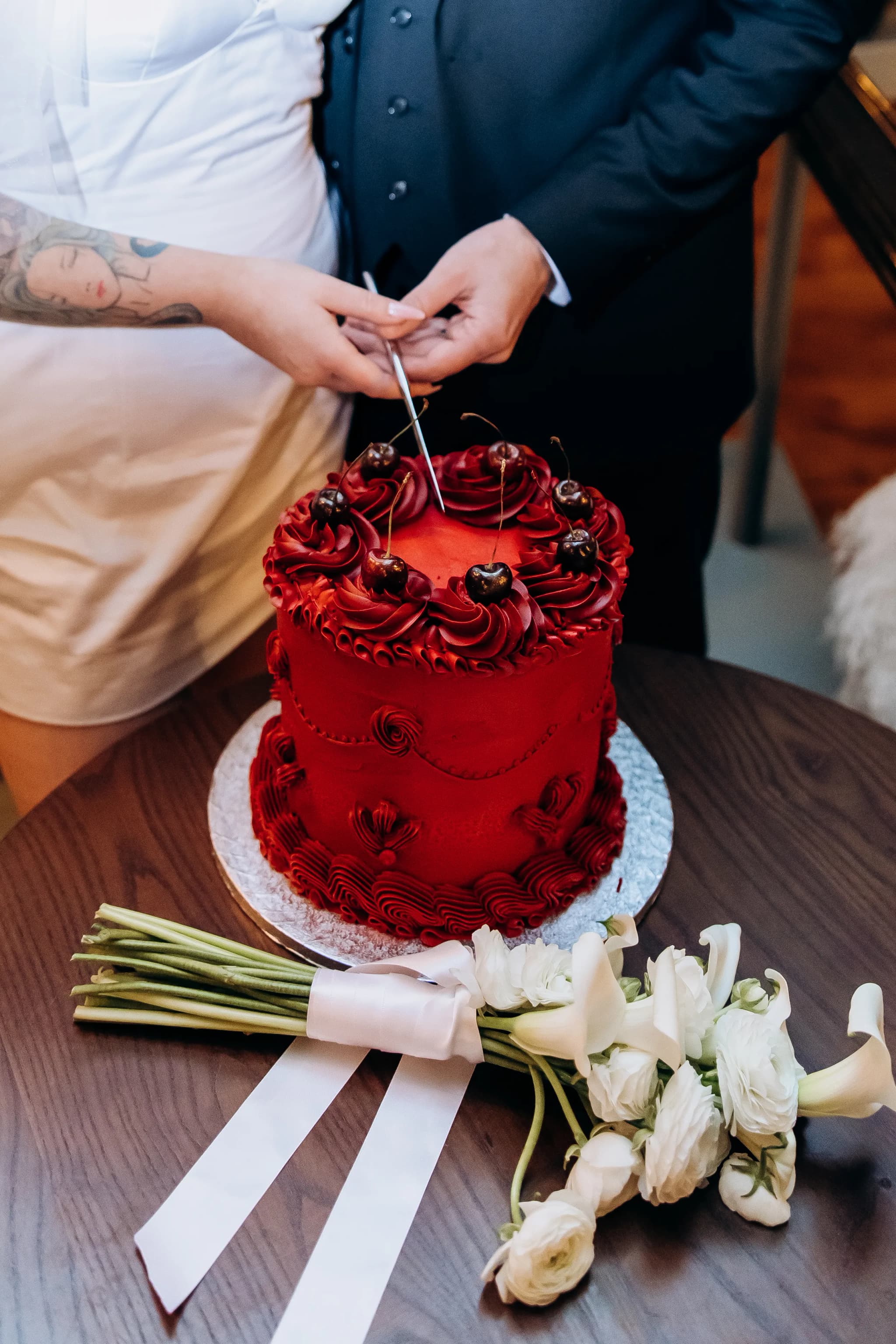
- ◆Ribbon texture and layering: Silk ribbon catches directional light beautifully, revealing weave and sheen that is invisible in flat or overcast conditions. Velvet ribbon reads as rich and dimensional in close-up. If your florist is layering multiple ribbon colours or materials, a shallow depth of field isolates that layering in a way that conveys deliberate design rather than accident.
- ◆Charm and keepsake attachments: A locket, a fabric-wrapped brooch, a small photograph pinned to the stems — these are the details that carry the most emotional weight and the most editorial interest. They deserve their own individual frames. In the morning light of a bridal prep room, I will usually photograph these separately before they are attached, then again once they are in place on the bouquet.
- ◆Dried and preserved flowers: Dried botanicals are a significant trend in UK wedding floristry right now and they photograph exceptionally well. The texture of dried gypsophila, the papery layers of a preserved peony, the silver-grey of dusty miller — these read as detail-rich even at a distance, and at close range they reward the viewer with extraordinary surface complexity. They also hold their appearance reliably throughout the day.
- ◆Stem binding and wrap finish: The bottom of the bouquet is almost always overlooked — but a hand-tied stem finish, a wax seal on a ribbon bow, or bare stems bound with jute twine can be genuinely beautiful compositionally. Photograph the bouquet from below as well as above; the geometry of bound stems is often the strongest graphic image in the set.
- ◆Colour relationship between flowers: A single tight frame that captures two adjacent blooms in contrasting colours — a blush rose against a burgundy dahlia, cream freesia beside sage foliage — distils the entire colour palette of your floristry into one image. These photographs work well as standalone prints and also translate cleanly to album spreads.
- ◆Bruising and movement (mid-ceremony): Some of the most honest bouquet photographs happen mid-ceremony or after, when the flowers have been held, pressed to a chest during vows, or set down briefly during a ring exchange. A petal with a slight press mark, ribbon with a twist from nervous hands — these are records of the bouquet being used, not displayed, and they carry their own kind of meaning.
Light, Background, and When to Shoot
Wedding bouquet detail photography depends heavily on light quality, and the best light for it is almost always available in the first two hours of the wedding morning. A north-facing sash window in a Cambridge townhouse, a draped white curtain diffusing summer sun, a doorway open onto a garden — any of these produces the kind of soft, directional light that gives flowers three-dimensionality without harsh shadow.
Background matters as much as light. I bring a small selection of neutral surfaces to every wedding — a piece of ivory linen, a textured cream card — but often the best backgrounds are already in the room. A wooden floor, an unadorned wall, the surface of a dressing table. The goal is to let the bouquet read without competition. A busy background pulls the eye away from the detail you are trying to show; a clean one holds it there.
If your ceremony or reception venue is a UK country house or barn, there will usually be additional opportunities: a windowsill in the ceremony space, the wooden surface of a drinks table during the reception, or natural foliage outdoors during couple portraits. I always keep an eye out for these settings throughout the day, because a bouquet photographed against a lichen-covered stone wall in late-afternoon Cambridgeshire light is a different and equally valid image to the clean prep-room close-ups taken in the morning.
Communicating with Your Florist Before the Day
The single most effective thing you can do to ensure your bouquet details are photographed well is to tell your florist that detail photography matters to you. An experienced UK wedding florist will immediately understand — they will make sure ribbon tails are cut cleanly, that any charm or keepsake is securely but visibly positioned, and that the stem binding is finished neatly on all sides rather than just the front-facing one.
It is also worth asking your florist whether any elements in your bouquet are particularly fragile or time-sensitive. Some blooms — sweet peas, anemones, ranunculus — are at peak photographic quality within the first few hours of being out of water. Knowing this means I can prioritise those shots during prep rather than leaving them until the afternoon. Conversely, if your bouquet includes sturdy elements like succulents, dried grasses, or orchids, those can be photographed effectively at any point in the day without urgency.
If your bouquet includes a family keepsake — a brooch from a grandmother, a small photograph wrapped in ribbon — please let me know before the wedding day. I will dedicate specific time to photographing it well, with context that shows both the object itself and the way it has been incorporated into the overall design. These are the images that tend to mean the most when couples receive their gallery.
After the Wedding: What Happens to Bouquet Photographs
Bouquet detail photographs serve the wedding gallery in specific ways. They provide visual breathing room between wider documentary shots — the pace of a wedding album needs quiet close-up moments alongside the action and emotion of the ceremony and reception. A double-page spread of bouquet details, flowers, and floral arrangement photographs gives the album an editorial rhythm that feels intentional rather than rushed.
Many couples also use bouquet detail photographs for other purposes: thank-you cards to their florist, Instagram posts on their anniversary, prints for a bedroom or dressing room. A beautifully lit close-up of a silk ribbon bow tied around ivory roses is genuinely decorative — it works as a photograph independent of its context as a wedding image. Several couples I have worked with in Cambridge have had their bouquet detail photograph printed and framed, not because it was the most emotionally significant image from the day, but because it is simply a beautiful object to live with.
The bouquet is one of the few elements of a wedding that was chosen with pure aesthetic intention. Wedding bouquet detail photography is how that intention gets preserved — not just remembered, but seen.
Every detail of your bouquet deserves to be seen.
I photograph weddings across Cambridge, Cambridgeshire, and the wider UK with close attention to the details — ribbon, charm, dried flower, stem binding — that make your bouquet yours. If you'd like to talk about your wedding date and what matters most to you, I'd love to hear from you.
Check Your Date →

Yana Skakun
Photographer · England
Professional wedding, family and portrait photographer based in England. Passionate about capturing authentic emotions and timeless moments.
About Yana →weddingbouquetribbondetails
Wedding Tips — Wedding Photography in Cambridge & England
Yana Skakun is a professional wedding photographer based in Cambridge, covering weddings across England — from intimate elopements to full-day ceremonies at country houses, barns, and city venues. Every couple receives a relaxed, documentary approach that captures the day as it truly unfolds. This guide — Wedding Bouquet Ribbon and Floral Detail Photography — is part of the photography journal: practical, experience-based advice drawn from real sessions across England. Whether you arrived searching for wedding or bouquet, the same care and attention shapes every session Yana photographs.
Wedding Photography sessions are available year-round, with bookings open across Cambridge, Ely, Huntingdon, Peterborough, and further afield — East England, London, the Midlands, and beyond. If you have specific questions about ribbon, mention it in your enquiry. Get in touch through the contact form above to check availability and discuss your session. Enquiries are welcomed from anywhere in the UK.
Frequently Asked Questions
How much does a wedding photographer cost in England?+
Wedding photography in England typically ranges from £1,500 to £4,000+ for a full day. Price depends on experience, coverage hours, and whether albums or engagement shoots are included. Most photographers charge between £2,000–£3,000 for 8–10 hours of coverage.
How early should you book a wedding photographer?+
For peak season (May–September), book 12–18 months in advance. For autumn and winter weddings, 9–12 months is usually sufficient. Popular photographers at popular venues fill up fast — as soon as you have a date and venue confirmed, start reaching out.
How many photos do you get from a wedding photographer?+
Most professional wedding photographers deliver 400–800 edited images for a full-day wedding. The exact number depends on coverage hours, how many guests there are, and the photographer's editing style. Quality matters more than quantity — a curated gallery of 500 images tells the story better than 1,500 unedited files.
Do you need a second photographer at your wedding?+
A second photographer is helpful if you want simultaneous coverage of getting-ready moments in different locations, multiple angles during the ceremony, or more candid coverage during the reception. It adds cost but significantly increases the variety and completeness of your gallery.
What is the difference between documentary and editorial wedding photography?+
Documentary (reportage) wedding photography captures moments as they happen — the photographer observes and doesn't intervene. Editorial photography involves deliberate direction: placing you in good light, shaping compositions, creating intentional portraits. Most photographers blend both styles throughout the day.
Continue Reading
Related Articles

Wedding Tips
Sustainable Eco-Friendly Wedding Guide — Planning a Green Celebration
15 min read · Read Article
Wedding Tips
Trash the Dress Session — Complete Planning and Photography Guide
14 min read · Read Article
Wedding Tips
Client Communication for Photographers — From Enquiry to Gallery Delivery
15 min read · Read Article
Get in Touch
Ready to Book Your Session?
Get in touch to discuss your vision — I'll reply within 24 hours.