Yana Skakun

Wedding Cake Cutting: Do's and Don'ts for Perfect Photos
By Yana Skakun·10 June 2026·5 min read
The cake cutting lasts about ninety seconds, yet it produces some of the most-shared photos from the entire wedding day. Get it right and you have a genuine, joyful image that ends up on your wall; get it wrong and you have two people hunched awkwardly over a tier, squinting into a flash. After photographing weddings across Cambridgeshire, Suffolk and London, I have seen every version of this moment — here is exactly what separates the beautiful shots from the ones couples quietly skip in their gallery.
Timing: When to Cut the Cake (and When Not To)
Most UK wedding venues schedule the cake cutting immediately after the wedding breakfast, just before the evening guests arrive. On paper this sounds logical. In practice it often means you are asking a tired couple to perform for the camera at the exact moment energy is lowest and the room is at its most chaotic — tables being cleared, chairs scraping, caterers moving around the periphery.
If your venue allows flexibility, push the cake cutting to roughly thirty minutes into the evening reception. Evening guests have arrived, the room has filled again, the energy is high, and you both have had a chance to breathe. The background of a full, buzzing room looks infinitely better than an emptying dining hall with stacked napkins in the frame.
One exception: if your venue has a natural light window — say, French doors facing west — and the cutting falls during golden hour, absolutely use it. I will always flag this to couples in our pre-wedding call. Natural light at that angle is flattering in a way no flash can replicate, so if the timing aligns, we position the cake to make the most of it rather than defaulting to wherever the venue has placed it.
The Do's: What Makes Cake Cutting Photos Genuinely Work
The couples whose cake cutting photos I am most proud of all did a version of the same things. None of it is complicated, but it does require a little intentionality on the day.
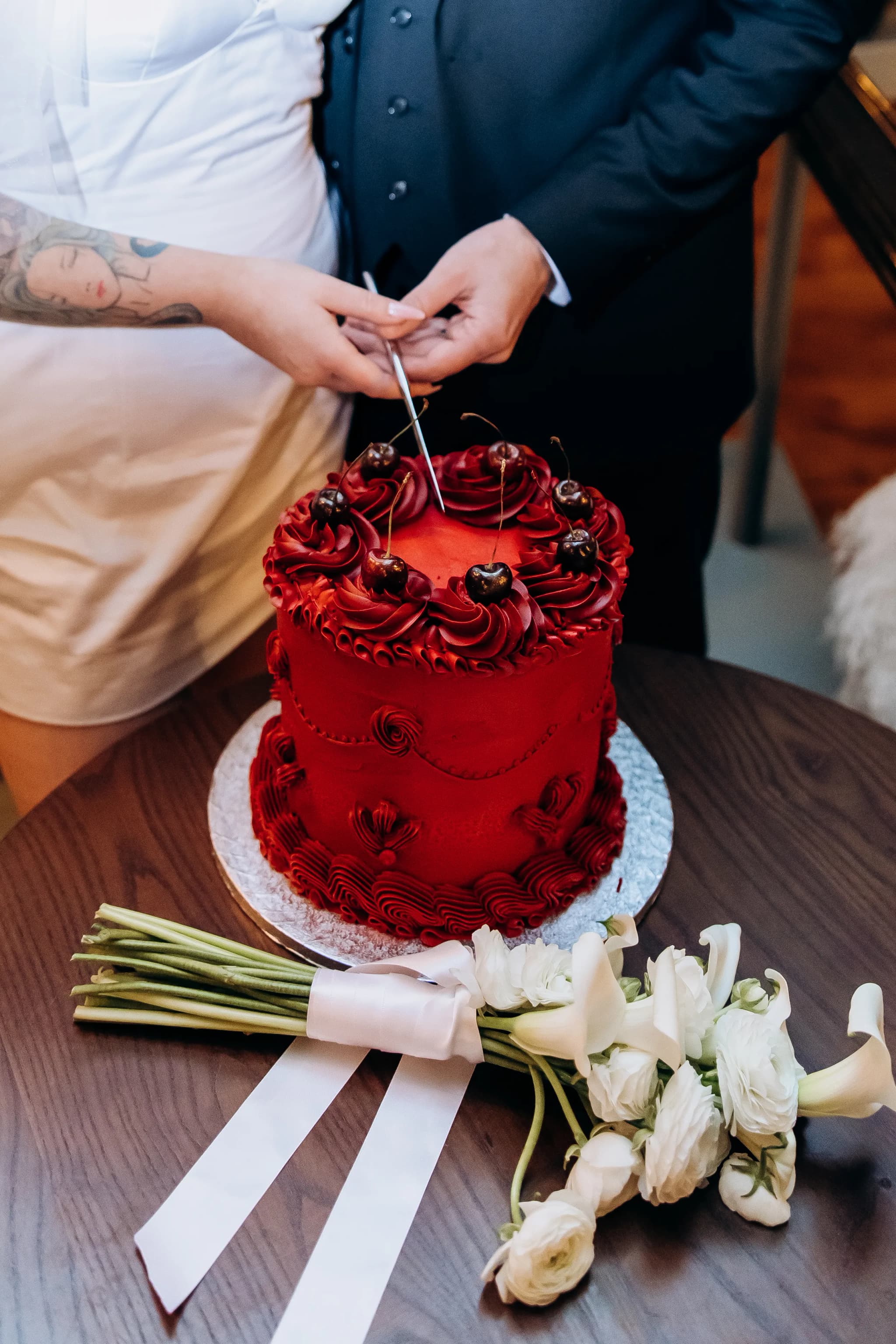
- ◆Stand side by side, not face-to-face: Face-to-face looks staged and blocks at least one person from the camera. Standing shoulder to shoulder with both of you angled slightly toward the cake means I can see both faces clearly and capture the moment together.
- ◆Let the moment breathe before you cut: Pause for two or three seconds once your hands are on the knife. Look at each other, not at the cake. That glance — the shared smile just before you cut — is almost always the strongest frame in the sequence.
- ◆Cut with a genuine action, not a hover: A knife hovering half a centimetre above the cake looks hesitant in photos. Press down with intention. The physical movement reads much better on camera and gives me clean action shots rather than a static pose.
- ◆Feed each other properly or skip it entirely: If you are going to do the feed, go for it — a real bite, a laugh, maybe a smear. Half-hearted is the worst outcome. If you are not comfortable with it, simply skip it; there is no obligation, and the cutting itself is more than enough.
- ◆Keep guests close but not crowding: Ask your MC to bring guests in around the cake rather than leaving a wide empty circle. The energy of people gathered around you shows in the photos. Just make sure no one is standing directly behind you blocking the background entirely.
- ◆Agree a signal with your photographer beforehand: I always confirm with couples exactly when they plan to cut so I can be positioned and ready. A quiet nod or a look in my direction means I am not scrambling to find an angle when the knife goes in.
The Don'ts: Mistakes That Ruin the Moment on Camera
Most cake cutting mistakes come from nerves or from following a vague instruction from a well-meaning relative. These are the ones I see most often and how to avoid them.
Do not look at the camera the entire time. It sounds counterintuitive, but couples who stare directly at the lens throughout look stiff and performative. Look at each other, look at the cake, laugh at something real — I will catch the candid moments. The one or two frames where you glance up naturally will have far more warmth than a sustained camera stare.
Do not rush it because you feel self-conscious. This is one of the most common things I see, especially at British weddings where there can be a cultural discomfort with being the centre of attention. I completely understand it — but rushing through in three seconds means I have very few frames to work with. Slow down. The guests are there because they love you; they want to see this moment, not watch it blur past.
Do not cut too close to the base tier. Cutting low down on the cake means you are both bending over significantly, which creates awkward posture. The ideal cut is in the middle of the bottom tier — it photographs cleanly, reads clearly as a cake cutting, and keeps your posture upright and natural.
Do not forget the knife. This sounds obvious but at busy UK weddings I have seen caterers clear the cake table before the couple arrived. Assign someone — your wedding planner, a bridesmaid, the best man — to confirm the knife is in place and the cake is in the agreed spot thirty minutes before the scheduled cut. A five-second check saves ten minutes of flustered searching on the night.
Backdrop, Lighting and Positioning: What Your Photographer Needs to Know
The cake position is usually decided by the venue, but if you have any input, share it with your photographer early. My preferences as a Cambridge wedding photographer: a plain or softly textured wall behind the cake rather than a busy patterned one; space on at least two sides so I can work the angle without climbing over guests; and ideally no ceiling spotlights directly above the cake creating harsh shadows across your faces.
If the cake is positioned in a dark corner — which happens more often than you would think in older UK venues — I will use off-camera flash positioned to the side rather than on-camera flash straight ahead. Side lighting preserves the texture of the cake and is far more flattering on faces. It does mean I need a couple of extra minutes to set up, which is another reason why a confirmed schedule and a brief conversation beforehand matters.
For outdoor summer weddings, particularly at Cambridgeshire barn venues or country house gardens, cutting the cake outside during the late afternoon is genuinely stunning. The open sky gives beautiful even light, there is no ceiling reflection to manage, and the natural setting adds depth to the photos that an indoor room simply cannot match. If your venue and weather allow it, always worth discussing.
A Note on Authenticity: Why Staged Feels Hollow
The best cake cutting photos I have taken were not particularly well-planned. They were moments where something real happened — a laugh that started before the knife went in, a look between a couple that had nothing to do with the camera, a parent in the background visibly moved. You cannot manufacture those frames, but you can create the conditions for them by being relaxed, being present with each other, and trusting that the photographer will catch what matters.
What kills the moment is treating it as a performance. When couples are thinking about what they look like rather than what they feel, the photos show it — there is a flatness behind the eyes that no amount of good lighting can fix. My advice to every couple I work with is the same: do the cake cutting for yourselves first, and let me worry about the camera. The photos will be better for it.
Want Cake Cutting Photos That Actually Look Like You?
I photograph weddings across Cambridge, Suffolk and London with a focus on genuine moments over posed perfection — including that ninety-second cake cutting that deserves to be remembered properly. Check whether your date is still available and let's talk about your day.
Check Your Date →

Yana Skakun
Photographer · England
Professional wedding, family and portrait photographer based in England. Passionate about capturing authentic emotions and timeless moments.
About Yana →weddingcakecuttingdos
Wedding Tips — Wedding Photography in Cambridge & England
Yana Skakun is a professional wedding photographer based in Cambridge, covering weddings across England — from intimate elopements to full-day ceremonies at country houses, barns, and city venues. Every couple receives a relaxed, documentary approach that captures the day as it truly unfolds. This guide — Wedding Cake Cutting: Do's and Don'ts for Perfect Photos — is part of the photography journal: practical, experience-based advice drawn from real sessions across England. Whether you arrived searching for wedding or cake, the same care and attention shapes every session Yana photographs.
Wedding Photography sessions are available year-round, with bookings open across Cambridge, Ely, Huntingdon, Peterborough, and further afield — East England, London, the Midlands, and beyond. If you have specific questions about cutting, mention it in your enquiry. Get in touch through the contact form above to check availability and discuss your session. Enquiries are welcomed from anywhere in the UK.
Frequently Asked Questions
How much does a wedding photographer cost in England?+
Wedding photography in England typically ranges from £1,500 to £4,000+ for a full day. Price depends on experience, coverage hours, and whether albums or engagement shoots are included. Most photographers charge between £2,000–£3,000 for 8–10 hours of coverage.
How early should you book a wedding photographer?+
For peak season (May–September), book 12–18 months in advance. For autumn and winter weddings, 9–12 months is usually sufficient. Popular photographers at popular venues fill up fast — as soon as you have a date and venue confirmed, start reaching out.
How many photos do you get from a wedding photographer?+
Most professional wedding photographers deliver 400–800 edited images for a full-day wedding. The exact number depends on coverage hours, how many guests there are, and the photographer's editing style. Quality matters more than quantity — a curated gallery of 500 images tells the story better than 1,500 unedited files.
Do you need a second photographer at your wedding?+
A second photographer is helpful if you want simultaneous coverage of getting-ready moments in different locations, multiple angles during the ceremony, or more candid coverage during the reception. It adds cost but significantly increases the variety and completeness of your gallery.
What is the difference between documentary and editorial wedding photography?+
Documentary (reportage) wedding photography captures moments as they happen — the photographer observes and doesn't intervene. Editorial photography involves deliberate direction: placing you in good light, shaping compositions, creating intentional portraits. Most photographers blend both styles throughout the day.
Continue Reading
Related Articles

Wedding Tips
Sustainable Eco-Friendly Wedding Guide — Planning a Green Celebration
15 min read · Read Article
Wedding Tips
Trash the Dress Session — Complete Planning and Photography Guide
14 min read · Read Article
Wedding Tips
Client Communication for Photographers — From Enquiry to Gallery Delivery
15 min read · Read Article
Get in Touch
Ready to Book Your Session?
Get in touch to discuss your vision — I'll reply within 24 hours.