Yana Skakun
Grandparents Gift Guide: Multigenerational Family Photoshoots
By Yana Skakun·1 November 2026·5 min read
Three generations in one photograph is rarer than most families realise, right up until the moment it is no longer possible. A multigenerational family session is one of the most meaningful gifts you can give grandparents, though the truth is that the people who will value it most are not the ones being given it. It is the grandchildren, decades from now, who will have these images for the rest of their lives.
Why Multigenerational Photographs Matter
Family photo archives tend to follow a predictable pattern: rich in photographs of children, and thin on photographs of older generations, particularly candid, natural photographs of grandparents together with their grandchildren. Formal occasions like Christmas or a milestone birthday produce stiff, dressed-up images that rarely capture the actual texture of a relationship. A dedicated portrait session does something different. It creates a genuine visual record of a relationship that grandchildren will return to long after their grandparents are gone.
The urgency behind this is real rather than sentimental exaggeration. Health changes, families move, and the window during which every generation can comfortably gather in one place, at the same time, is not indefinite. Booking a session sooner rather than later is very rarely something families regret.
What to Include in a Multigenerational Session
A well-planned session usually covers several distinct groupings rather than a single large group shot. Photographs of grandparents alone, together as a couple, are worth prioritising — they are often the pair who have been photographed less and less as children took over the frame in family life. The core of the session, though, is grandparents with grandchildren captured through natural interaction rather than posed stillness: reading together, walking side by side, playing a simple game. These are the images that tend to matter most in the years that follow.
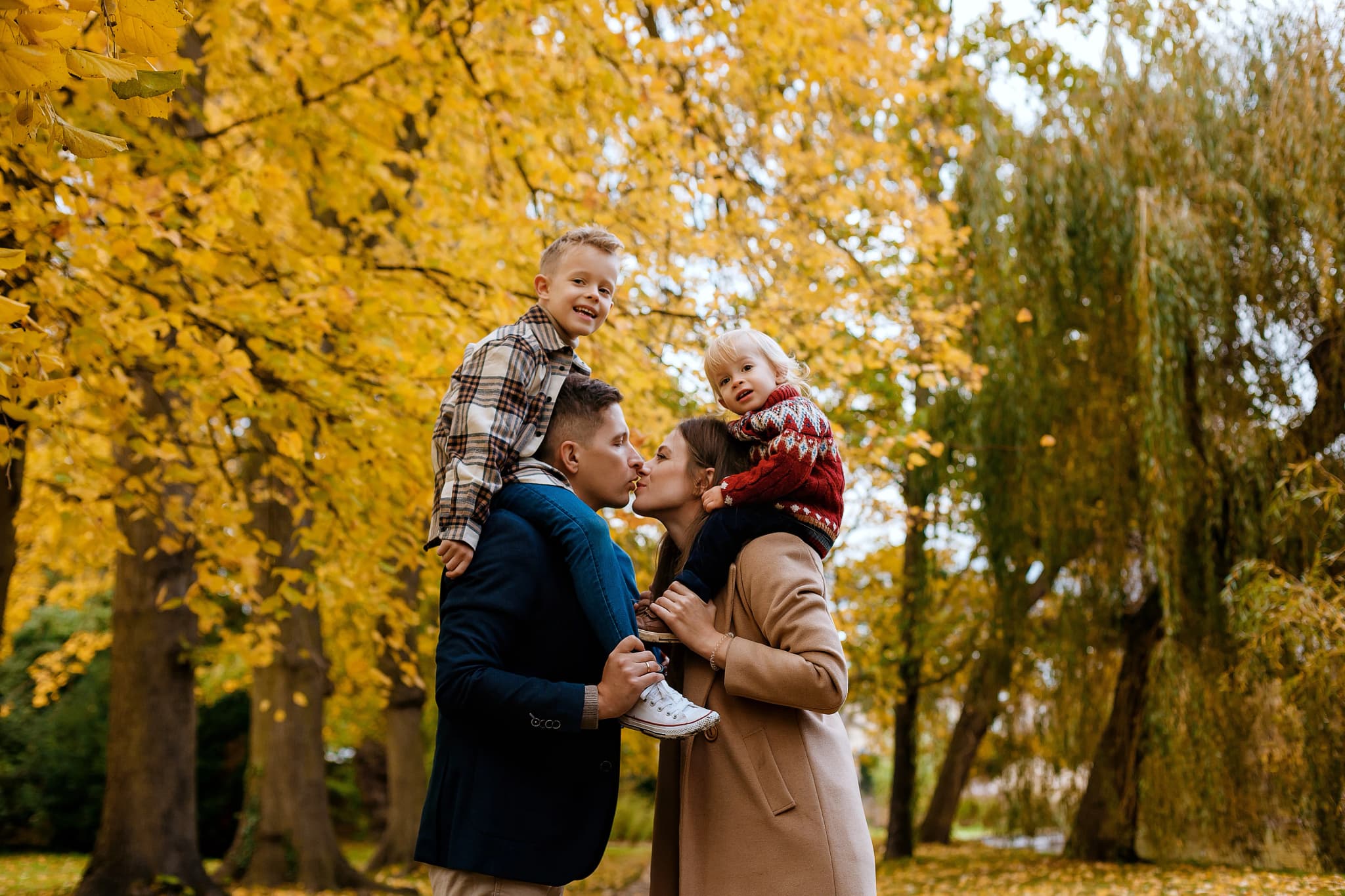
A full family group photograph, with all three generations together, is useful in its own right too — these wider images work well for large prints later and give a clear sense of the complete family unit. It is also worth including the parent generation specifically alongside grandchildren and grandparents, rather than assuming they will simply appear in the background of other shots, since a complete record of the family structure is part of the value of the session.
Making Sessions Accessible for Older Family Members
A multigenerational session works best when it is planned with the least mobile family member in mind, not the most energetic child. That usually means choosing flat, easy terrain — a garden, a park with paved paths, or an indoor location — rather than anywhere involving uneven ground or long walks between spots. Keeping the session itself relatively short, somewhere around forty-five minutes to an hour, is generally enough time to properly cover three generations without anyone becoming tired or restless.
Scheduling matters as well. Choosing a time of day when energy is naturally at its best for older adults, which is often the morning, tends to produce more relaxed, natural results than an evening session after a full day. Building in time for rests, rather than treating the session as a continuous block, allows a genuine photographer to pause and adjust rather than pushing everyone through on a fixed schedule. A familiar location, such as a grandparent's own garden, often produces noticeably more comfortable and natural photographs than a neutral portrait location that means nothing to the family.
A note on gifting a session
A multigenerational session works well as a gift precisely because it benefits everyone involved, not just the person it is given to. If you are considering this for a grandparent's upcoming birthday or a family gathering, getting in touch early gives us time to plan the right location, timing, and group size properly rather than rushing to fit a date at the last minute.
Get in touch about gifting a sessionChoosing a Location That Means Something
The location for a multigenerational session is worth as much thought as anything else. A grandparent's own garden, where they may have lived for decades, tends to produce photographs with a warmth and familiarity that a generic park or studio simply cannot replicate. A favourite local park, walked in weekly for years, or a family home carries similar weight, giving the images a real sense of place rather than a neutral, interchangeable backdrop.
Where a location like this is not practical, a park with good accessible paths and some natural shelter is a reliable second choice. The important thing is choosing somewhere genuinely comfortable for the least mobile member of the group, rather than the most visually striking spot found online, since comfort has a direct effect on how natural and relaxed everyone looks in the resulting photographs.
Giving the Session as a Gift to Grandparents
A multigenerational session gift works particularly well tied to significant birthday milestones — a grandparent's seventieth, seventy-fifth, or eightieth birthday, for instance, where a family portrait feels like a genuinely fitting way to mark the occasion. It is also a strong option around Christmas, when extended families are already gathered in one place and the practical logistics of getting everyone together are already solved, even if the actual session itself is scheduled for a quieter moment in the new year.
The gift, in a very real sense, is for the grandparents on the surface, but it is honestly for everyone else in the family too — the photographs that come out of a session like this tend to be shared, printed, and revisited by parents, siblings, and grandchildren alike for years afterwards.
What Great-Grandparents Add to a Session
Where a great-grandparent is able to attend, a four-generation photograph becomes possible, and these images carry a particular weight that a standard three-generation portrait does not quite match. If a great-grandparent's health or mobility is uncertain, it is worth prioritising this specific grouping early in the session, while everyone still has energy, rather than assuming there will be time for it later.
Even a single, simple photograph of four generations together, taken without much fuss, tends to become one of the most requested images from any multigenerational session, precisely because opportunities to capture it are genuinely limited.
Planning the Practical Details
Coordinating a multigenerational session usually means coordinating diaries across several households, which takes a little more lead time than a standard family shoot. I generally suggest starting the conversation a month or two ahead of the date you have in mind, particularly if travel is involved for any part of the family. Clothing is worth a brief conversation too — coordinating tones across the group without insisting on strict matching outfits tends to produce photographs that feel cohesive without looking artificially uniform.
Once the session itself is booked, very little else needs to be arranged in advance. My approach on the day is to let the family lead, following natural interaction rather than imposing a rigid structure, which tends to put everyone at ease and produces far more genuine results than a strictly posed session ever could.
If you are still deciding whether the timing is right, it is worth remembering that there is rarely a perfectly convenient moment to arrange a session like this. Families who wait for an ideal window often find it never quite arrives, while those who simply choose a date and commit to it tend to be glad, afterwards, that they did not wait any longer.
What Happens After the Session
Once a session is complete, images are edited and delivered through an online gallery, usually within a couple of weeks. Many families choose to order prints directly from the gallery, and a multigenerational session in particular lends itself well to a proper printed album or a set of framed prints, given as gifts to different branches of the family rather than left as digital files that are rarely looked at again.
I am always happy to advise on print and album options once you have had a chance to see the full set of images, particularly for a session like this where the photographs are likely to be kept and treasured for a very long time.
A photograph with three or four generations in one frame is one of the rarest and most valuable things a family can own. If you are considering a multigenerational session, whether as a gift or simply because the moment feels right, get in touch and we can talk through what would work best for your family.
Yana Skakun
Photographer · England
Professional wedding, family and portrait photographer based in England. Passionate about capturing authentic emotions and timeless moments.
About Yana →grandparents gift family photoshootmultigenerational photography giftgift for grandparents photography ukfamily photo session grandparent gift
Photography Tips — Professional Photography in Cambridge & England
Yana Skakun is a professional photographer based in Cambridge, specialising in wedding, family, and portrait photography across England. Every session is personal — planned around your story, your people, and the moments that matter most. This guide — Grandparents Gift Guide: Multigenerational Family Photoshoots — is part of the photography journal: practical, experience-based advice drawn from real sessions across England. Whether you arrived searching for grandparents gift family photoshoot or multigenerational photography gift, the same care and attention shapes every session Yana photographs.
Professional Photography sessions are available year-round, with bookings open across Cambridge, Ely, Huntingdon, Peterborough, and further afield — East England, London, the Midlands, and beyond. If you have specific questions about gift for grandparents photography uk, mention it in your enquiry. Get in touch through the contact form above to check availability and discuss your session. Enquiries are welcomed from anywhere in the UK.
Frequently Asked Questions
What camera settings should I use for outdoor portraits?+
For outdoor portraits, shoot in aperture priority mode. Use a wide aperture (f/1.8–f/2.8) to blur the background and isolate your subject. Keep ISO as low as possible in good light. In bright conditions, use a neutral density filter or switch to manual to avoid overexposure at wide apertures.
What is the golden hour in photography?+
Golden hour is the period roughly 30–60 minutes after sunrise and before sunset. The sun is low in the sky, producing warm, soft, directional light that flatters skin tones and creates beautiful long shadows. It's widely considered the best natural light for portrait and outdoor photography.
How do you get sharp photos in low light?+
In low light, increase your ISO (accepting some grain), use the widest aperture your lens allows, and slow your shutter speed to the slowest you can hand-hold without camera shake (roughly 1/focal length as a guide). Use image stabilisation if available, and consider a tripod for static subjects.
What is the rule of thirds in photography?+
The rule of thirds divides the frame into a 3×3 grid. Placing your subject on one of the four intersection points — rather than dead centre — creates a more dynamic, visually interesting composition. It's a guideline, not a rule: some of the most powerful images break it deliberately.
How do you edit photos to look professional?+
Professional editing starts with shooting in RAW format. In Lightroom or similar software, correct exposure, white balance, and contrast first. Recover shadow and highlight detail. Apply gentle colour grading for mood. Be conservative with skin retouching — the goal is natural enhancement, not transformation. Consistency across a set of images is what separates professional from amateur editing.
Continue Reading
Related Articles

Photography Tips
Photography Gift Vouchers: The Most Personal Present You Can Give
5 min read · Read Article
Photography Tips
Photo Books vs Photo Albums: What Is the Difference and Which Is Better?
5 min read · Read Article
Photography Tips
Photo Gift Ideas: Turning Professional Images into Meaningful Presents
5 min read · Read Article
Get in Touch
Ready to Book Your Session?
Get in touch to discuss your vision — I'll reply within 24 hours.