Yana Skakun
What to Wear for Maternity Photos: Beautiful Bump Outfit Ideas
By Yana Skakun·12 March 2026·6 min read
Of all the questions I am asked in the weeks before a maternity session, "what should I wear?" comes up more than any other — and it usually arrives with a slightly apologetic tone, as though it is a trivial concern compared to the more obviously important things happening in a pregnancy at thirty-odd weeks. It is not trivial at all. What you wear shapes the entire feel of the images: whether the bump reads as the clear subject of the photograph, whether the colours sit comfortably against a Cambridgeshire meadow or a soft studio backdrop, and whether you look back at these pictures in ten years and see yourself, rather than an outfit that was borrowed for the occasion and never quite felt like you. The good news is that the underlying principles are simple once you know them, and most of the anxiety around outfit choice dissolves the moment you have a clear framework to work from.
Why the Bump Should Lead the Outfit, Not the Other Way Round
The single most useful principle in maternity styling is this: the bump is the subject of the photograph, and the clothing exists to support and reveal it, not to compete with it or hide it. This sounds obvious written down, but in practice many of the maternity outfits people arrive with instinctively minimise the bump — loose, structured tops, boxy jackets, or dresses cut to disguise rather than celebrate the shape of late pregnancy. I understand the instinct; it is the same instinct that governs most maternity wear designed for daily life, where comfort and practicality come first. For a photography session, though, the priority inverts. You want fabric that skims and drapes over the bump, that moves with your body rather than sitting away from it, and that makes the curve of the third trimester the clear focal point of the frame.
This does not mean every outfit needs to be figure-hugging from neck to hem. A dress can have volume in the skirt and still define the bump clearly through a fitted or wrap bodice, an empire waistline, or a tie that sits just under the bust. What matters is that somewhere in the silhouette, the shape of the pregnancy is unambiguous. When I am talking clients through outfit choices beforehand, this is the test I suggest: stand side-on to a mirror in the outfit you are considering. If the bump reads clearly in silhouette, it will photograph well. If the outfit reads as simply "loose clothing on a person," it is worth reconsidering.
The Flowing Maxi Dress: Still the Most Reliable Choice
If I had to recommend a single garment type to every client without knowing anything else about them, it would be a flowing maxi dress in a soft, light-catching fabric — jersey, chiffon, crepe, or a lightweight cotton-linen blend. These fabrics move gently in even the faintest breeze, which brings a sense of life and motion into outdoor images that static, structured fabric simply cannot replicate. Look specifically for wrap-style bodices, empire waists, or dresses with a defined tie or seam under the bust; these cuts do the work of skimming over the bump and defining its shape while leaving the skirt free to flow, split, or catch the wind behind you as you walk.
Sleeve style is worth thinking about too. Fitted long sleeves in a jersey fabric work beautifully through most of the year and photograph as elegant rather than covered-up. Flutter sleeves and off-the-shoulder necklines add softness around the face and shoulders, which is particularly flattering in golden-hour outdoor light. Strapless and bandeau styles can look striking but tend to work better for shorter portions of a session, since they are less comfortable to hold for the duration of a full shoot, especially later in the third trimester when standing for long periods becomes more tiring.
On colour, outdoor sessions in Cambridgeshire — whether that is the water meadows near Grantchester, the wide skies around the Fens, or the dappled woodland light at somewhere like Wandlebury — are consistently flattered by soft, muted, warm neutrals: cream, ivory, oatmeal, dusty rose, sage, and soft terracotta all sit beautifully against natural greens and golds without fighting them for attention. These tones also tend to photograph as timeless rather than trend-led, which matters if you want these images to feel as right in fifteen years as they do today.
Fitted Looks: Bold, Elegant, and Best Suited to Controlled Settings
Not every client wants the softness of a flowing dress, and a fitted approach can be genuinely striking — a ribbed maternity bodycon dress, a fitted jersey midi, or a simple wrap top with fitted trousers all show the pregnant form directly, and there is a real confidence in choosing to be photographed that way rather than draped in fabric. These looks tend to work best in studio settings or simple indoor spaces where the background is uncluttered and the light is controlled, because the clean lines of a fitted silhouette read most powerfully against a plain backdrop. Outdoors, against the textural business of trees, grass, and changing light, a fitted look can occasionally get visually lost in a way a flowing dress does not.
That said, I want to be clear this is a photographic tendency rather than a rule, and personal comfort and confidence should always outweigh any theoretical styling consideration. A client who feels self-assured and genuinely herself in a fitted dress will photograph better than a client who is technically wearing the "correct" flowing gown but feels uncomfortable or unlike herself in it. I would always rather work with the outfit that makes you feel like you than the one that ticks every styling box on paper.
Colour, Pattern, and What Genuinely Does Not Work
A few things reliably work against a maternity session regardless of setting. Very dark navy or black against green outdoor backdrops tends to flatten the image, because the tonal contrast between the dark fabric and the shadowed foliage behind it disappears, leaving the outfit reading as a near-silhouette rather than a garment with texture and shape. Pure white can look beautiful in the right light but is technically demanding — it overexposes easily in bright sun and shows every mark or crease, so if white is the outfit you have your heart set on, it is worth bringing a second option as a backup for at least part of the session.
Busy prints, large logos, visible text, and bold horizontal stripes are worth avoiding across the board. Patterns compete for the eye's attention in a way that pulls focus away from your face and the bump, and logos and text date a photograph almost immediately — an image that could otherwise feel timeless suddenly has a very specific and searchable year attached to it. Simple, considered, and slightly relaxed almost always outperforms busy and literal.
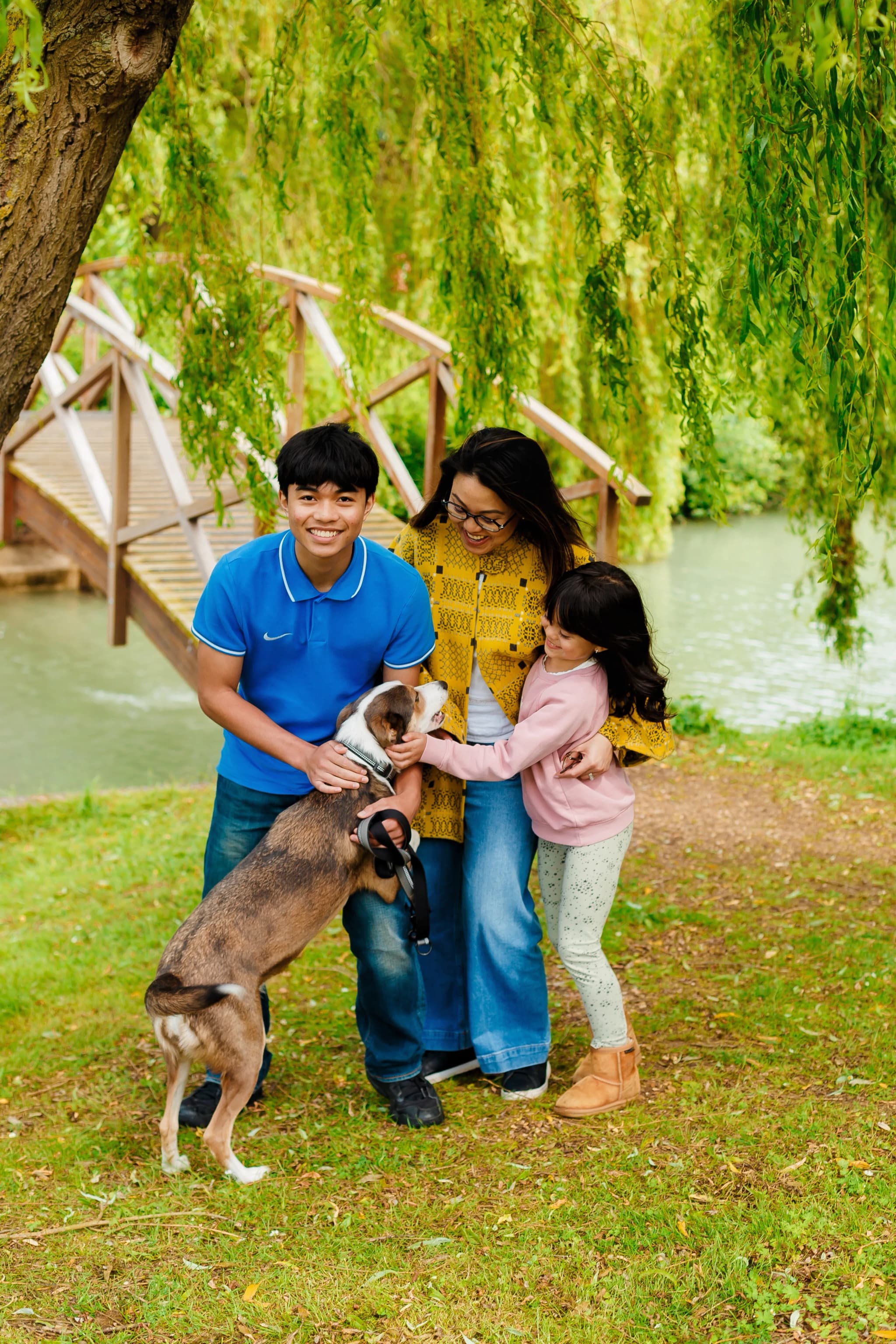
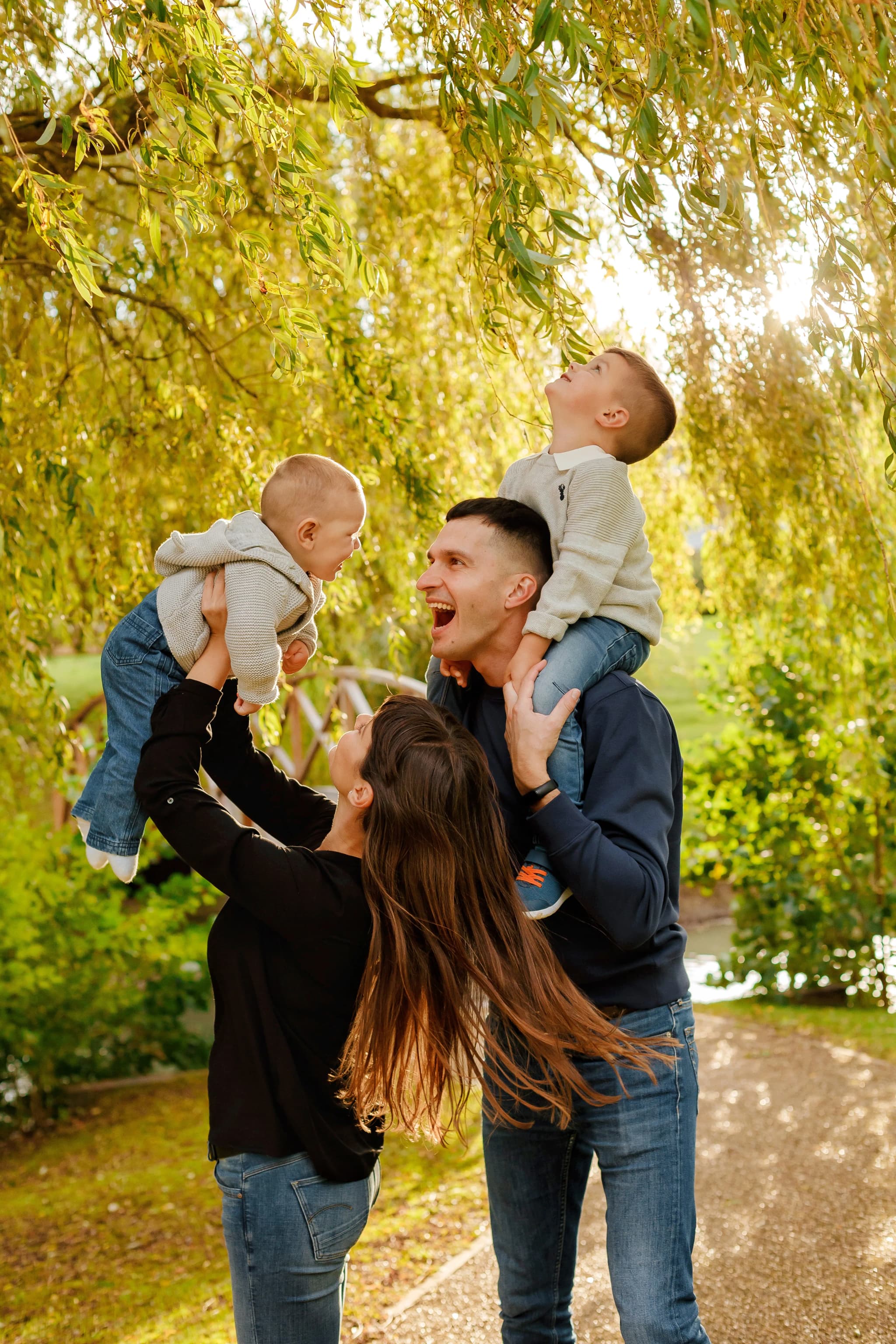
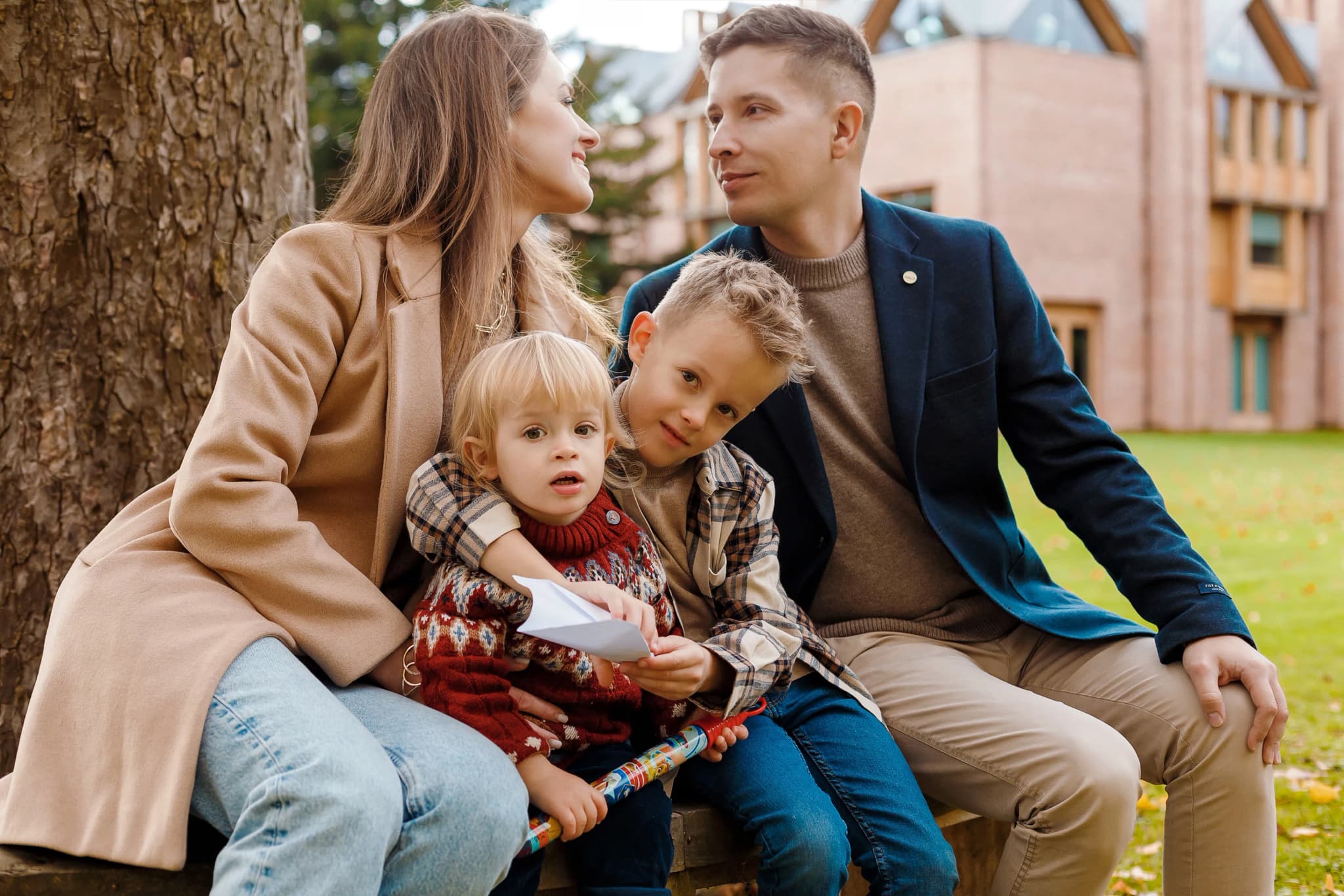
If you are including a partner or other children in part of the session, the coordinating principle is the same one I use for family and newborn sessions: coordinate within a palette rather than matching outfits exactly. If you are in cream, a partner looks better in soft grey, warm beige, or a muted olive than in an identical cream shirt — related tones read as a considered, put-together group without looking like a uniform.
Layers, Comfort, and the Practical Realities of a UK Session
UK weather rarely cooperates fully, and outdoor maternity sessions often fall in shoulder-season light — early morning or early evening, when the temperature can be several degrees cooler than midday even on an otherwise pleasant day. A coordinating wrap, a lightweight cardigan, or a soft shawl in a complementary neutral solves two problems at once: it keeps you warm and comfortable between shots, which matters enormously for how relaxed you look in the images, and it gives an additional textural layer that can be worked into some frames and set aside for others. A cashmere or fine-knit wrap in cream or soft grey is a particularly versatile choice, since it works equally well over a flowing dress or a fitted look.
Footwear matters more than people expect, even though feet rarely appear in the final images. Comfortable, flat, well-worn-in shoes make an enormous difference to how you carry yourself over the course of an hour-long session, particularly later in the third trimester when balance and stamina are both more limited. Barefoot is often the simplest and most flattering option for outdoor sessions on grass or sand, and I am always happy to shoot that way if it is comfortable for you.
Undergarments are worth a moment's thought too, particularly for fitted looks or lighter fabrics in bright light. A well-fitting nude or skin-tone maternity bra avoids the visible lines or straps that can distract in a fitted dress, and if the outfit is pale or sheer in strong sunlight, a slip in a matching tone underneath prevents any unwanted see-through moments. None of this needs to be expensive or special-bought — it simply needs to be considered a few days ahead rather than discovered on the morning of the session.
A full styling guide, tailored to you
When you book a maternity session with me, I send a detailed styling guide ahead of the shoot with specific recommendations based on your chosen location, the season, and your own colouring and preferences — so you never have to guess.
Enquire about a maternity sessionBringing Multiple Outfits: A Simple Approach
Most maternity sessions have time built in for one or two outfit changes, and I generally suggest clients plan around a simple structure: one flowing dress as the anchor look, and one alternative that offers some contrast — perhaps a fitted piece, or a change from a bold colour to a soft neutral, or a shift from a full-length gown to something shorter and more relaxed for a portion of the session. There is no need to bring five outfit options; more choice at the point of getting dressed usually creates more stress rather than less, and two well-chosen outfits that you feel genuinely confident in will always outperform a suitcase of half-considered alternatives.
If you are planning to include a partner, older children, or a family pet in part of the session, it is worth deciding those coordinating outfits at the same time as your own, using the same palette-based approach described above. I am always glad to look over outfit photographs sent ahead of the session and offer honest feedback — it is far easier to swap something out the week before than to wish, looking at the gallery afterwards, that a different choice had been made.
Choosing what to wear for a maternity session should feel like a small, enjoyable piece of preparation rather than a source of stress, and with a few clear principles in mind — let the bump lead the silhouette, favour soft flowing fabric outdoors, keep patterns and logos to a minimum, and bring a warm layer for comfort between shots — most of the difficult decisions make themselves. If you are planning a maternity session in Cambridge or further afield across Cambridgeshire and would like specific guidance for your own colouring, chosen location, and the time of year, get in touch and I will talk you through it properly before the day arrives.

Yana Skakun
Photographer · England
Professional wedding, family and portrait photographer based in England. Passionate about capturing authentic emotions and timeless moments.
About Yana →maternity outfit ideaswhat to wear maternity photosmaternity photoshoot outfit UKmaternity dress photography
Maternity Tips — Professional Photography in Cambridge & England
Yana Skakun is a professional photographer based in Cambridge, covering weddings, families, and portraits across England. Every session is personal — planned around your story, your people, and the moments that matter most. This guide — What to Wear for Maternity Photos: Beautiful Bump Outfit Ideas — is part of the photography journal: practical, experience-based advice drawn from real sessions across England. Whether you arrived searching for maternity outfit ideas or what to wear maternity photos, the same care and attention shapes every session Yana photographs.
Professional Photography sessions are available year-round, with bookings open across Cambridge, Ely, Huntingdon, Peterborough, and further afield — East England, London, the Midlands, and beyond. If you have specific questions about maternity photoshoot outfit uk, mention it in your enquiry. Get in touch through the contact form above to check availability and discuss your session. Enquiries are welcomed from anywhere in the UK.
Frequently Asked Questions
What camera settings should I use for outdoor portraits?+
For outdoor portraits, shoot in aperture priority mode. Use a wide aperture (f/1.8–f/2.8) to blur the background and isolate your subject. Keep ISO as low as possible in good light. In bright conditions, use a neutral density filter or switch to manual to avoid overexposure at wide apertures.
What is the golden hour in photography?+
Golden hour is the period roughly 30–60 minutes after sunrise and before sunset. The sun is low in the sky, producing warm, soft, directional light that flatters skin tones and creates beautiful long shadows. It's widely considered the best natural light for portrait and outdoor photography.
How do you get sharp photos in low light?+
In low light, increase your ISO (accepting some grain), use the widest aperture your lens allows, and slow your shutter speed to the slowest you can hand-hold without camera shake (roughly 1/focal length as a guide). Use image stabilisation if available, and consider a tripod for static subjects.
What is the rule of thirds in photography?+
The rule of thirds divides the frame into a 3×3 grid. Placing your subject on one of the four intersection points — rather than dead centre — creates a more dynamic, visually interesting composition. It's a guideline, not a rule: some of the most powerful images break it deliberately.
How do you edit photos to look professional?+
Professional editing starts with shooting in RAW format. In Lightroom or similar software, correct exposure, white balance, and contrast first. Recover shadow and highlight detail. Apply gentle colour grading for mood. Be conservative with skin retouching — the goal is natural enhancement, not transformation. Consistency across a set of images is what separates professional from amateur editing.
Get in Touch
Ready to Book Your Session?
Get in touch to discuss your vision — I'll reply within 24 hours.