Yana Skakun
Seasonal Brand Photography: When to Update Your Business Images
By Yana Skakun·1 June 2026·5 min read
Brand photography has a shelf life, and it is shorter than most business owners assume. An image taken three years ago shows a slightly different person, at a slightly different weight or hair length, running a slightly different version of the business, wearing clothes that were current then and slightly dated now. None of that is a criticism — it is simply what happens over time to anyone and any business. What separates owners who look current and credible online from those whose photography quietly undermines them is not luck. It is a habit of treating brand photography as a maintained asset, on a seasonal or annual rhythm, rather than a one-off purchase made once and never revisited. This piece is about how to think about that rhythm: when to update, how often, what time of year works best for different kinds of imagery, and how to plan a refresh that does not require reinventing your entire visual identity every time.
Why brand photography ages faster than people expect
There are two separate kinds of ageing at work, and it helps to tell them apart. The first is personal: your hair, your weight, your glasses, the general look of you, which shifts gradually and is barely noticeable to you day to day but becomes obvious the moment someone compares a photo from today to one from two or three years ago. The second is contextual: your business itself changes shape. You raise your prices, you narrow or widen your niche, you rebrand your colours and your messaging, you move office or start working from a different studio, you bring on a team where before it was just you. Photography that was accurate and flattering at the time it was taken can become quietly inaccurate on either front without ever looking bad in isolation — it simply stops looking like the business as it actually is now.
This matters more for service-based and personal-brand businesses than almost anywhere else, because the photograph often is the first point of contact. A prospective client scrolling a website, a LinkedIn profile, or an Instagram grid is making a snap judgement about trust and fit based on a face and a setting before they read a single word of copy. If that face and setting do not match the person who eventually turns up to the consultation or the shoot day, there is a small but real credibility gap that a first meeting then has to close. Keeping the imagery current closes that gap before it opens.
The signs it is time for a refresh
A handful of signals reliably indicate that a business's photography has fallen behind its reality, and most owners recognise several of them at once when they actually stop to look at their current image library with fresh eyes rather than the affectionate blindness that comes from having chosen the photos yourself originally.
The most obvious is simple age: if your current headshots and lifestyle images are more than eighteen months to two years old, and your appearance has shifted at all in that time, it is worth a look. Rebrands are an equally clear trigger — if you have changed your colour palette, your logo, your business name, or your overall positioning, but the photography on your website still sits against the old backdrop or wears the old branding, the mismatch is jarring even if visitors cannot immediately articulate why something feels slightly off. A change in service offering is another: a coach who has moved from group programmes to high-touch one-to-one work, or a photographer who has shifted from weddings into commercial work, needs imagery that reflects the new emphasis, not photographs still selling the old model. And there is the more mundane but very real sign of simply running out of material — recycling the same ten images across every platform and every new piece of marketing until your own audience could recite them from memory.
There is also a softer, more anecdotal signal that is worth taking seriously: new clients or contacts meeting you in person and saying, in one form or another, that you look different from your photos. It is usually said kindly, but it is a direct piece of feedback that the imagery representing you online has drifted from reality, and it is exactly the kind of gap a seasonal refresh is designed to close before it becomes a recurring comment.
Matching the season to the kind of session
One of the most useful things about treating brand photography as a seasonal habit rather than a single event is that different times of year genuinely suit different kinds of imagery, and planning around that gives you a better result than trying to force any session into a fixed calendar slot regardless of light and mood.
Spring, from March through May, brings improving light and outdoor locations that look genuinely fresh rather than bare or overgrown. Parks, courtyards, and college grounds around Cambridge come back to life in this window, with blossom and new green growth adding warmth and softness to outdoor and lifestyle sessions without the harshness of full summer sun. It is a strong choice for businesses planning a spring launch, a relaunch, or simply wanting imagery with an optimistic, forward-looking feel.
Late summer, particularly August into September, offers long golden evenings and warm outdoor tones that suit lifestyle and environmental brand photography especially well — images of you working, meeting clients, or simply existing in your business environment with natural light doing most of the work. Many business owners deliberately schedule a late-summer session to have fresh imagery ready ahead of the autumn push into a new quarter or a new offer.
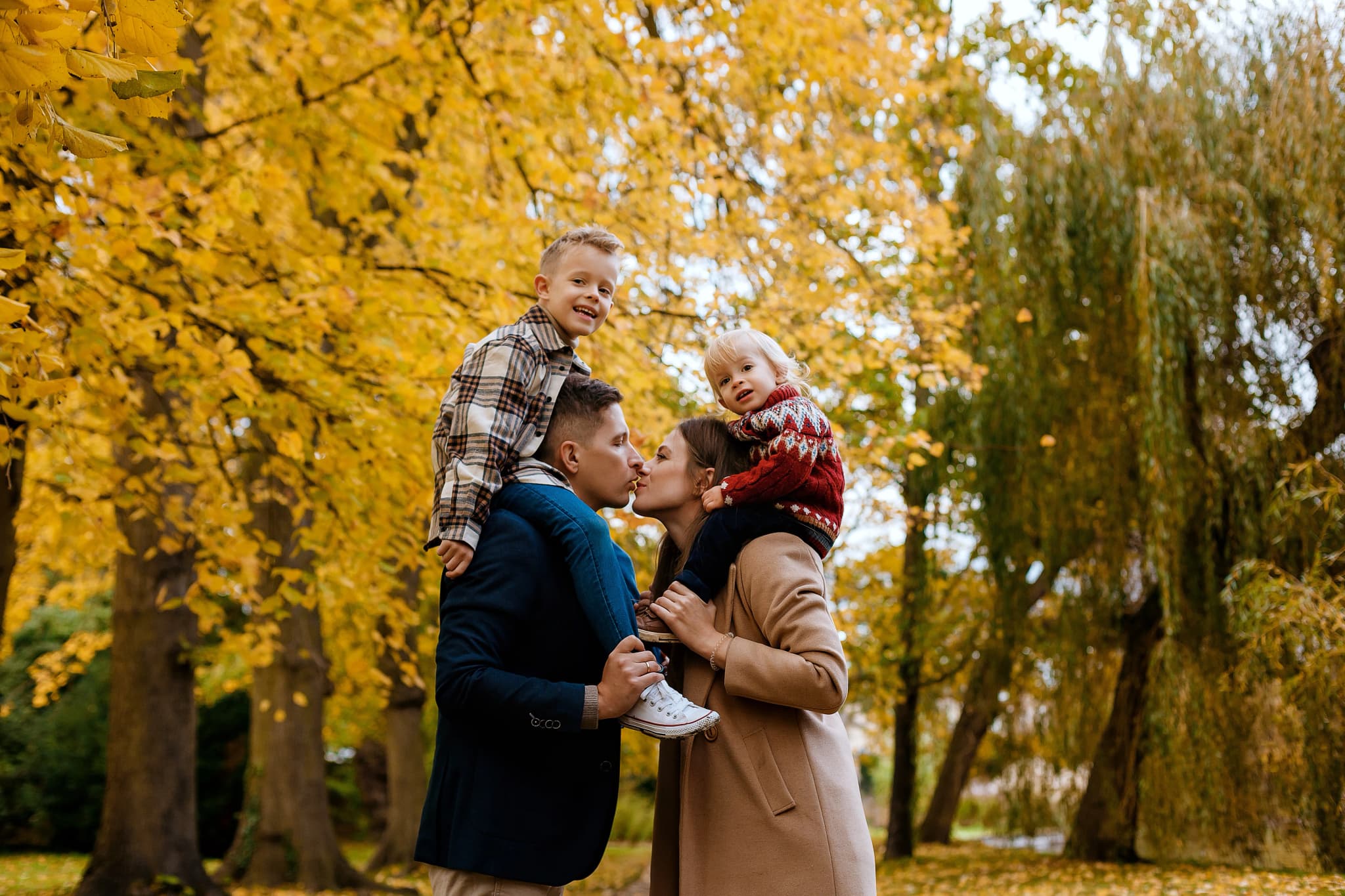
Autumn, especially October, brings rich, warm textures and low, flattering light that suits earthy, sophisticated brand aesthetics particularly well — think tailored knitwear, warm neutral backdrops, and the kind of golden-hour tones that photograph beautifully against Cambridgeshire's woodland and college architecture. It is a popular booking window and tends to fill early, so it rewards planning several weeks ahead rather than trying to book at short notice.
January and February are the quietest months for bookings generally, which has its own advantage: sessions are easier to arrange at short notice, studio and indoor locations work well when outdoor light is at its weakest and greyest, and a fresh set of images at the start of the calendar year suits any business planning a January relaunch, a refreshed offer, or simply wanting to walk into the new year with imagery that matches present-day ambitions rather than last year's.
Planning a cost-effective refresh instead of starting from zero
A common misconception is that keeping brand photography current requires a full-day shoot every single year, with multiple outfit changes, multiple locations, and the associated cost and time commitment. In practice, that is rarely necessary or the most efficient way to maintain a strong image library. Many business owners instead build a rhythm of one full session every two to three years, when something substantial has changed — a rebrand, a significant repositioning, a major shift in service offering — supplemented by shorter refresh sessions in between, of perhaps one to two hours, to top the library up.
A refresh session works best when it is focused rather than trying to replicate a full shoot in miniature. Typically that means one or two new contexts — a different room, a different outdoor spot, a new piece of equipment or workspace that has become part of how you present the business — combined with a single outfit change and a clear list of specific gaps to fill. If you have noticed you have no vertical images for Instagram Stories, no wide shots with negative space for website banners, or no images that show you actually mid-task rather than posed and looking at camera, a refresh session is the moment to solve precisely those gaps rather than reshooting everything from scratch.
Coming to a refresh session with that kind of shortlist, rather than a vague sense that you need "new photos," makes the time genuinely efficient. It also tends to produce a more cohesive library over time, because each refresh builds on the last rather than starting the visual identity over from nothing, which is what tends to happen when photography is only revisited every four or five years in one large, expensive, slightly overwhelming session.
Brand photography refresh sessions — Cambridge & UK
Whether you need a full rebrand session or a short, focused refresh shoot to fill specific gaps, I work with brand photography clients across Cambridge, London, and further afield to keep imagery current, useful, and genuinely representative.
Plan your brand sessionKeeping the refresh consistent with what came before
The one risk with any refresh session is that it drifts too far from your existing visual identity, so that the new images do not sit comfortably alongside the old ones on the same website or the same feed. The way to avoid this is to treat continuity as a deliberate part of the brief, not an afterthought. Before the session, it is worth pulling together the handful of images from your current library that you feel represent you best — the ones that get the most positive response, that you are proudest to have on your homepage — and using those as the anchor for tone, colour palette, and general mood in the new session. A refresh should feel like the next chapter of the same story, not a different book.
That does not mean nothing can change. A rebrand, a change of premises, or a genuine shift in how you want to be perceived is exactly the moment to let the photography move deliberately, rather than incrementally, in a new direction. The distinction is between change that is intentional and communicated — new colours, a new setting, a slightly more polished or slightly more relaxed tone to match a repositioned offer — and change that happens by accident because a session was booked without reference to what already existed. The former strengthens a brand. The latter tends to leave a visitor unsure, at a glance, whether they have landed on the right website.
Building the habit into your working year
The businesses that never end up with the awkward, dated photography problem are, almost without exception, the ones that have made a refresh session a routine part of their working year rather than a task that only gets attention once the old photos have become embarrassing. Some owners tie it to their financial year, booking a session in the same month each year as part of annual planning. Others tie it to a seasonal rhythm — an autumn session most years, occasionally supplemented by a shorter spring top-up if something specific has changed. What matters less than the exact timing is the existence of a rhythm at all: a standing decision, made once, that photography gets revisited on a schedule rather than being left until a client comment or a personal cringe forces the issue.
If your current images are starting to feel like they belong to an earlier version of your business, or if you simply cannot remember the last time you updated them, that is usually the clearest sign it is time. A short, focused refresh session is often all that is needed to close the gap, without the cost or time commitment of a full rebrand shoot. If you would like to talk through what a refresh session could look like for your business, and which time of year would suit the kind of imagery you need, get in touch and we can plan a session around your calendar and your goals.




Yana Skakun
Photographer · England
Professional wedding, family and portrait photographer based in England. Passionate about capturing authentic emotions and timeless moments.
About Yana →when to update brand photographyseasonal brand photos businessupdate business images ukhow often refresh brand photography
Photography Tips — Professional Photography in Cambridge & England
Yana Skakun is a professional photographer based in Cambridge, specialising in wedding, family, and portrait photography across England. Every session is personal — planned around your story, your people, and the moments that matter most. This guide — Seasonal Brand Photography: When to Update Your Business Images — is part of the photography journal: practical, experience-based advice drawn from real sessions across England. Whether you arrived searching for when to update brand photography or seasonal brand photos business, the same care and attention shapes every session Yana photographs.
Professional Photography sessions are available year-round, with bookings open across Cambridge, Ely, Huntingdon, Peterborough, and further afield — East England, London, the Midlands, and beyond. If you have specific questions about update business images uk, mention it in your enquiry. Get in touch through the contact form above to check availability and discuss your session. Enquiries are welcomed from anywhere in the UK.
Frequently Asked Questions
What camera settings should I use for outdoor portraits?+
For outdoor portraits, shoot in aperture priority mode. Use a wide aperture (f/1.8–f/2.8) to blur the background and isolate your subject. Keep ISO as low as possible in good light. In bright conditions, use a neutral density filter or switch to manual to avoid overexposure at wide apertures.
What is the golden hour in photography?+
Golden hour is the period roughly 30–60 minutes after sunrise and before sunset. The sun is low in the sky, producing warm, soft, directional light that flatters skin tones and creates beautiful long shadows. It's widely considered the best natural light for portrait and outdoor photography.
How do you get sharp photos in low light?+
In low light, increase your ISO (accepting some grain), use the widest aperture your lens allows, and slow your shutter speed to the slowest you can hand-hold without camera shake (roughly 1/focal length as a guide). Use image stabilisation if available, and consider a tripod for static subjects.
What is the rule of thirds in photography?+
The rule of thirds divides the frame into a 3×3 grid. Placing your subject on one of the four intersection points — rather than dead centre — creates a more dynamic, visually interesting composition. It's a guideline, not a rule: some of the most powerful images break it deliberately.
How do you edit photos to look professional?+
Professional editing starts with shooting in RAW format. In Lightroom or similar software, correct exposure, white balance, and contrast first. Recover shadow and highlight detail. Apply gentle colour grading for mood. Be conservative with skin retouching — the goal is natural enhancement, not transformation. Consistency across a set of images is what separates professional from amateur editing.
Continue Reading
Related Articles

Photography Tips
Photography Gift Vouchers: The Most Personal Present You Can Give
5 min read · Read Article
Photography Tips
Photo Books vs Photo Albums: What Is the Difference and Which Is Better?
5 min read · Read Article
Photography Tips
Photo Gift Ideas: Turning Professional Images into Meaningful Presents
5 min read · Read Article
Get in Touch
Ready to Book Your Session?
Get in touch to discuss your vision — I'll reply within 24 hours.