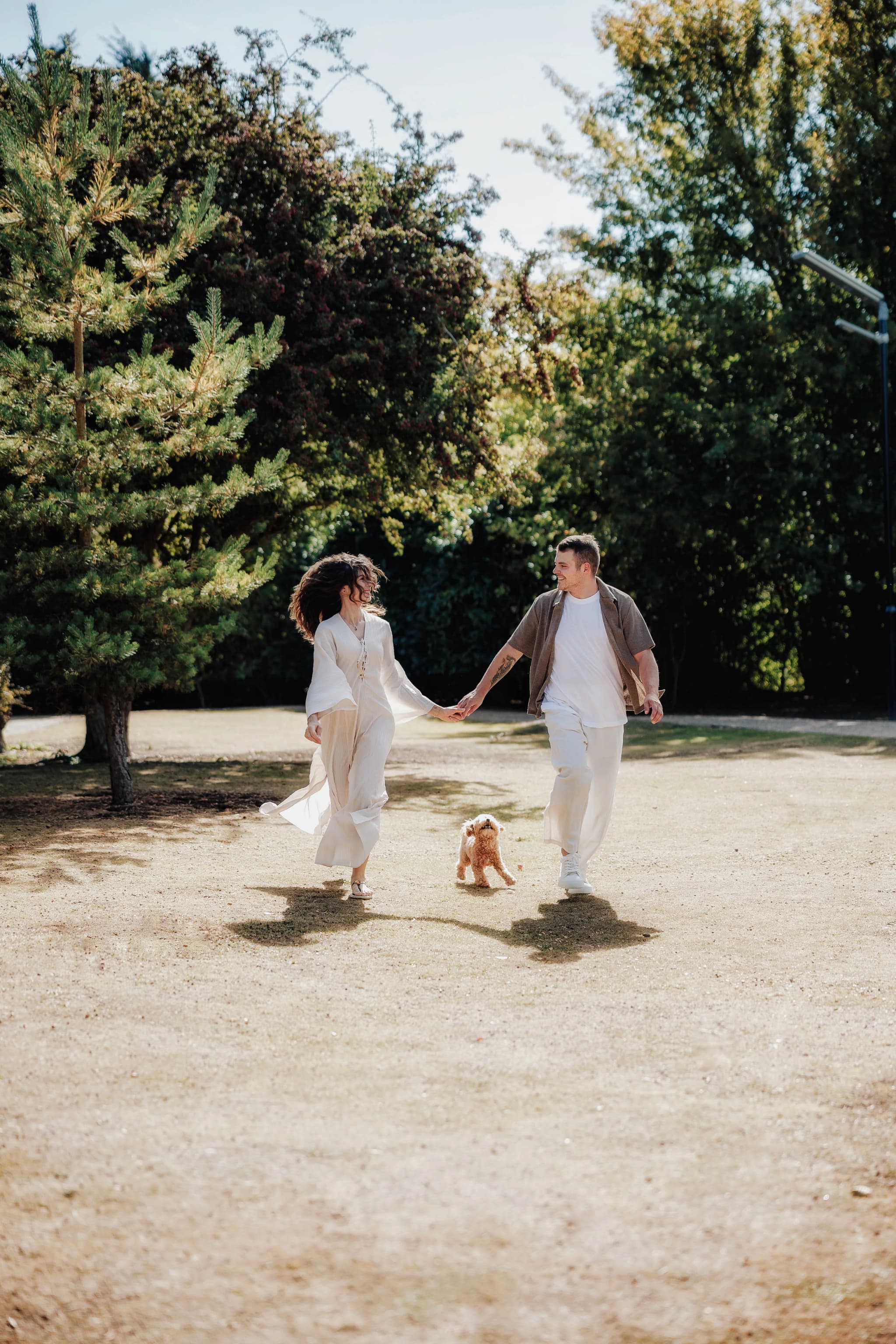
Symmetry is one of the most immediately satisfying compositional tools in photography. When both halves of an image mirror each other — or nearly so — the result feels balanced, orderly, and visually powerful. The human brain is wired to recognise and respond to symmetry: it reads as beauty, stability, and intentionality. This guide covers the different types of symmetry, how to find and compose symmetrical images, and how to use symmetry in wedding, portrait, and architectural photography.
Types of Symmetry in Photography
Vertical Symmetry (Left-Right)
The most common type. The left half of the image mirrors the right half. Found in architecture (church naves, doorways, corridors), reflections (lakes, puddles, mirrors), and posed subjects (a person centred in a doorway). The axis of symmetry is a vertical line through the centre of the frame.
Horizontal Symmetry (Top-Bottom)
The top half mirrors the bottom half. Most commonly created by reflections in still water — a landscape reflected in a lake produces near-perfect horizontal symmetry. Mountains, trees, and buildings sit above; their reflections stretch below. The horizon line becomes the axis.
Radial Symmetry
Elements radiate outward from a central point — like petals on a flower, the spokes of a wheel, or architectural features viewed from directly below (domes, spiral staircases, rose windows). Radial symmetry is hypnotic and draws the eye inward toward the centre.
Approximate Symmetry
Perfect mathematical symmetry is rare in the natural world. Approximate symmetry — where the two halves are similar but not identical — often works better in photography because it feels organic rather than manufactured. A tree-lined avenue where each side has similar but not identical trees, or a face where both sides echo each other without being mirror images, produces a comfortable visual balance.
Where to Find Symmetry
Architecture
Buildings are designed with symmetry. Churches, cathedrals, grand houses, and civic buildings almost always have a symmetrical facade and symmetrical interiors. Stand on the centre line, align the camera precisely, and the image falls into symmetry naturally.
- Church naves — the aisle leads the eye to the altar, flanked by identical rows of pews, columns, and arches.
- Doorways and archways — centred, they become powerful symmetrical frames.
- Corridors and cloisters — long, repeating, symmetrical perspectives.
- Staircases — especially double staircases that mirror from a central landing.
Reflections
Water is the primary source of reflection symmetry. Any body of still water — a lake, a pond, a puddle after rain, a flooded field — becomes a mirror that doubles the scene above it.
- Calm lakes at dawn or dusk — when wind drops and the surface becomes glass-like.
- Puddles — a low-angle shot into a puddle reflecting a building, a person, or a sky.
- Glass and polished surfaces — marble floors, glass windows, car bonnets.
- Mirrors — in bridal suites, in venue hallways, in dressing rooms.
Nature
Natural symmetry is approximate but powerful: butterfly wings, flower petals, leaf veins, tree canopies viewed from below, and the human face all exhibit varying degrees of symmetry.
The Human Body
The face and body are approximately symmetrical. A centred portrait — eyes level, face forward, body balanced — leverages this symmetry. Combined with a symmetrical background (a doorway, a wall, a window), the entire image becomes a symphony of balance.
Composing Symmetrical Images
Find the Centre Line
Symmetry requires the camera to be precisely on the axis of symmetry. In a church nave, stand on the centre line between the pews. In front of a building facade, centre yourself between the two wings. Any deviation left or right breaks the symmetry visibly — and asymmetry that looks accidental rather than intentional weakens the image.
Level the Camera
A tilted camera destroys symmetry instantly. Use a gridline overlay, an electronic level, or a hot-shoe spirit level to ensure the camera is perfectly horizontal. Even 1-2 degrees of tilt is visible in a symmetrical composition.
Correct Perspective
Shooting upward at a building creates converging verticals that break symmetry. Use a tilt-shift lens, shoot from further back with a longer focal length, or correct perspective in post-processing (Lightroom's Transform panel, Photoshop's Perspective Crop).
Centre the Subject
Symmetrical compositions almost always demand centred subjects. This is one of the few situations where the rule of thirds doesn't apply — placing a centred subject in a symmetrical frame at a third-line position feels wrong. Centre it. Own the symmetry fully.
Symmetry in Wedding Photography
The Church Aisle Shot
The bride walking down the aisle, centred in the nave, with symmetrical rows of pews, columns, and arches flanking her. This is the quintessential symmetrical wedding image — powerful, formal, and timeless.
The Venue Facade
The couple standing centred in front of the venue's main entrance — the building's symmetry frames them, communicating the grandeur and formality of the setting.
Reflected Couple Portraits
The couple standing at the edge of a lake, their reflection doubling them below. Or a creative low-angle shot into a puddle, with the couple and sky reflected in the surface. Reflection symmetry adds a dreamlike quality.
Table Setting Overheads
A long dining table set for the reception, photographed from directly above — plates, glasses, cutlery, and centrepieces arranged in symmetrical patterns. The overhead angle reveals the symmetry that guests at the table never see.
Bridal Portrait in a Mirror
The bride in front of a mirror — the real person and the reflection creating left-right symmetry. This works particularly well in ornate mirrors with symmetrical frames, where the mirror itself adds another layer of balanced composition.
Breaking Symmetry Intentionally
Perfect symmetry can feel static. A single element that breaks the symmetry — one person stepping out of line, a coloured object on one side only, a bird in one half of a sky — creates dynamic tension. The eye expects symmetry, encounters the break, and the image becomes more interesting because of that surprise. The best symmetrical compositions often include one deliberate asymmetric element.
Post-Processing for Symmetry
- Guided transform: in Lightroom, use the Guided Upright tool to align vertical and horizontal lines precisely. This corrects minor camera misalignment.
- Crop precisely: even a small crop adjustment can centre a nearly-symmetrical image perfectly.
- Rotate: a 0.5-degree rotation can level a horizon that breaks an otherwise symmetrical reflection.
- Clone/heal: if a small element breaks the symmetry unintentionally (a bin, a sign, a parked car), removing it in post restores the visual balance.
Balanced, intentional, visually powerful compositions — symmetry, negative space, and leading lines crafted with care.
Every image composed with precision and purpose, from the church aisle to the final confetti throw. Explore the composition-driven portfolio.