Yana Skakun
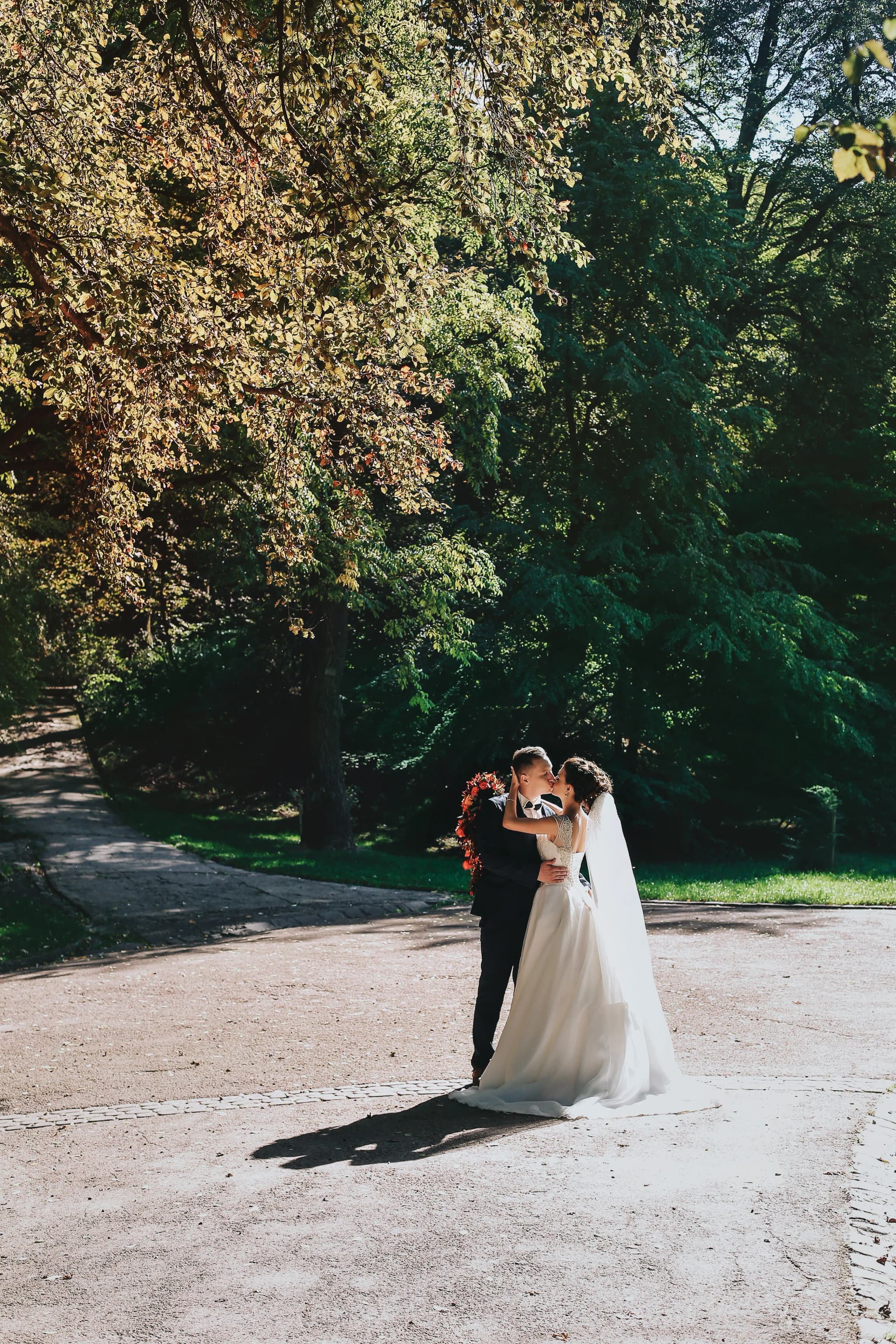
Destination Wedding Packing Guide: What to Bring for a Photo Shoot Abroad
By Yana Skakun·2 May 2026·7 min read
A destination wedding or elopement photo shoot requires careful packing — you are travelling with formalwear, accessories, and sometimes a full wedding dress, while also navigating flights, hotel rooms, and outdoor locations. This practical guide covers everything you need to know about packing for a destination wedding and photo shoot, from protecting your dress on the flight to the accessories that photograph best in different conditions.
Travelling with a Wedding Dress
The wedding dress is typically the most difficult item to transport. The main options are:
- ◆Cabin luggage in a garment bag: Most airlines allow a wedding dress as a special item to be hung in the aircraft coat closet (cabin crew will usually accommodate this request, but it is not guaranteed). Book in advance and arrive early. A full-length garment bag protects the dress from crushing and dirt. Ball gowns with structured crinolines are the most difficult — a gown in a softer fabric folds more easily.
- ◆Carry-on compression in a garment bag: Many modern wedding dress fabrics (crepe, silk charmeuse, jersey, chiffon) can be loosely folded and packed into a carry-on or standard checked garment bag with minimal wrinkle effect. On arrival, hanging the dress in a steamy bathroom for 20–30 minutes releases most compression creases. Your dressmaker should advise on whether your specific fabric and construction can travel this way.
- ◆Shipped in advance: For complex ball gowns, sending the dress via courier from a dress specialist to the destination hotel is an option. International shipping requires customs documentation; a specialist bridal courier service manages this process.
Shoes for Outdoor Destination Locations
Many of the most beautiful destination photography locations — cobbled streets in Positano, rocky Santorini paths, clifftop grass at the Cliffs of Moher, slate paths in Skye — are difficult to navigate in high heels. Practical recommendations:
- ◆Bring two pairs: A photography-specific flat or low heeled shoe for the location session (silver metallic sandals or white trainers both photograph beautifully and are practical) and a different shoe for the ceremony itself if desired.
- ◆Heel caps: Stiletto heels on cobblestones, gravel paths, or grass will sink. Heel caps (rubber or plastic) applied to your stiletto heel convert the point to a flat bottom and prevent sinking. Available from any shoe repair shop.
- ◆Barefoot on beaches: For beach and coastal locations, going barefoot is often both the most practical and the most photogenic option — bare feet on white sand or pebbles, with the sea behind, is a classic image.
What to Bring for a Destination Photo Shoot
- ◆A small emergency kit: Safety pins, a needle and thread matching your dress colour, fashion tape, blotting paper, and a compact mirror. Specifically for outdoor destination shoots: insect repellent (essential in Scottish Highlands, Algarve pine forests), and SPF50 sunscreen for Mediterranean locations.
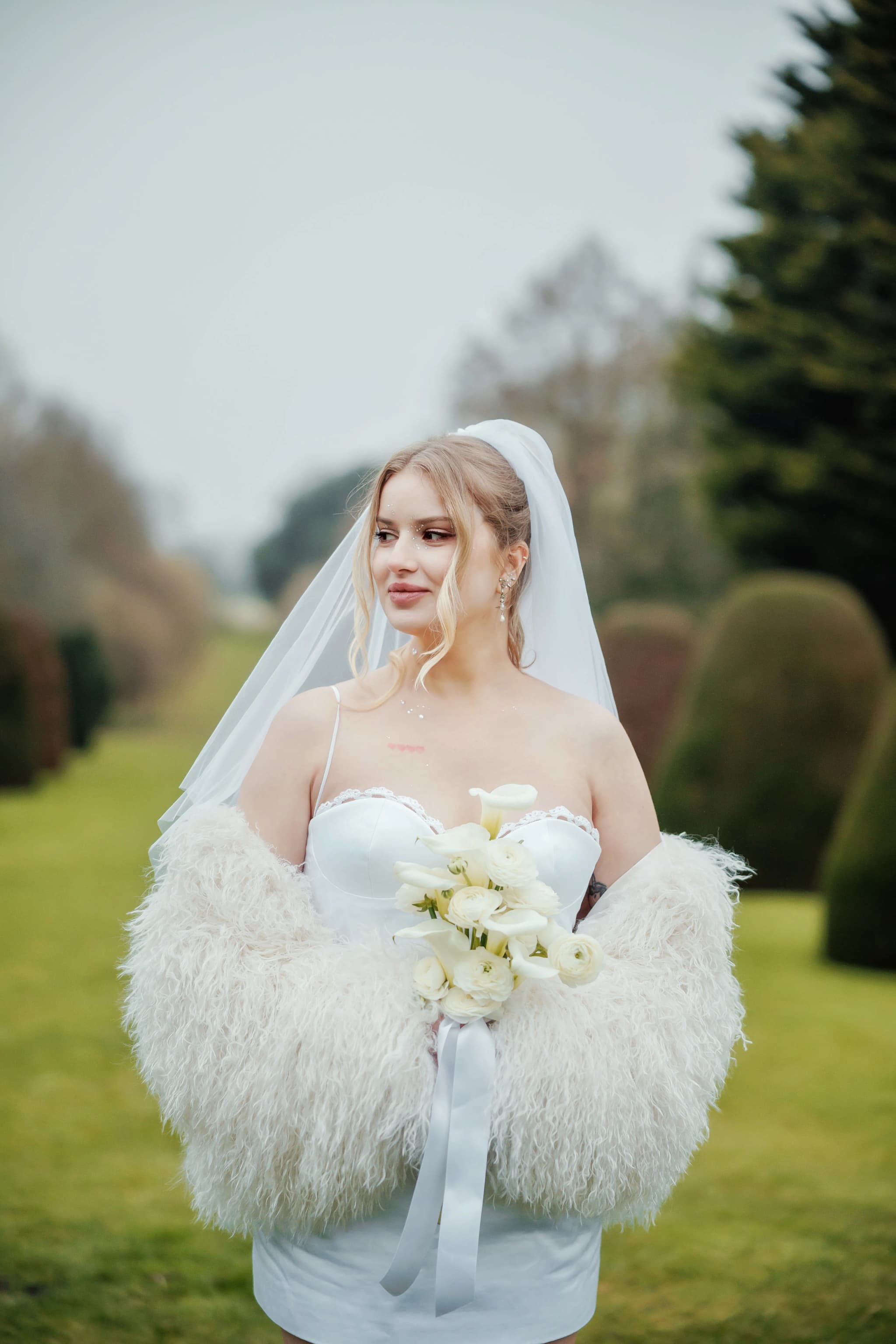
- ◆Bouquet or flowers: Even if your ceremony is a simple symbolic ceremony, a hand-tied bouquet is a significant photographic prop. If you cannot transport fresh flowers, many destinations have florists who can prepare a bouquet on-site. Dried flower and pampas grass arrangements can be transported in luggage.
- ◆A change of outfit for the second session: Many couples bring a second look for their destination session — a floral summer dress, a coloured wrap, or a completely different style. This creates variety across the gallery and gives a more relaxed feel to the later part of the session.
- ◆Your partner's suit or outfit: Suits typically travel well in a garment bag. Linen suits can be steamed on arrival. Alternatives to suits — smart trousers and an open-collar shirt, a kilt for Scottish destinations — often work as well photographically as a full formal suit.
For Mediterranean destinations: pack a small umbrella or a large scarf that can function as a shaul or head covering. Not for rain — for the midday shade. Direct overhead sun in July in Santorini or Positano at 2pm creates very unflattering facial shadows. Having a way to create soft shade for a brief portrait moment in harsh midday light is useful. Your photographer will plan sessions around the best light, but having a light diffusion option is a backup.
Documents to Keep in Cabin Baggage
For any destination where you are entering into a legal ceremony, keep the following in your cabin bag, not checked luggage: passports and CNI or apostilled documents, the ceremony details and officiant's contact information, and the hotel booking confirmation. These should never go into checked luggage — the consequences of lost documents in this context are severe.
Planning Your Destination Wedding Photo Shoot
I provide pre-session guidance for all destination bookings — including specific advice on what to wear and bring for the particular location, time of year, and photography style. If you are planning a destination elopement or wedding, get in touch to begin the planning process.
Enquire About Destination Wedding Photography

Yana Skakun
Photographer · England
Professional wedding, family and portrait photographer based in England. Passionate about capturing authentic emotions and timeless moments.
About Yana →destination wedding packing guidetravelling with wedding dresswhat to pack elopement shootdestination wedding tipselopement photography checklist
Destination Weddings — Professional Photography in Cambridge & England
Yana Skakun is a professional photographer based in Cambridge, covering weddings, families, and portraits across England. Every session is personal — planned around your story, your people, and the moments that matter most. This guide — Destination Wedding Packing Guide: What to Bring for a Photo Shoot Abroad — is part of the photography journal: practical, experience-based advice drawn from real sessions across England. Whether you arrived searching for destination wedding packing guide or travelling with wedding dress, the same care and attention shapes every session Yana photographs.
Professional Photography sessions are available year-round, with bookings open across Cambridge, Ely, Huntingdon, Peterborough, and further afield — East England, London, the Midlands, and beyond. If you have specific questions about what to pack elopement shoot, mention it in your enquiry. Get in touch through the contact form above to check availability and discuss your session. Enquiries are welcomed from anywhere in the UK.
Frequently Asked Questions
What camera settings should I use for outdoor portraits?+
For outdoor portraits, shoot in aperture priority mode. Use a wide aperture (f/1.8–f/2.8) to blur the background and isolate your subject. Keep ISO as low as possible in good light. In bright conditions, use a neutral density filter or switch to manual to avoid overexposure at wide apertures.
What is the golden hour in photography?+
Golden hour is the period roughly 30–60 minutes after sunrise and before sunset. The sun is low in the sky, producing warm, soft, directional light that flatters skin tones and creates beautiful long shadows. It's widely considered the best natural light for portrait and outdoor photography.
How do you get sharp photos in low light?+
In low light, increase your ISO (accepting some grain), use the widest aperture your lens allows, and slow your shutter speed to the slowest you can hand-hold without camera shake (roughly 1/focal length as a guide). Use image stabilisation if available, and consider a tripod for static subjects.
What is the rule of thirds in photography?+
The rule of thirds divides the frame into a 3×3 grid. Placing your subject on one of the four intersection points — rather than dead centre — creates a more dynamic, visually interesting composition. It's a guideline, not a rule: some of the most powerful images break it deliberately.
How do you edit photos to look professional?+
Professional editing starts with shooting in RAW format. In Lightroom or similar software, correct exposure, white balance, and contrast first. Recover shadow and highlight detail. Apply gentle colour grading for mood. Be conservative with skin retouching — the goal is natural enhancement, not transformation. Consistency across a set of images is what separates professional from amateur editing.
Continue Reading
Related Articles
Destination Weddings
Ireland Wedding Photography Guide: Wild Atlantic Way, Castles and the Emerald Landscape
9 min read · Read Article
Destination Weddings
Loch Lomond Wedding Photography: Scotland's Most Accessible Highland Landscape
7 min read · Read Article
Destination Weddings
Gretna Green Elopement Photography: Scotland's Famous Blacksmith and the Border Village
7 min read · Read Article
Get in Touch
Ready to Book Your Session?
Get in touch to discuss your vision — I'll reply within 24 hours.