Yana Skakun

How to Tell Your Family You're Eloping (And Why They'll Love It)
By Yana Skakun·10 July 2026·8 min read
Of all the conversations that come before an elopement, this is usually the one couples dread most. Choosing to elope is rarely about excluding anyone — it is about wanting a wedding day that feels genuinely yours, without the guest list, the seating plan, or the sense of performing for an audience. But explaining that to a mother who has been planning your big day since you were seven, or a grandparent who has already picked out a hat, takes some thought. Having photographed elopements across the UK and further afield, I have sat with a lot of couples through this exact conversation, and I have watched families react in every way from tears of disappointment to genuine relief. The good news is that with the right approach, most families come round — and many end up loving the idea more than the couple expected.
Understand Why You're Eloping Before You Explain It
Before you say a word to anyone else, get clear with your partner on your own reasons. "We just want to" is true but rarely persuasive to a parent who has strong feelings about the matter. Sit down together and articulate the real motivations — whether that is wanting a day free of family politics, not wanting to go into debt for a wedding, craving somewhere remote and beautiful rather than a marquee in a field, or simply finding the idea of forty pairs of eyes on you during your vows unbearable. Whatever it is, name it specifically.
This matters because family members can usually sense the difference between a couple who has made a considered decision and a couple who is avoiding a difficult conversation about budget or in-laws by hiding behind "we're just not wedding people." A clear, honest reason is far easier to accept than a vague one, even if the person hearing it is disappointed by the outcome.
Choose the Right Moment and the Right Method
Telling your parents you are eloping over text message rarely goes well, even when everything else about the conversation is handled perfectly. This is news that deserves a phone call at minimum, and ideally a conversation in person, sitting down, without other distractions competing for attention. Avoid delivering the news during an already stressful family gathering, at Christmas dinner, or squeezed in before someone has to leave for work. Give the conversation room to breathe.
Consider who should hear it first. In most families, telling parents before siblings, and telling both sets of parents at broadly the same time, avoids anyone feeling like an afterthought. If your families are close, or if one parent is prone to phoning the other immediately with news, try to have both conversations within a short window of each other so nobody feels like they heard it secondhand before you had the chance to tell them yourself.
Lead With Love, Not With Logistics
A common mistake couples make is opening the conversation with the practical case for eloping — the cost savings, the simplicity, the fact that neither of you wants to deal with seating charts. Logistics can sound, however unintentionally, like you are justifying a decision that has already excluded the person you are talking to. Start instead with what this choice means emotionally: that you want your wedding day to be about the two of you and your marriage, not about managing a guest list, and that this decision comes from wanting the day to be as meaningful as possible, not from wanting to shut anyone out.
It also helps enormously to be explicit that eloping is not a judgement on your family or on traditional weddings generally. Many parents hear "we're eloping" and translate it internally to "our wedding wasn't good enough" or "you don't want us there." Naming that fear directly and reassuring them it is not the case — even before they ask — often defuses a huge amount of tension before it builds.
Prepare for Different Reactions From Different People
Not everyone will react the same way, and it helps to expect that rather than be thrown by it. Some parents will be immediately supportive, particularly if they have watched you stress about wedding planning for other people's weddings and have half-expected this. Others will need time to process, especially if they had specific hopes attached to your wedding day — walking you down an aisle, giving a speech, seeing you in your dress before anyone else does. A slower, quieter reaction is not necessarily disapproval; it is often just grief for an imagined version of the day that will not now happen, and that grief deserves space rather than defensiveness.
A smaller number of people may react with real hurt or anger, particularly if cultural or religious expectations around weddings are significant in your family. If you anticipate this being a possibility, it is worth thinking in advance about where you are willing to be flexible — a blessing ceremony back home after the elopement, a big party later, involving a parent in some specific way even from a distance — versus where the decision is genuinely not up for negotiation. Knowing your own boundaries beforehand makes it much easier to stay calm and kind in the moment rather than becoming defensive.
Offer a Way for Them to Feel Included
Much of the sting of an elopement announcement comes from a sense of exclusion, so anything you can offer that counters that feeling is worth considering. This does not mean compromising on the elopement itself — it means finding a second, smaller way for family to participate. Many couples I photograph plan a relaxed celebration back home in the weeks after their elopement: a dinner, a garden party, a pub lunch, something considerably lower-key and lower-stakes than a full wedding, where family and friends can toast the couple, see the photographs, and genuinely celebrate without any of the pressure of the day itself.
Sharing the actual planning of the elopement, where appropriate, can also help. Sending a parent a photograph of the location you have chosen, asking a sibling's opinion on an outfit, or simply keeping people updated as the date approaches signals that they are still part of your life and your decision-making, even if they are not standing beside you on the day. For couples who want the professional photographs to genuinely represent the day so family can feel like they were there in spirit, working with a photographer who understands elopement photography specifically — someone used to telling the full story of a small, intimate day — makes a real difference to what you are able to share afterwards.
Planning an elopement of your own?
I photograph elopements and small intimate weddings across the UK and further afield, and I am always happy to talk through how a day might look before you have made any firm decisions — including how to plan around family, timing, and locations. A good elopement photographer can also help you think through logistics that make the family conversation easier, from timing a celebration back home to choosing images that tell the full story of your day.
Get in touchWhat to Say If Someone Asks "Why Not Just Have a Small Wedding?"
This question comes up often, and it is worth having an honest answer ready, because it is a reasonable thing for family to ask. The truth is that a small wedding and an elopement are genuinely different experiences, not just different sizes of the same event. A small wedding still involves a guest list, which means decisions about who is included and who is not, seating, catering for a set number, and almost inevitably, some version of performing for an audience, however intimate. An elopement removes that entirely. There is no audience. There is no version of the day where you are managing anyone else's experience or expectations, which frees both of you to be fully present with each other rather than half-present while also hosting.
For couples who have watched a friend or sibling get overwhelmed and exhausted by their own wedding planning, or who have personally found guest-list negotiations painful, this distinction is often the clearest and most persuasive explanation. It is also worth pointing out, gently, that a wedding with fifteen or twenty guests is not necessarily cheaper or simpler than one with eighty — venues, catering, and photography costs do not always scale down proportionally, whereas a true elopement genuinely does simplify almost every decision. If cost or simplicity is part of your reasoning, our page on wedding photography pricing can be a useful reference point if the conversation turns practical.
Why Families Often Come Around — and Even End Up Grateful
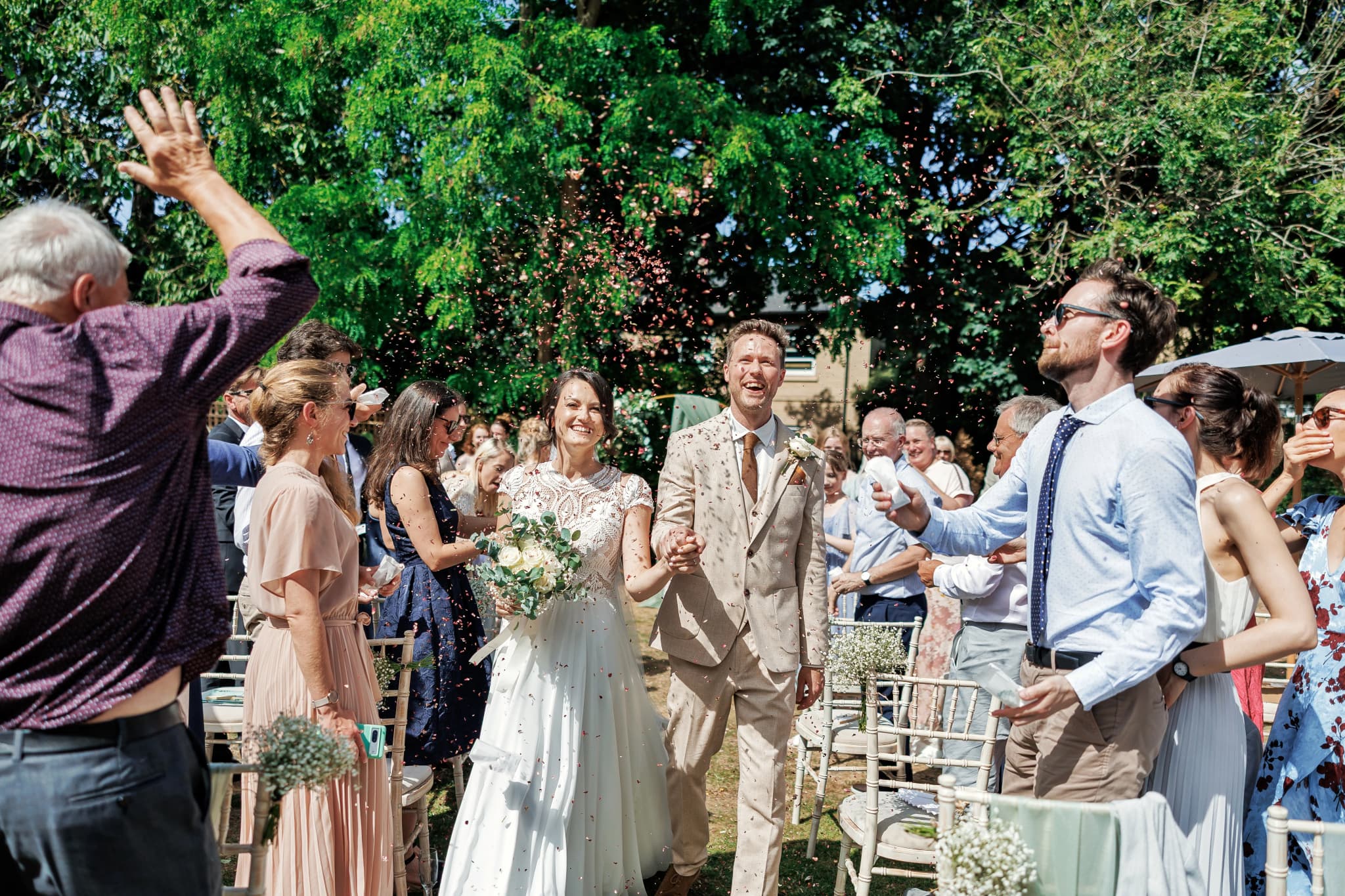
In my experience photographing elopements, the family reaction that greets a couple returning from their day is very often warmer than the reaction that greeted the initial announcement. Once the anxiety about being excluded has settled, and once photographs arrive showing a couple who looks unmistakably happy, relaxed, and utterly themselves, most family members focus on that rather than on the guest list they were not part of. Parents who were initially hurt often tell me, once they see the images, that they can see exactly why the couple chose the day the way they did.
There is also a practical relief that families sometimes only recognise afterwards: no obligation to travel long distances at cost to themselves, no awkward seating negotiations between divorced parents or feuding relatives, no pressure to give a speech or fulfil a specific role they might have found stressful. Couples occasionally tell me their quietest, most reluctant relative turned out to be the most relieved once the pressure of a traditional wedding role was removed from the equation entirely.
If you are considering an elopement or a very small wedding and are still working out how to have this conversation, know that it gets easier once you have said it out loud once. The first conversation is almost always the hardest; each one after that benefits from practice and from having already worked out what you want to say. Choosing to elope is not a rejection of your family — it is a decision about how you want to begin your marriage, and most people who love you will eventually understand that, even if it takes them a little longer than you would like.
If you are planning an elopement and would like to talk through locations, timing, or how to document a day that will mean everything to the two of you, I would love to hear from you. As Yana Skakun Photography, I work with couples across the UK who want their wedding day — however small, however unconventional — captured honestly and beautifully. Get in touch to talk about your plans.

Yana Skakun
Photographer · England
Professional wedding, family and portrait photographer based in England. Passionate about capturing authentic emotions and timeless moments.
About Yana →telling family about elopementhow to elopeeloping advice UKelopement photographersmall wedding vs elopementfamily reaction to eloping
Elopement — Professional Photography in Cambridge & England
Yana Skakun is a professional photographer based in Cambridge, covering weddings, families, and portraits across England. Every session is personal — planned around your story, your people, and the moments that matter most. This guide — How to Tell Your Family You're Eloping (And Why They'll Love It) — is part of the photography journal: practical, experience-based advice drawn from real sessions across England. Whether you arrived searching for telling family about elopement or how to elope, the same care and attention shapes every session Yana photographs.
Professional Photography sessions are available year-round, with bookings open across Cambridge, Ely, Huntingdon, Peterborough, and further afield — East England, London, the Midlands, and beyond. If you have specific questions about eloping advice uk, mention it in your enquiry. Get in touch through the contact form above to check availability and discuss your session. Enquiries are welcomed from anywhere in the UK.
Frequently Asked Questions
What camera settings should I use for outdoor portraits?+
For outdoor portraits, shoot in aperture priority mode. Use a wide aperture (f/1.8–f/2.8) to blur the background and isolate your subject. Keep ISO as low as possible in good light. In bright conditions, use a neutral density filter or switch to manual to avoid overexposure at wide apertures.
What is the golden hour in photography?+
Golden hour is the period roughly 30–60 minutes after sunrise and before sunset. The sun is low in the sky, producing warm, soft, directional light that flatters skin tones and creates beautiful long shadows. It's widely considered the best natural light for portrait and outdoor photography.
How do you get sharp photos in low light?+
In low light, increase your ISO (accepting some grain), use the widest aperture your lens allows, and slow your shutter speed to the slowest you can hand-hold without camera shake (roughly 1/focal length as a guide). Use image stabilisation if available, and consider a tripod for static subjects.
What is the rule of thirds in photography?+
The rule of thirds divides the frame into a 3×3 grid. Placing your subject on one of the four intersection points — rather than dead centre — creates a more dynamic, visually interesting composition. It's a guideline, not a rule: some of the most powerful images break it deliberately.
How do you edit photos to look professional?+
Professional editing starts with shooting in RAW format. In Lightroom or similar software, correct exposure, white balance, and contrast first. Recover shadow and highlight detail. Apply gentle colour grading for mood. Be conservative with skin retouching — the goal is natural enhancement, not transformation. Consistency across a set of images is what separates professional from amateur editing.
Continue Reading
Related Articles


Get in Touch
Ready to Book Your Session?
Get in touch to discuss your vision — I'll reply within 24 hours.